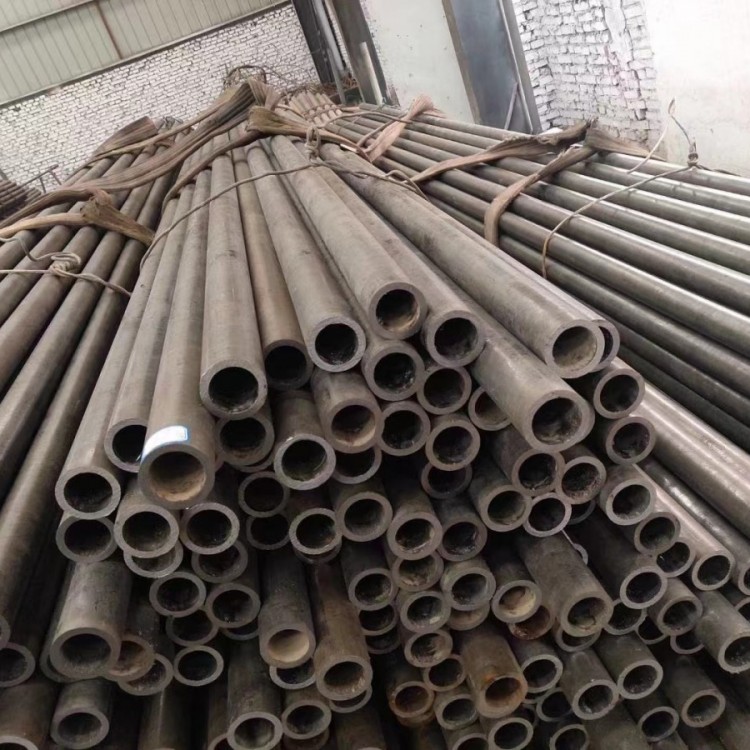
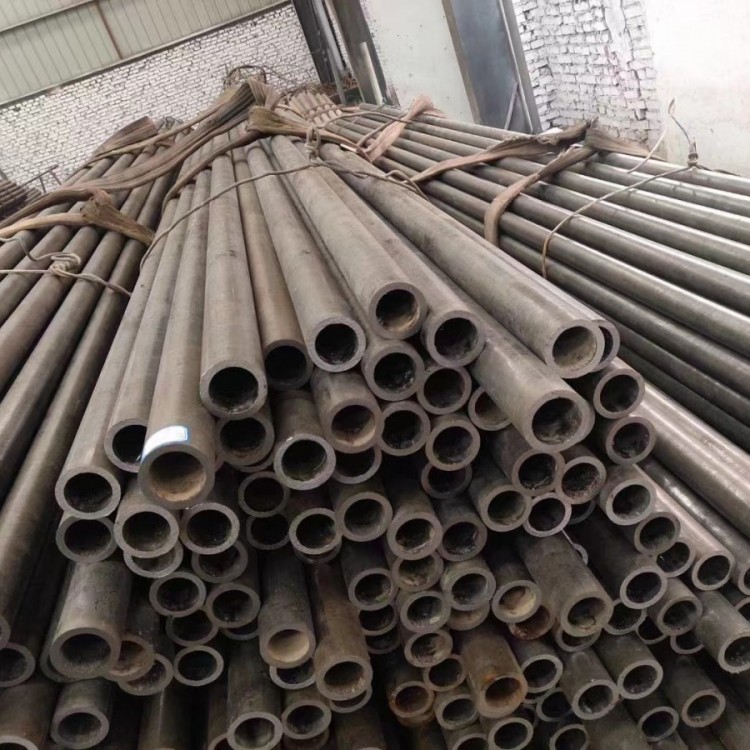
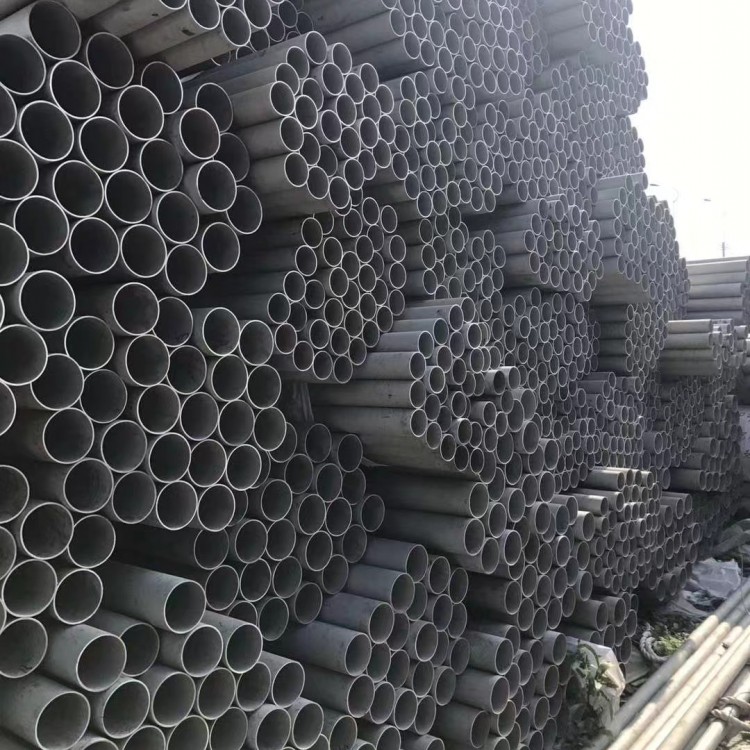
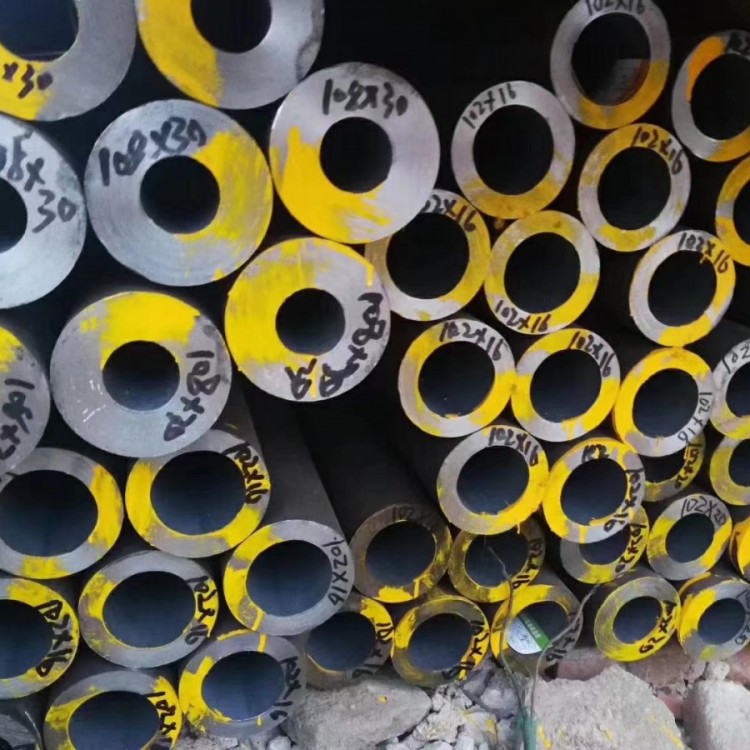
Based on Standard GB/T 3077-2008: Chemical composition (wt%) C 0.37~0.44, Si 0.17~0.37, Mn 0.50~0.80, Cr 0.80~1.10, Ni ≤0.30. 【Mechanical Properties】
Sample blank size (mm): 25
Heat Treatment:
Quenching Heating Temperature (℃): 850; Cooling Medium: Oil
Quenching Heating Temperature (℃): -
Hardening temperature (℃): 520; Cooling medium: Water, Oil
Tensile Strength (σb/MPa): ≧980
Yield Point (σs/MPa): ≧785
Ultimate elongation rate (δ5/%): ≧9
Section Reduction Ratio (ψ/%): ≧45
Impact Absorption Work (Aku2/J): ≧47
Beloit Hardness (HBS 100/3000) (annealed or high-temperature tempered condition): ≦207
Reference Steel Grades: Chinese GB standard: 40Cr, German DIN material number: 1.17035/1.7045, German DIN steel number: 41Cr4/42Gr4, British EN standard: 18, British BS standard: 41Cr4, French AFNOR standard: 42C4, French NF standard: 38Cr4/41Cr4, Italian UNI standard: 41Cr4, Belgian NBN standard: 42Cr4, Swedish SS standard: 2245, American AISI/SAE/ASTM standard: 5140, Japanese JIS standard: SCr440(H)/SCr440, International Organization for Standardization ISO standard: 41Cr4.


Critical Point Temperature
(Approximate Value) Acm = 780℃
Current Standard of Practice
Temperature: 850~870°C, Hardness: 179~229HBS.
Cold-pressing Stock Softening Treatment Specification
Temperature: 740~760°C, insulation time: 4~6h, then cool at a rate of 5~10°C/h, down to ≤600°C, and air-cool after removal from the furnace.
Pre-treatment hardness ≤ 217HBS, softened hardness ≤ 163HBS.
Iron屑 Protection Swing Hardening Specification
(670±10)℃×2h,升温 with furnace, (710±10)℃×2h, cool with furnace, (670±10)℃×2h,升温 with furnace, (710±10)℃×2h, cool with furnace, (670±10)℃×2h,升温 with furnace, (710±10)℃×2h, cool with furnace, total of 3 cycles, then cool to 550℃, air cool after removal. The hardness after treatment is 153HBS.
【Hardening Treatment Specifications】
Quenching temperature: 850℃ ±10°C, oil cooled; tempering temperature: 520℃ ±10°C, water or oil air cooled.
【Features】Medium carbon tempered steel, cold heading die steel. The steel offers moderate pricing, ease of machining, and after proper heat treatment, it achieves certain toughness, ductility, and wear resistance. Normalizing promotes spheroidization and improves the machinability of blanks with hardness less than 160HBS. After tempering at 550~570°C, the steel exhibits comprehensive mechanical properties. The hardenability of this steel is higher than that of 45 steel, making it suitable for high-frequency quenching, flame hardening, and other surface hardening treatments.
【Application】This steel, after heat treatment, is used to manufacture mechanical parts for medium load and speed operations, such as car steering knuckles, rear axles, and gears, shafts, worm gears, spline shafts, and tips on machine tools; after quenching and medium-temperature tempering, it is suitable for parts subjected to high loads, impacts, and medium speeds, like gears, main shafts, oil pump rotors, sliders, and rings; after quenching and low-temperature tempering, it is used for parts with heavy loads, low impacts, and good wear resistance, with solid thickness under 25mm, such as worms, main shafts, shafts, and rings; after quenching and high-frequency surface hardening, it is used to produce parts with high surface hardness and wear resistance without significant impact, such as gears, sleeves, shafts, main shafts, crankshafts, mandrels, pins, connecting rods, screws, nuts, and intake valves. Additionally, this steel is also suitable for manufacturing various transmission parts subjected to carbonitriding treatment, such as large-diameter gears and shafts with good low-temperature toughness.
【Supply Condition & Hardness】 Annealed condition, hardness ≤ 207HBS. Elastic Modulus of 40Cr: Modulus of Elasticity E (20℃) /MPa 200000~211700, Shear Modulus G (20℃) 80800
Quenching process for 40Cr
40Cr is quenched at 850°C, oil-cooled; tempered at 520°C, water-cooled or oil-cooled. The surface hardness of 40Cr steel pipe after quenching is HRC 52-60, while flame quenching can reach HRC 48-55.
40Cr Nitriding Treatment
40Cr is a nitriding steel, containing elements that are beneficial for nitriding. After nitriding treatment, 40Cr can achieve a high surface hardness, with the hardness after quenching and tempering reaching HRA72~78, equivalent to HRC43~55. The process route for nitriding workpieces: forging - annealing - rough machining - quenching and tempering - finish machining - stress relief - rough grinding - nitriding - finish grinding or polishing. Due to the thin and brittle nitriding layer, a higher-strength core structure is required, so quenching and tempering treatment must be performed first to obtain tempered sorbite, enhancing the core mechanical properties and the quality of the nitriding layer. Soft nitriding is an active nitriding process, with gas nitriding being the most commonly used.
40Cr Welding
Preheat 40Cr before welding to prevent internal cracking due to rapid quenching caused by matrix cooling. Perform a normalizing treatment before tempering after welding.
Weldability of 40Cr: Prone to segregation during solidification, it is sensitive to crystalline cracks (a type of thermal crack) and tends to crack at the crater and concave parts of the weld during welding. High carbon content leads to the formation of quench-hardened martensitic structure, which is highly sensitive to cold cracks, when rapidly cooled. In the overheated zone, with a high cooling rate, it's easy to form hard and brittle high-carbon martensite, leading to embrittlement of the overheated zone.
Welding process key points:
Welding is generally carried out in the annealing (normalizing) condition.
2. Welding methods are unrestricted.
3. Utilize a higher line energy and adjust the preheat temperature appropriately; generally, the preheat and interlayer temperatures can be maintained between 250-300°C.
4. Welding materials should ensure that the composition of the deposited metal is essentially the same as the base material, such as J107-Cr
5. Post-weld quenching and tempering treatment should be carried out promptly. If it's difficult to perform the tempering treatment promptly, intermediate annealing can be performed or the material can be held at a temperature above the preheat for a period to expel diffused hydrogen and soften the structure. For products with complex structures and numerous welds, an intermediate annealing can be conducted after a certain number of welds have been completed.