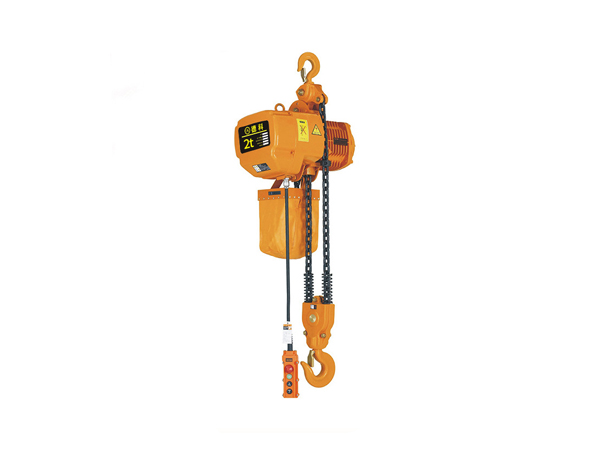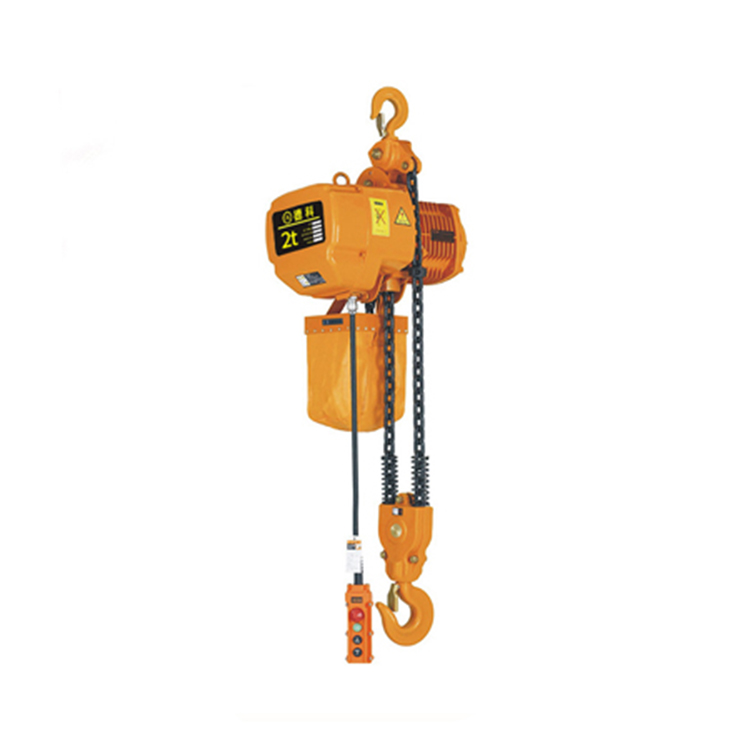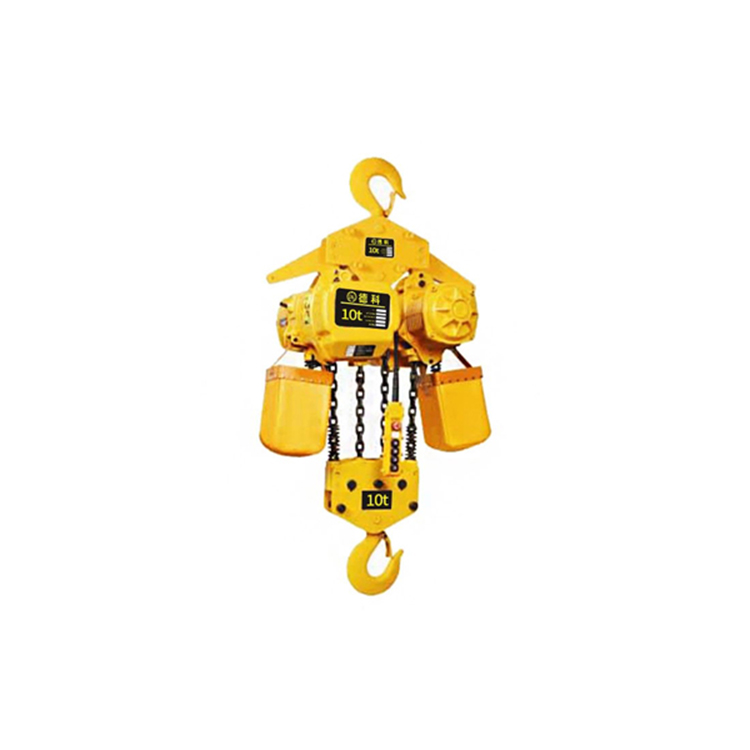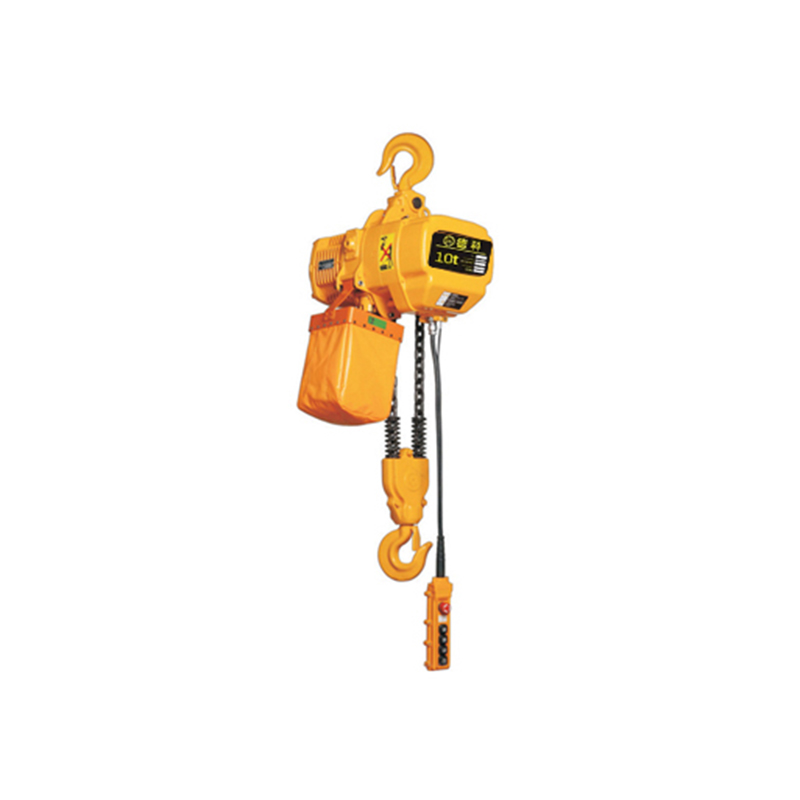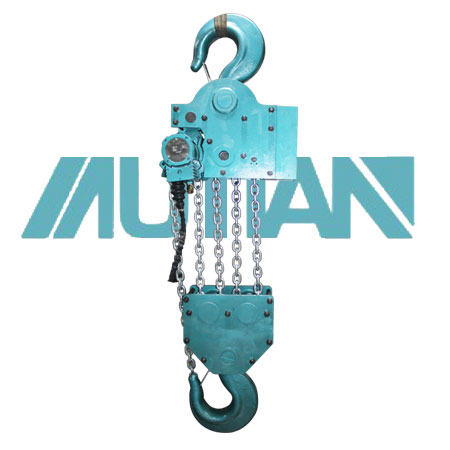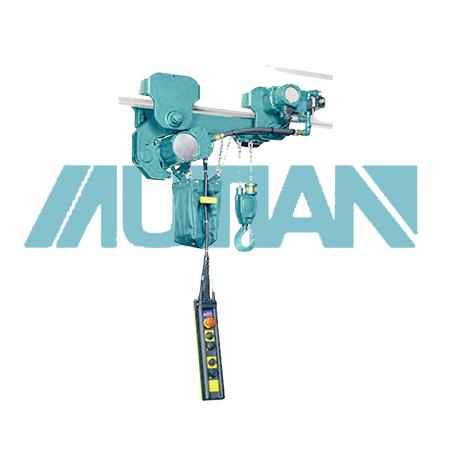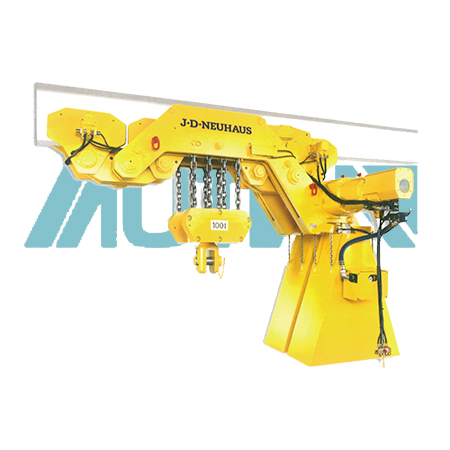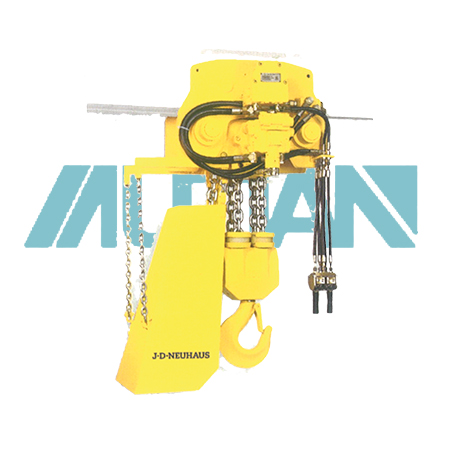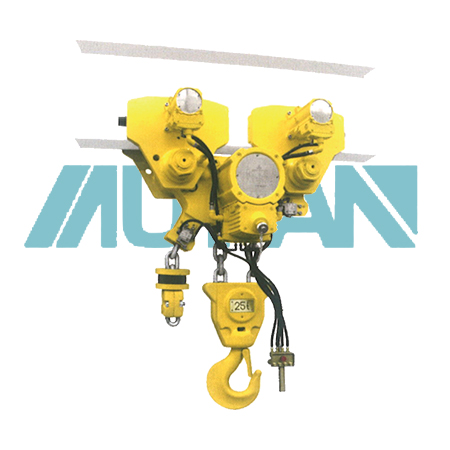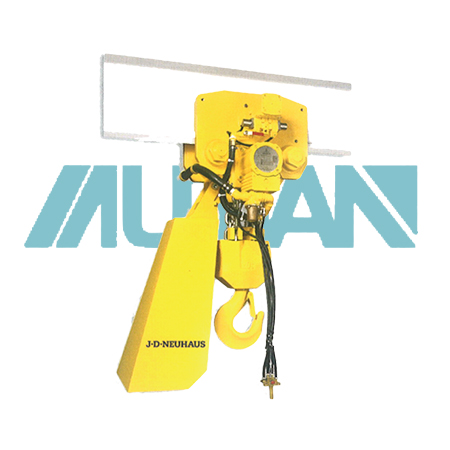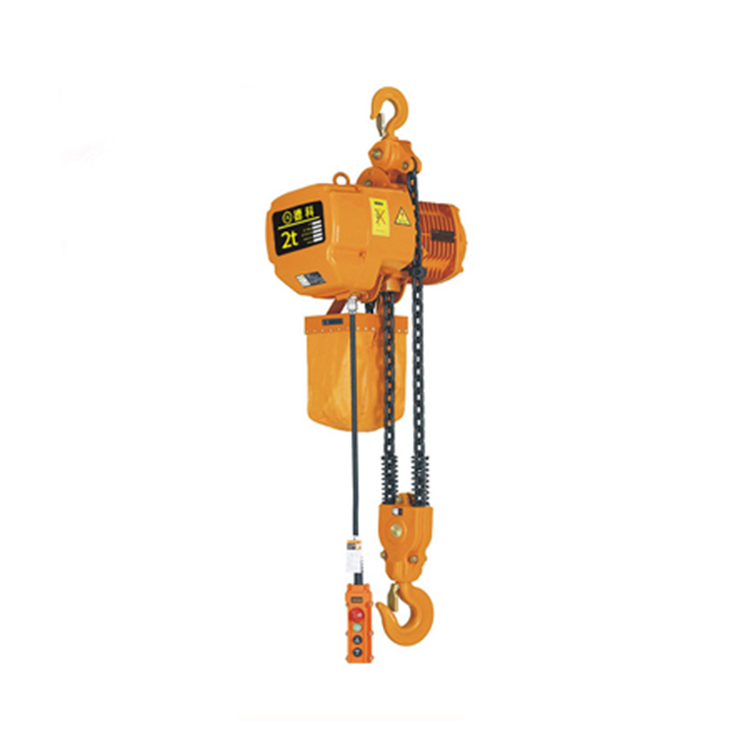


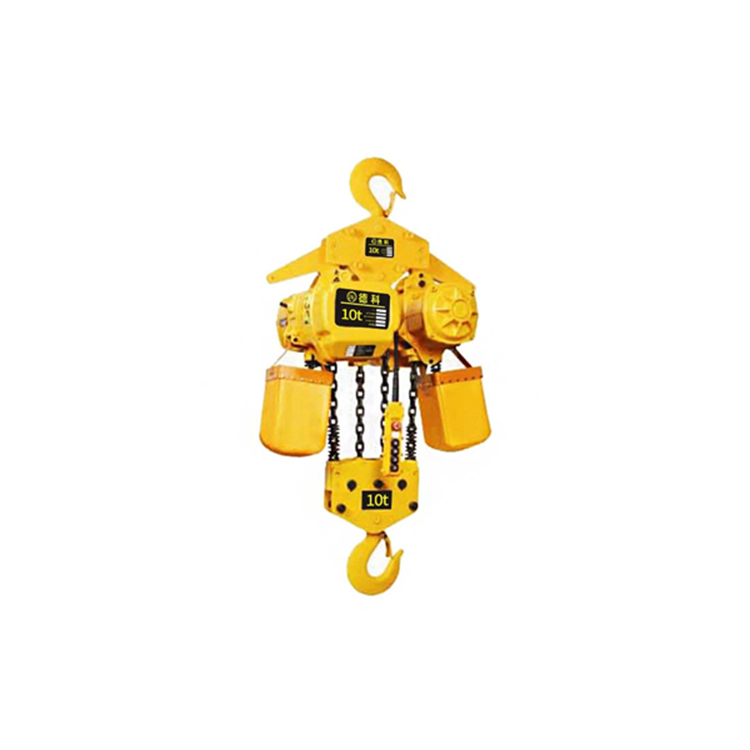
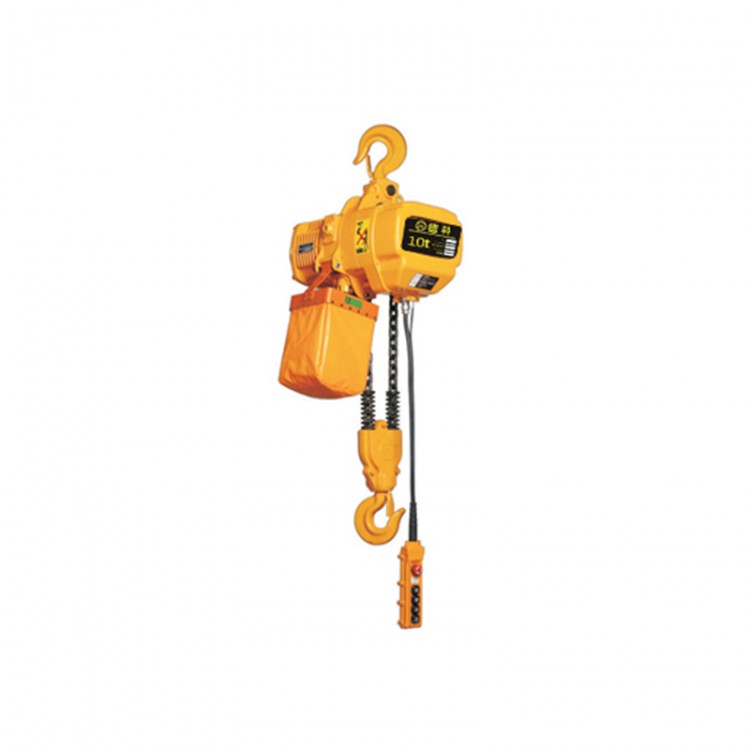



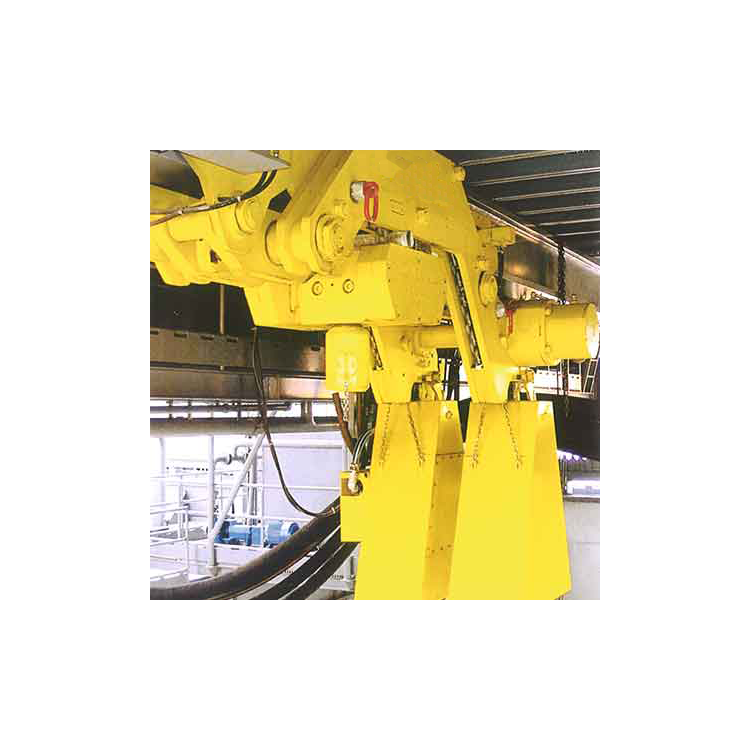






The body is made of high-strength extruded shells or die-cast aluminum shells, precision manufactured using thin-walled extrusion molding technology, featuring small size, light weight, and high strength.
Standard electric chain hoists feature an independent transmission system, a sealed secondary coaxial gear mechanism within the transmission, and a long-life oil bath lubrication system.
Electric hoist powder metallurgy clutch serves as an overload protection device. The braking employs a disc-type DC electromagnetic field brake, offering high braking torque, stability, rapid response, and low noise.
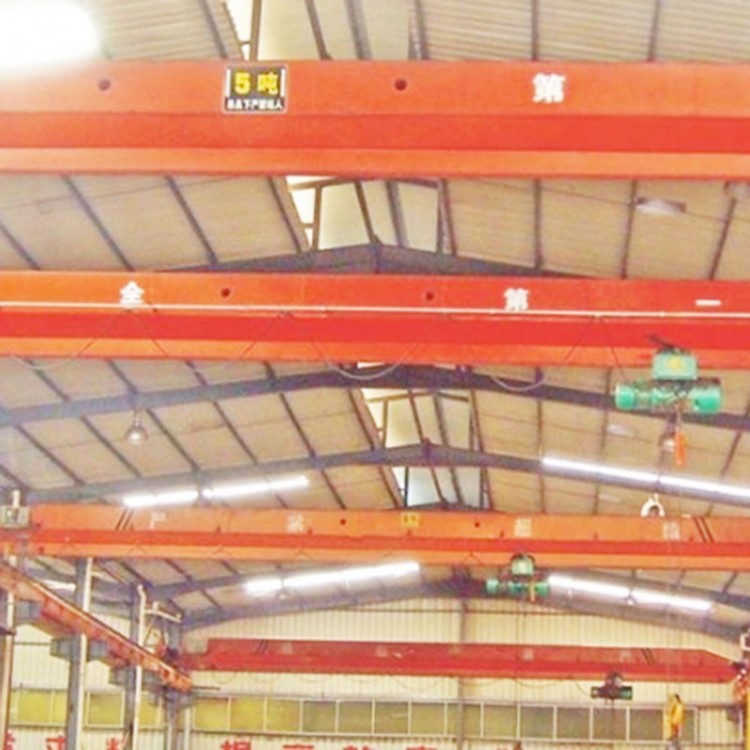
The electric chain hoist has a wide range of applications, primarily used in various factories, warehouses, wind power generation, logistics, ports, and construction industries for lifting or loading/unloading goods.
Heavier loads can also be lifted for ease of work or repair of large machinery.
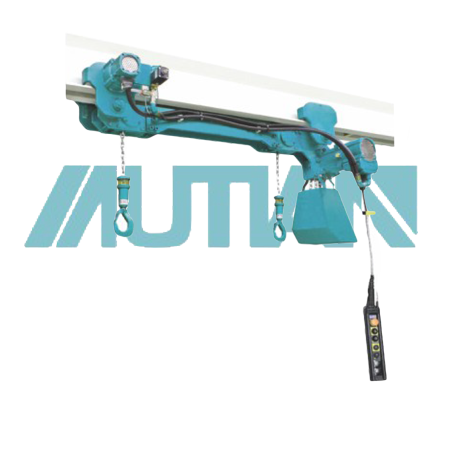
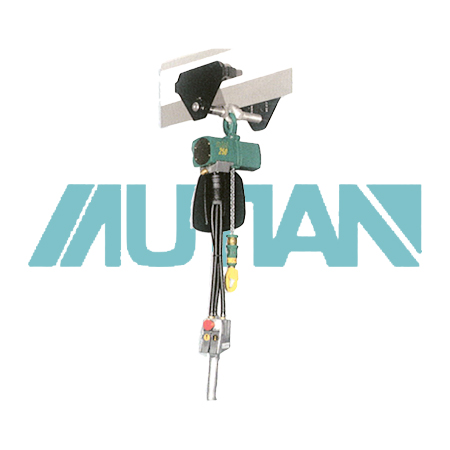
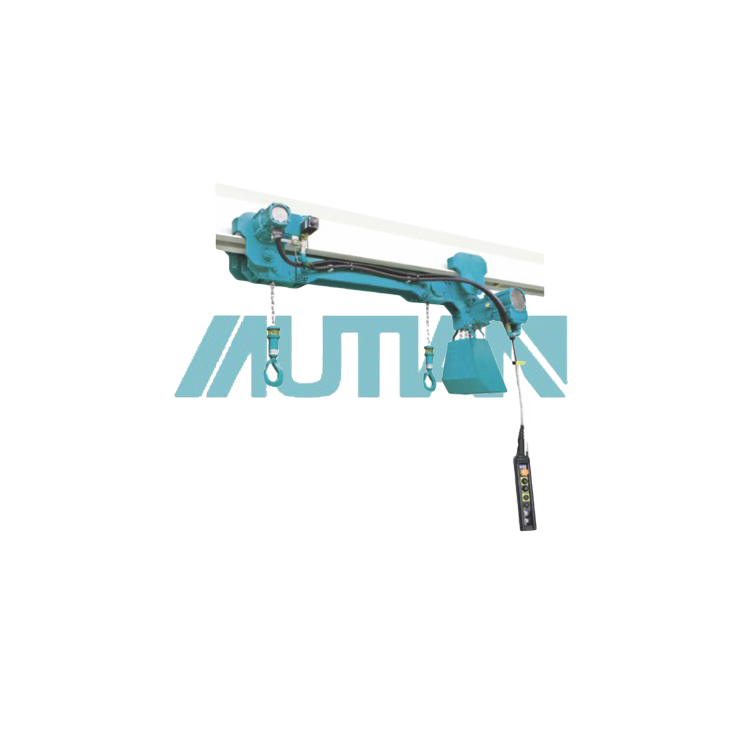
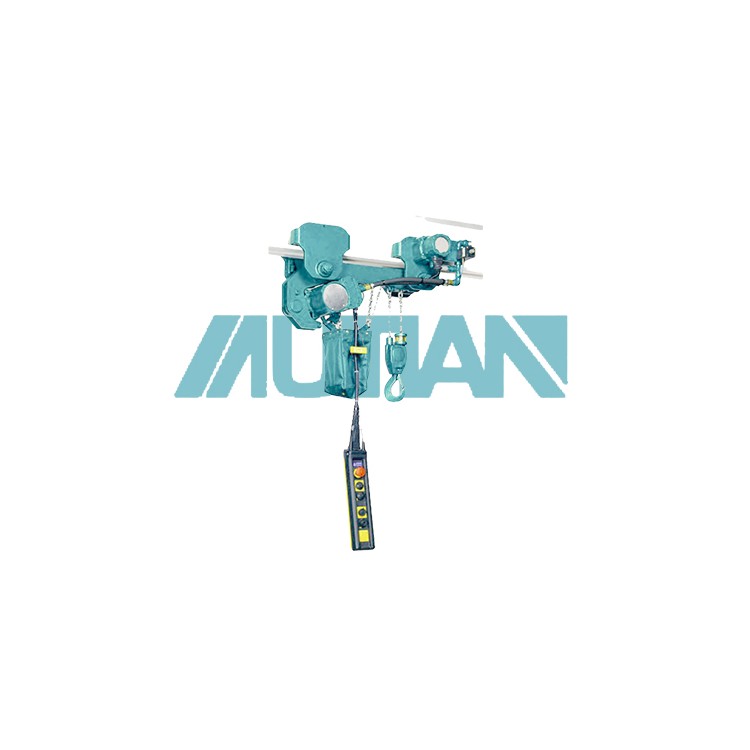
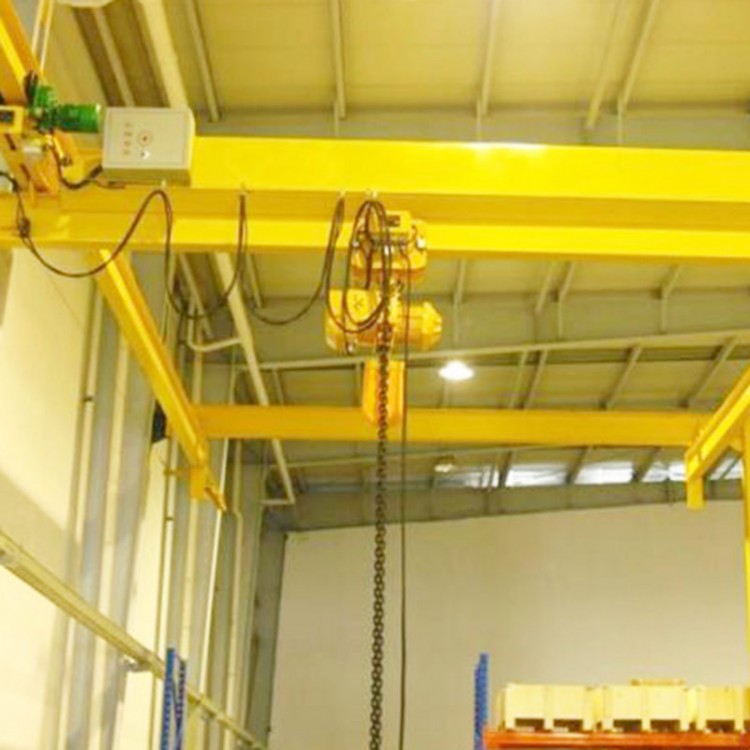
The electric chain hoist is operated by the operator using buttons on the ground, can also be controlled in the control room, or via wired (wireless) remote control.
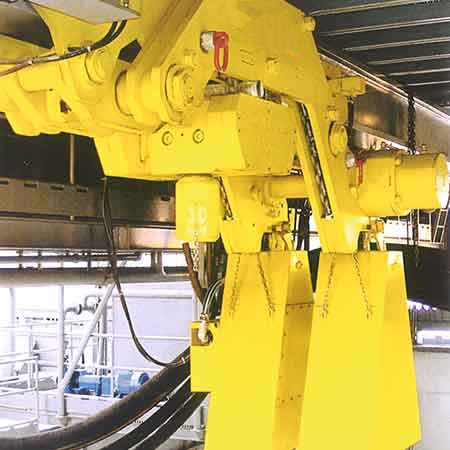
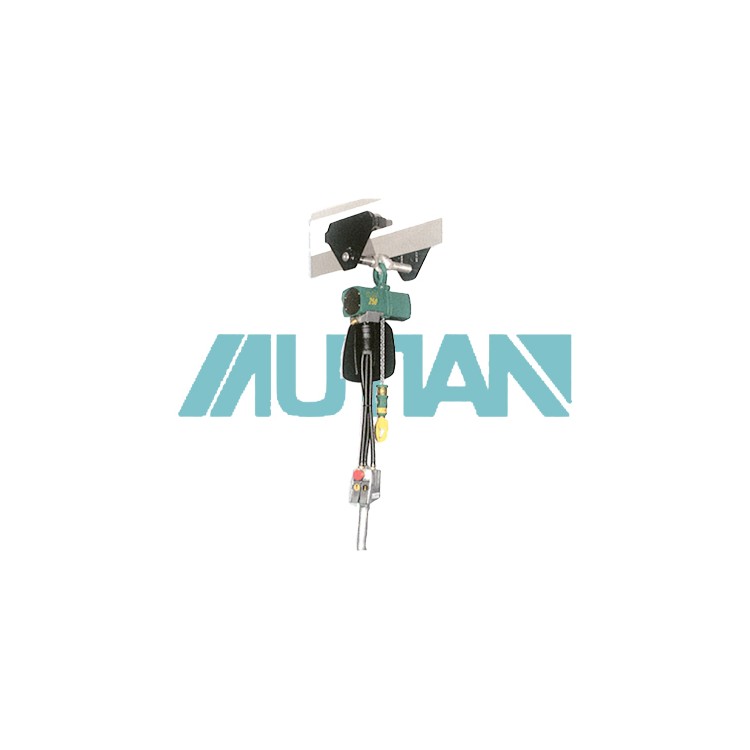
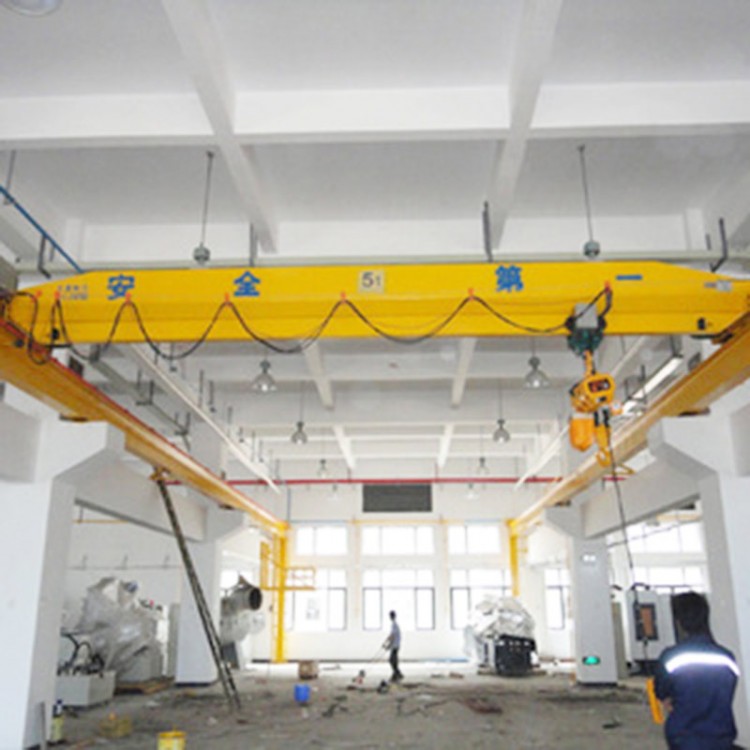
The electric chain hoist can be used both for fixed suspension and with electric monorail trolleys or manual push/pull monorail trolleys for movement.
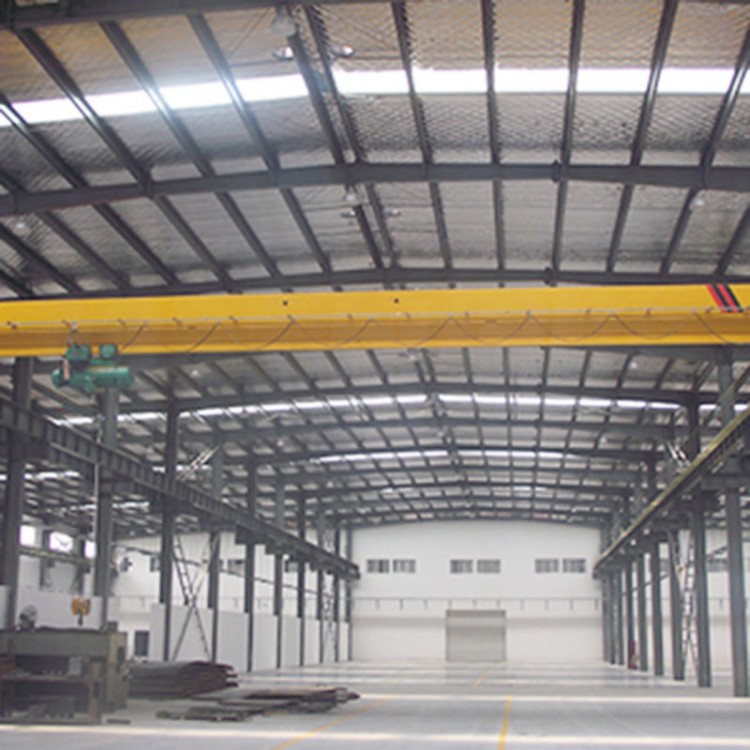
Hoist Chain Electric Hoist Installation and Use: The hoist can be used with single-beam I-beams on single-beam cranes, bridge cranes, gantry cranes, and suspended cranes, and can also be paired with double-beam trolleys.
Therefore, the electric hoist is one of the commonly used lifting equipment in factories, mines, ports, warehouses, loading yards, stores, etc., and is an essential machine for improving labor efficiency and enhancing working conditions.