








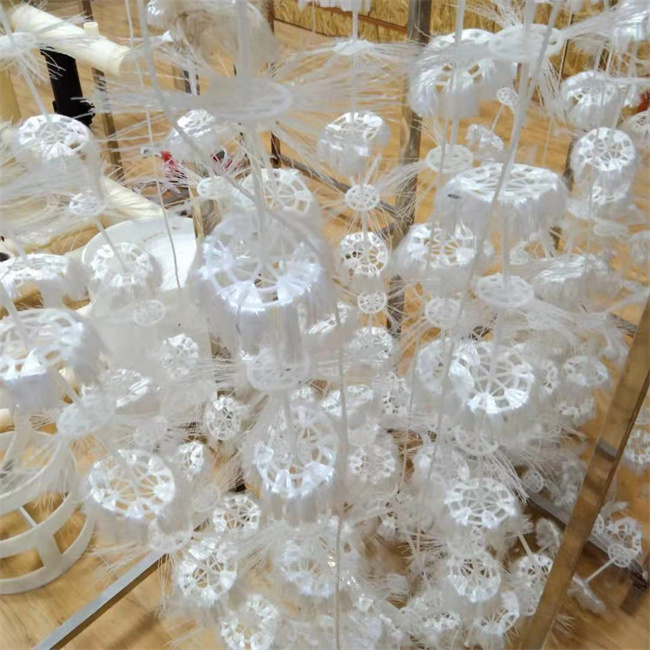
Mixed Filler
Product Introduction
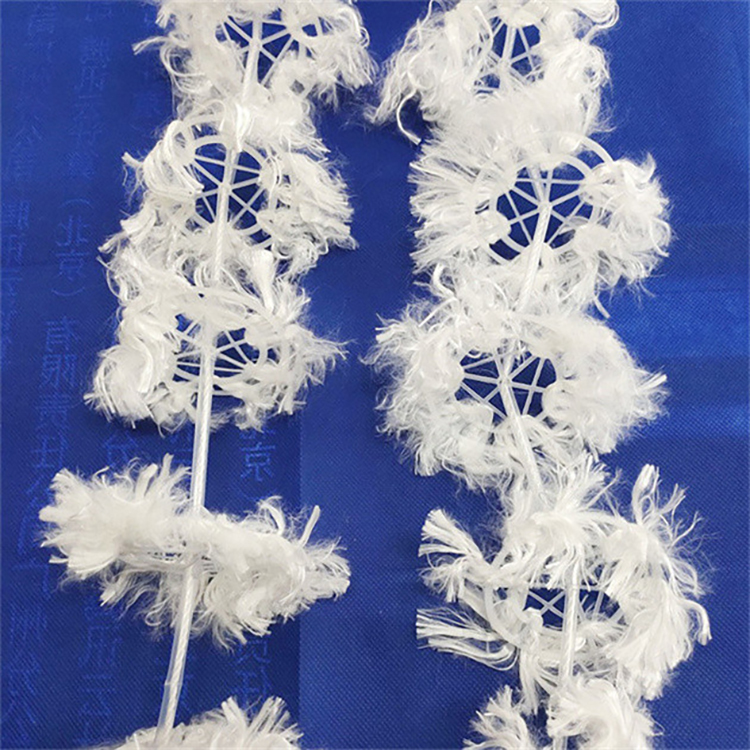
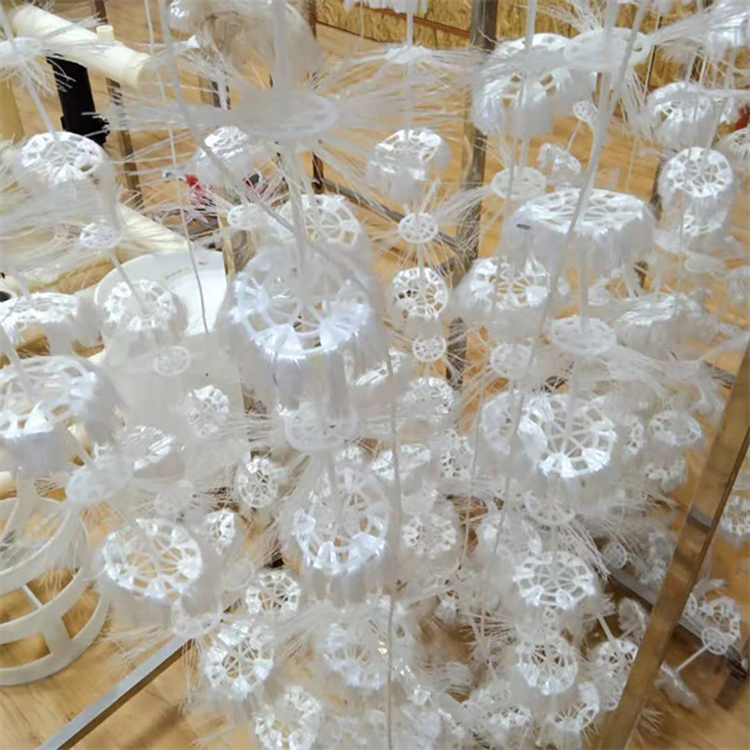
Composite packing is developed based on both soft packing and semi-soft packing, combining the advantages of both. The composite packing combines the advantages of soft packing in easy film formation, semi-soft packing in low tendency to tangle or clog, and overcomes the drawback of semi-soft packing in difficult film formation, thus widely used in contact oxidation processes for treating various wastewater. Elastic three-dimensional packing is made from high molecular polymer, enhanced with antioxidants, hydrophilic agents, stabilizers, and adsorbents, and formed through special spinning. The surface of the elastic fibers features fine bristles to increase specific surface area. During installation, place600 to 1000 silk filaments are interlaced and compressed between two plastic circular rings, radiating evenly. They are strung at varying distances to form suspended filling material. This filling material is made of full plastic, offering a longer lifespan than soft filling materials. During aeration, each filament continuously trembles, allowing for variable gaps in the filling material, preventing clumping and blockages, and making it easy to update the biofilm. Currently, it is widely used in the hydrolysis and acidification stage of organic matter degradation processes, enhancing the biodegradability of wastewater.
The composite filler features a structure that replaces the plastic disc clip with a double-loop large plastic ring, with the aldehyde fiber or polyester filament pressed onto the ring's hoop, ensuring uniform distribution of the fiber bundle.The inner circle features snowflake-shaped plastic branches, which can both hang membranes and effectively cut bubbles, enhancing the rate and efficiency of oxygen transfer. This allows for a thorough exchange of the water-gas biofilm, treating organic matter in the water.

Key Features
Combinable packing material features non-clogging, non-agglomeration, large specific surface area, rapid film formation, long service life, resistance to high-load impact, excellent aeration properties, and is suitable for various sewage and wastewater treatment projects, used in conjunction with equipment such as contact oxidation walls, oxidation tanks, and oxidation troughs.
Technical Specifications
The composite filling is composed of fiber bundles, all-plastic type spacers made of aldehyde-modified polyester, tubes, and a central rope.
Diameter:φ150mm, φ180mm, φ200mm, with spacing options of 60mm, 80mm, and 100mm in three specifications.
Application Range
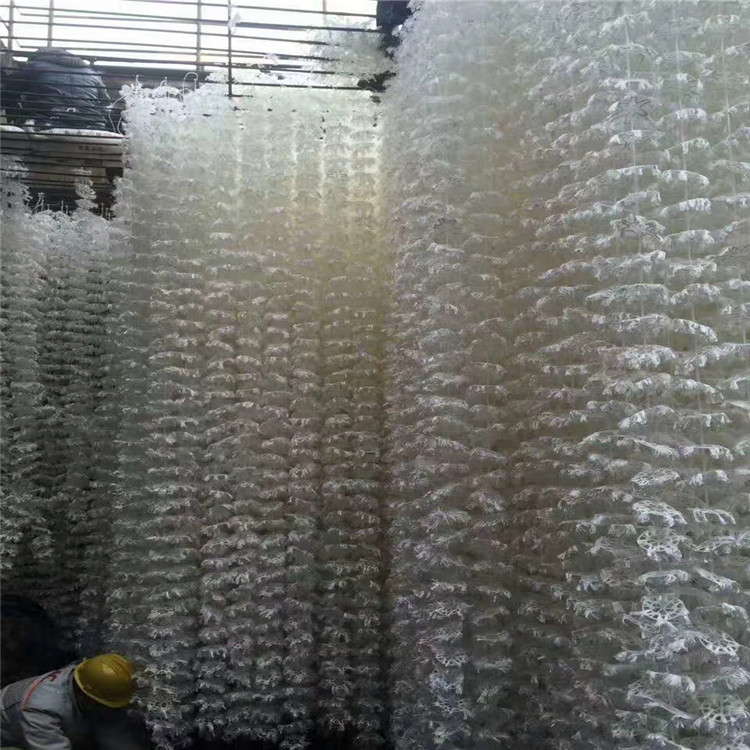
Used in wastewater and sewage treatment projects, it is a biological carrier for treating wastewater by biological contact oxidation and anaerobic fermentation, compatible with equipment such as contact oxidation towers, oxidation ponds, and oxidation channels.
Ordering Instructions
Please specify the required diameter, length, cubic count, and spacing for the modular filling material. Installation options include square and equilateral triangle shapes. Frames are available in steel structure and soft rope structure styles, each consisting of upper and lower layers. The distance between the two layers is the effective length of the filling material. Both ends of each filling material are equipped with ties for securing. Simply use a special knotting technique to fasten the filling material to both layers of the frame during installation.