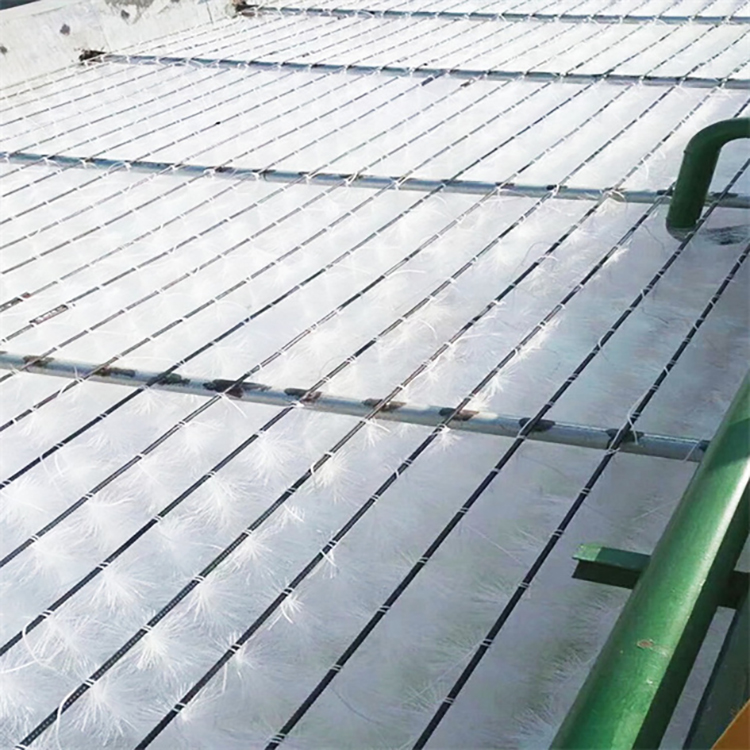










Three-dimensional elastic filling material
ProductsIntroduction】
The Biofilm Contact Oxidation Process primarily utilizes a biofilm attached to a carrier (commonly referred to as three-dimensional elastic packing) to purify organic wastewater. It has been applied in the treatment of wastewater from textile dyeing and printing, wool spinning and knitting, beer and food production, petrochemical industries, and domestic sewage, yielding significant environmental and economic benefits. In recent years, with the increasing demand for water supply and the varying degrees of surface water pollution from rivers and lakes due to extensive organic contamination, the contact oxidation process has been adopted for treatment. Over the years, this process has been favored by design departments for its advantages such as small land occupation, resistance to shock loads, and ease of operation and management, making it highly popular among users.
Our factory's newly produced three-dimensional elastic packing material has been proven to be an ideal carrier packing material through extensive testing under various conditions and long-term production operation. Thanks to its structural design and superior material and processing choices, it boasts a long service life, excellent aeration performance, low energy consumption, quick startup and membrane formation, easy membrane removal and renewal, high load resistance, good treatment results, simple operation and management, non-blocking, non-agglomeration, and cost-effectiveness. This material can adjust the density of the fibers and different assembly forms for application in different process water quality conditions, suitable for anaerobic, aerobic, and mixed oxygen treatment processes for wastewater.

【PrimaryFeatures】
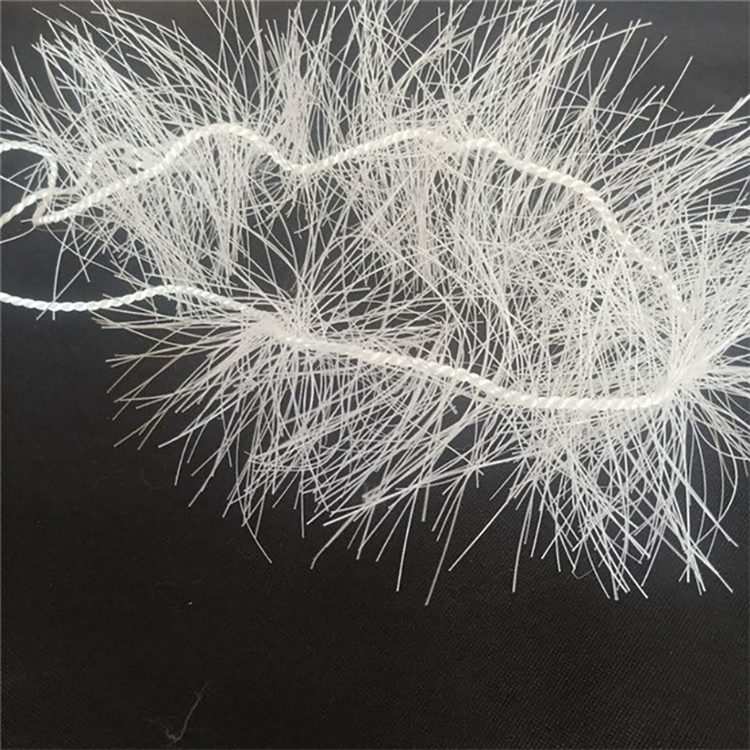
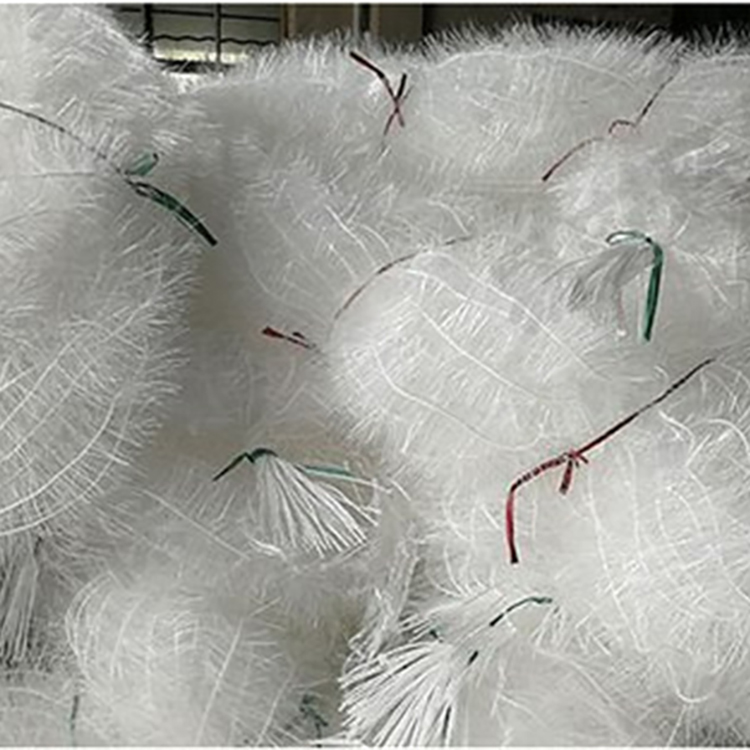
Three-dimensional elastic filling material selects several anti-corrosive, temperature-resistant, and aging-resistant varieties from polyolefins and polyamides. Mixed with hydrophilic, adsorptive, and anti-thermal oxidation additives, it employs the spinning and yarn processing techniques, interweaving and fixing the yarns on a corrosion-resistant core rope. The yarn arrangement should be in a three-dimensional shape, with a microwaved pattern on the yarn surface. Due to the excellent material selection and processing, the yarns are moderately flexible and rigid, forming a uniform and radiating three-dimensional arrangement. This creates the individual units of suspended three-dimensional elastic filling material, which can uniformly spread and cover the designated area. It allows for full mixing, penetration, and exchange of air, water, and biofilm, ensuring that the biofilm can uniformly adhere to each yarn, maintain good activity, and exhibit variability in porosity. Moreover, during operation, the biofilm can achieve an increasingly larger specific surface area.
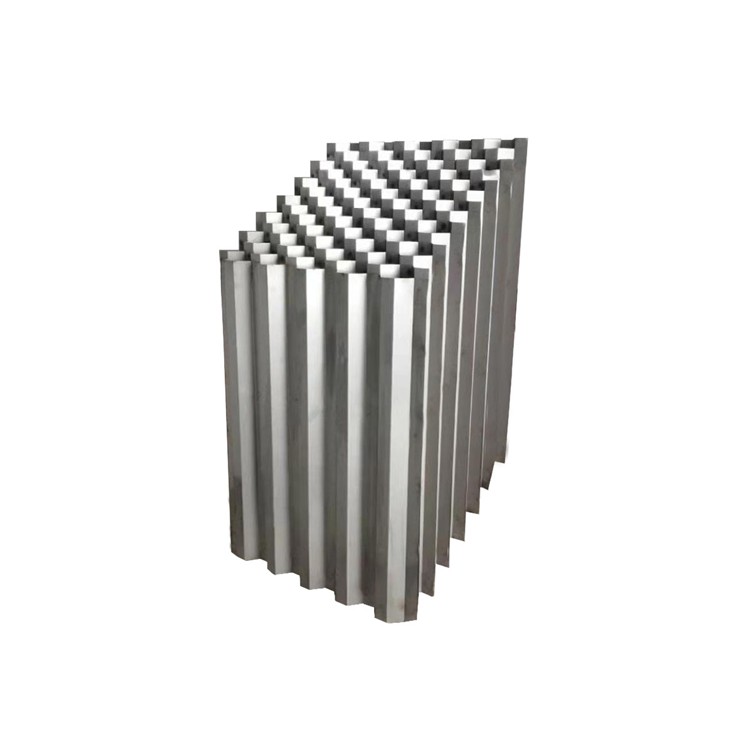
Compared to rigid honeycomb fillers, this material has a greater porosity variability and does not clog; compared to soft fillers, it has a longer material lifespan and does not stick to connection clusters; compared to semi-soft fillers, it has a larger surface area and is more cost-effective.
The biofilm has a uniform density distribution, the media rapidly forms a biofilm without shedding or deforming, and exhibits excellent temperature resistance and load impact tolerance.

Application Scope
Primarily used for low-concentration domestic wastewater, medium-concentration dyeing wastewater, papermaking wastewater, high-concentration food wastewater, and coal chemical wastewater. Widely applicable in aerobic, anaerobic, and mixed-aerobic treatment processes.