







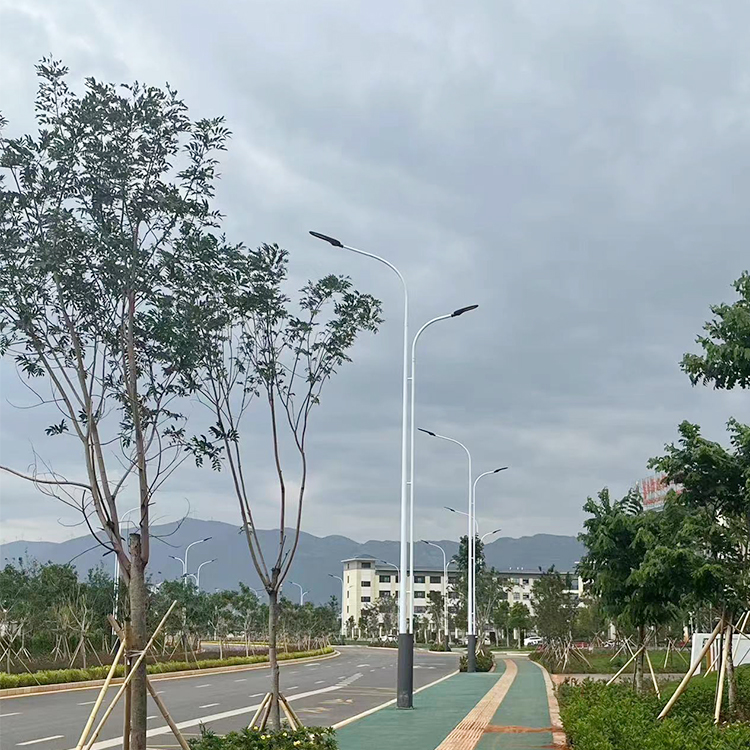
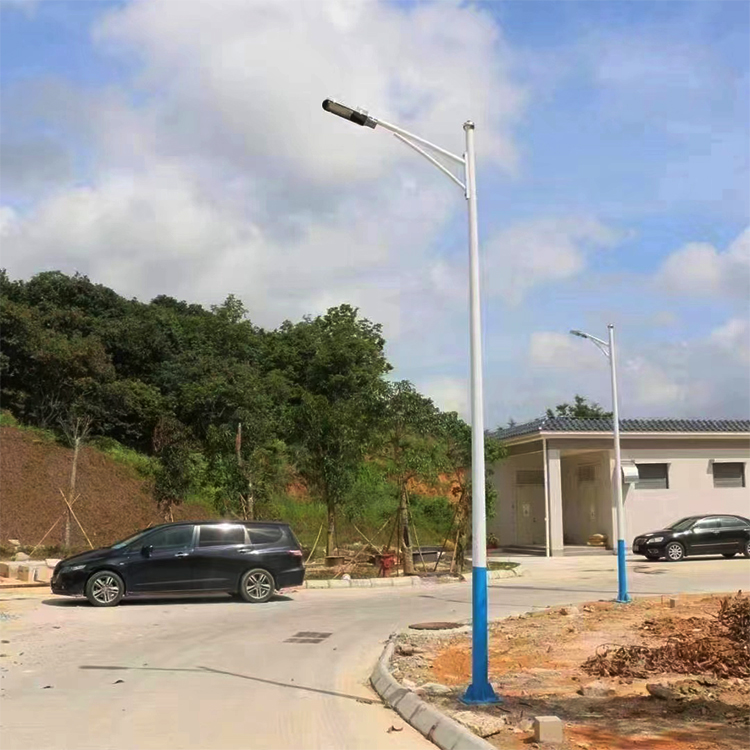
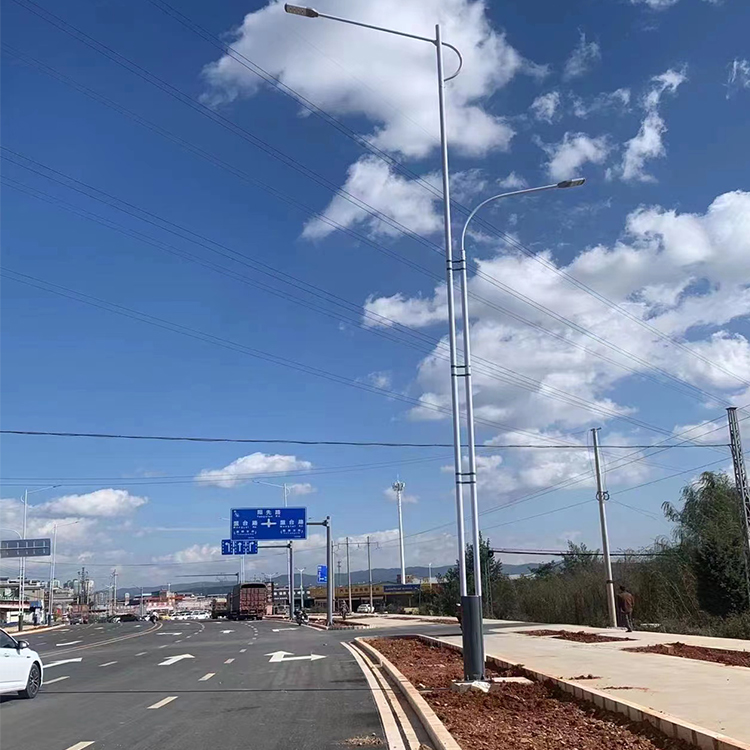
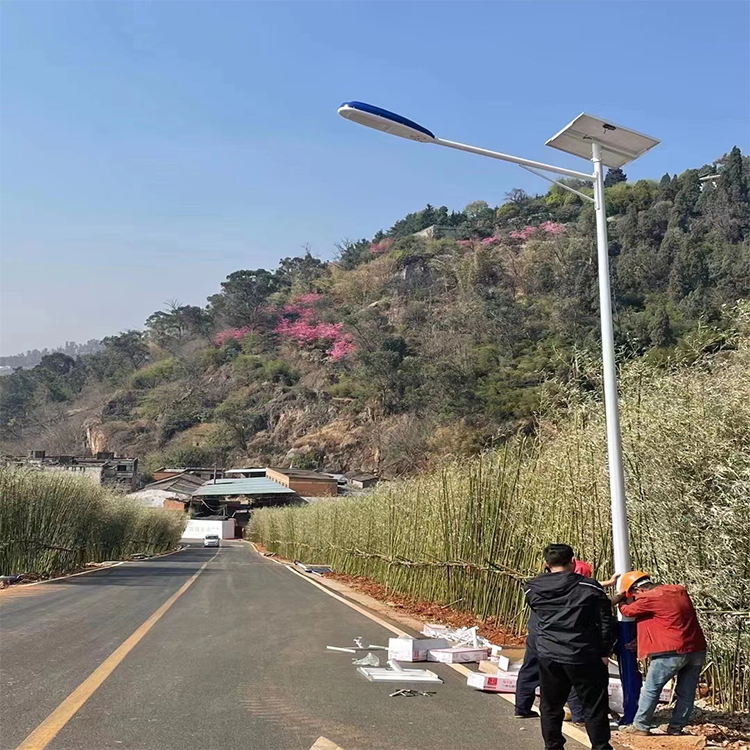


Generally, streetlights use a single-lamp decentralized compensation method to increase the power factor of various lamps to above 0.9, thereby reducing the transformer capacity specifically for streetlights by over 51% and decreasing line losses by approximately 75%, resulting in significant energy-saving effects.
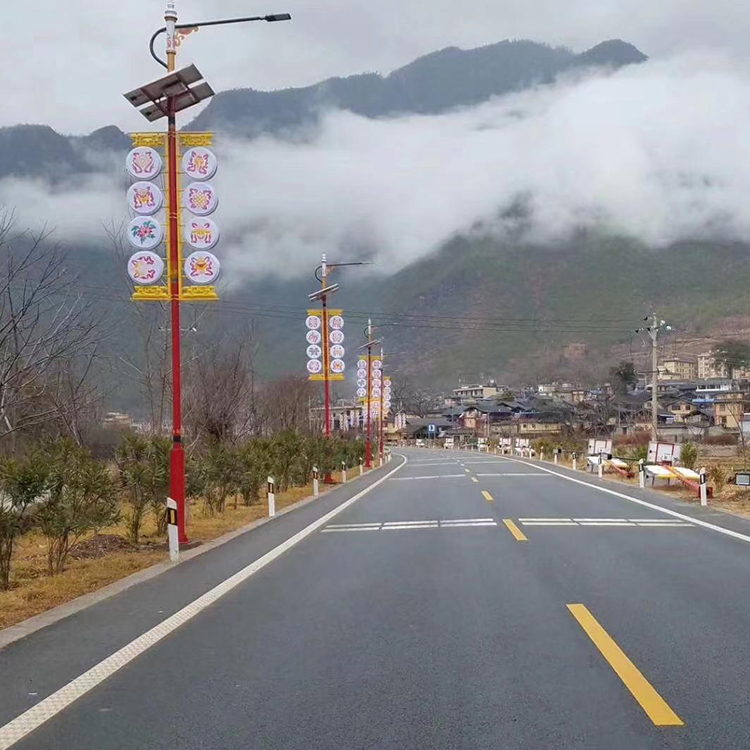
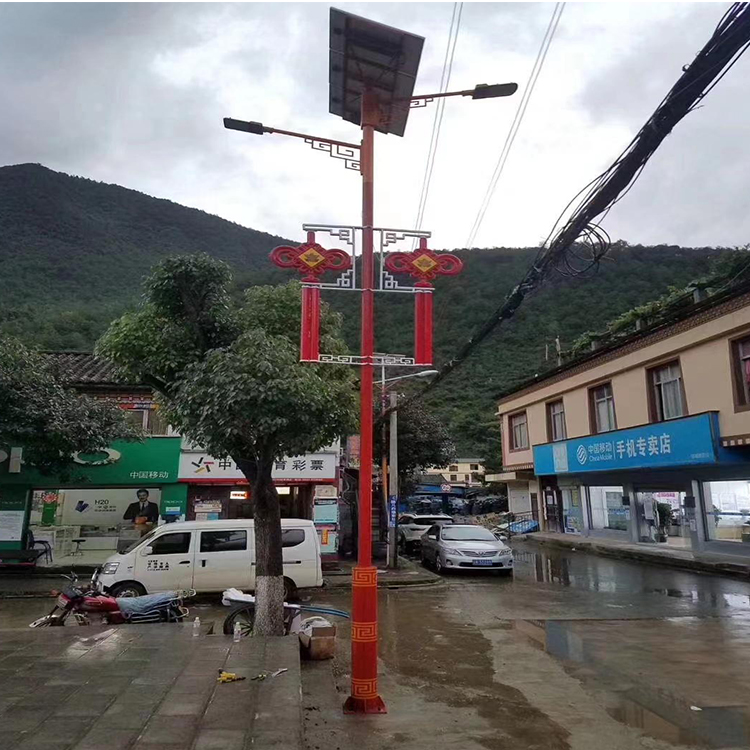
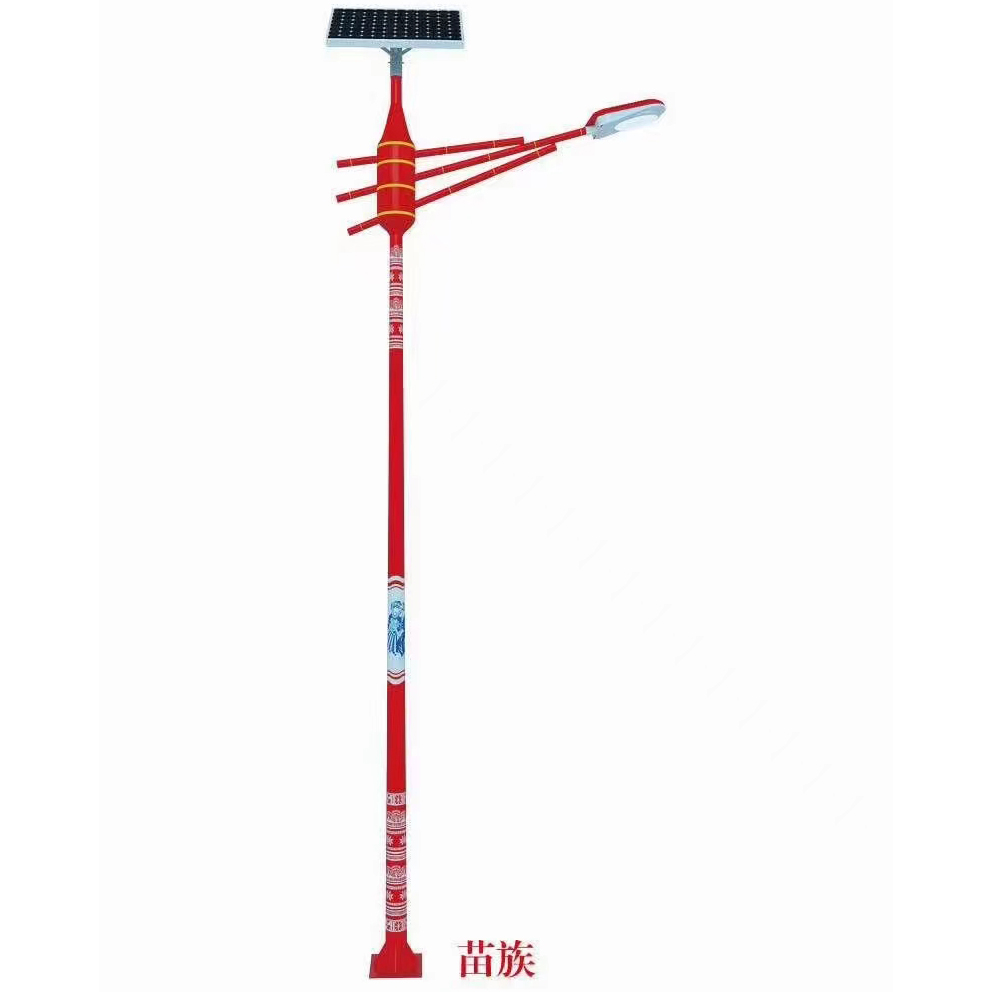
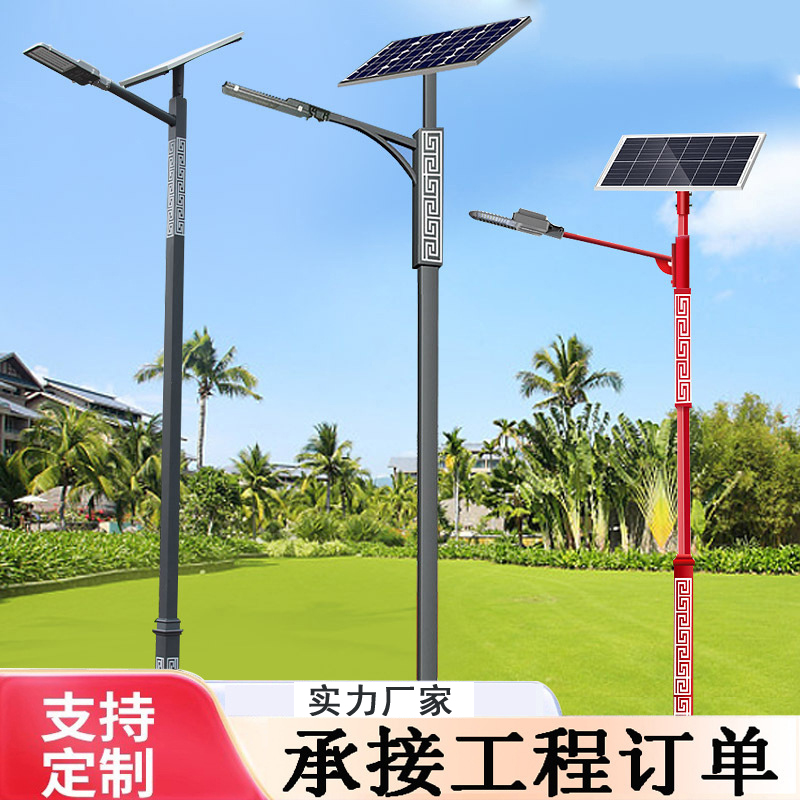
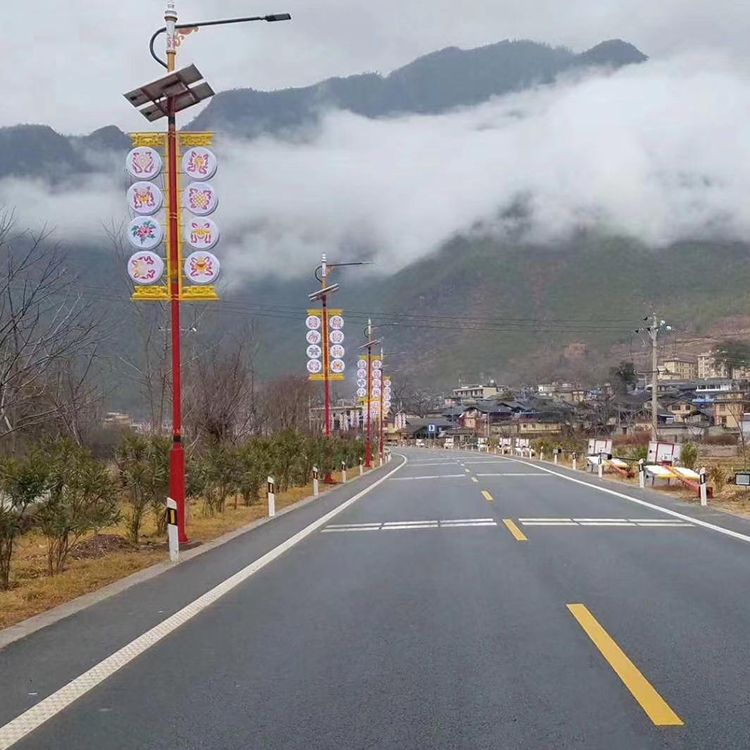
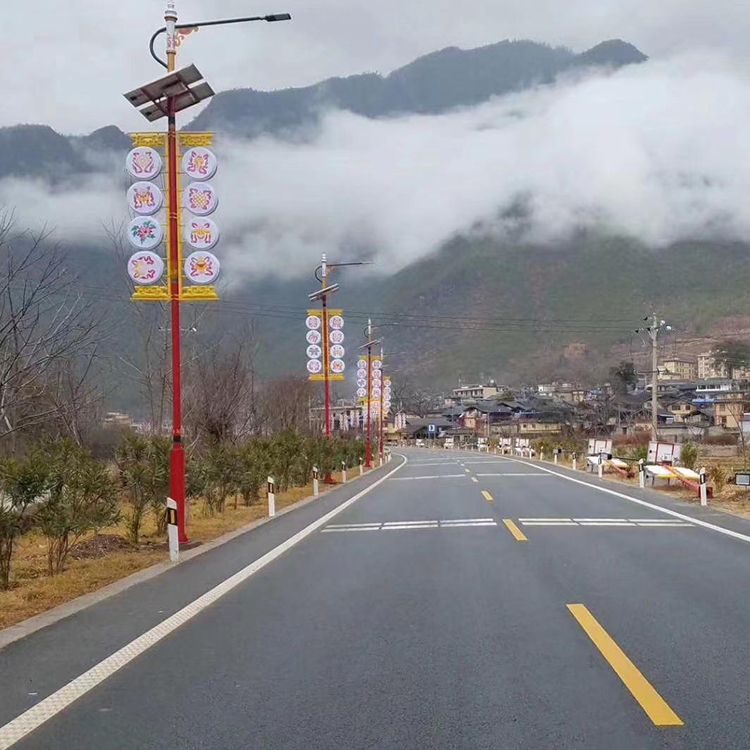
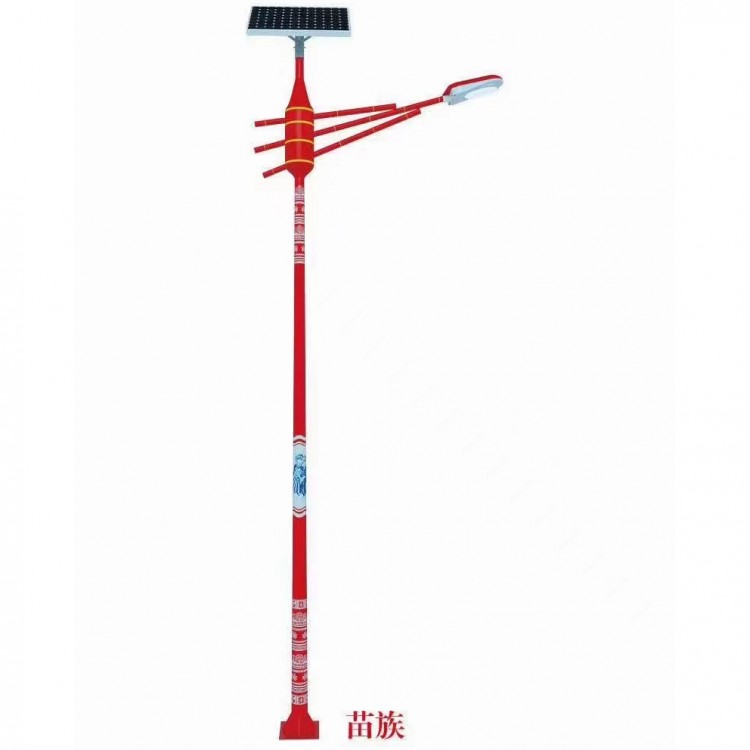
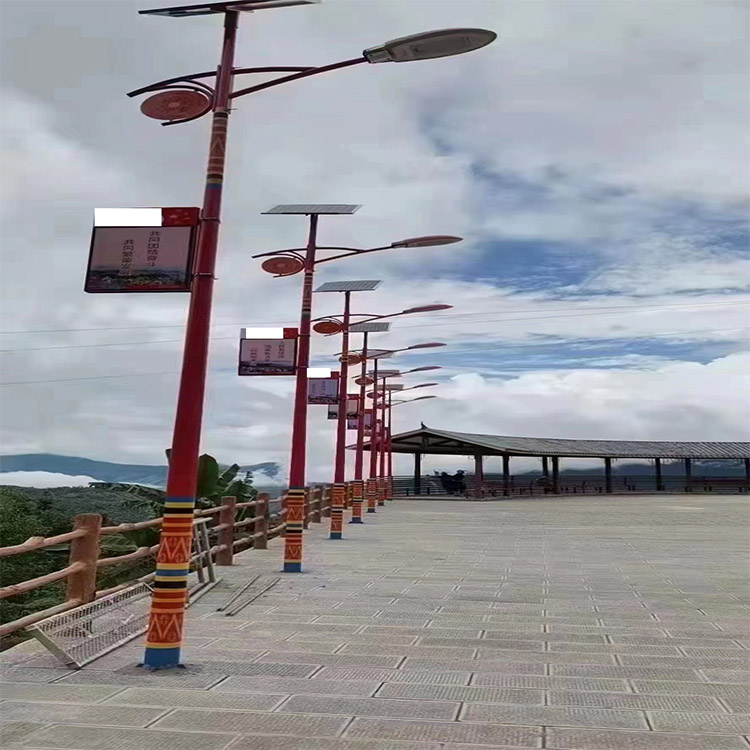
Traditional ethnic style solar street lamp control method
Following the principle of practical energy conservation and adopting the practices of most cities today, we design a control method combining light and clock controls based on different traffic volume periods and their varying requirements for illumination. This means that after dark, during peak traffic hours, all streetlights are turned on to ensure the safe passage of pedestrians and vehicles; after midnight, as traffic volume decreases, the streetlights on one side are turned off by the clock control, achieving a relatively economical energy-saving effect while ensuring normal traffic flow.
Selection of lighting distribution methods
(1) Short power supply distance
Low-load landscape lighting and road lighting can use single-phase power distribution, and voltage drop and end short-circuit current values should be verified. The distribution box is of outdoor type, installed on the ground with the bottom edge 0.3 meters above the ground level.
(2) Long power supply distance
For heavy load calculations, a three-phase power distribution system is used, with phases A, B, and C sequentially connected to each group of streetlights to avoid unbalanced three-phase conditions. The distribution panel is an outdoor type, installed on the ground with the bottom edge 0.3 meters above the ground level. The low-voltage lighting circuit employs a three-phase five-wire system, which can effectively reduce line voltage loss compared to traditional single-phase circuits. The size and laying requirements of the cable protection conduit ensure that the total cross-sectional area of the conductors inside the conduit should not exceed 40% of the conduit's cross-sectional area. The internal diameter of the conduit should not be less than 1.5 times the outer diameter of the cable.
Cables are buried 0.5 meters deep in the green belt of the pedestrian walkway. At crossings, they are routed through D50 steel pipes with a soil cover depth of 0.7 meters. If these requirements cannot be met, a layer of C20 reinforced concrete will be added on top of the pipe.
Yunnan Walde Lighting Technology Co., Ltd. specializes in outdoor lighting projects, offering a wide range of products including landscape lights, garden lights, high mast lights, ground lights, street lights, solar lights, lawn lights, stake lights, underwater lights, LED lights, wall lights, beacon lights, floodlights, factory lights, explosion-proof lights, emergency lights, traffic signal lights, flag poles, and light sources, among other outdoor lighting solutions. As a professional manufacturer, we provide a full range of styles, direct from the factory, ensuring genuine quality and affordability. If you're in need of street lights or other lighting products, please call for detailed discussions!!