








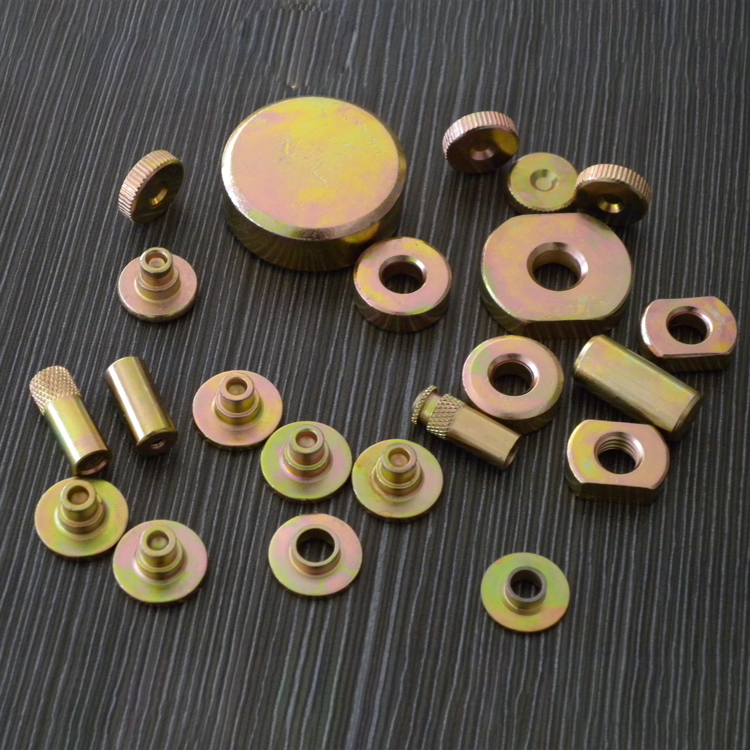
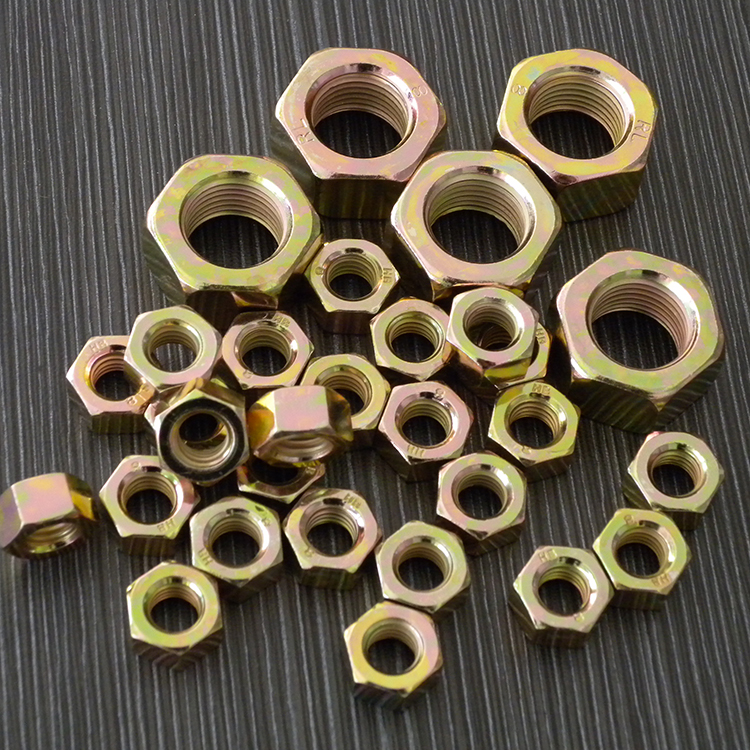
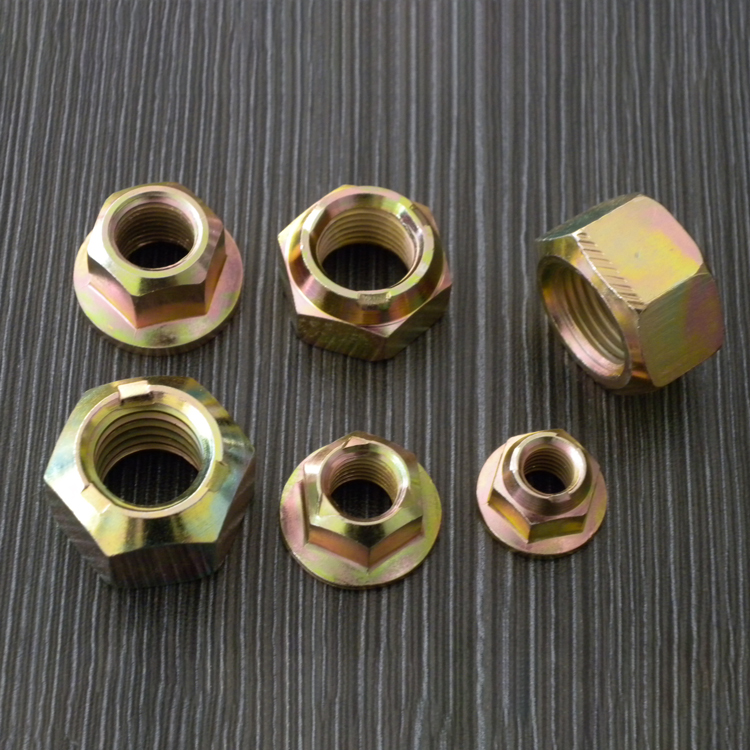
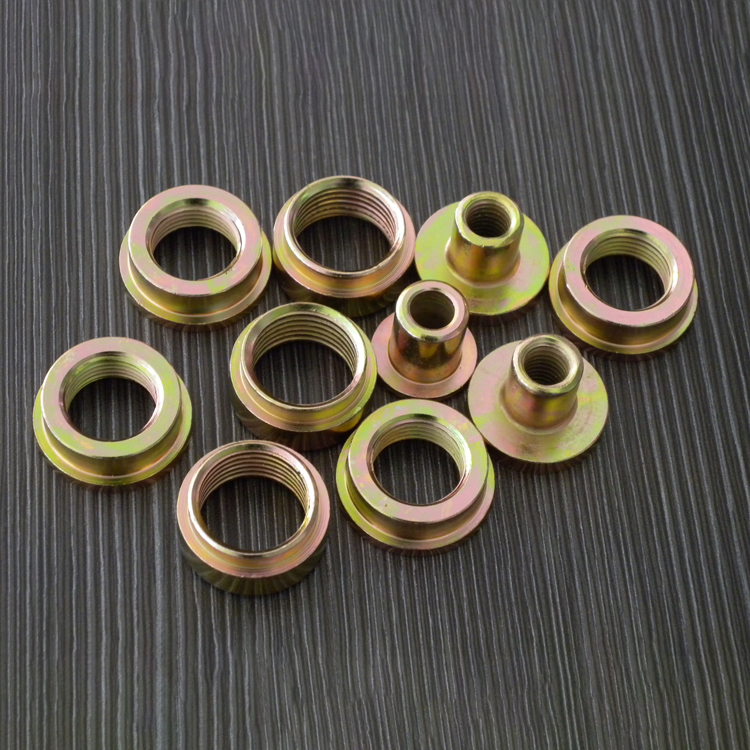
Product Category: Anti-Loosening Nuts
Product Origin: Wenzhou
Business Model: Manufacturing & Processing
Main Products: Card Springs, Retainer Washers; Bolts; Washers; Nuts
Principles: Adhere to honesty, trust, mutual benefits, and common development.
Mission: Continuous Innovation and Perfection
Applications: Automotive Industry, Mechanical Manufacturing, Pneumatic Tools, Furniture Hardware, etc.
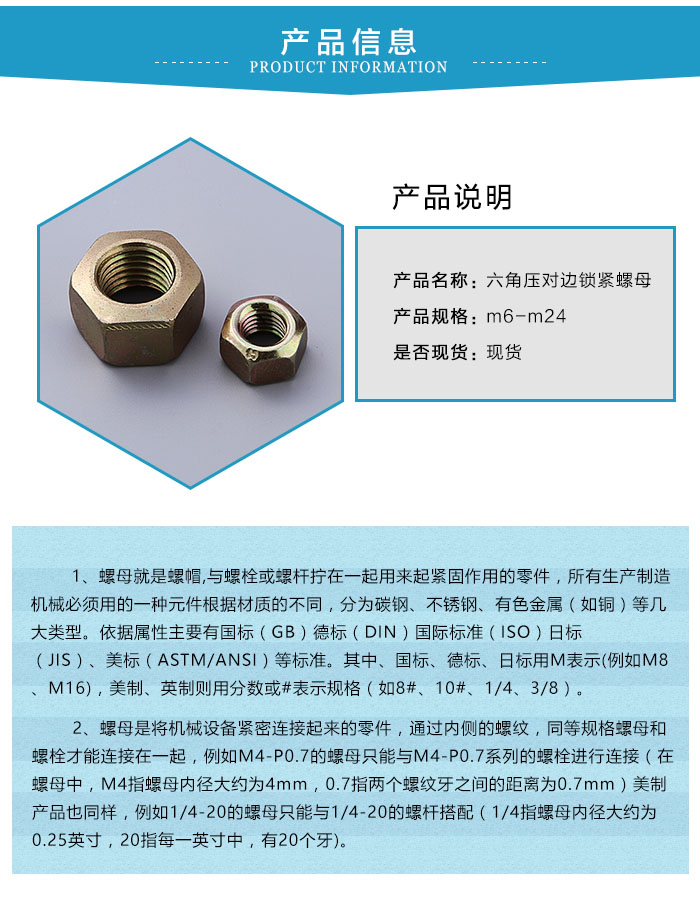
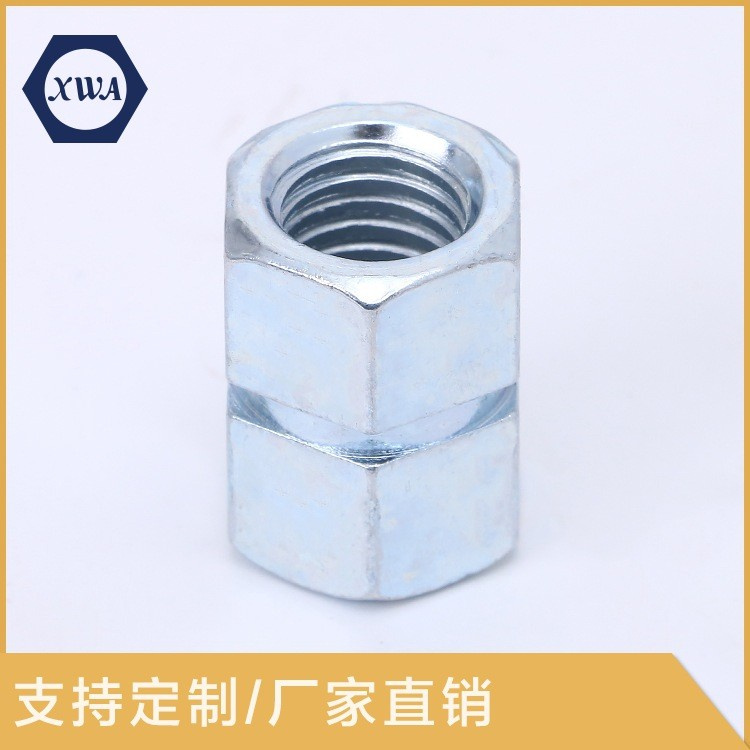
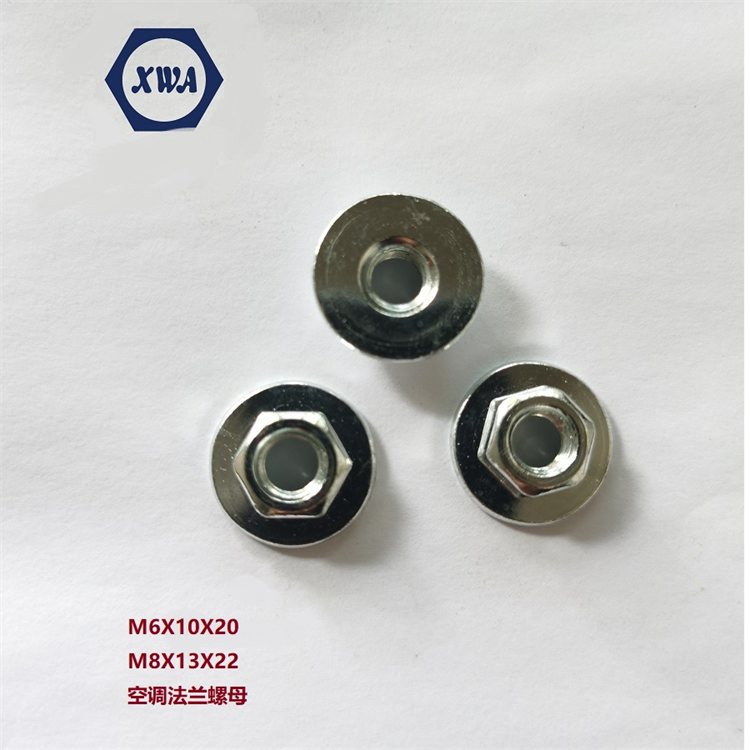
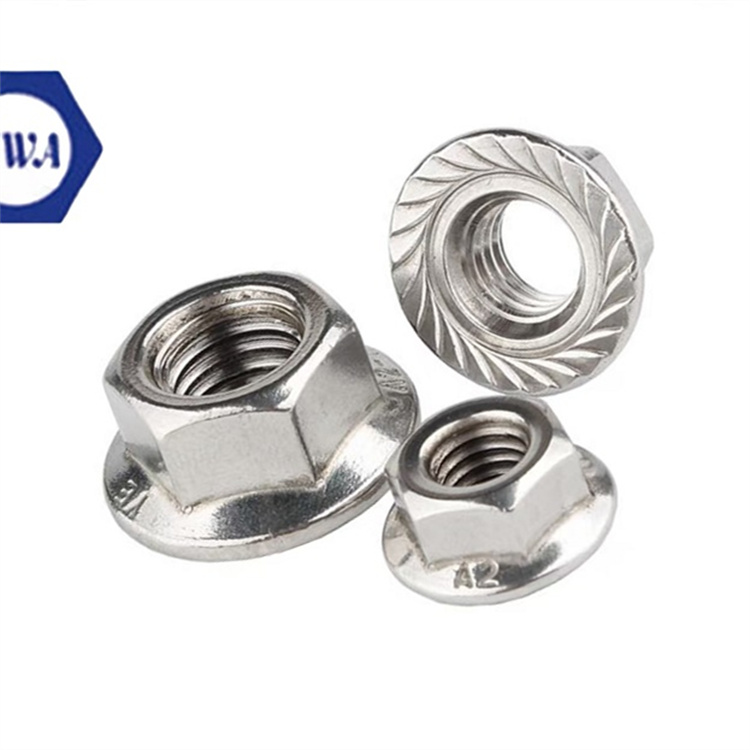
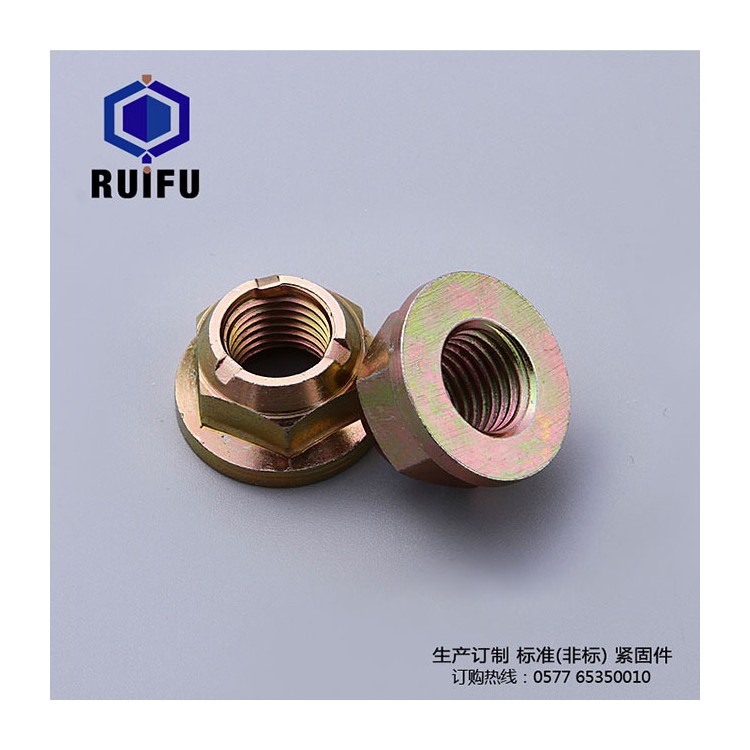
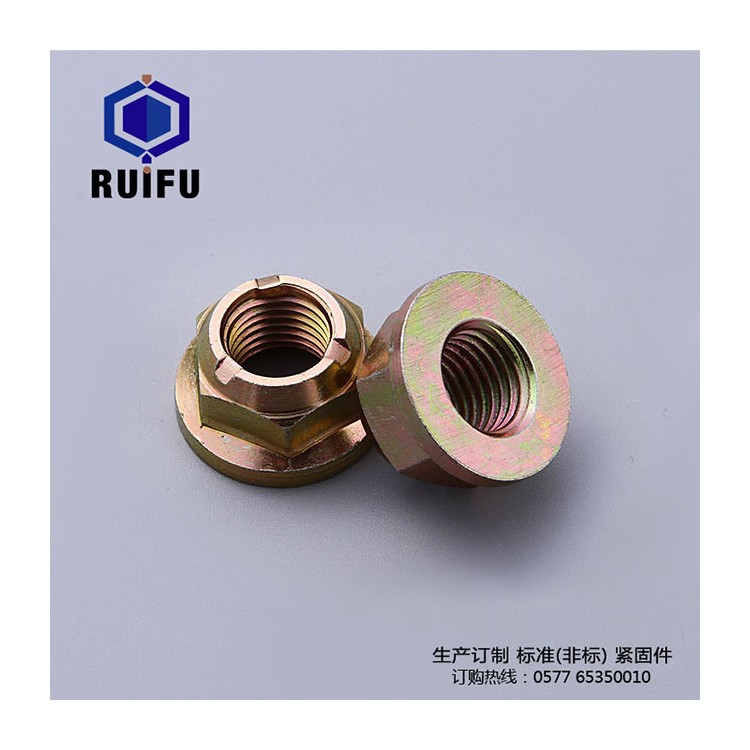
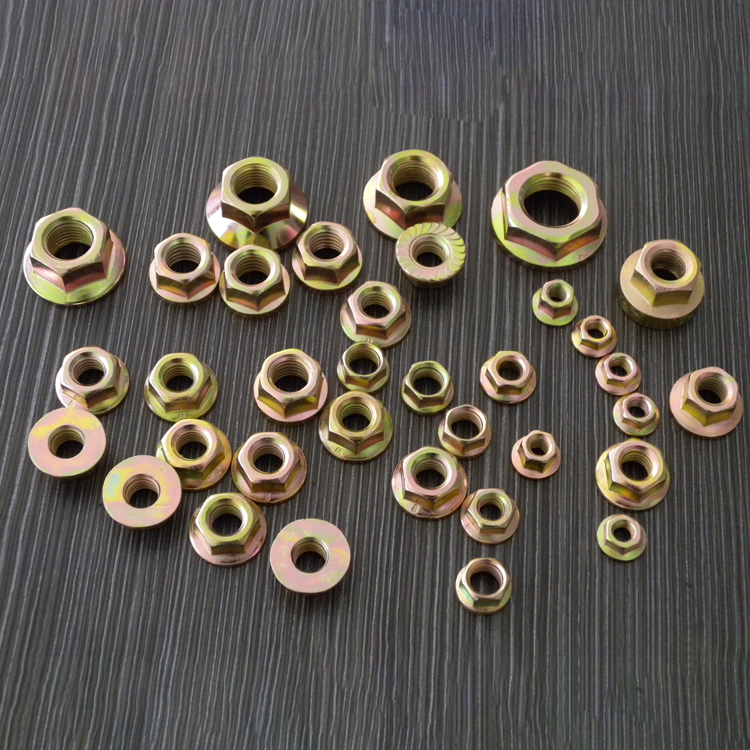
Anti-loosening nutThe anti-loosening principle: A conventional 60-degree tip has a 30-degree wedge at the top. This structure, when tightened with a nut, offers greater friction compared to the traditional method, thus providing better anti-loosening performance. There are four methods to prevent the loosening of the anti-loosening nut: preventing friction loosening, mechanical nut loosening, rivet mandrel loosening, and structural loosening.
A limited size must be fixed for manufacturing anti-loosening nuts, as the parts' dimensions must be within a reasonable range. The actual dimensions after manufacturing fall within the fixed range of large and small sizes. The allowable size variation is called size tolerance, or simply tolerance.
Stainless Steel Locking Nuts, Performance Grades: 45, 50, 60, 70, 80
Anti-loose nuts are mainly divided into Austenitic (18%Cr, 8%Ni) types, which have good heat resistance, corrosion resistance, and weldability. A1, A2, A4.
Martensite, 13% Cr has poor corrosion resistance, high strength, and good wear resistance. C1, C2, C4 ferritic stainless steels. 18% Cr has better forgeability and stronger corrosion resistance than martensite. Currently, imported materials on the market are mainly Japanese products. Mainly categorized by grade as SUS302, SUS304, and SUS316.