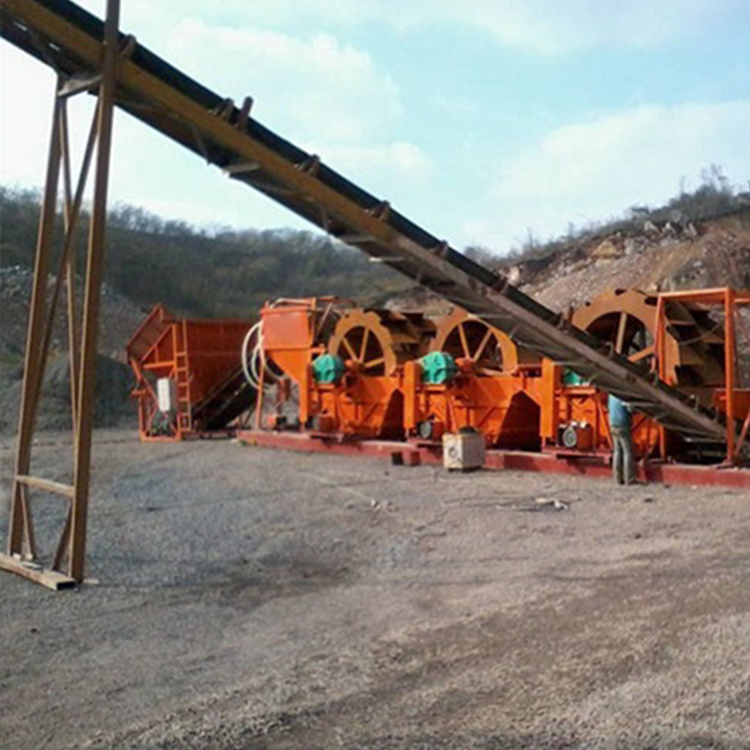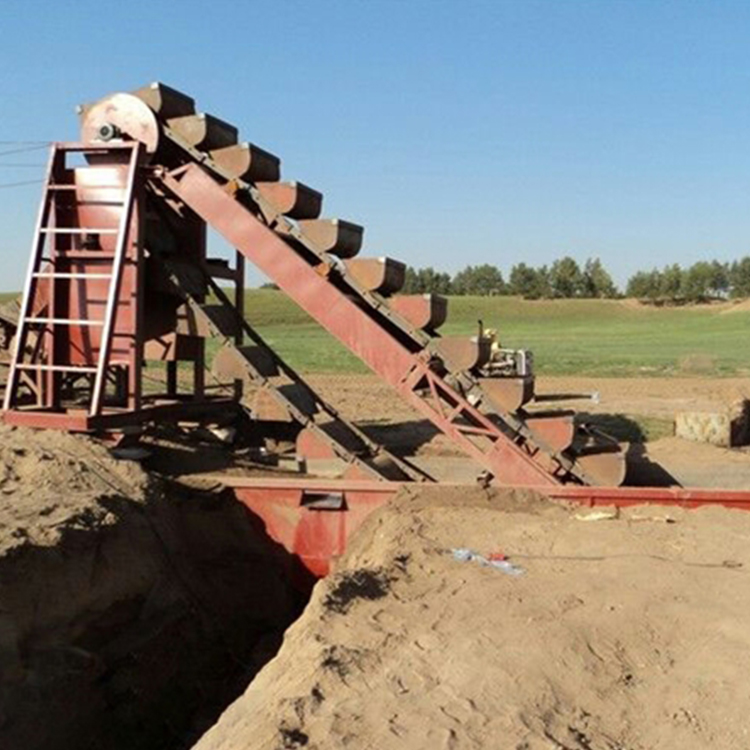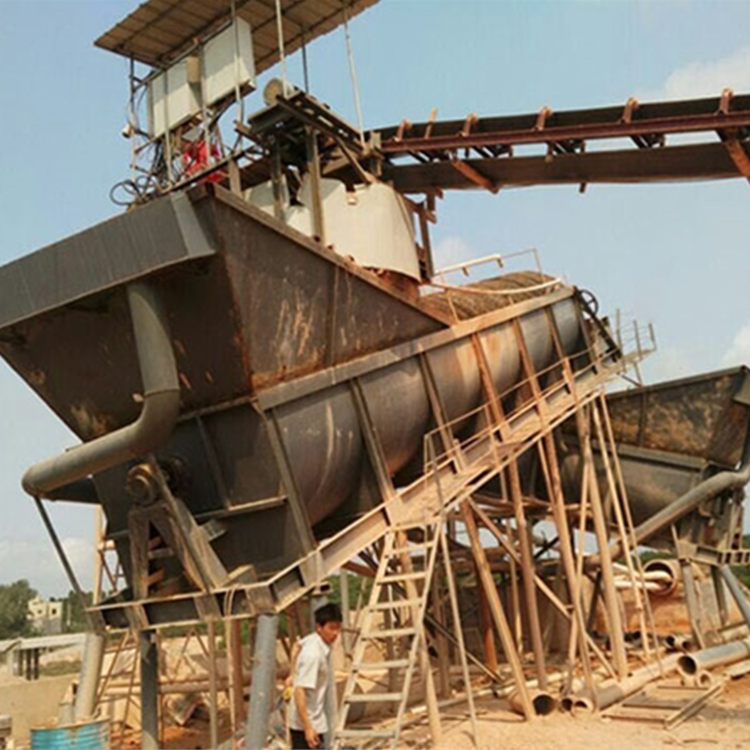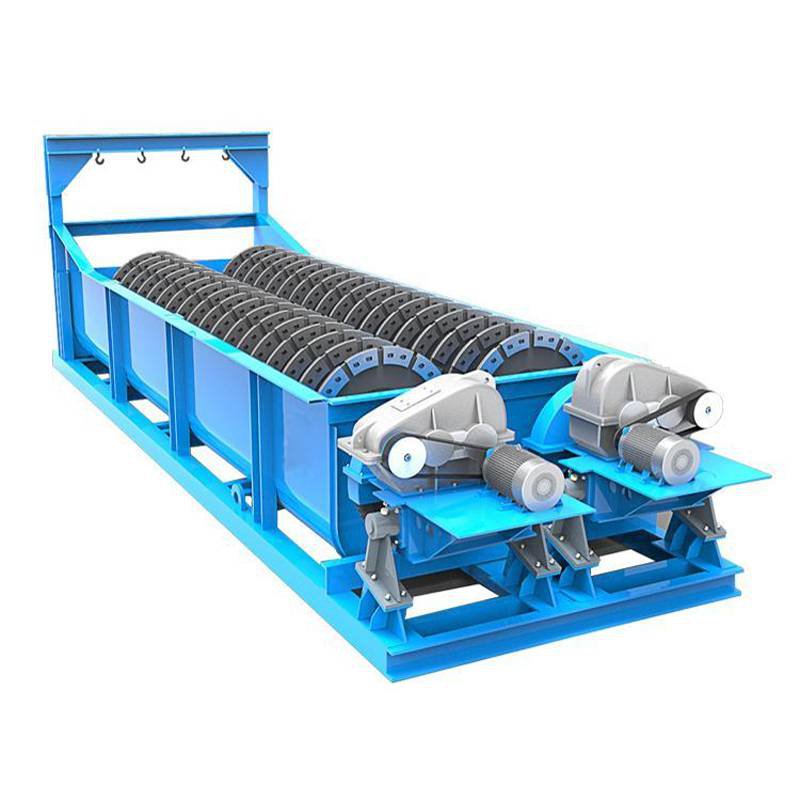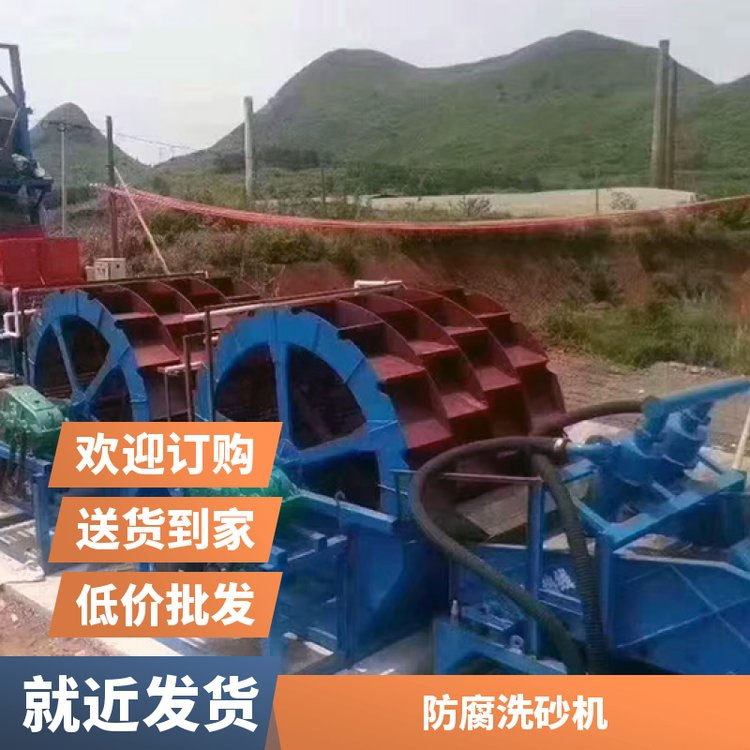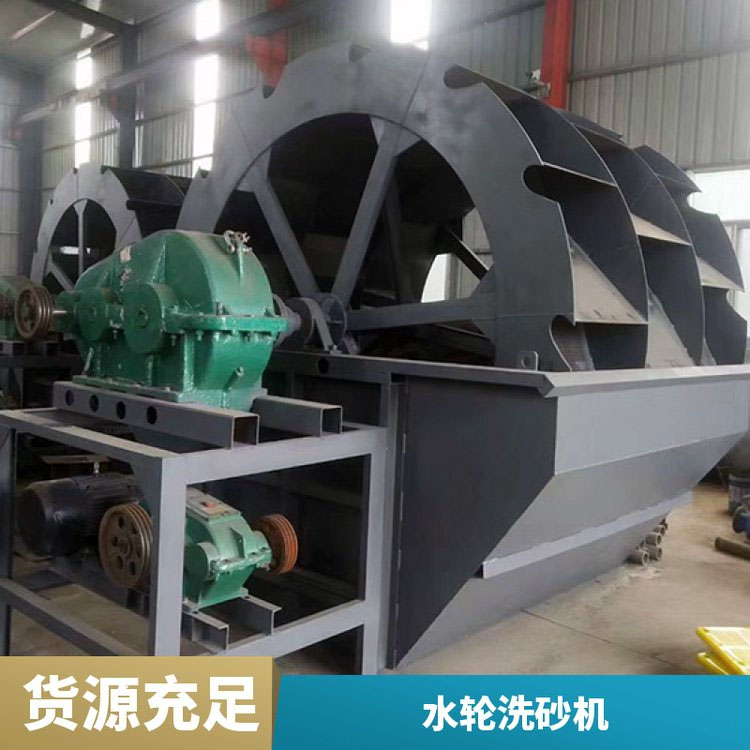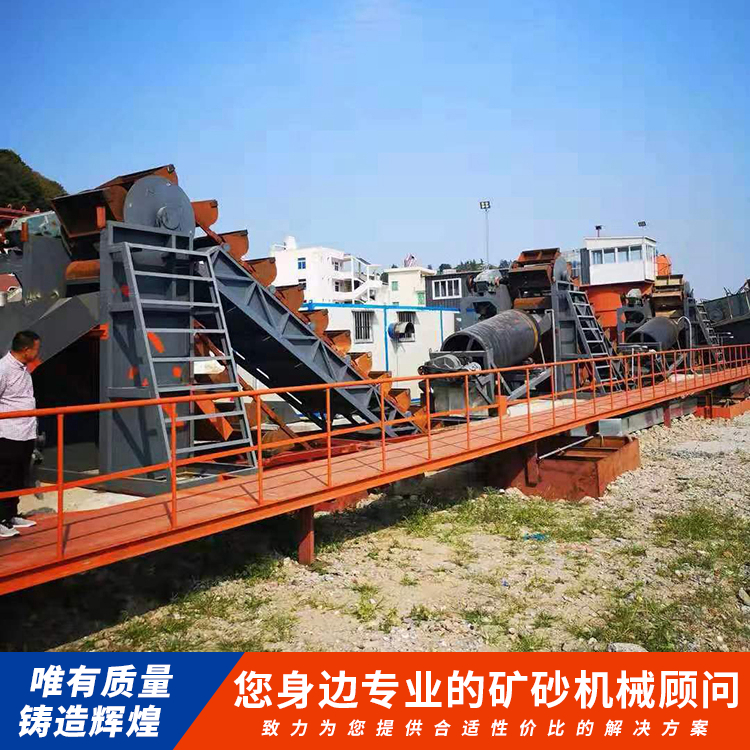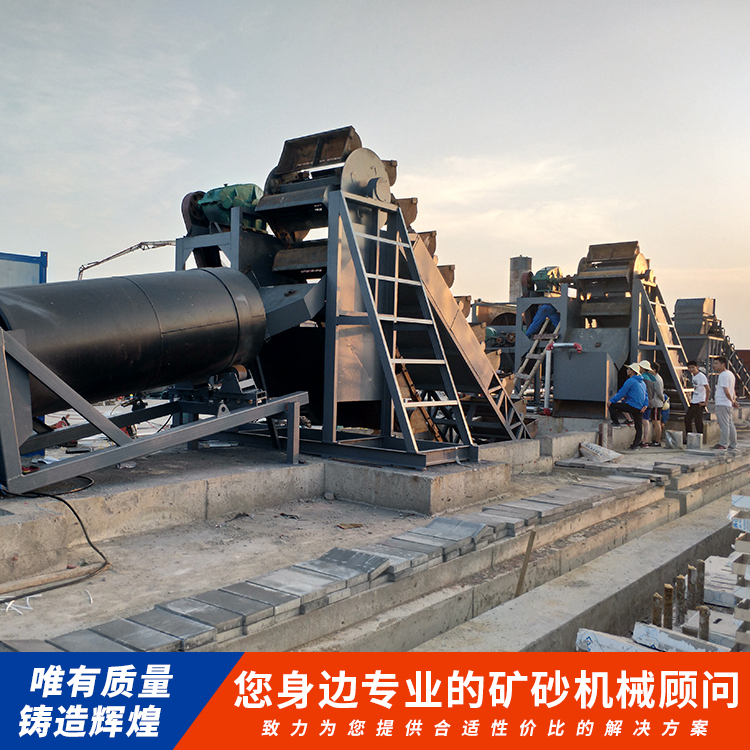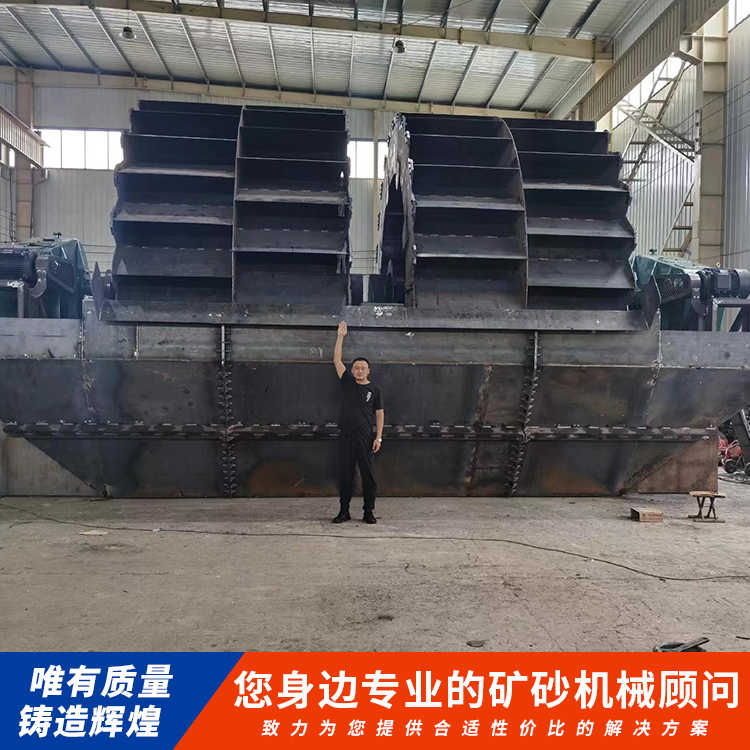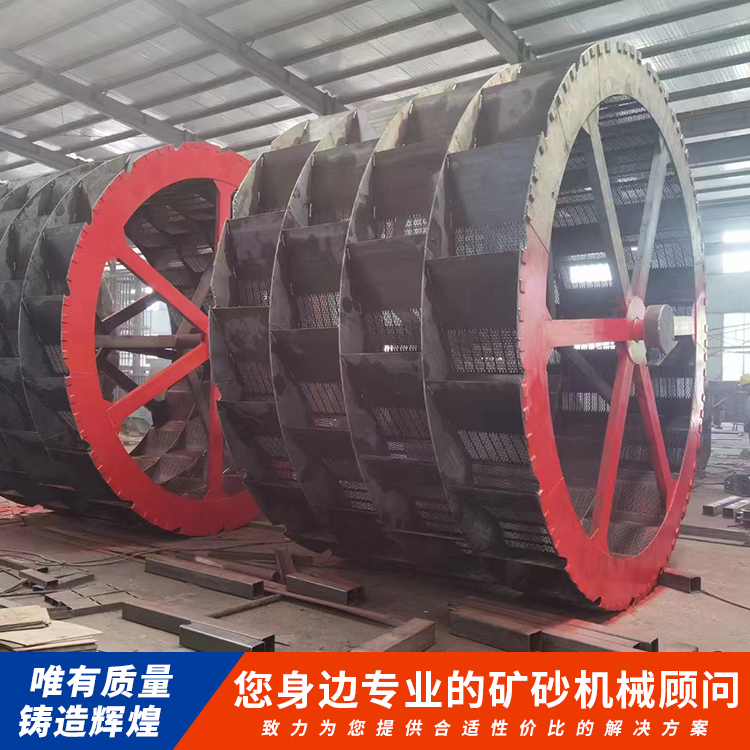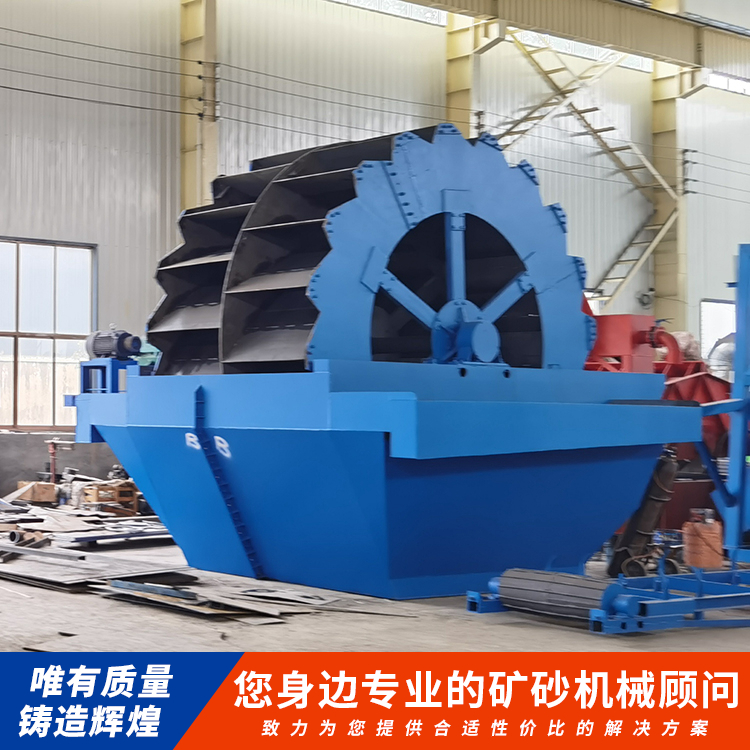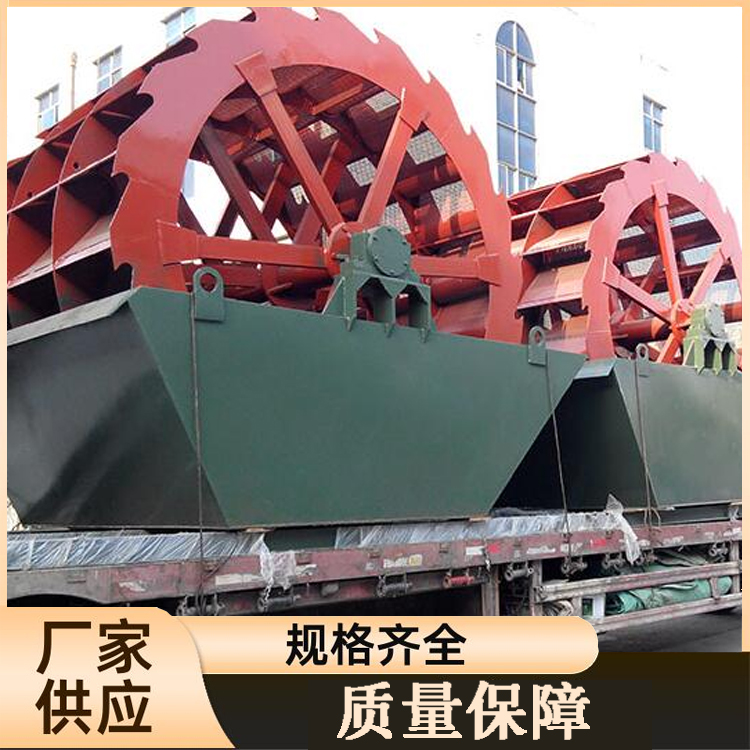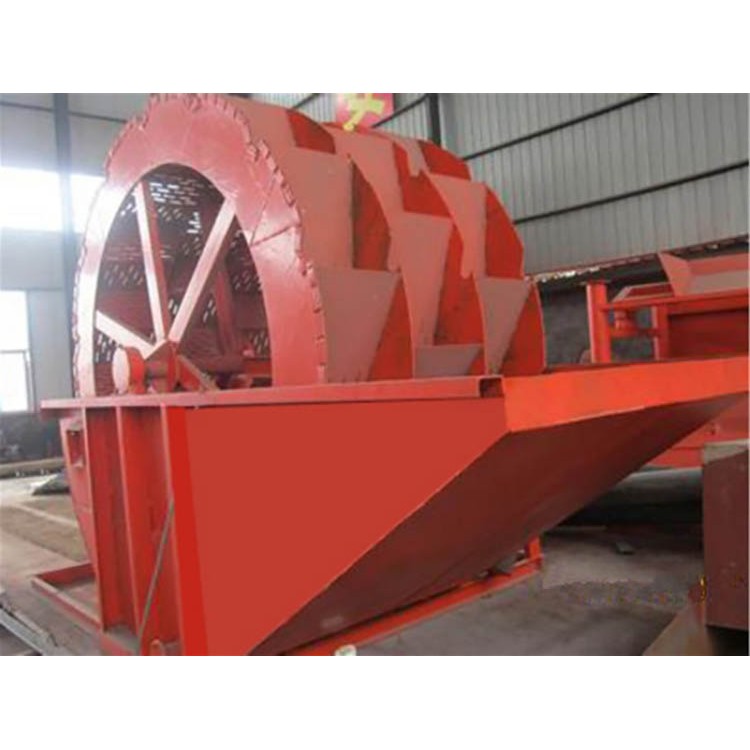


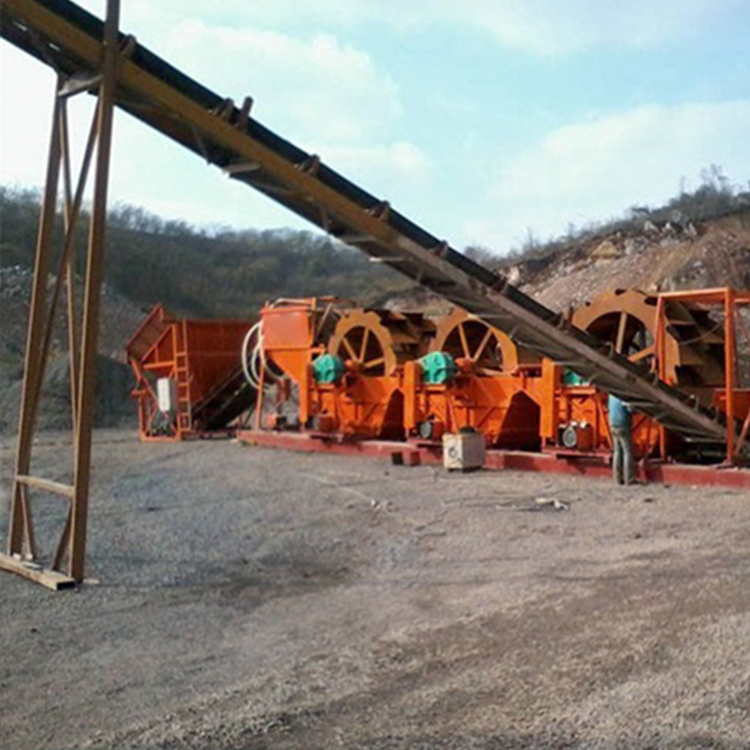
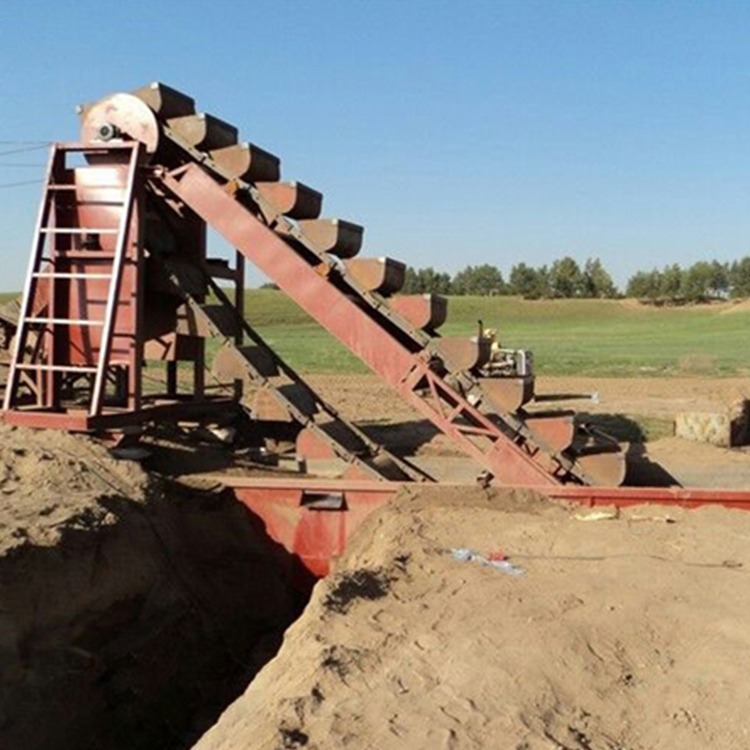
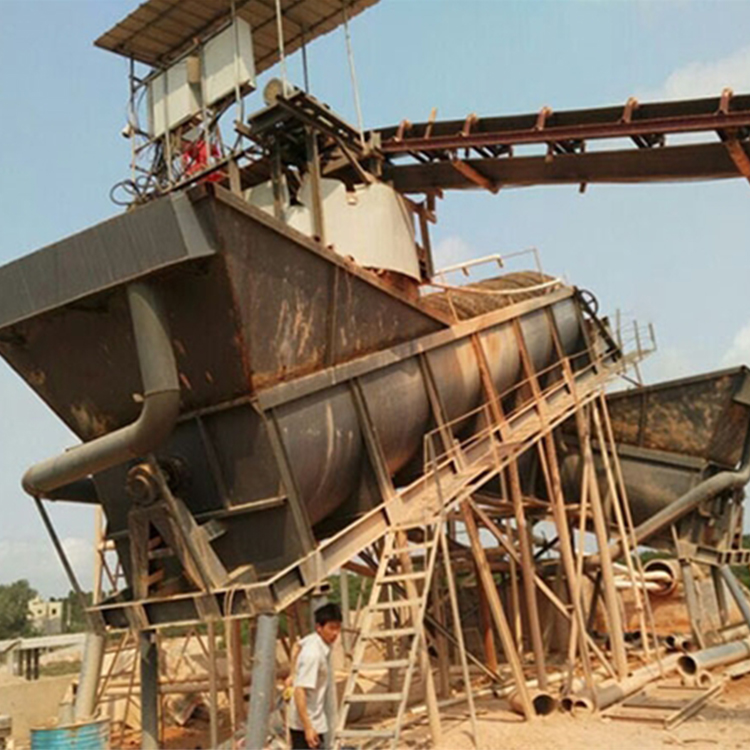


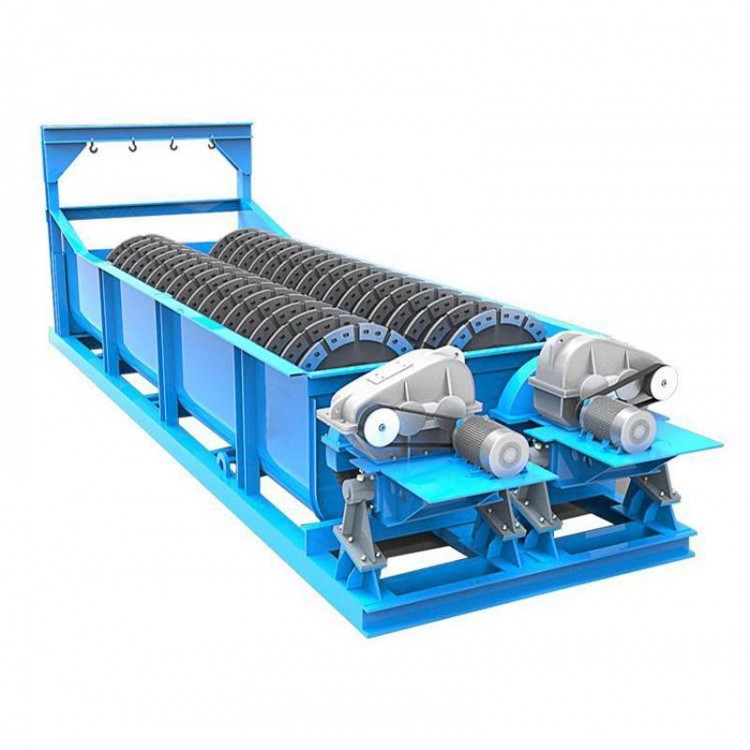
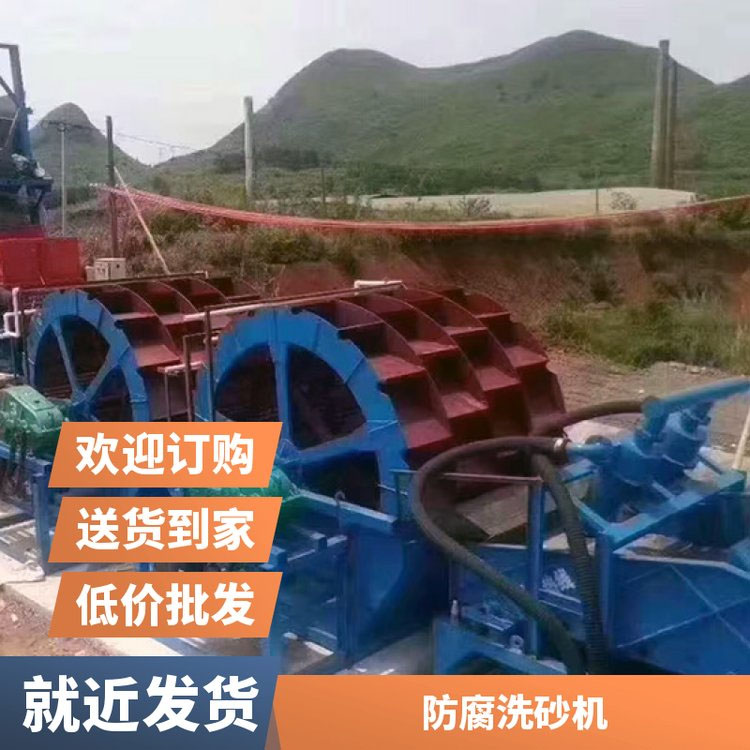
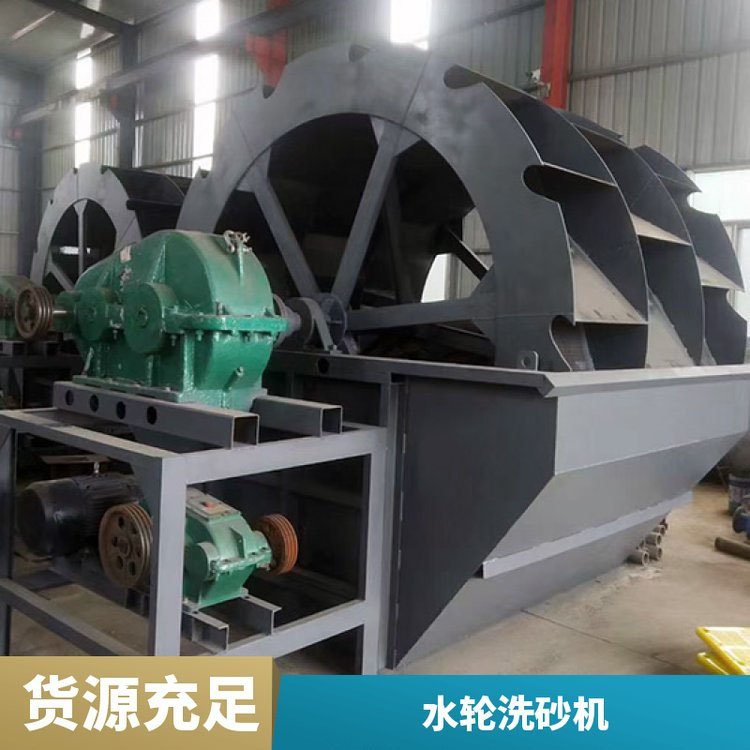
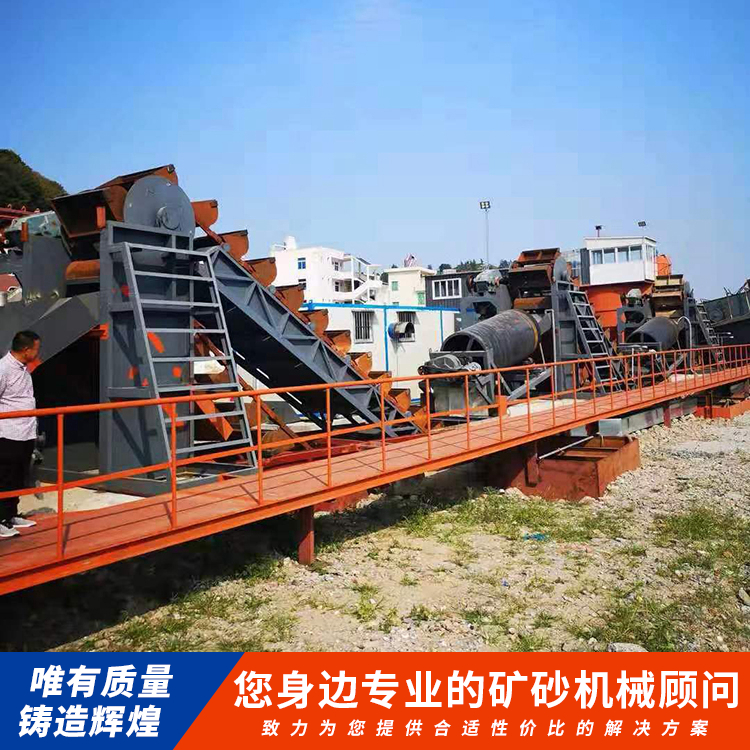






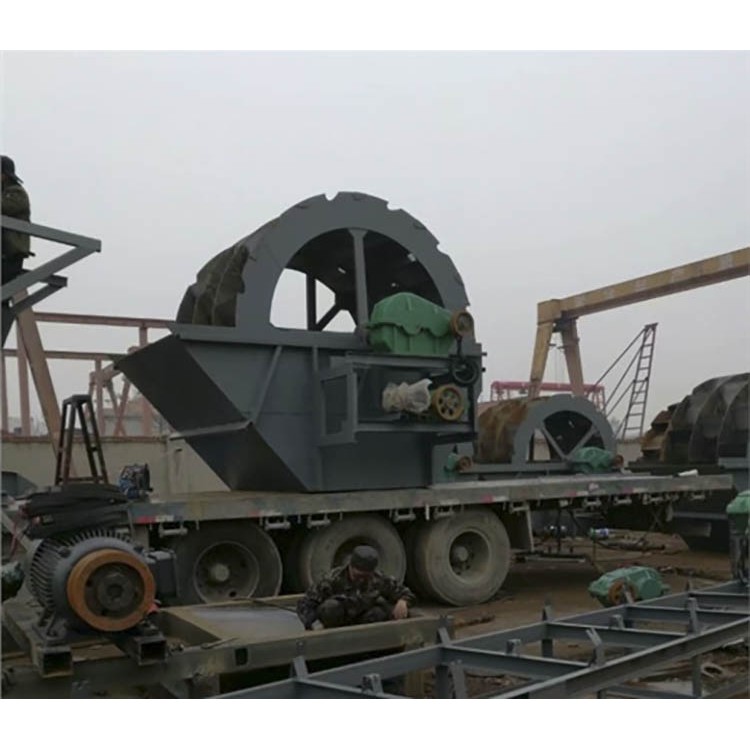
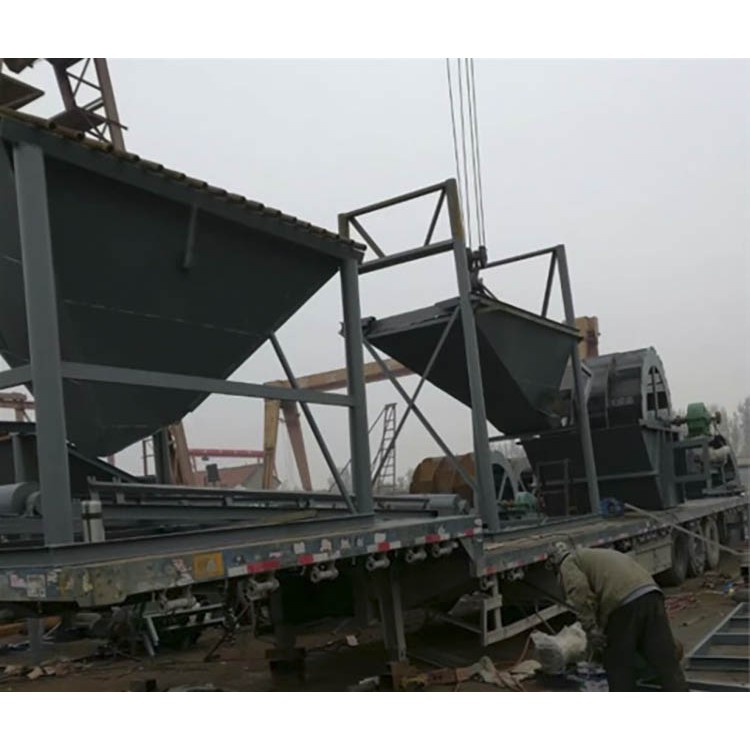
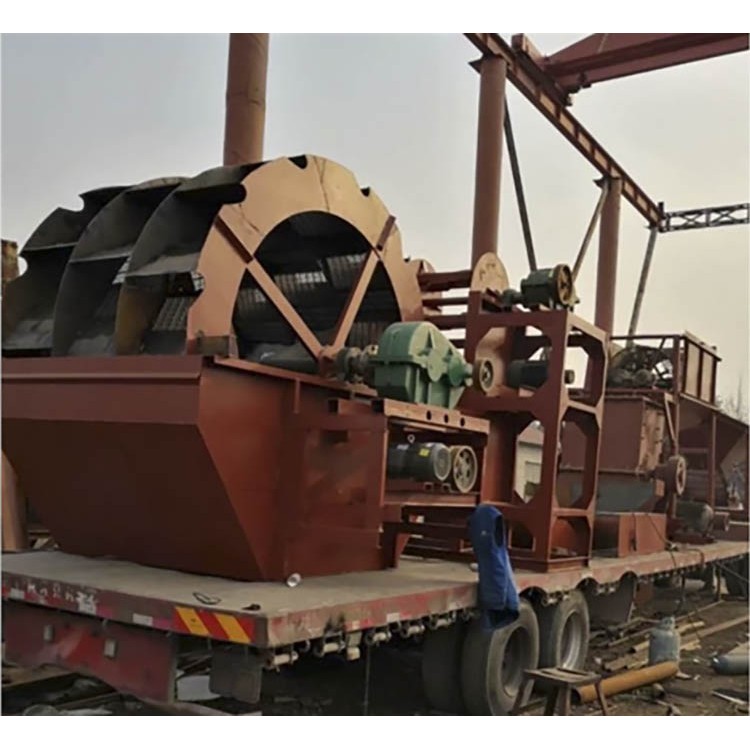
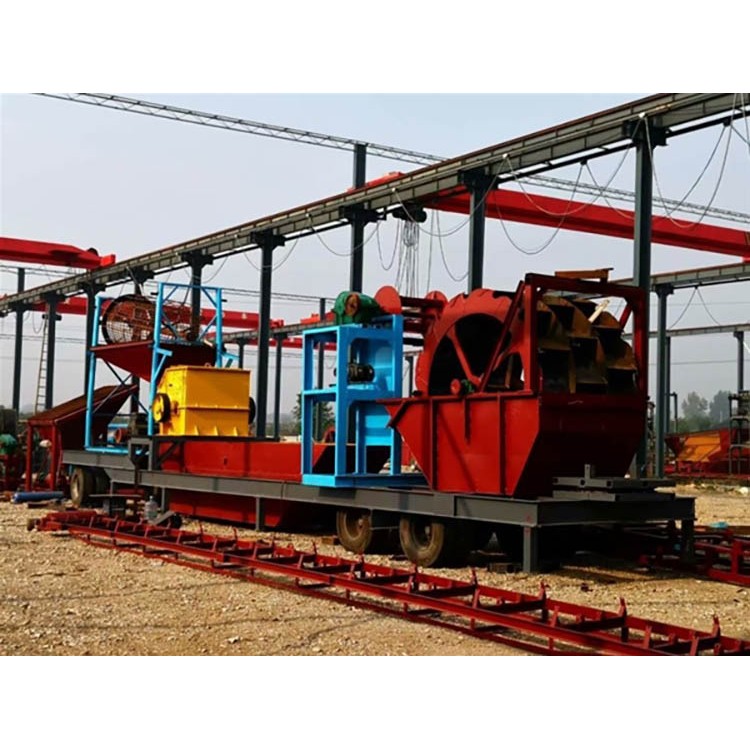
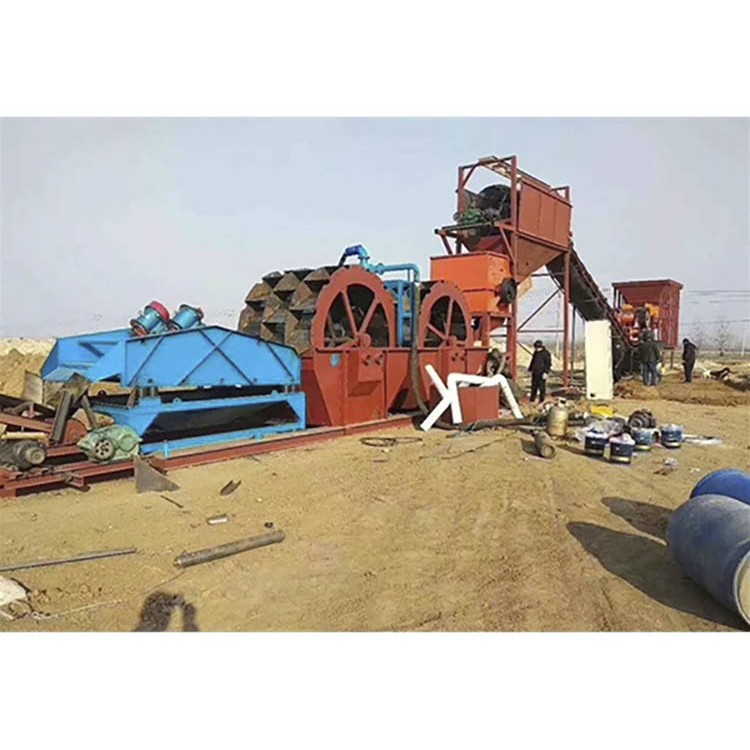
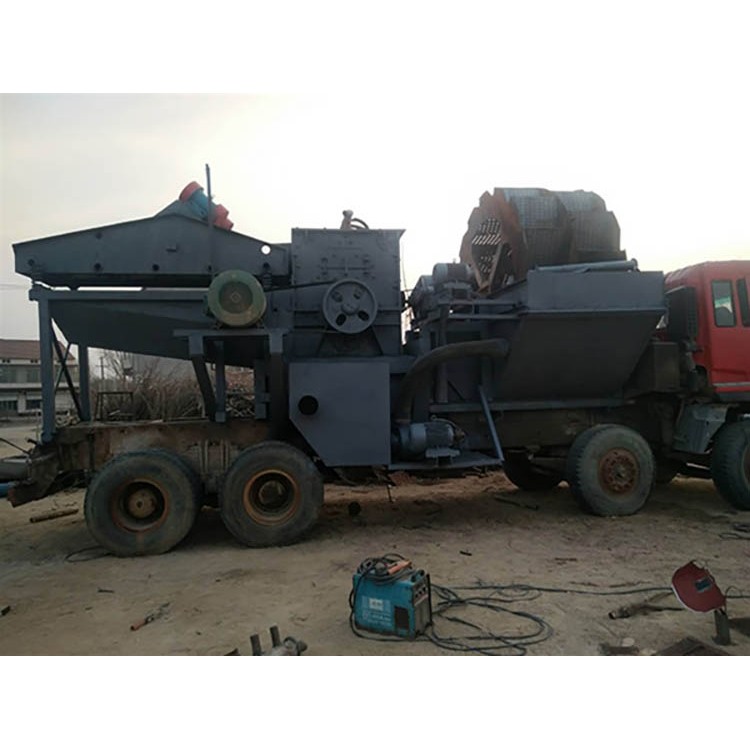
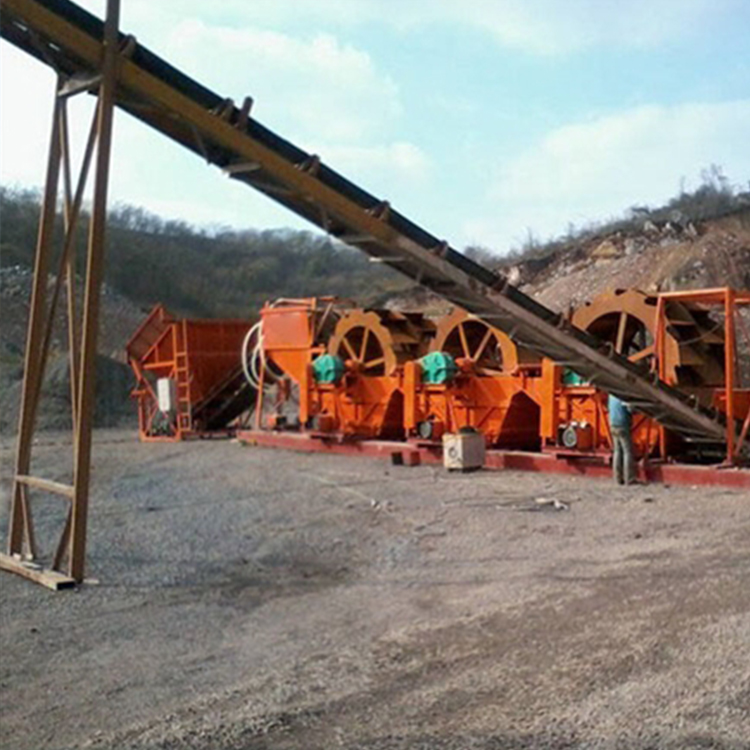
The working principle of the sand washing machine involves the motor reducing its speed through a V-belt, a reducer, and gears to drive the impeller to rotate slowly. Sand particles enter the washing tank from the feed hopper and roll beneath the impeller as it rotates, grinding against each other to remove impurities from the surface of the sand particles, disrupting the water vapor layer on them, and achieving the effect of dehydration; at the same time, water is added to the sand washing machine to create a strong water flow that pushes lighter impurities and foreign objects out of the overflow slot, achieving the cleaning effect. Clean sand and gravel are then poured into the discharge hopper as the blades rotate, completing the cleaning process for the gravel.
Performance Features:
The structure of the sand washing machine is simple, and the impeller drive bearing assembly is isolated from water and materials, greatly reducing damage to the bearings from water, sand, and pollutants.
2. Sand washing machine (stone washing machine) has the following distinct advantages compared to traditional sand washing machines:
One is that there is very little loss of fine sand and stone powder; the grade and fineness modulus of the washed construction sand meet the national standards.
One is that the sand washing machine is not easily damaged, with strong durability; besides the screen, there are almost no fragile parts.
One is long-lasting, typically free of malfunctions and repairs even with long-term use.
3. Features include a well-structured design, easy mechanical maintenance, high processing capacity, low power consumption, and high material cleanliness. Additionally, it boasts innovative sealing structures, adjustable overflow weir plates, and a fully enclosed oil bath transmission system, ensuring durability, excellent cleaning, and dehydration performance for the series.