








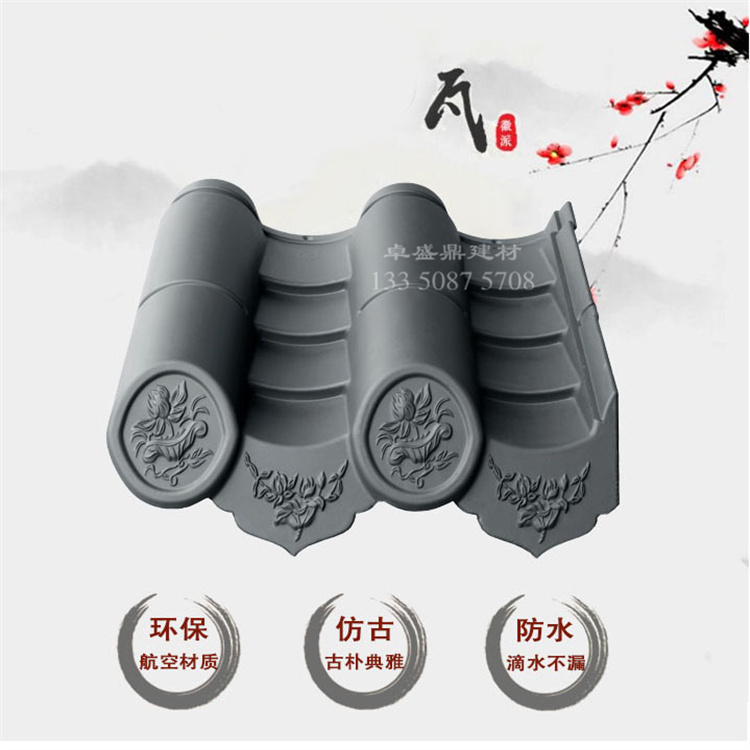
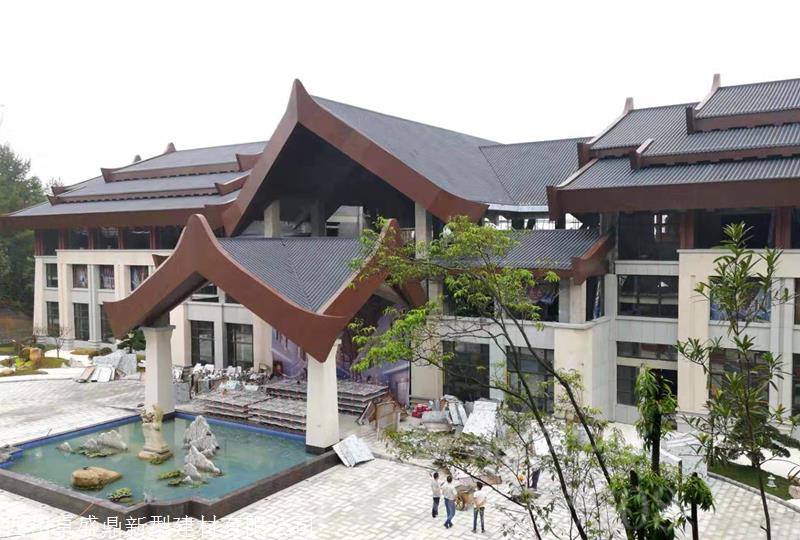
Sichuan antique tiles have always been of high quality, gaining a modest reputation in Southwest China and even nationwide, particularly in the areas around Pengzhou and Chongzhou where many factories produce them. These tiles are lightweight, with large single pieces and a rich variety of colors, meeting modern architecture's demand for material and color diversity. Beyond roofing to shield against wind and rain, they are widely used in indoor restaurants, hotpot restaurants, teahouses, and hotel decorations.
How much for one piece of antique tile?
Through erosion tests of steel structural coatings in simulated wind-blown sand environments, the erosion wear characteristics, erosion behavior, and erosion mechanisms of the coatings were investigated. Results show that the mass loss due to erosion wear increases with the increase in erosion velocity; low-angle erosion is mainly due to micro-cutting, with material hardness being the decisive factor, while high-angle erosion is mainly due to erosion extrusion deformation, with material toughness playing a decisive role. Since the coating has relatively lower hardness and higher toughness, it experiences severe erosion under low impact angles. An evaluation calculation formula for the degree of coating erosion was proposed, and its calculated results are consistent with the experimental results. This provides a basis for revealing the erosion mechanism of wind-blown sand and accurately evaluating the durability of steel structures.
One. Steel and wood structure roofs
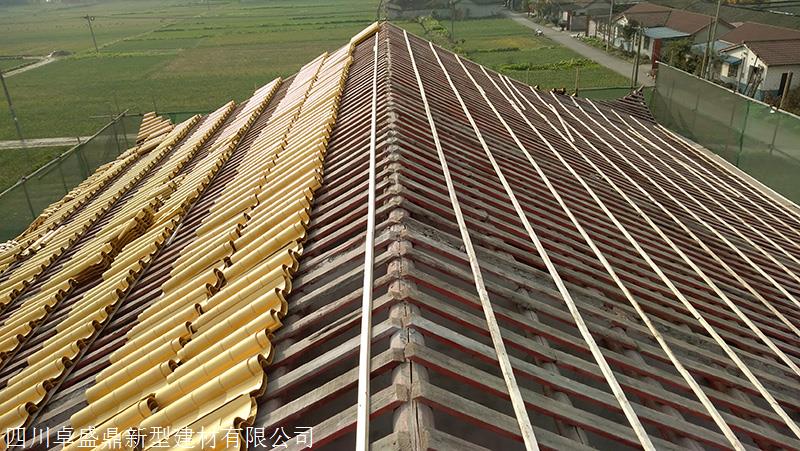
Roof installations with steel and wood structures are convenient with Sichuan-style ancient tiles, eliminating the need for waterproofing and concrete pouring. Tiles can be directly laid. Before constructing the roof structure, design the frame based on the tile dimensions and installation hole positions.
The direction and sequence of tile installation: from left to right, bottom to top. Ensure the antique tiles are horizontally and vertically aligned before securing with drill-point or wood screws.
Two, Cast-in-place concrete roof
The installation of Sichuan-style ancient tiles on cast-in-place concrete roofs is similar to that of steel and wood structures. If the concrete roof surface has been leveled, and is very smooth, tile strips can be omitted, and the tiles can be directly fastened to the concrete surface with screws, as shown in the following illustration:
If the leveling layer is not well-handled, only use rafters to adjust to maintain the flatness of the pitched roof at all times.
The usual cast-in-place layer is not leveled, or the pitched roof is unevenly treated, requiring the use of wood or other materials for leveling to ensure the tiles are installed flat.
For instructions on installing the antique tile as shown above, please contact Zhuoshengding New Building Materials Co., Ltd., Sichuan Ancient Tile Factory, if you have any questions.
How much is a piece of Xinjiang antique tile?
Sichuan antique tile prices vary depending on production technology, product quality, and size. The prices of Sichuan antique tiles made with new materials are slightly higher, with the price of a tile being around 38 yuan. However, only 3.4 tiles are needed per square meter, totaling about 110 yuan per square meter, with installation costs around 10 yuan. Traditional antique tiles fired from clay are heavier and more expensive to transport over long distances. The installation process is complex, and poor installation can lead to leaks, with higher maintenance costs later on.
How much is a piece of Xinjiang antique tile?
The temperature sensitivity of road optical fiber Bragg grating temperature sensors is affected by the medium being tested. Calibration through experiments is a prerequisite for accurate asphalt pavement temperature measurement. Firstly, the wavelength drift of the fiber Bragg grating temperature sensor was measured under both water bath and asphalt concrete specimen environments, obtaining the correlation between reflected wavelength and temperature. Subsequently, through linear regression analysis of the experimental data, calibration formulas for the fiber Bragg grating temperature sensors under different medium environments were obtained, and the temperature sensing characteristics and the reasons for the differences between the same sensor in the water bath and asphalt concrete specimens were compared and analyzed. The results show that the temperature sensitivity of the same sensor in different medium environments is different, and the calibration method based on the asphalt concrete specimen environment is more in line with engineering practice and has certain practical value.
Next Article: