








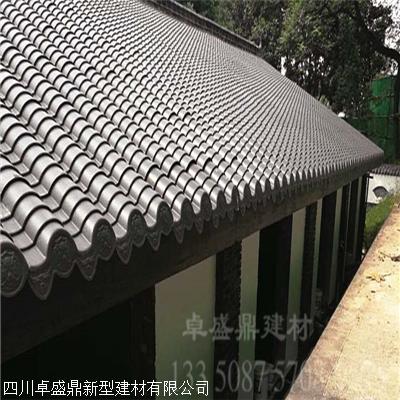
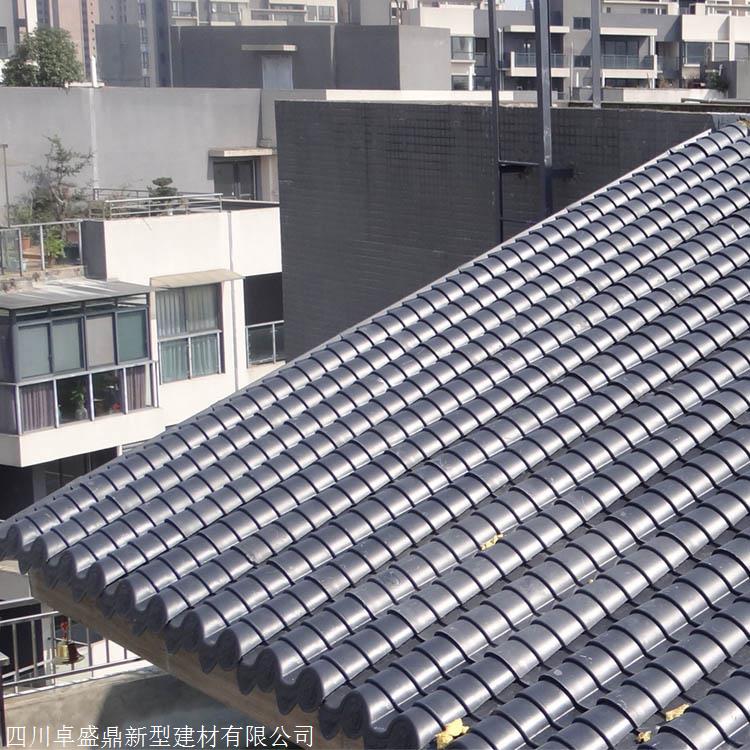
Small green tiles can be used to create various styles of roofing, including interlocking tile roofs. The characteristic of interlocking tile roofs is that the tiles are laid with both flat and curved tiles, alternating in a "yin-yang" pattern.
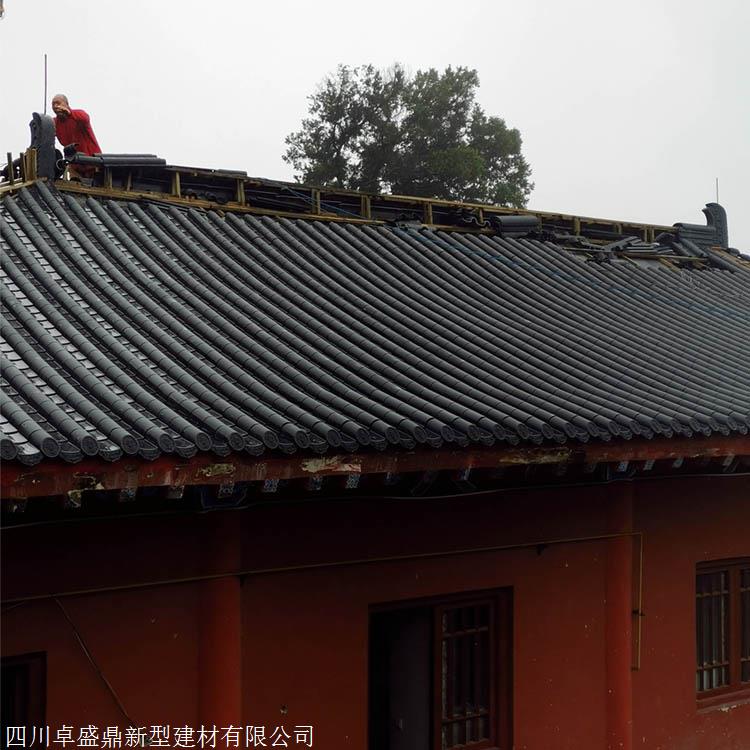
The hip and valley roof is commonly found in small-scale buildings and residential structures in Beijing, Hebei, Shandong, and other regions, but not in grand buildings.
In these areas, a glance at whether the roof is tiled or corrugated will tell you if it's a residential house, a temple, or a royal mansion.
Chongqing Kaixian Xiaoqing Tile Factory Direct Supply
JG158 has just commenced its launch meeting and is also preparing for revisions. The newly compiled product standard is the extruded polystyrene thin coat exterior thermal insulation system, with the Shanghai Research Institute of Building Science and Technology as the main editorial unit. Currently, research is underway on decorative panels, and the technical requirements for exterior thermal insulation of these panels are being formulated as well; this is being done by the Building Material Inspection and Certification Center. Additionally, there are technical requirements for enhanced exterior thermal insulation, which is being handled by the Construction Ministry's Science and Technology Center; and there's also the fire resistance testing method for exterior thermal insulation, managed by the Inspection Institute. As national standards are issued, our standard institute also publishes many related national standard collections. According to our current statistics and those from Europe and the U.S., at present, the vast majority of thermal insulation materials are EPS boards, accounting for 82.7% of the usage due to their various superior properties; other materials like mineral wool/rock wool and glass wool boards account for 14%, while polyurethane accounts for 0.5%.
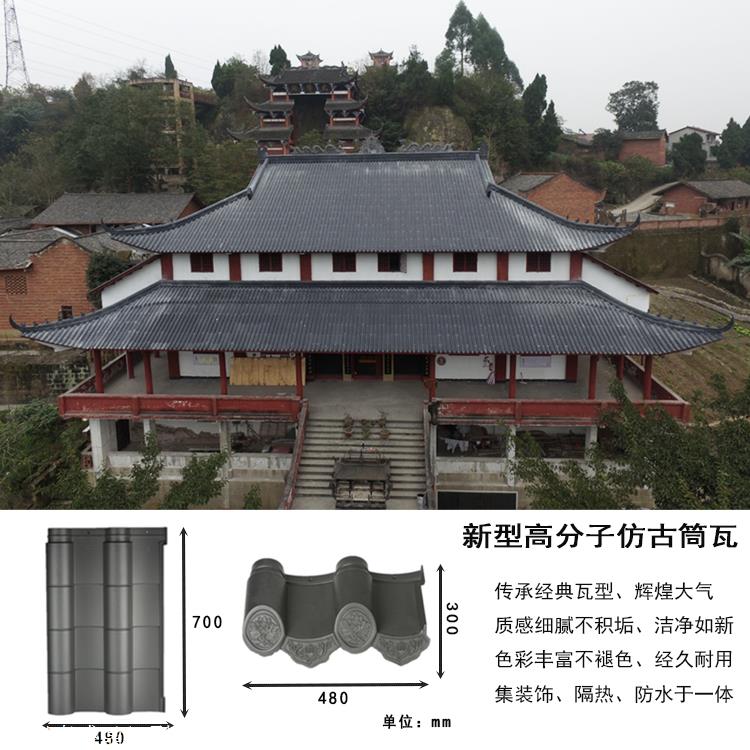
High corrosion resistance: Suitable for temperature range of -70 to 400 degrees Celsius, it will not corrode under harsh urban environments such as acid rain, and can withstand strong light, rain, snow, and frost.
Fireproof, dustproof, self-cleaning: The high polymer small green tiles have been tested to meet the B1 fire rating standard and feature a lotus leaf self-cleaning function, appearing clean and new after being washed by rain.
Good thermal and sound insulation: The high polymer small green tiles have a low thermal conductivity, similar to wood, maintaining a warm winter and cool summer indoors, reducing energy loss. They effectively absorb environmental noises such as raindrop impacts, ensuring a comfortable living environment.
High overall cost-performance: Light in weight yet high in strength, reduces the overall roof weight, eliminates the need for a waterproofing layer to save on construction costs, and is easy to install with a short construction period. Compared to traditional fired tiles, installation costs can be reduced by 50%, and roof frame accessories can be saved by 40%, with no need for maintenance throughout its lifetime. This is the author's introduction to the high polymer small green tile manufacturer and its performance features, which can provide some assistance to homeowners in choosing roof tiles. If you're looking for small green tiles, turn to Sichuan Zhuoshengding.
Chongqing Kaixian Xiaoqingwa Factory Direct Supply

Installation Method for Xiaoqing Tiles
The small tiles are designed with two installation holes, secured in place using screws. Typically, the tiles are fastened to batten strips, which can be made of wood or metal square tubes, and the specifications of the batten strips should be selected based on the structural load. The installation diagram is as follows:
As per the illustration, any worker can complete construction tasks both qualitatively and quantitatively. Determine the spacing of the roof tiles based on their size. After setting up the tile hanger frame, installing from right to left and bottom up allows for quick construction, making it a very convenient roofing tile material product.
Each piece of bright and glossy stone has undergone numerous processing steps. Let's discuss the process of stone slab manufacturing. Rough Stone: Directly separated from the mine, these are irregularly shaped stone materials. Blocks: Processed from rough stone, these have specific dimensions and are used for decorative panel manufacturing. Sawn Slabs: Boards cut from the blocks. Mirror Large Slabs (also known as Large Slabs): After polishing and buffing the rough slabs, these boards have a flat surface and a mirror-like luster. Standard Size Slabs: Boards that meet standard dimensions. (Sizes are typically 6x6, 8x8, with standard thicknesses of 2mm, or as specified by the project size and price.)
Chongqing Kaixian Xiaoqingwa Factory Direct Supply
Next: