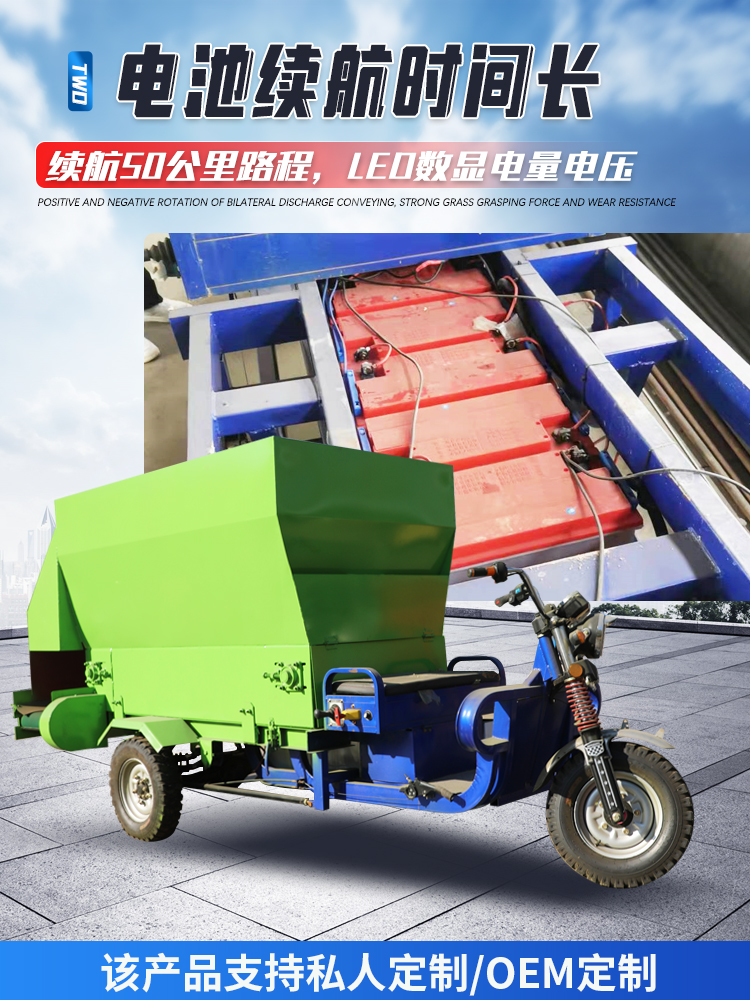











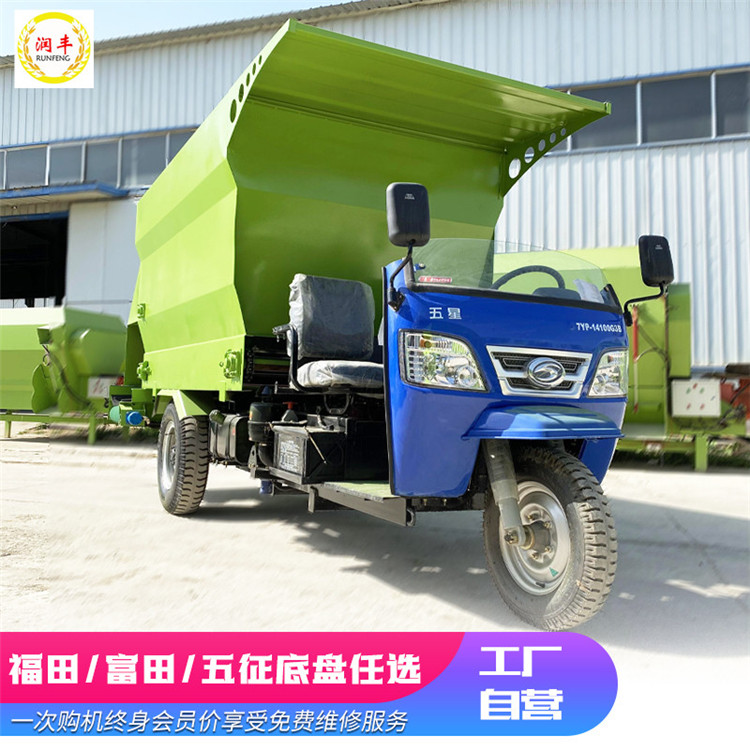
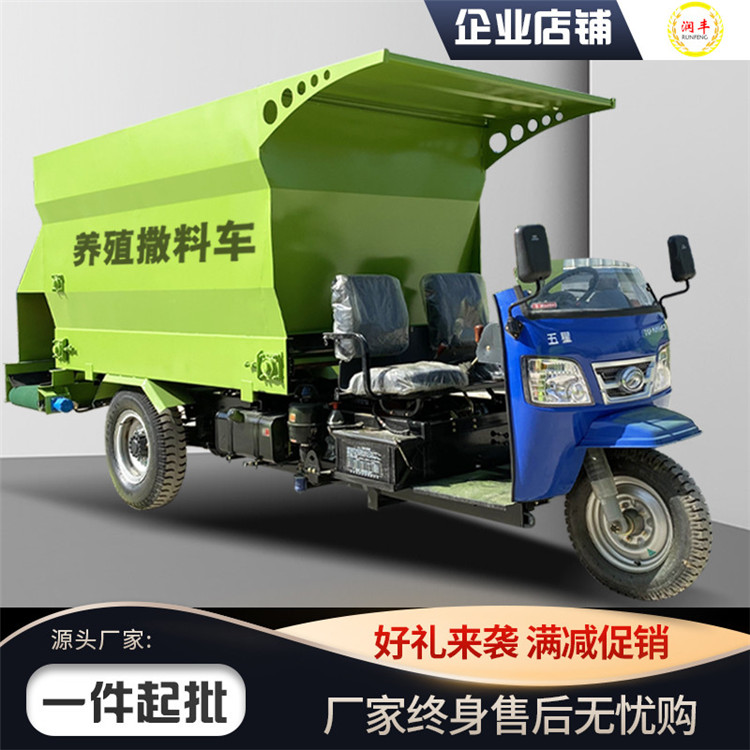
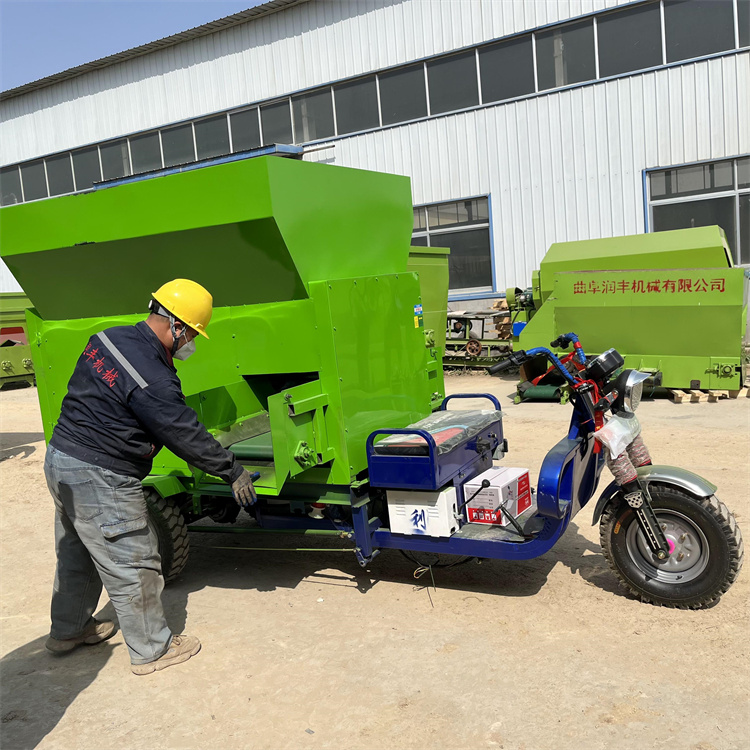
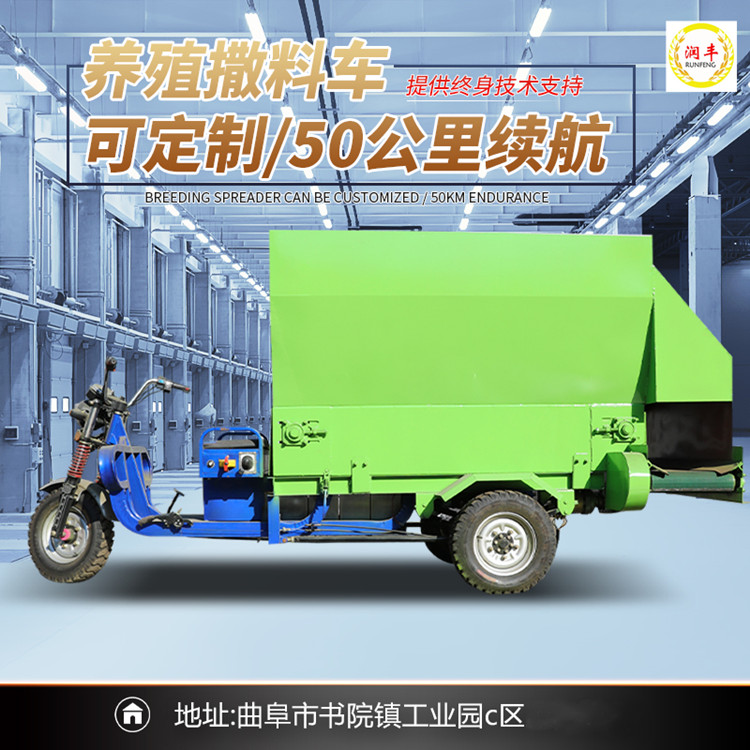
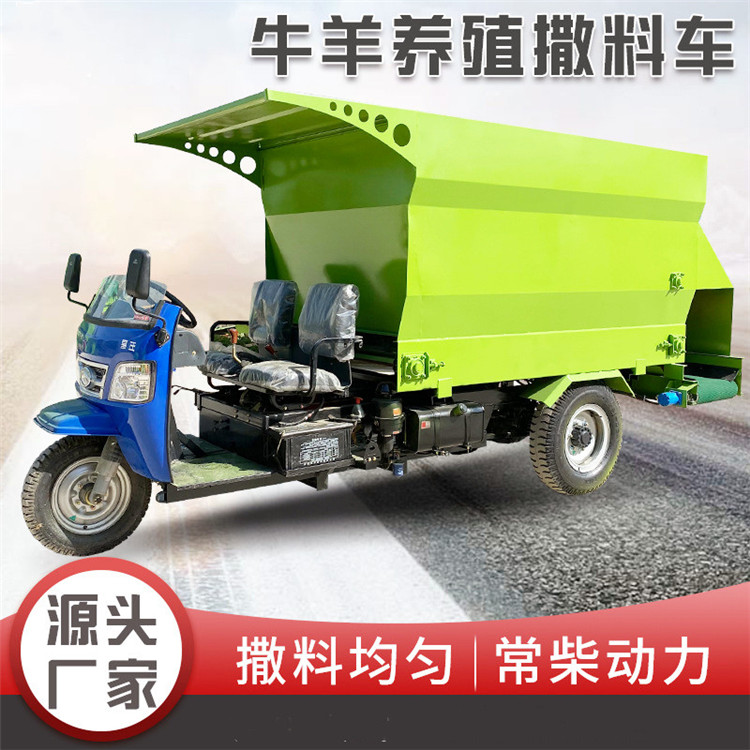
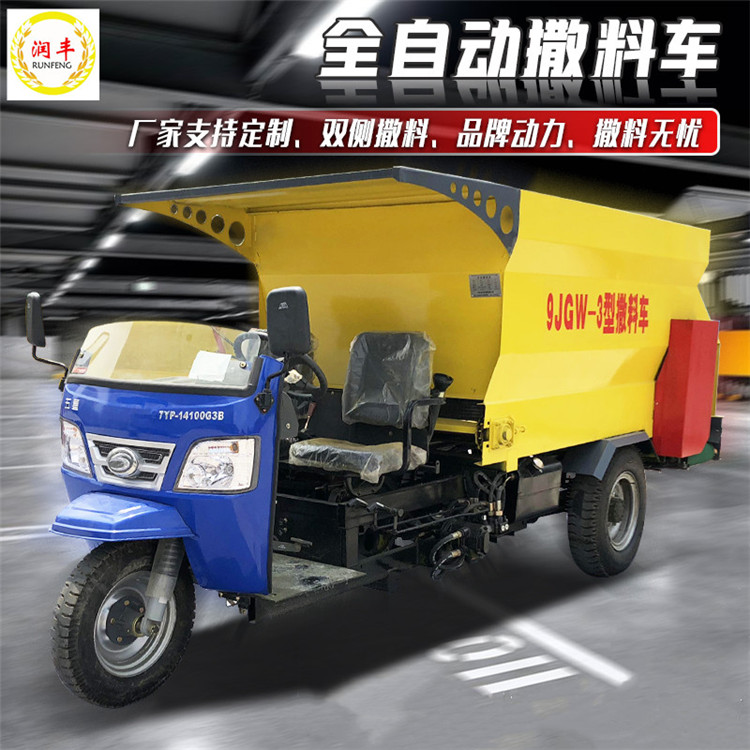
When the electric feed spreader arrives at the feeding location, first turn the small conveyance control switch on the instrument panel left and right, then turn on the large conveyance and simultaneously start the spreader for feeding. To stop feeding, first turn off the large conveyance switch, and then stop the small conveyance. The electric feed spreader evenly conveys the material
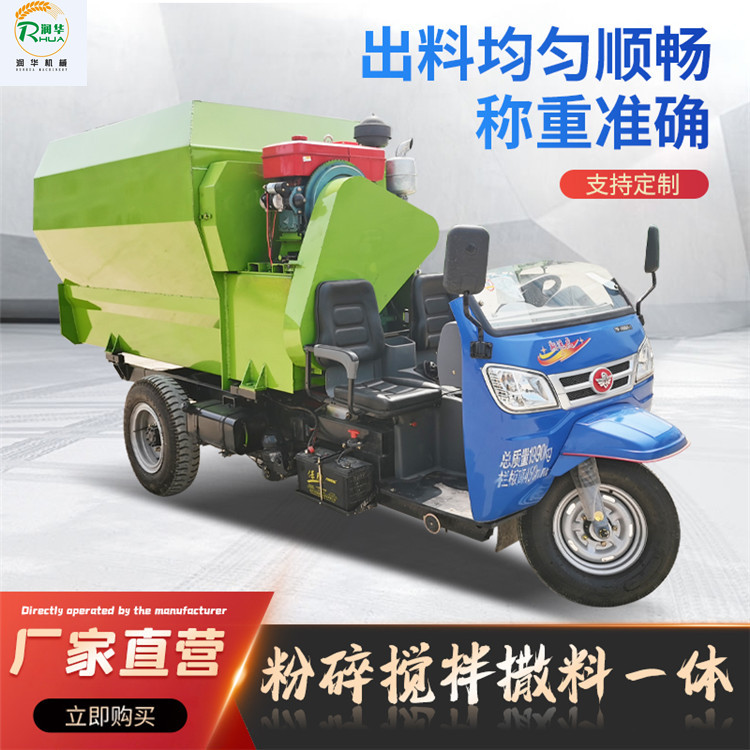
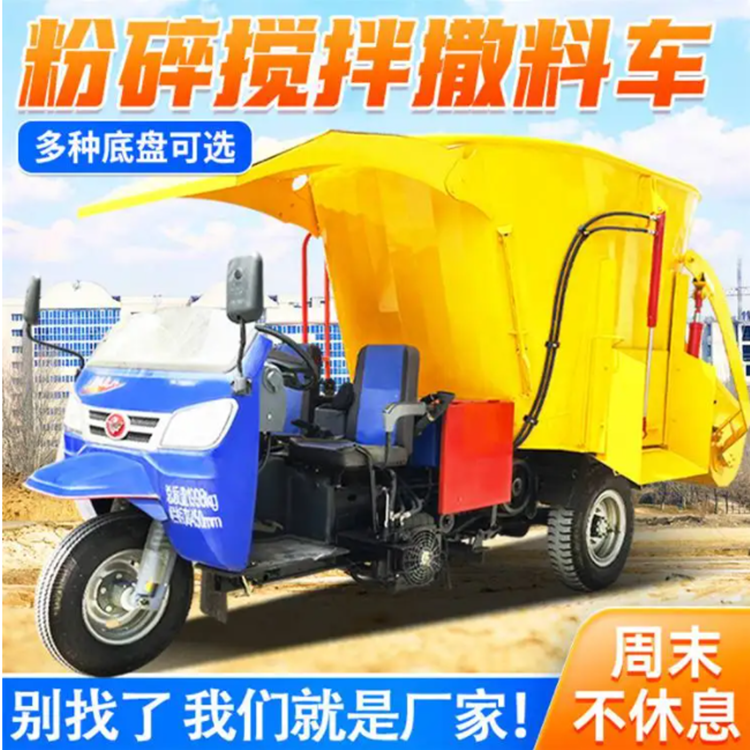
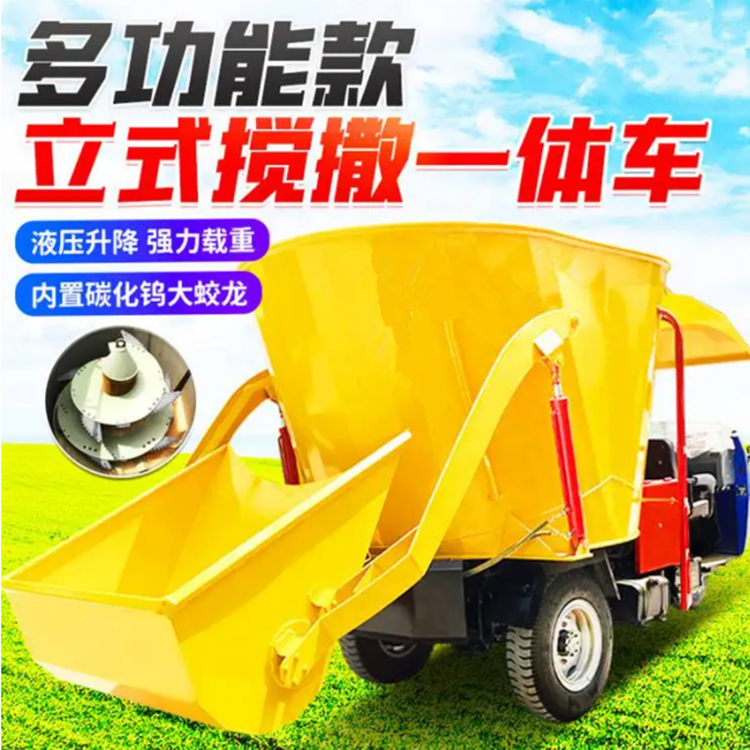
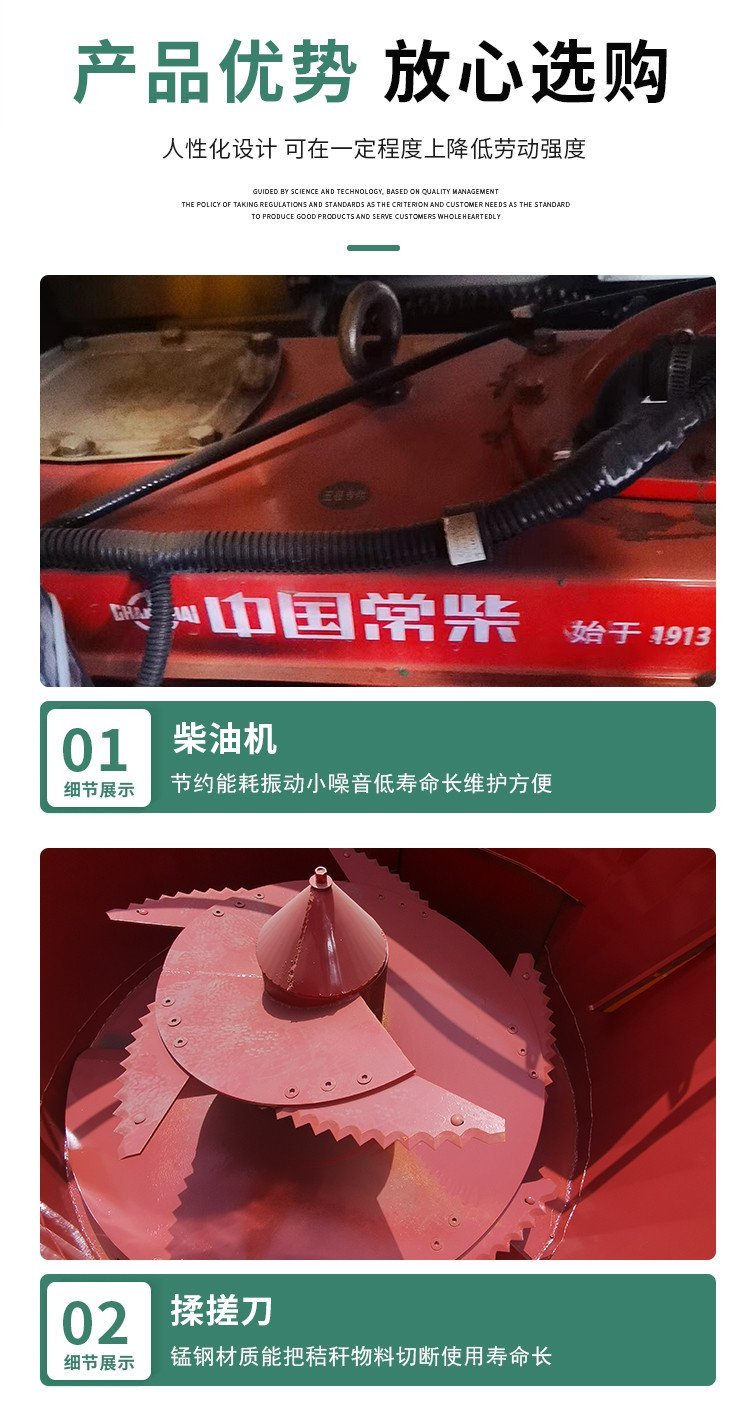
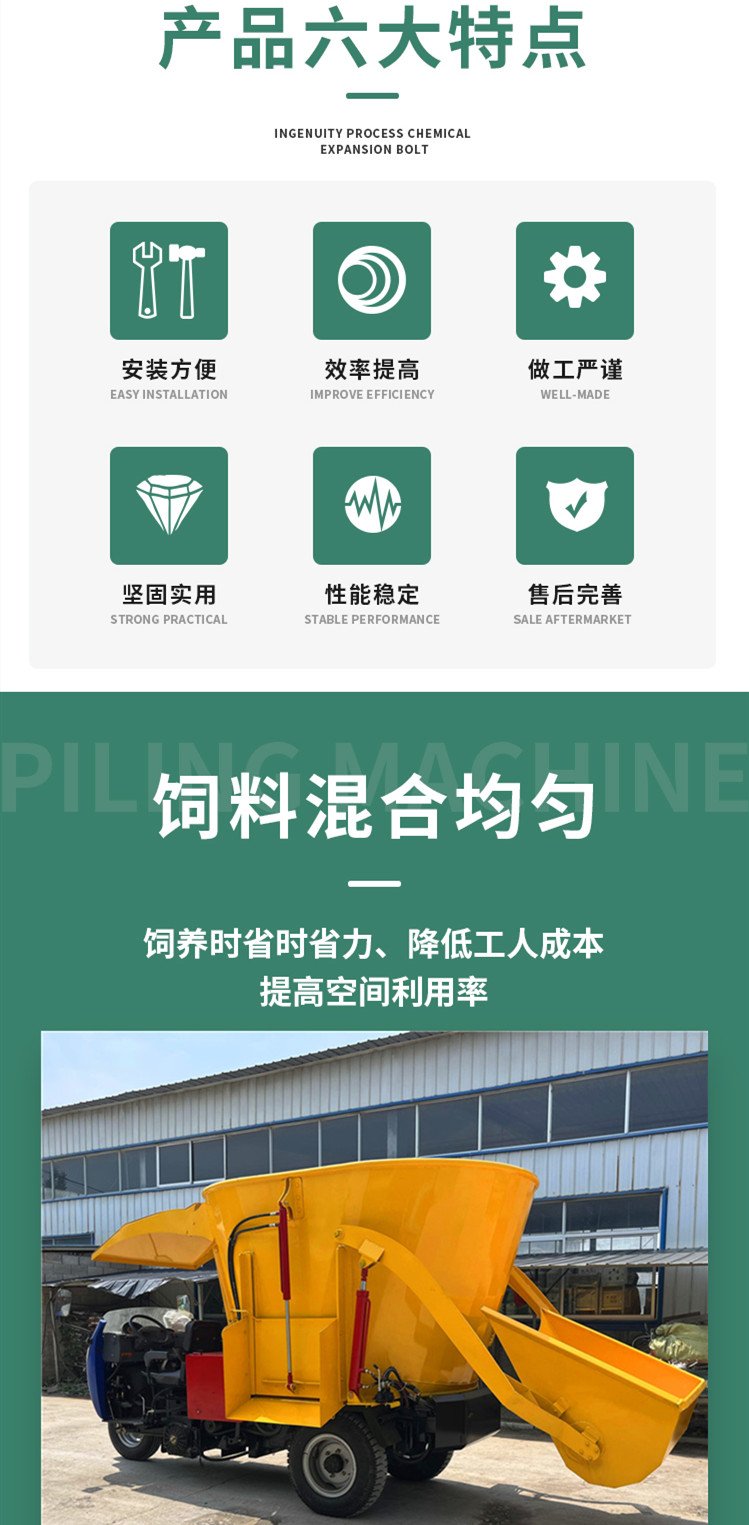
The main function of the feed spreader is to directly scatter finished feed in the feeding area for one-time feeding, widely used in farming and animal husbandry areas, large and medium-sized farms, and regulated community farms. It can mix and evenly disperse various forage, crop straw, silage, and other fibrous feed, then pour them into the vehicle for feeding. It is simple to use and operate, allowing the feeding amount to be adjusted according to the density of the livestock in the user's pen. It is highly efficient, time and labor-saving, and saves space in the farm.
Advantages include simple and convenient operation. The drawbacks are that there is no hydraulic device for directional turning, requiring manual control and the need for the feeder to move with the vehicle. Advantages also include its mobility and flexibility, allowing both forward and reverse operators to face forward, with good directional control. A drawback that hasn't been discovered yet is weak water. Another advantage is that it is similar to the electric tricycles commonly used in households, making it drivable by the general public.