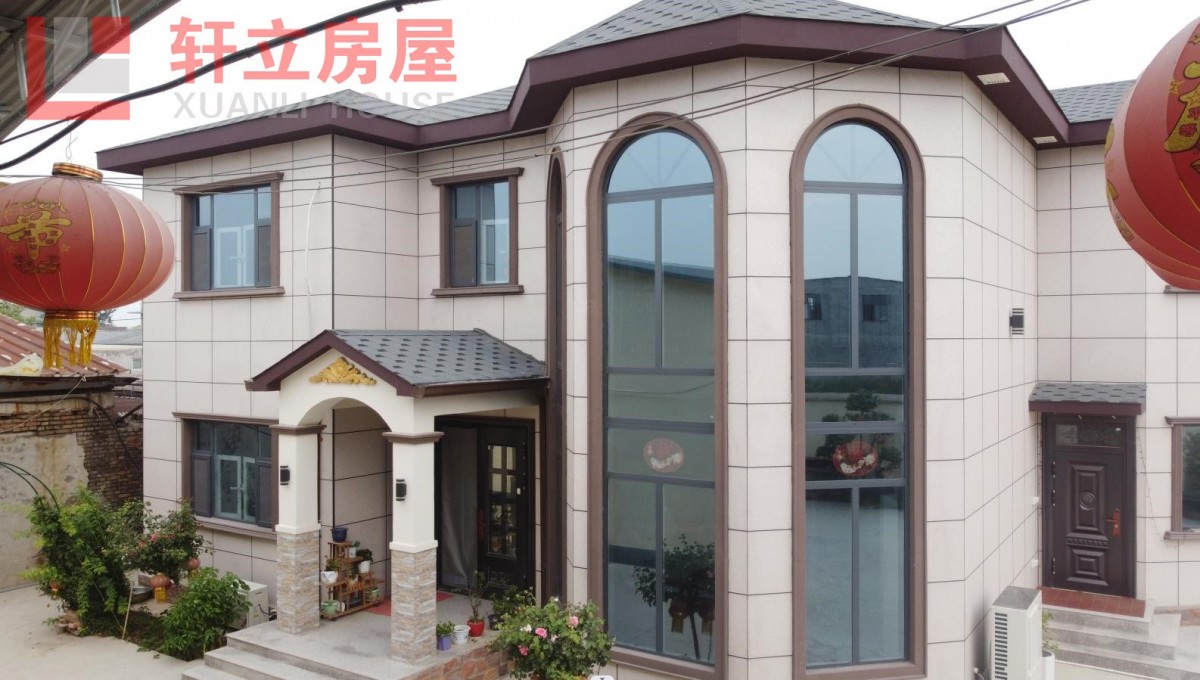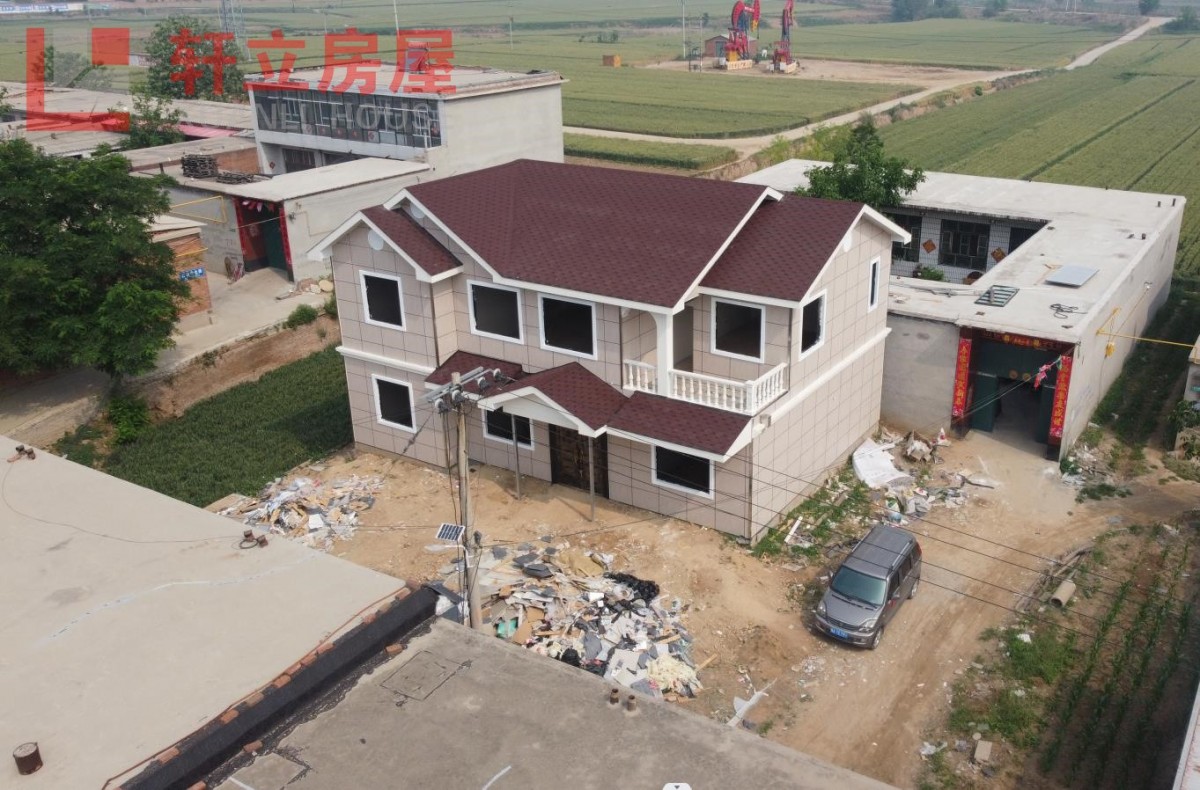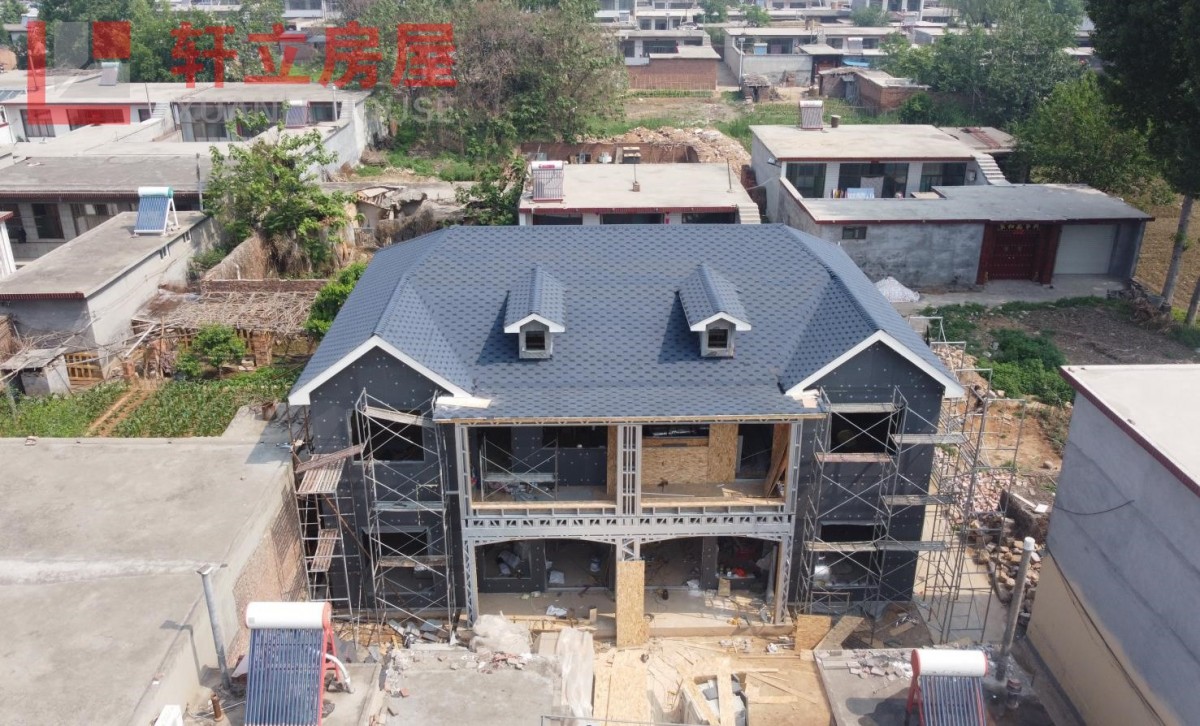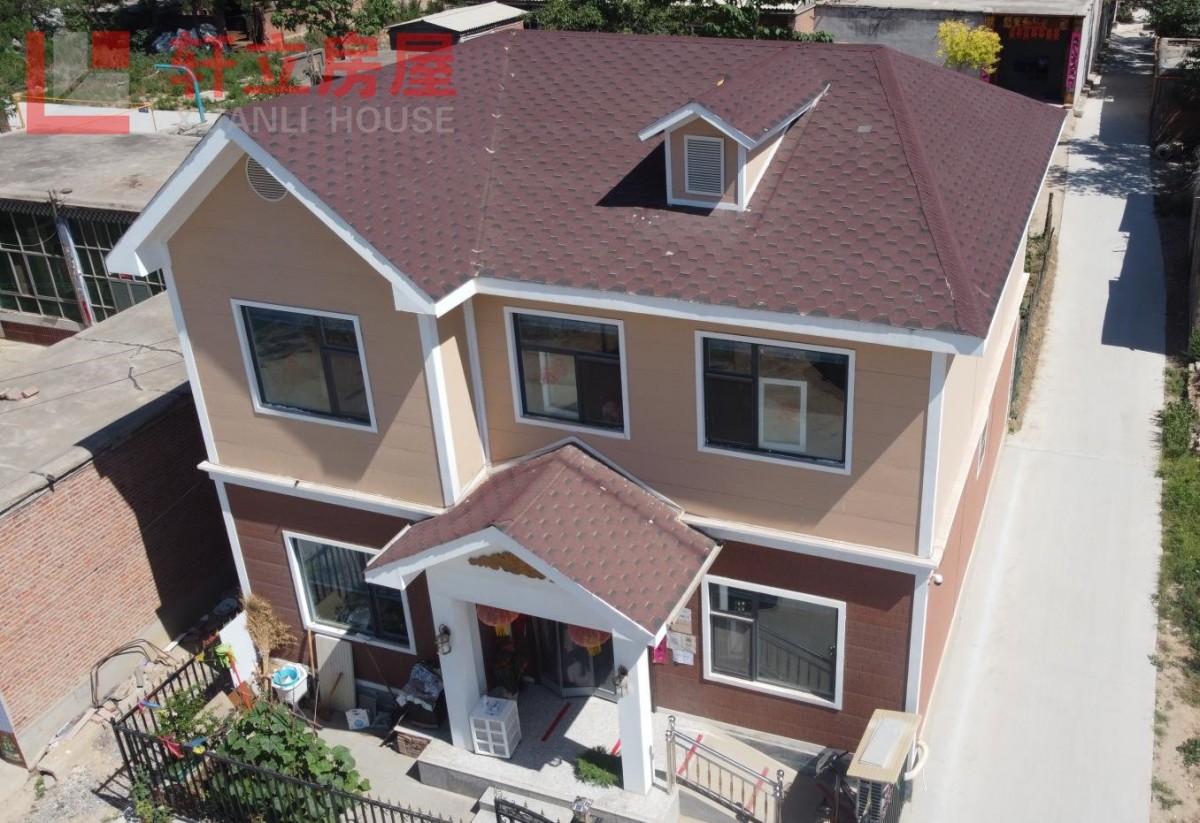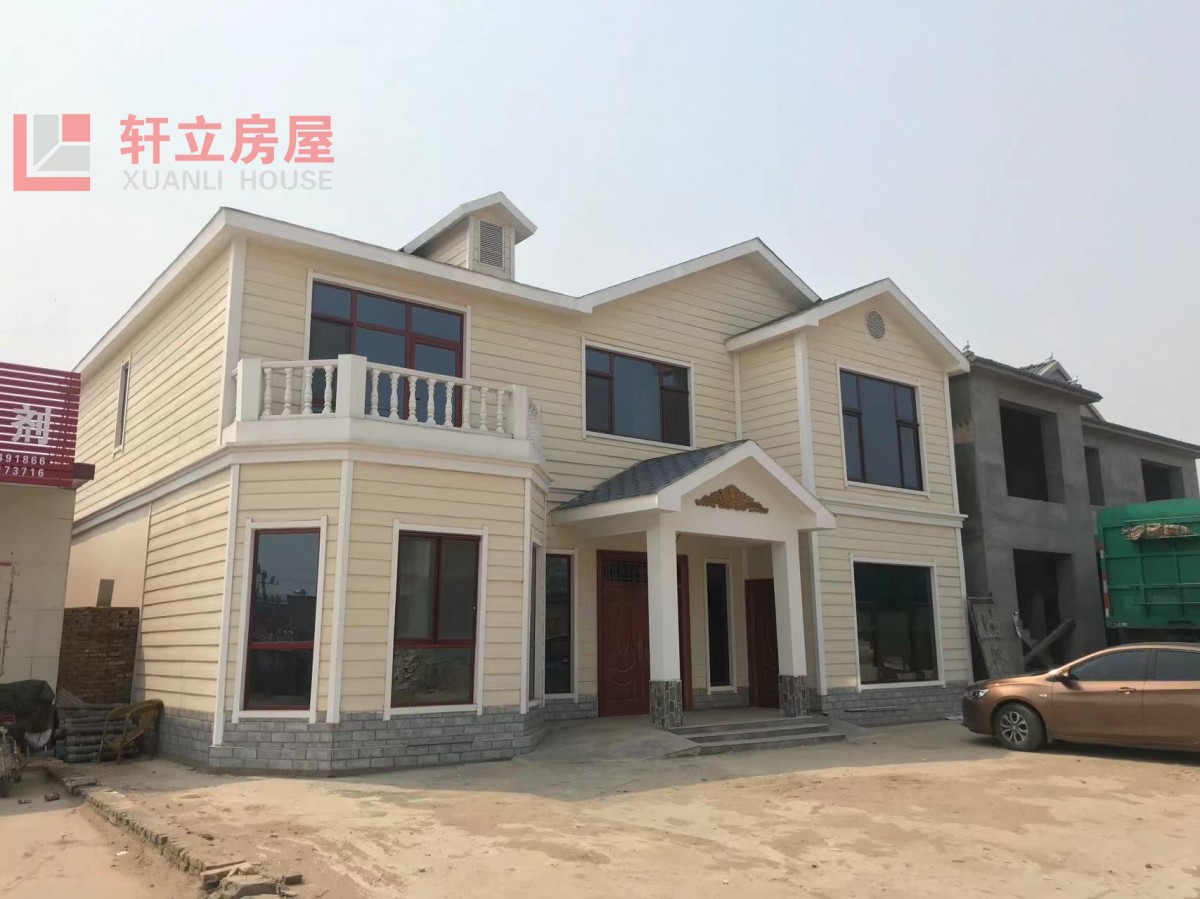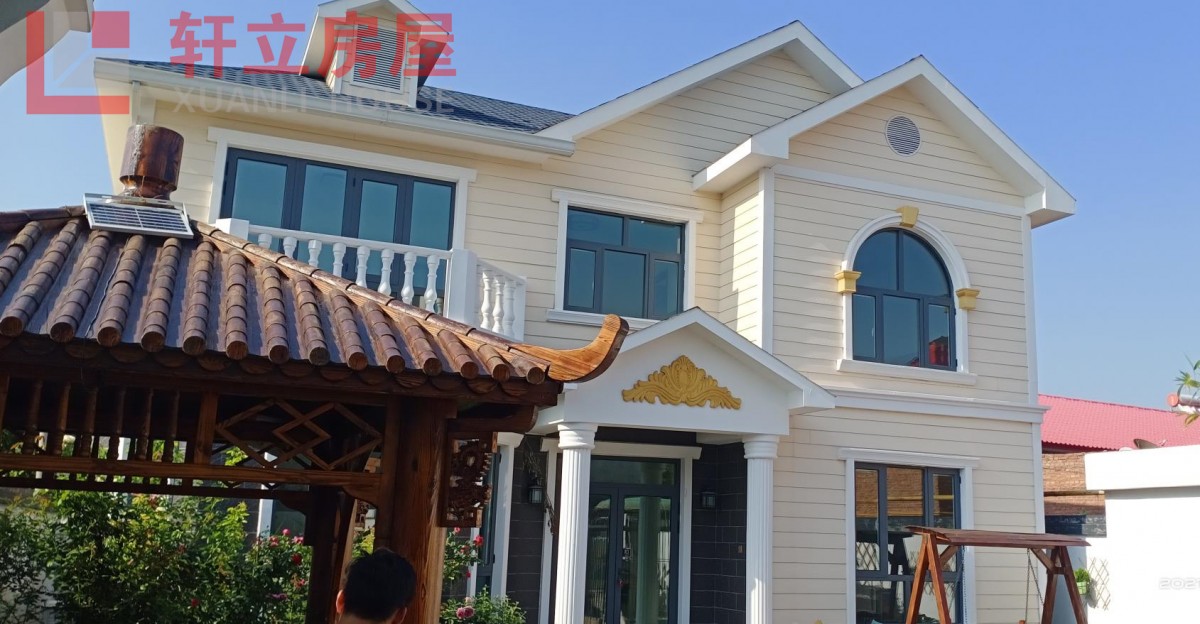












Hebei Lightweight Steel Villa Manufacturer, Beautiful and Elegant Design and Construction of Rural Two-Story Western-style Houses
Light steel villa is a type of building constructed primarily with light steel framing, typically assembled from tens of thousands of components. Prefabricated light steel villa, also known as light steel frame residential buildings, refers to residential structures primarily built with light steel framing as the main material. The main material is light steel framing synthesized through hot-dipped galvanized steel strip cold rolling process. With calculated support and auxiliary part combinations, it possesses reasonable load-bearing capacity and can replace traditional housing.
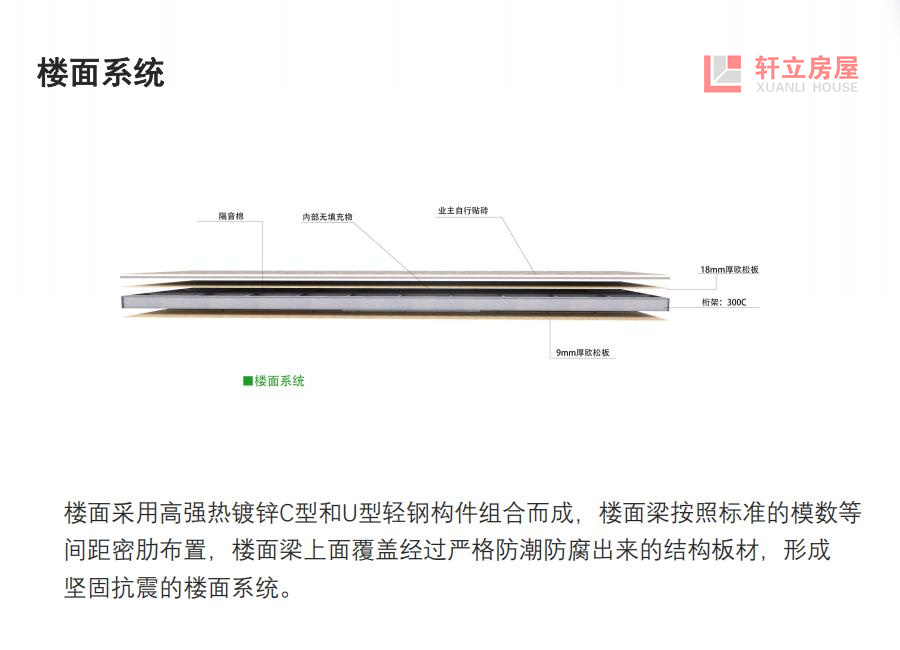
The floor of light steel integrated houses is composed of cold-formed thin-walled steel frames or composite beams, floor OSB structural boards, supports, connecting parts, etc. The materials used are oriented strand board, cement fiberboard, and plywood. These lightweight floors can bear loads of over 300 kg per square meter.
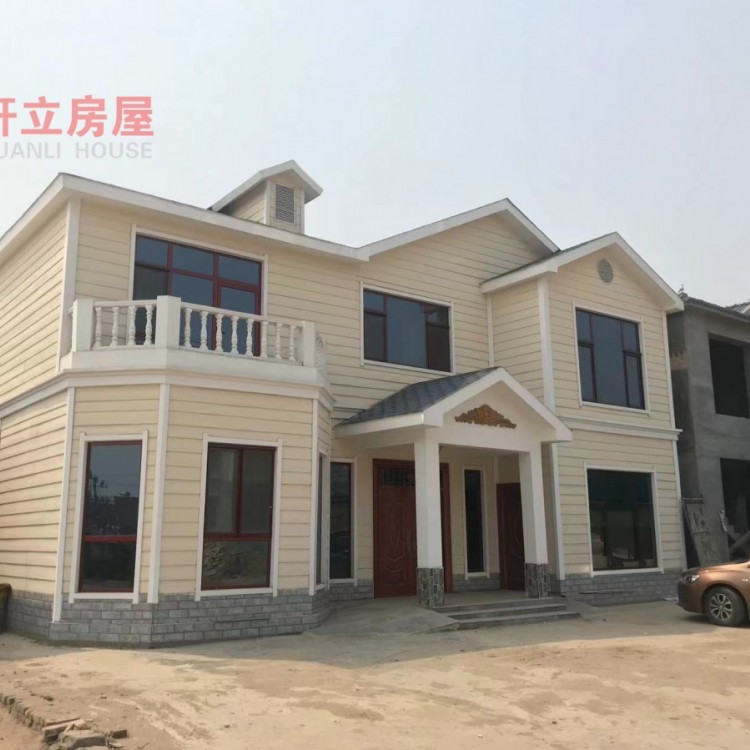
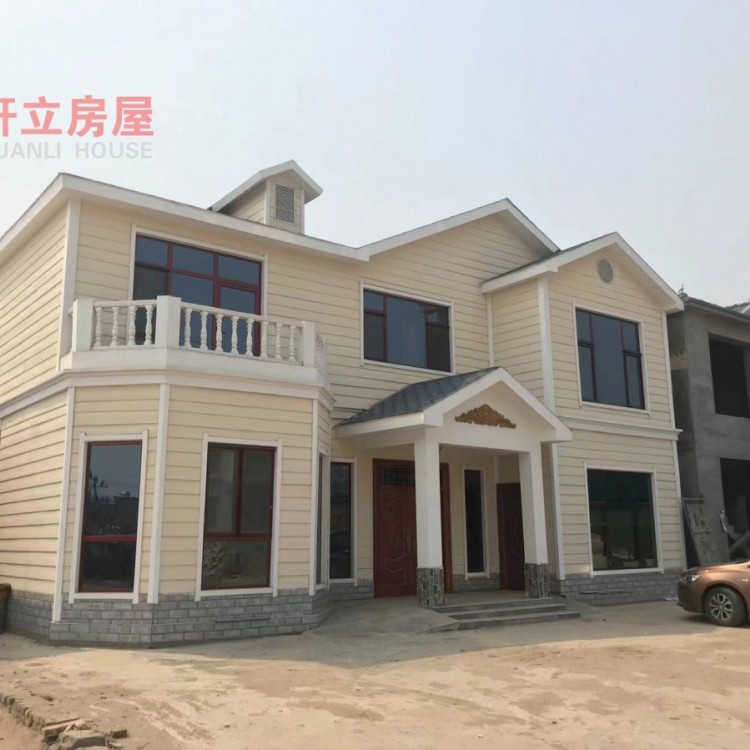
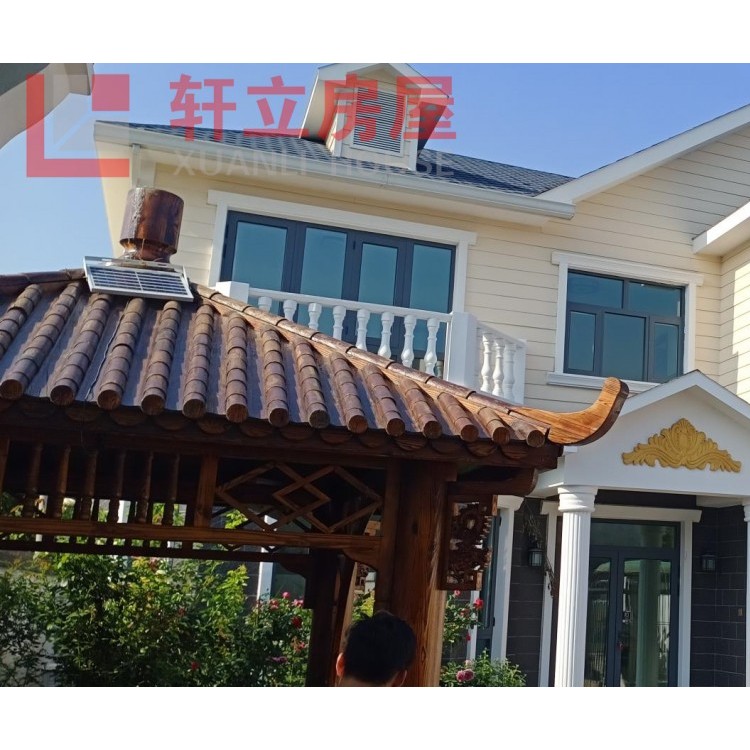
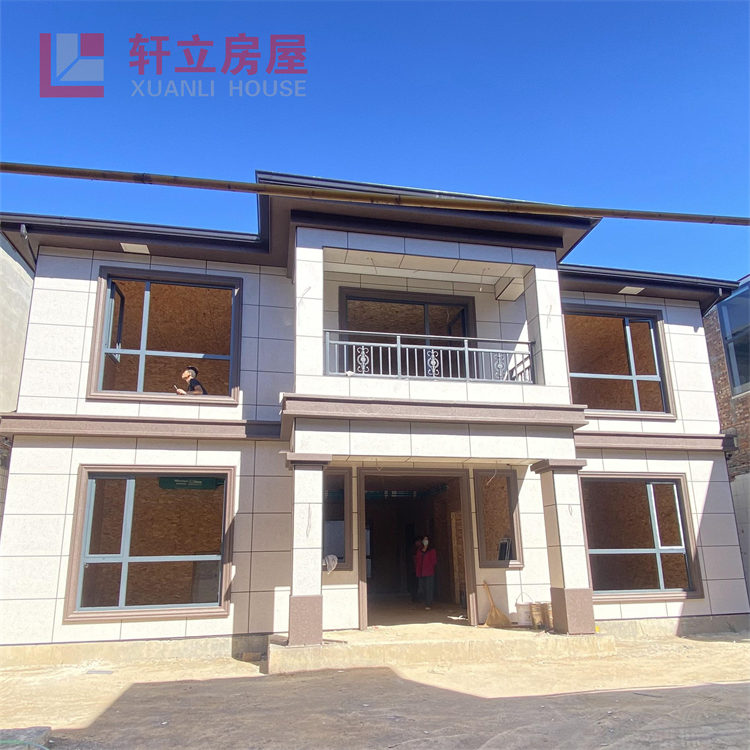
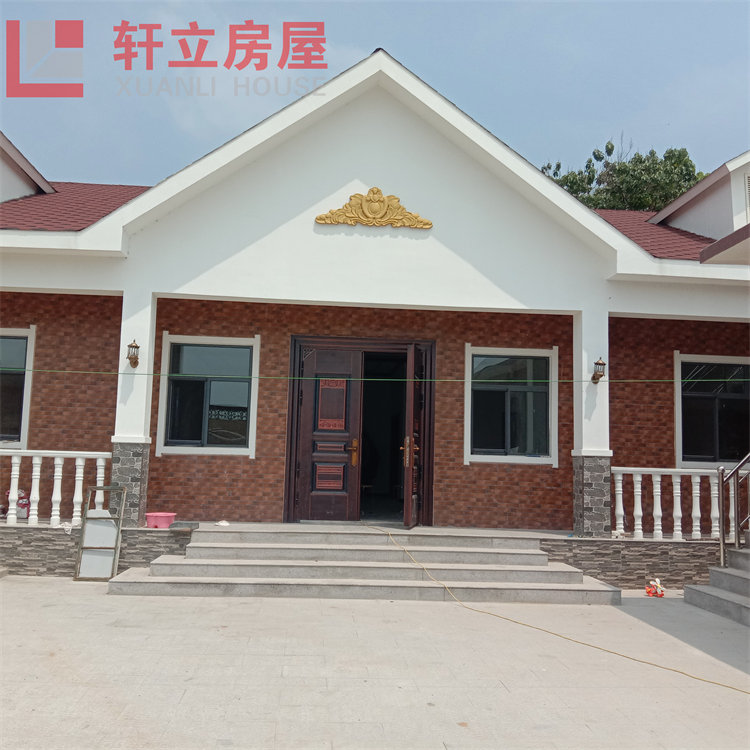
Comparing to traditional villas, the prefabricated light steel structure houses of the lightweight steel villa have a visually appealing exterior. They can be designed in various styles to meet the user's needs, making the lightweight steel villa diverse, flexible, and portable in appearance.
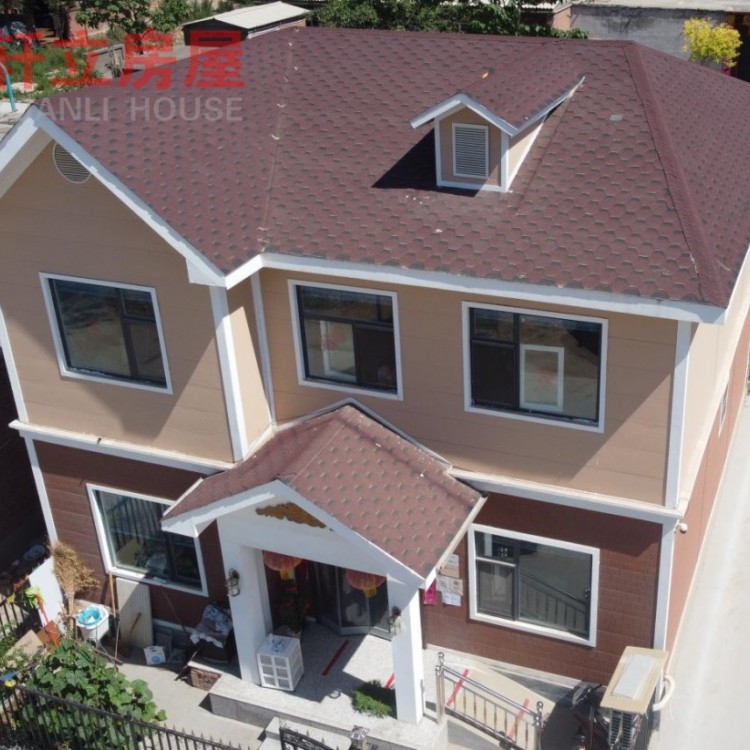
The roof system of lightweight steel integrated houses consists of rafters, structural OSB panels, a waterproofing layer, and lightweight roof shingles (either metal or asphalt). The roofs of lightweight steel structures can have various combinations in appearance and a wide range of materials. With the technical aspect of waterproofing guaranteed, there are numerous options for the appearance.
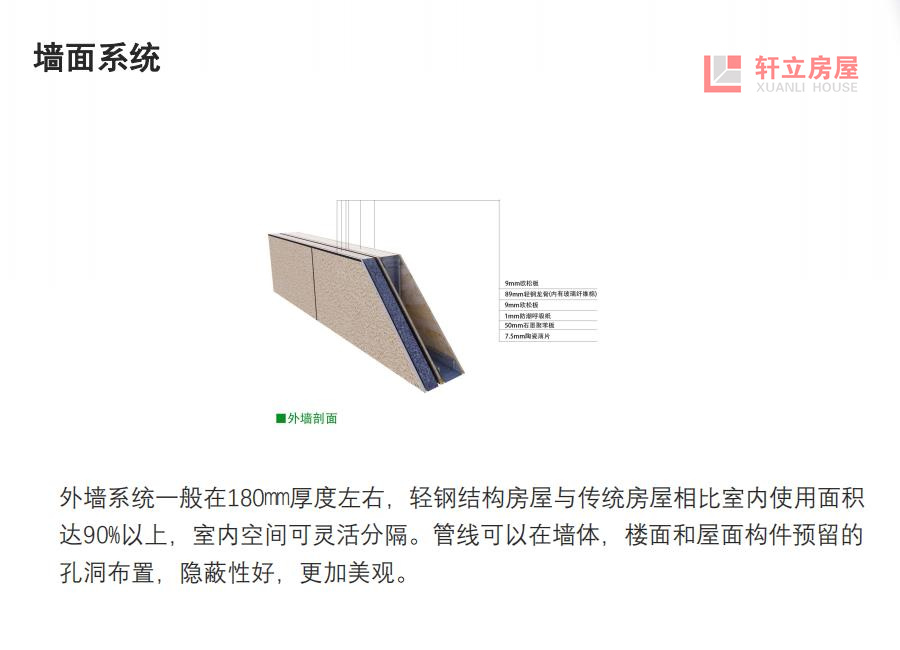
The walls of light steel frame residential buildings are mainly composed of wall frame columns, wall top beams, wall bottom beams, wall supports, wall panels, and connecting components. Light steel frame residential buildings typically use the internal cross walls as load-bearing walls, with the wall columns being C-shaped light steel members. The wall thickness is determined by the loads they bear, usually ranging from 0.84 to 2 millimeters. The spacing between wall columns is generally 400 to 600 millimeters. This wall structure arrangement of light steel frame residential buildings can effectively bear and reliably transmit vertical loads, is convenient to arrange, but the wall structure of light steel frame residential buildings cannot bear horizontal loads.
Light-gauge steel structure houses use thermal insulation materials in the exterior walls and roofs to achieve long-lasting thermal insulation. Generally, in addition to filling glass fiber between the wall columns, a layer of insulation material is added to the outer side of the wall, effectively blocking thermal bridges from the wall columns to the exterior panels. The joists between floors are filled with glass fiber to reduce heat transfer between floors; all interior wall columns are filled with glass fiber to minimize heat transfer between interior walls.
The reasons for the current development of light-gauge steel structures can be summarized in several aspects: mature technology, flexible structural systems conducive to construction and commercial use, high economic efficiency in buildings, and technology that aligns with the trend of environmental protection, energy conservation, and sustainable development. In addition to residential use, this system is also employed in scenic spots, rural housing, light-gauge landscape houses, and tourist gardens, among other places.
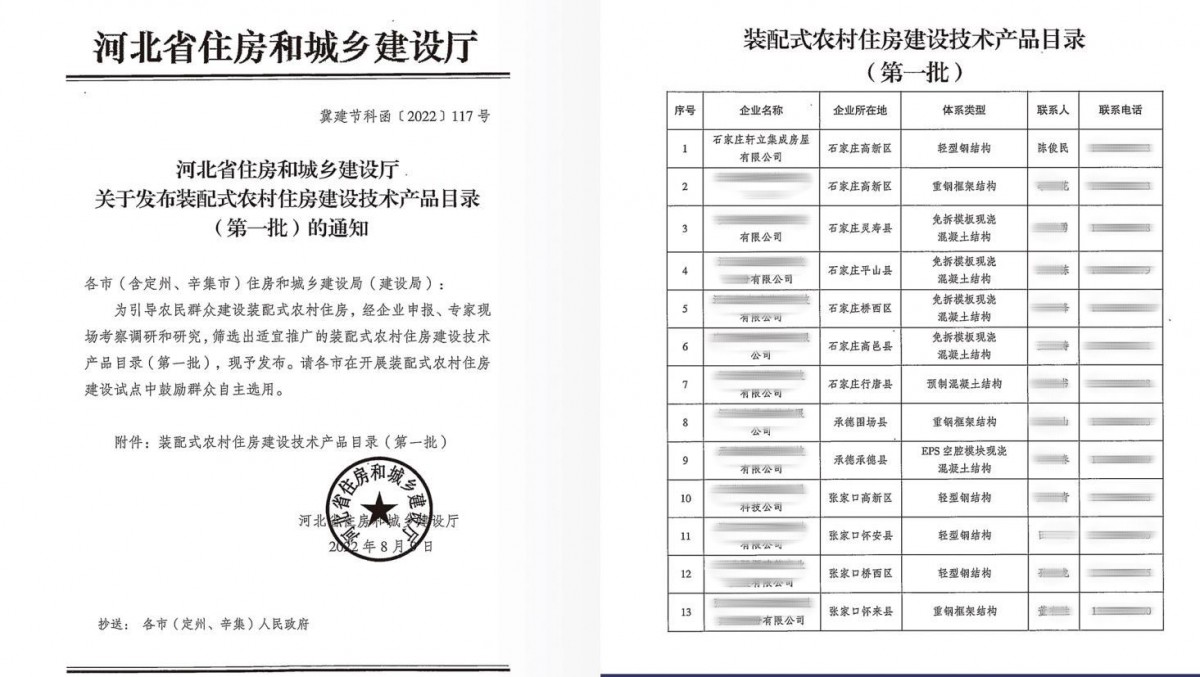
Shijiazhuang Xuanli Integrated House Co., Ltd. is a comprehensive manufacturer of prefabricated light steel villa construction, encompassing research and development, design, production, sales, construction, and after-sales services.