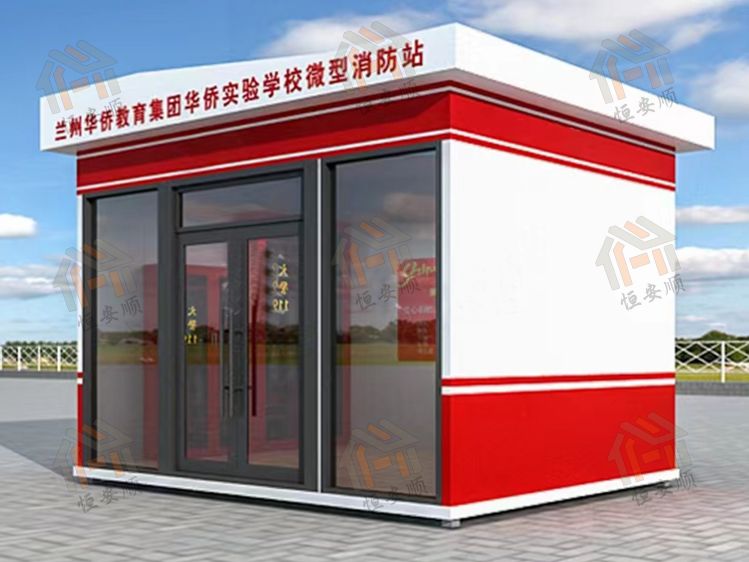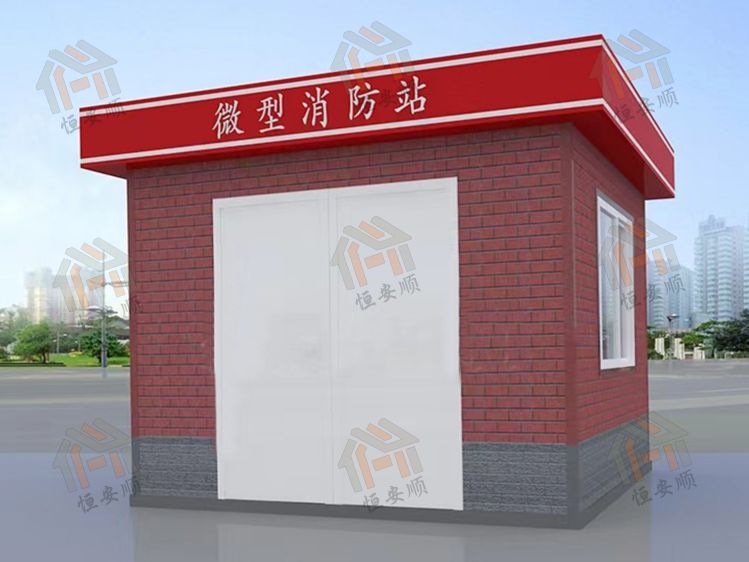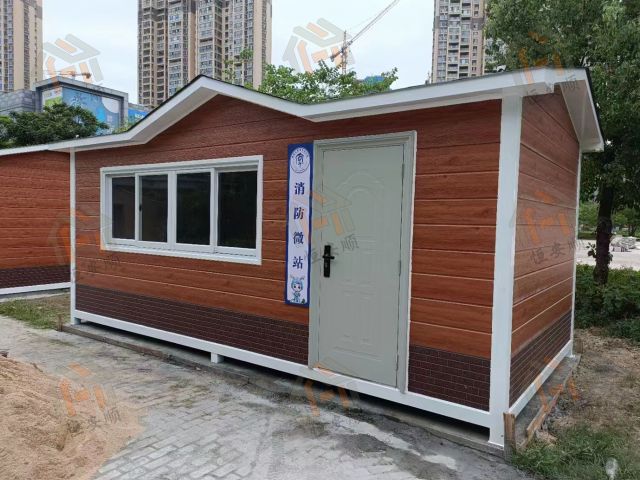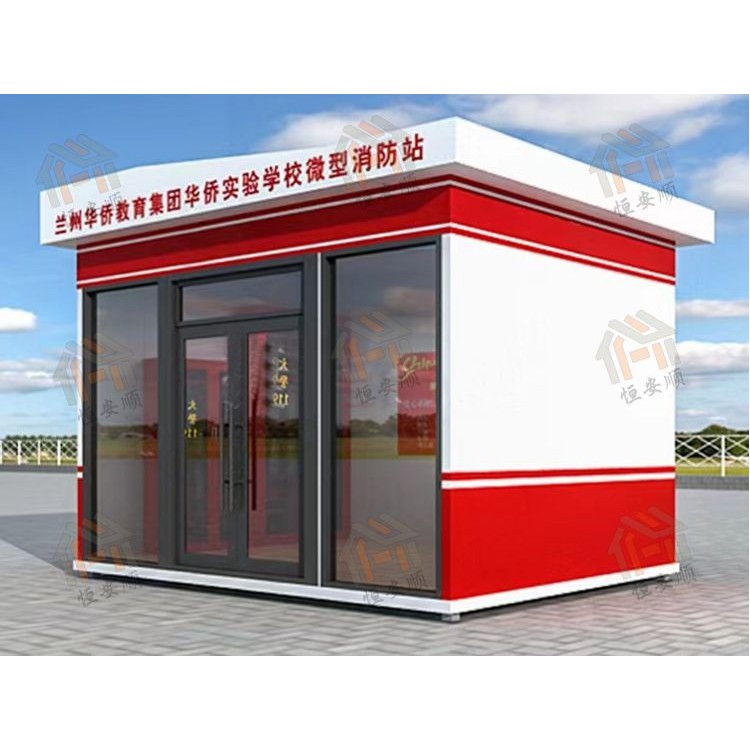


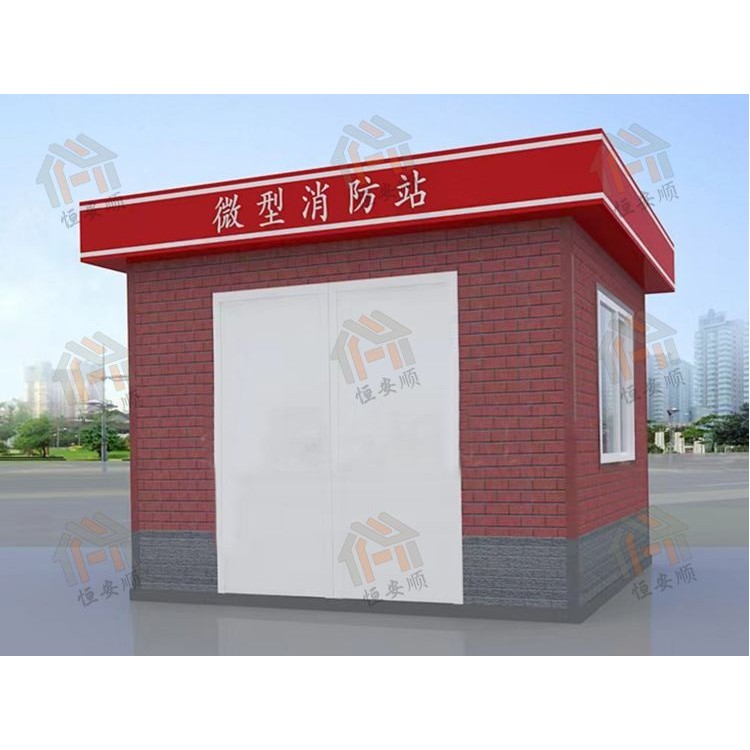
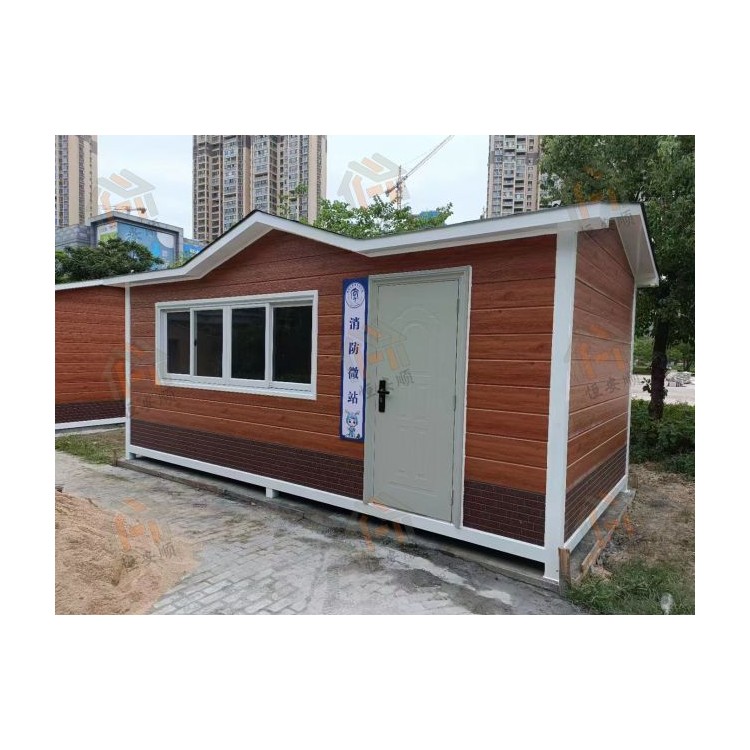












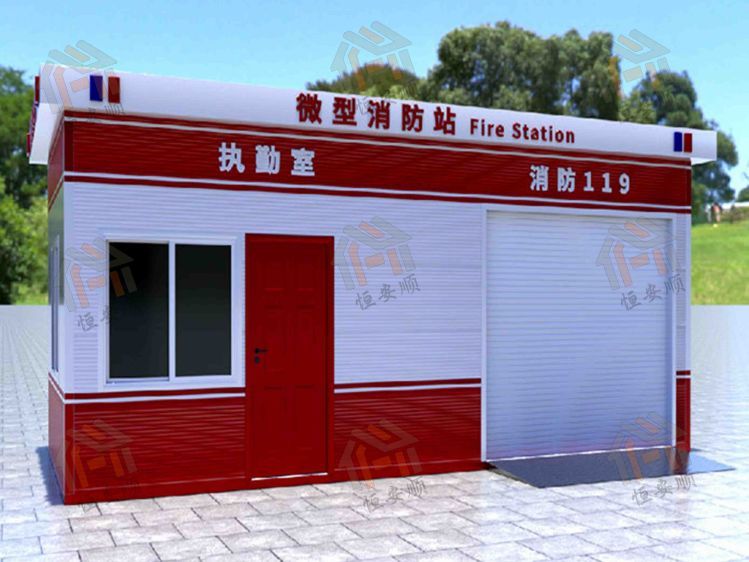
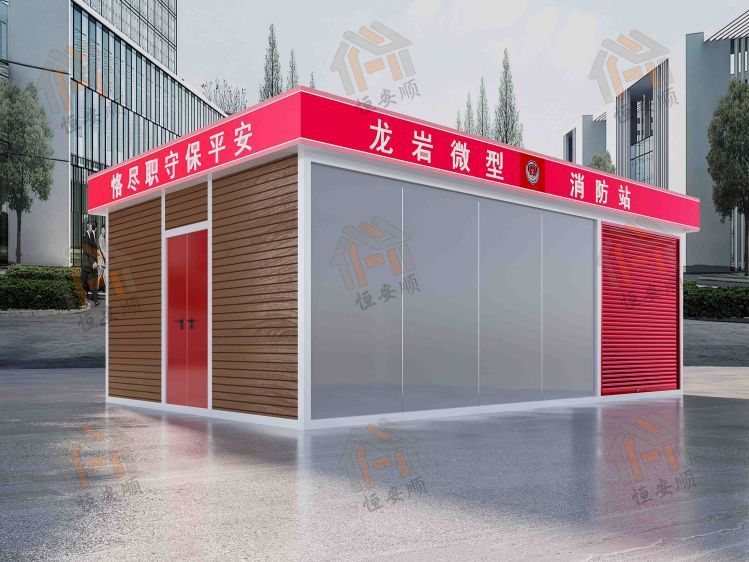
Miniature fire stations are designed to extinguish early and small fires and to respond within three minutes to initial fires, equipped with necessary firefighting equipment, relying on the company's volunteer firefighting teams and community group prevention and treatment teams. There are two types: miniature fire stations in key fire safety units and community miniature fire stations, which are small fire organization units constructed in key fire safety units and communities.
In addition to key units required to establish a dedicated fire brigade due to fire regulations, other key units with fire control rooms aim to extinguish early, control small fires, and achieve "arrival within 3 minutes" for initial fire suppression. These units rely on their volunteer fire teams, equip with necessary firefighting equipment, and establish key unit mini fire stations to actively carry out fire prevention inspections and initial fire suppression to control fires. Key units sharing a fire control room can jointly establish mini fire stations.
Section II: Staffing
(One) The personnel of the mini fire station shall not be fewer than 6.
(II) A micro fire station should have positions such as the station chief, deputy station chief, firefighters, control room duty officers, etc. For micro fire stations equipped with fire vehicles, a driver position should be established.
(3) The website administrator should be concurrently appointed as the unit's fire safety manager, with firefighters responsible for fire prevention inspections and initial fire extinguishing efforts.
(4) Personnel at micro fire stations should undergo pre-service training, which includes basic skills for extinguishing initial fires and fundamental knowledge of fire prevention inspections.
Section 3: Station Equipment
(1) Micro fire stations should have staffed quarters and equipment storage rooms, which can be shared with the fire control room; where conditions permit, they can be set up separately.
(II) Micro fire stations should be equipped with a certain number of fire extinguishers, hoses, and nozzles as needed for extinguishing initial fires; communication equipment such as landline telephones and handheld radios should also be provided; stations with the means can optionally equip fire helmets, fire-resistant suits, protective boots, and demolition tools.
(3) Micro fire stations should be equipped with fire equipment storage points within the building and on the refuge floors. Additionally, fire equipment storage points can be set up in designated areas between buildings as needed.
(4) Conditionally, micro fire stations can select fire vehicles based on actual needs.
Section 4: Job Responsibilities
(1) The website administrator is responsible for the daily management of the mini fire station, organizing the formulation of various management systems and fire extinguishing emergency plans, conducting fire prevention inspections, fire safety education, and fire extinguishing training; commanding the initial fire extinguishing efforts and evacuation of personnel. (2) Firefighters are responsible for extinguishing initial fires; familiar with the fire protection facilities of the buildings and fire extinguishing emergency plans, proficient in the performance and operation of equipment, and ensure maintenance and care; participating in daily fire prevention inspections and fire safety education. (3) The control room on-duty staff should be familiar with the fire extinguishing emergency response procedures, proficient in the operation of automatic fire protection facilities, and initiate the emergency plan upon receiving fire situation information.
V. On-duty Coordination
(1) Micro fire stations should establish a duty system to ensure that staff are on duty 24/7 and well-prepared for emergencies.
(2) Upon receiving a fire alarm, the duty operator in the control room should quickly verify the fire situation and initiate the fire extinguishing procedures. Firefighters should arrive at the scene to handle the situation within the "3-minute arrival" requirement.
(3) Micro fire stations should be integrated into the local fire extinguishing and rescue joint operation system, participating in fire fighting and disposal work in the surrounding area.
Six. Management Training
(1) The key units are the management entities for the construction and management of mini fire stations. After the mini fire stations of the key units are constructed, they should be reported to the local public security fire department. (2) Mini fire stations should formulate and implement management systems for post training, team management, fire prevention inspections, on-duty coordination, and evaluation. (3) Mini fire stations should organize daily business training to continuously improve their ability to extinguish initial fires. Training includes physical training, the use of fire extinguishing equipment, and personal protective equipment.