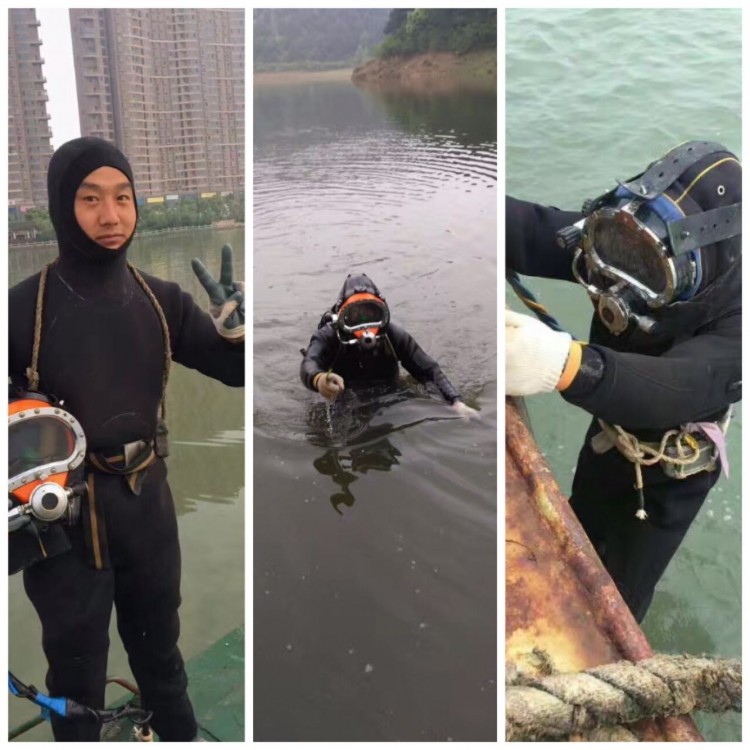









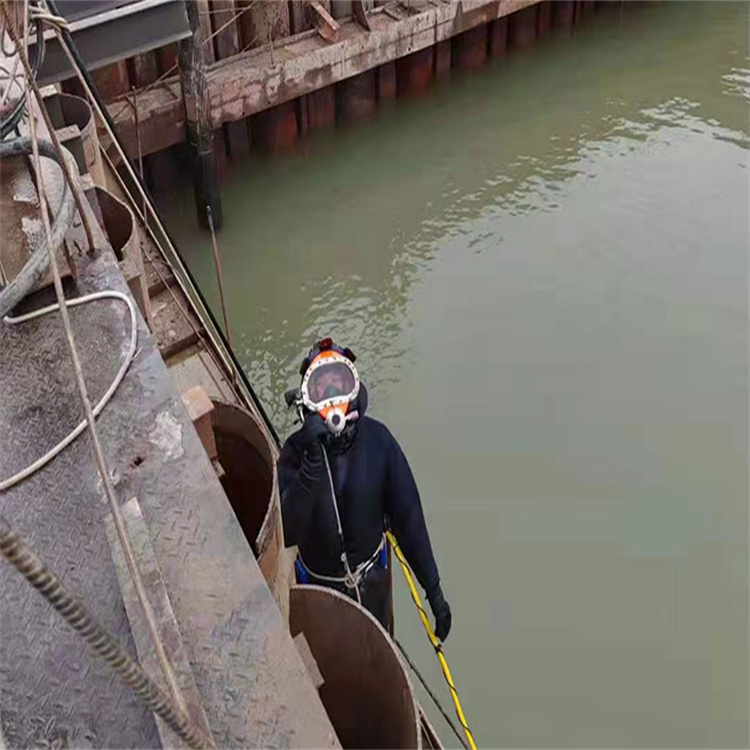
Underwater welding refers to a technique of welding metallic structures underwater. It is affected by both water and high pressure, thus the process, equipment, and quality requirements for underwater welding differ from those on land. Currently, there are many methods of underwater welding, which can generally be divided into wet underwater welding, dry underwater welding, and localized underwater welding.
Submerged arc welding in wet conditions, where divers do not take any drainage measures and weld directly. The main issues encountered with this method include poor visibility, difficulty in control, rapid cooling speed, and high hydrogen content, all of which affect the quality of the weld joints.



Underwater reinforcement includes carbon fiber reinforcement, pressure grouting reinforcement, and steel plate bonding reinforcement. The basic principle of the carbon fiber bonding method and the steel plate bonding reinforcement method is consistent, both involving the application of reinforcing materials to the tensile edges or weak parts of concrete structures, forming an integral part with the structure to replace additional reinforcing steel bars, thereby achieving the purpose of reinforcing the beam's load-bearing capacity. The parts of bridge components reinforced with carbon fiber: The carbon fiber materials are orderly wrapped and bonded to the surface of the components using bonding materials, thereby constraining the deformation of the components and thus enhancing their ultimate strength and load-bearing capacity. In the application of bridge reinforcement, it can be bonded to the top or bottom plate of concrete beams, utilizing the cross-sectional strength and rigidity of the concrete beams: it can also be bonded to the web of the beams, utilizing its shear strength
There are two possible causes of blockage. One is water-related; such pressure does not transfer to the solid content, so it is not a solid. This usually occurs when there is insufficient space in small or interlocked areas for concrete grouting materials, and there is not enough force to overcome the pipeline resistance internally. Therefore, it is crucial to have sufficient tight packaging of particles to create a blocking filter. The blocking filter allows the transfer of pressure from the liquid phase but prevents its own. In other words, when the pressure must be greater than the pressure required to pump concrete grouting materials, the isolation pump. Of course, remember that more particles mean a larger solid surface area, leading to greater pipeline resistance.