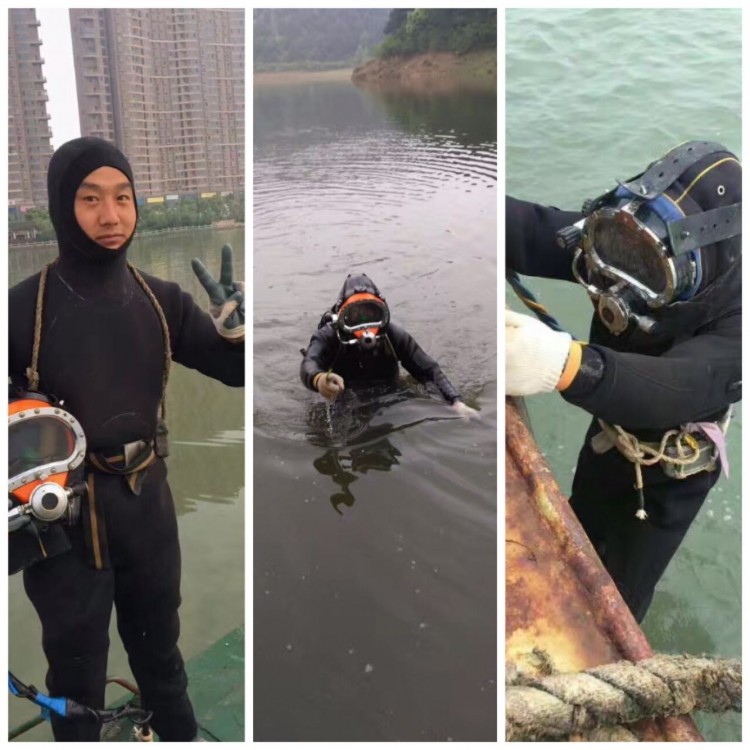









We possess a team of well-trained underwater engineering and diving safety experts, with significant construction achievements in Jiangsu, Zhejiang, Anhui, Beijing, Tianjin, Shanghai, Chongqing, Jiangxi, Fujian, Hunan, Hubei, Henan, Liaoning, Jilin, Heilongjiang, Hebei, Shandong, Shanxi, Guangdong, Hainan, Shaanxi, Gansu, Sichuan, Yunnan, and Guizhou provinces, maintaining close cooperative relationships.
Service Name: Underwater Maintenance Services Service Content: Specializing in underwater gate repairs, underwater inspections, and underwater construction projects within a depth of 120 meters. Services include: underwater cutting, welding, recovery, exploration and detection, underwater cable and pipeline laying, underwater facility maintenance, underwater dredging, pipeline plugging, municipal water conservancy projects, underwater well sinking and sealing, underwater installation, port and channel dredging, underwater leakage sealing, and various other underwater operations. If necessary, double-row buoys can be installed in areas of concentrated weight. We have a strong workforce and construction equipment. Our business goal is to achieve excellent work quality and create remarkable business performance. We operate in the field of underwater engineering, with branch offices located in Beijing, Shanghai, Jiangsu, Shandong, Anhui, Zhejiang, Dalian, Tianjin, Shanxi, Henan, Zhanjiang, Hubei, Sichuan, Chengdu, Yunnan, and other regions.

Ships may sink due to seawater entering the hull for various reasons, reducing buoyancy and causing submersion. To recover, it's necessary to restore its buoyancy to bring it back to the surface. The Buoyancy Recovery Method has emerged from this. Therefore, when the deck is submerged within 2 meters, direct pumping can be used. For depths exceeding 2 meters or when the deck's strength is deemed insufficient to bear the load, the Inflated Pumping Method should be employed.
For divers involved in underwater construction, the cold water temperatures in winter can cause discomfort to moving bodies, and the situation becomes worse with very low water temperatures. Pay extra attention if there's ice formation in the construction area, to avoid encountering hidden dangers while entering or exiting the water, which could threaten the divers' personal safety and cause damage, or damage the diving equipment. Divers conducting underwater recovery operations must apply for and issue navigation warnings in accordance with maritime safety laws before initiating recovery activities; during the recovery operations, they must carry out activities within the approved operational area of the maritime authority and report the relevant activities as required by the maritime authority; recovery operations must not use methods that harm marine resources, marine environments, subsea facilities, offshore facilities, or cause any harm to interests.
Water conducts electricity, as we all know, making underwater cutting far more dangerous than surface cutting. Divers in conductive underwater environments need to be extra cautious! So how can we prevent electric shocks during underwater cutting? Those who want to know, let's take a look together!
1. Prior to construction, divers must receive electrical safety training to understand and master electrical safety knowledge, enhancing their awareness. Insulation and watertightness checks must be conducted on underwater cutting equipment, and any non-compliant items must be replaced or repaired promptly.
During underwater cutting, if it's necessary to change the cutting wire or blade, the staff on the surface should be notified first to shut off the power supply.
3. When underwater cutting, ensure a secure ground connection and position the ground wire on the same side as the cutting torch as used by the diver. Otherwise, it not only poses a risk of electric shock but also accelerates corrosion of metal components on the diver's equipment, thereby reducing its service life.
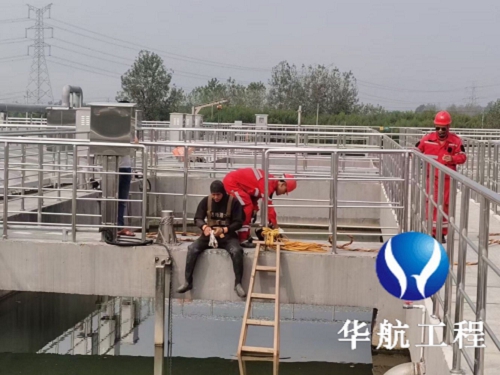
4. Divers performing underwater cutting must wear waterproof insulating gloves to keep their hands dry and prevent direct contact with live electrical conductors.
5. When underwater cutting is performed on a live structure (a structure with an external current protection system), the current to the structure should be first disconnected before proceeding with the cutting.
Underwater Cutting: Essential Safety Precautions to Know
1. Party A and Party B conduct a technical briefing for the lifting operation.
2. Divers should check and pressure-test their diving equipment, machinery, and air hoses before entering the water.
3. Divers confirm equipment is in good condition with surface crew, put on insulating gloves, don underwater cutting tools, and dive in. Inform the surface crew to start the power. Make two small holes at the top of the steel plate, fit the steel cable with a U-bolt, and instruct the surface crew to tension the cable. Inform the surface crew to turn off the power. Submerge and adjust position and posture, then notify the surface crew to start the power for underwater work.
4. Phone operators, signalmen, tube men, and electricians closely coordinate with the movements and conditions of the underwater personnel.
5. Recruit divers are fully geared and ready for orders.
6. After the diver finishes cutting a piece of steel, they report to the operator. Only after permission is granted and underwater safety precautions are in place may they resurface.
Divers are selected from retired divers, skilled in strength, and hold diving certificates issued by the Ministry of Transport. Design and production; unauthorized reproduction is prohibited. The above information is provided by the company itself, and the authenticity, accuracy, and completeness of the information content are the responsibility of the relevant company. No guarantee is assumed for this information. Product Description: The Howay Technology brand underwater repair type is customized for underwater repair work. Underwater repair engineering is a very grand project. Today, let's take a look at what is included in underwater repair.
2. Water recovery, underwater exploration, underwater reinforcement, underwater installation, underwater foundation construction. 3. Caisson leakage plugging, caisson bottom sealing, caisson sediment cleaning, caisson sinking, caisson work, caisson mud cleaning. 5. Bagwork construction, bagwork project, bagwork slope protection, bag concrete, bag concrete, bag concrete construction. 6. Leakage plugging projects, pollution cleaning projects, mud cleaning projects, mud suction projects, dam leakage plugging, dam flaw detection, dam inspection, dam maintenance, pipeline maintenance, pipeline laying, submerged object recovery, recovery, sealing work, leakage plugging, crack plugging projects, sealing projects, crack plugging construction.
8. Absolutely prohibited for non-divers to perform underwater work. 9. Ensure thorough safety briefings and sign-in by all personnel. 10. Strictly adhere to diving operational procedures for diving tasks. The company has passed ISO9001:2000 quality system certification and obtained underwater operation permits from the port authority as well as various classification society certificates. The main diving equipment and underwater operation equipment are imported from the United States, with underwater video and photography equipment at a good level within the industry.
7. Underwater Cable Laying, Non-destructive Underwater Inspection, Underwater Equipment Installation, Underwater Concrete Inspection, Underwater Marine Growth Removal, Underwater Foundation Construction, Underwater Steel Pipe Piling Cutting, Underwater Steel Casing Cutting. 9. Diving Leak Sealing, Diving Welding, Diving Operations, Diving Cutting, Diving Work, Diving Services, Diving Construction, Diving Maintenance, Diving Reinforcement, Diving Videography, Diving Installation, Diving Dredging, Diving Inspection, Diving Exploration, Diving Sealing, etc. Construction Services.