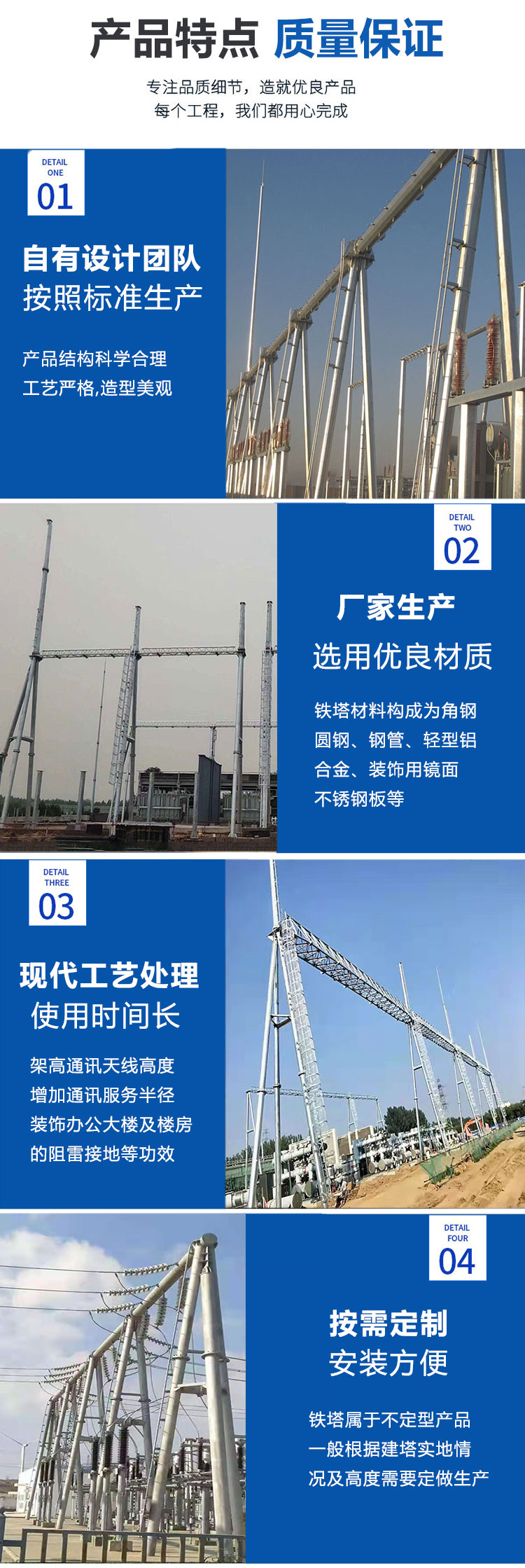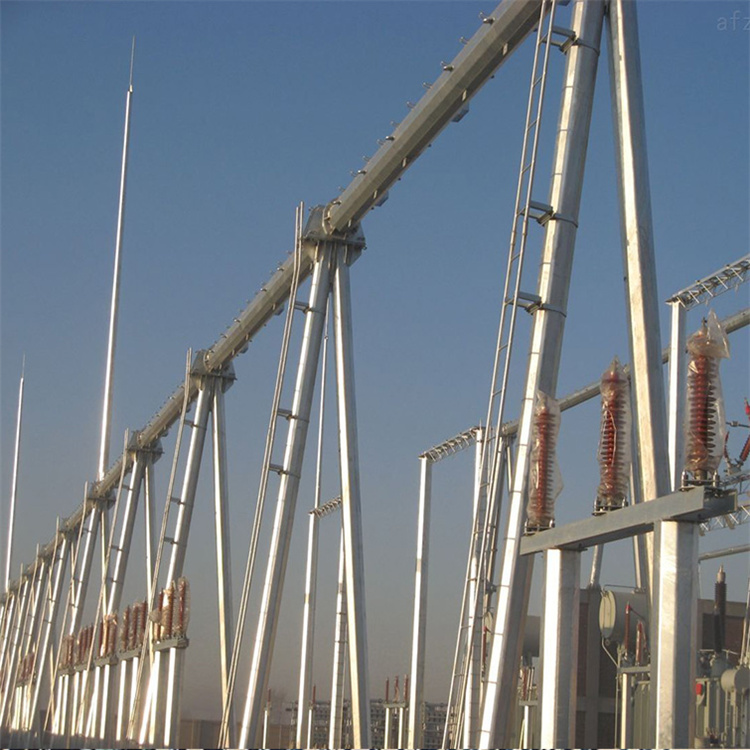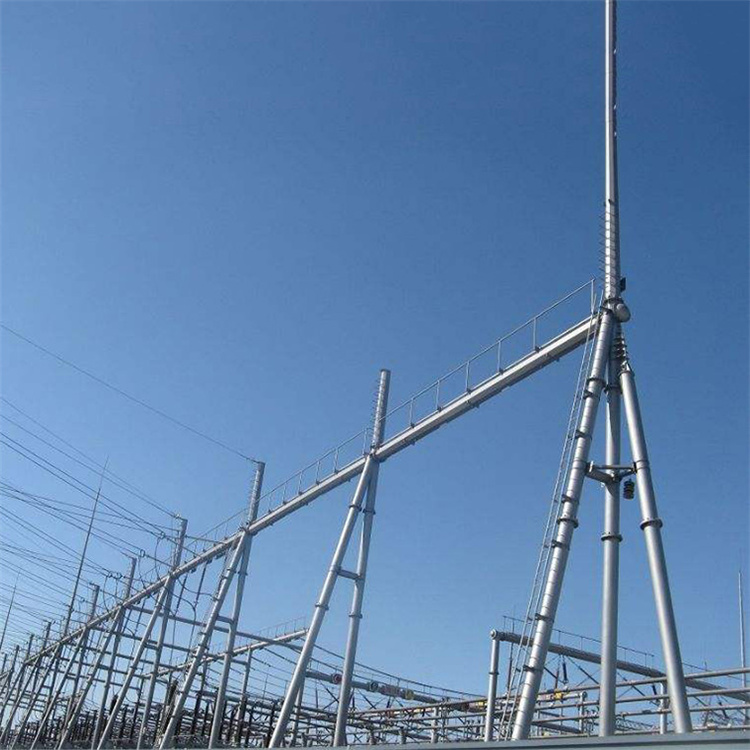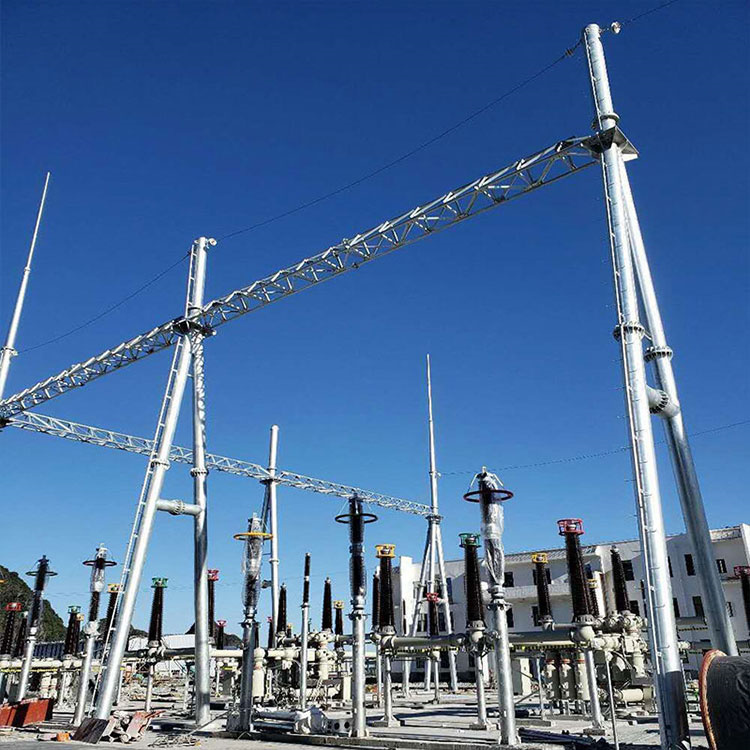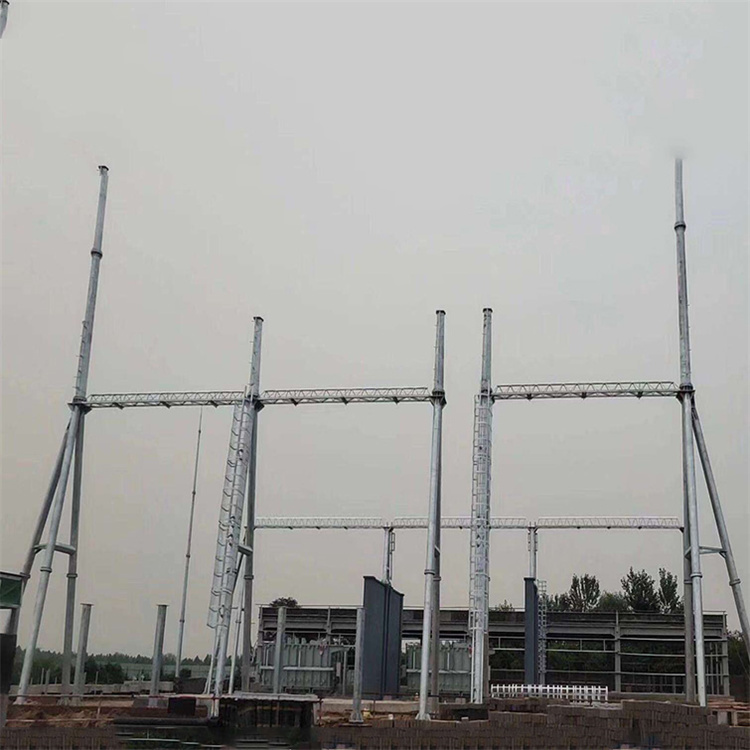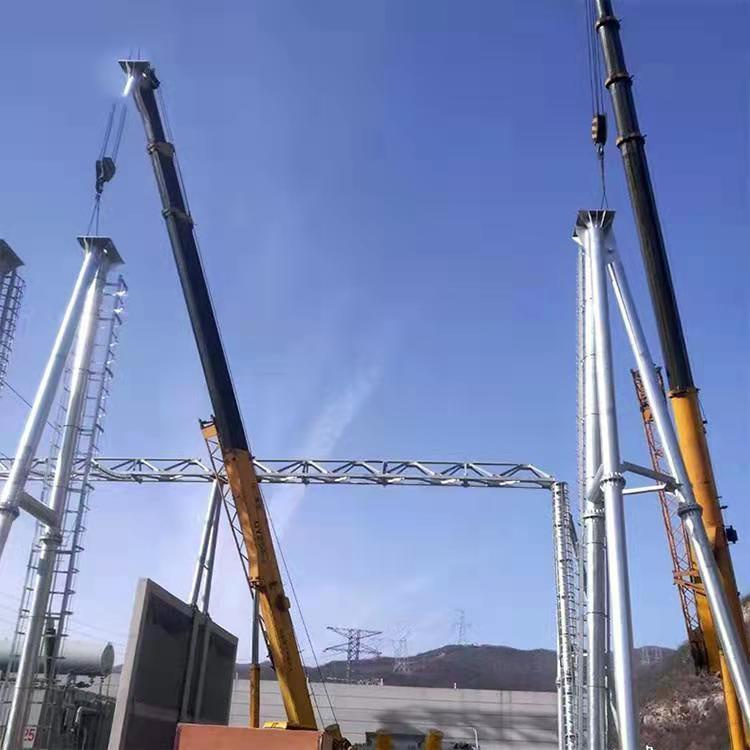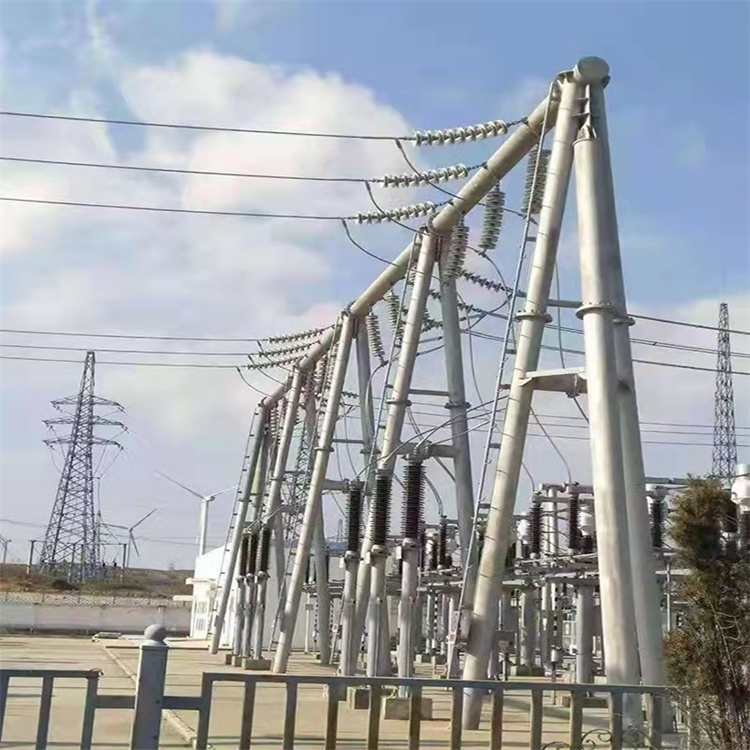







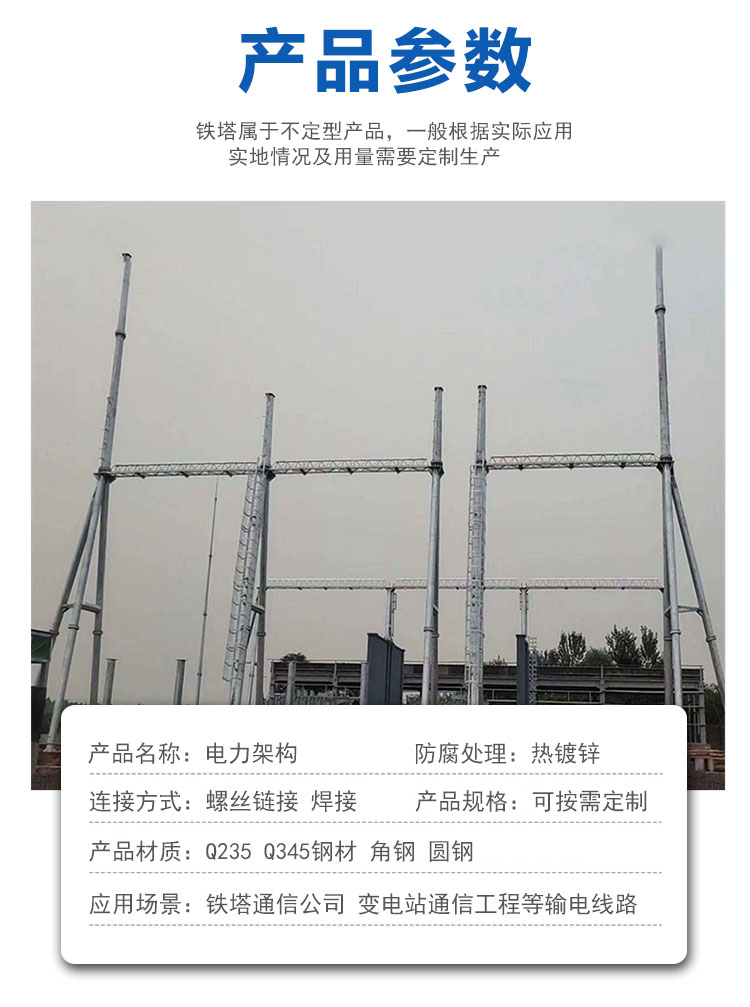
The substation structure is a general term for the main supporting structures for outdoor conductors and equipment in substation and transformer stations. It is determined based on the voltage level, scale, equipment arrangement, construction and operation conditions, as well as the local climatic conditions of the substation. Due to the electrical properties, different voltage levels require specific distances to be maintained between conductors, between conductors and the ground, and between conductors and structures. Therefore, the substation structure is characterized by tall columns with narrow cross-sections, and is classified as a high flexibility structure.
Its applications are categorized into entry racks, busbars, gate frames, corner frames, transformer assembly racks, etc., as well as single pole equipment supports.
外形Classification: Common structures include AH-type incoming/outgoing line architecture, A-type with lightning rod bracket incoming/outgoing line architecture, A-type architecture, Aח-type architecture, model architecture, corner architecture, large character architecture, and pull-line incoming/outgoing line architecture, etc.
In terms of structural load-bearing classification, the structures include: intermediate structure, terminal structure, and tension line structure.