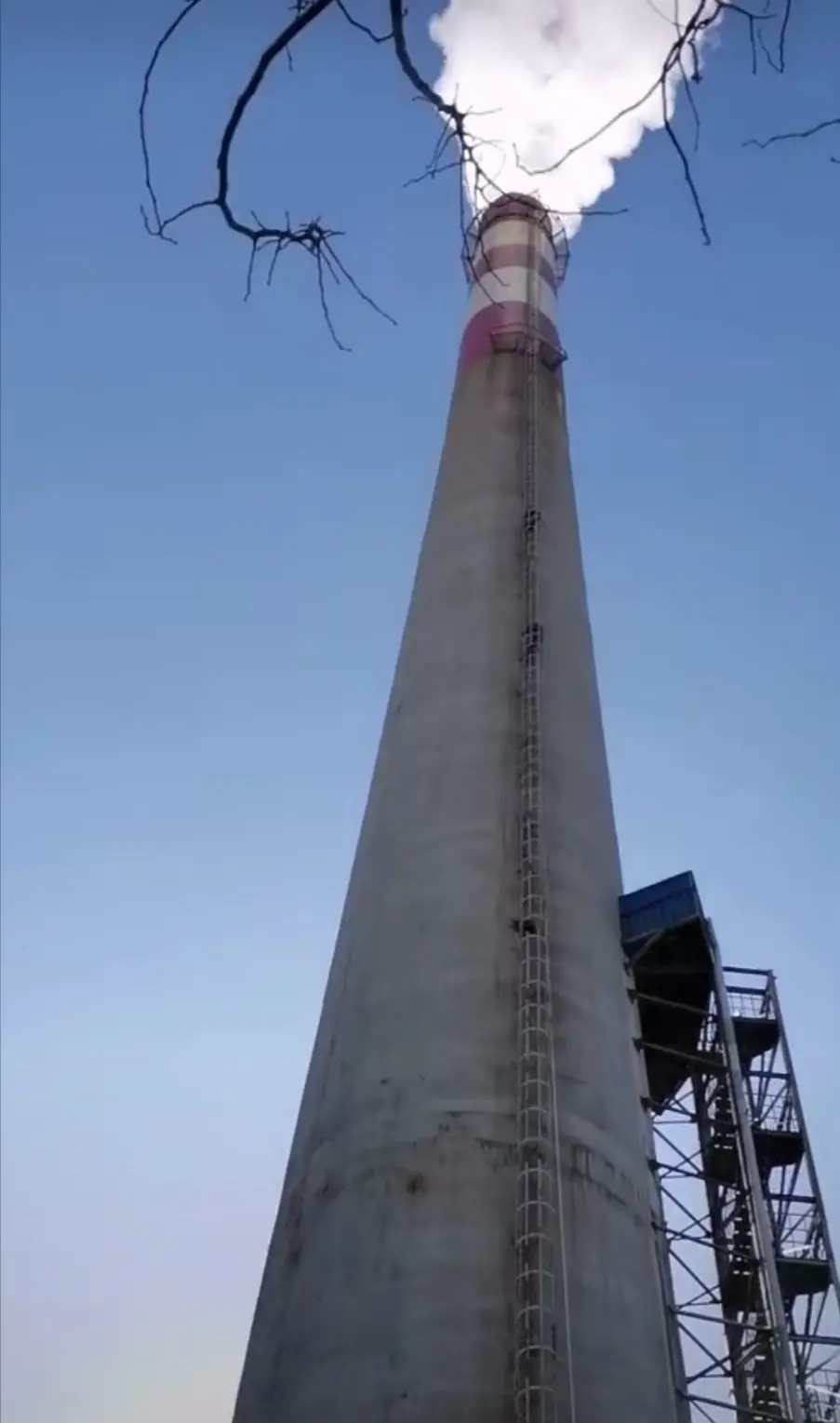

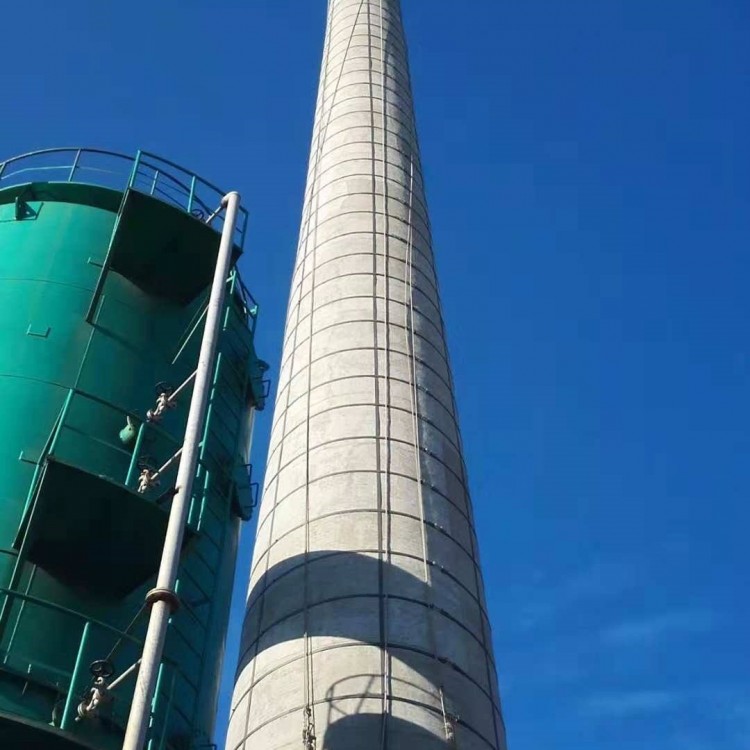
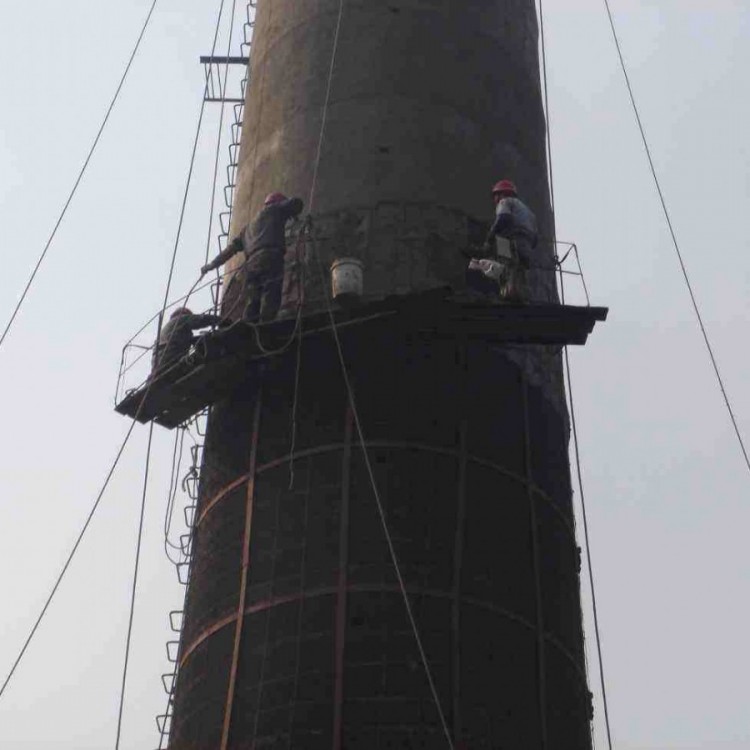







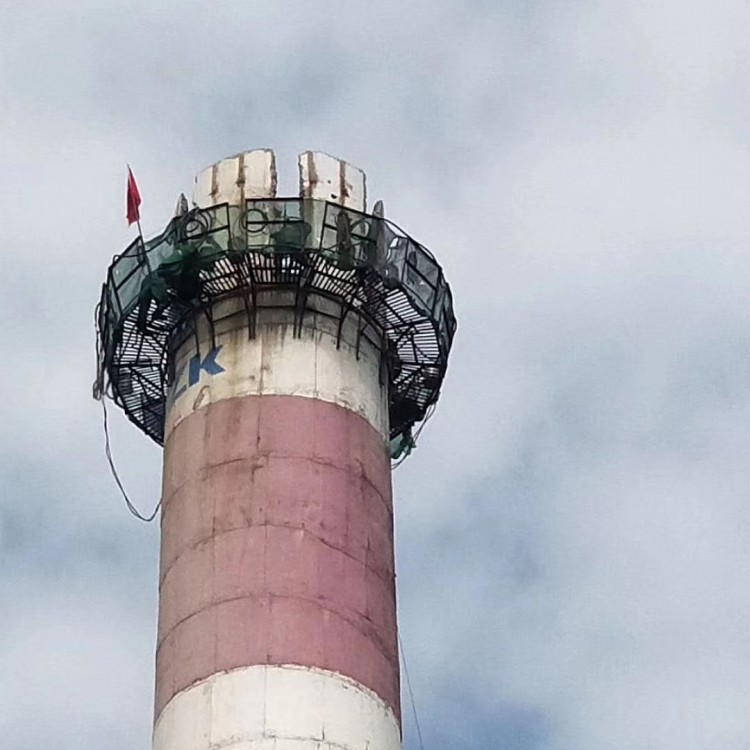
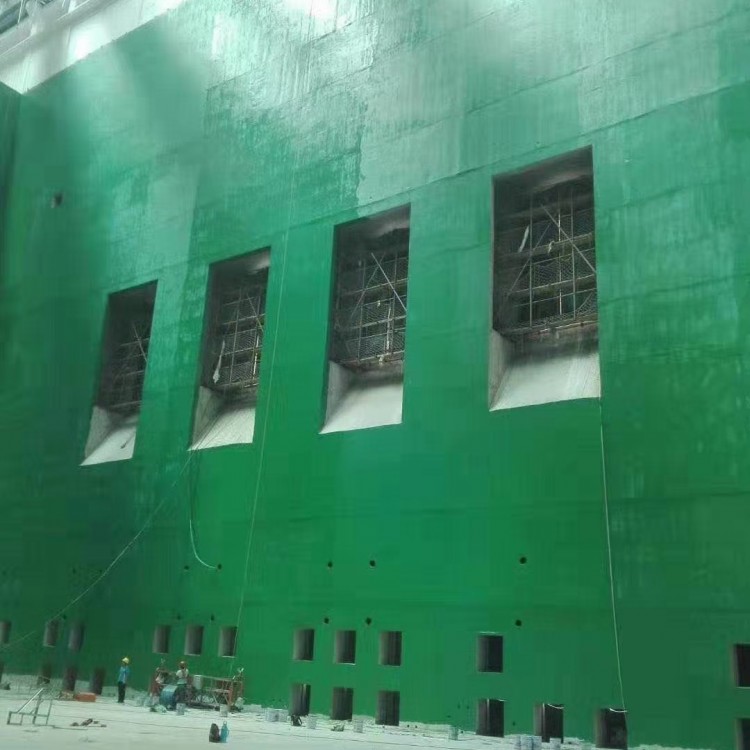
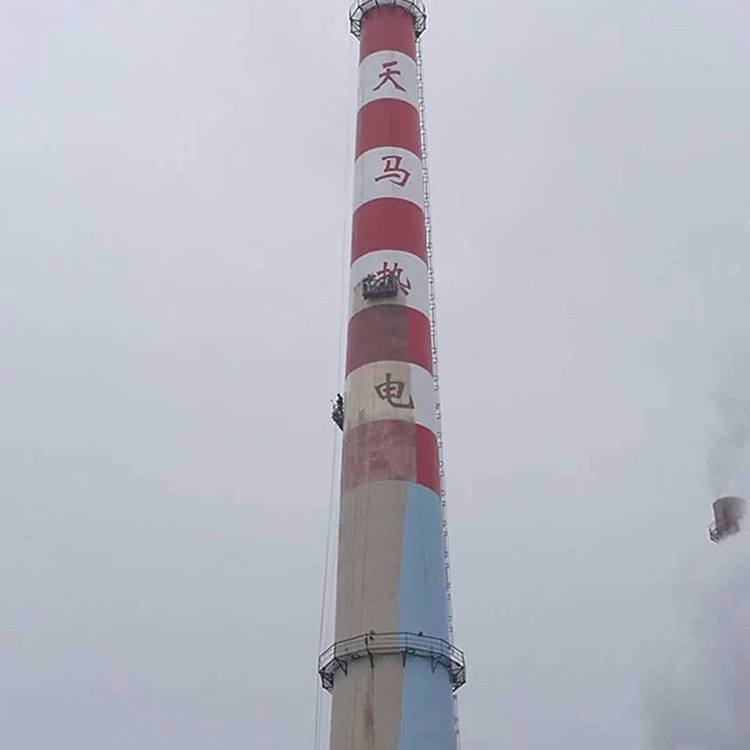
Huadian Corporation undertakes projects for - desulfurization tower chimney anti-corrosion painting, chimney painting with blue sky and white clouds, new boiler room chimney construction, installation of spotlight on chimney platforms, installation of spiral ladders on boiler room chimneys, demolition of abandoned chimneys, repair of high-rise chimney cracks, anti-corrosion treatment of inner wall glass phosphorus flakes, exterior painting and beautification of cooling towers, installation of aviation obstruction lights on chimneys, exterior wall logo spraying on fan tower cylinders, exterior wall leakage sealing and repair of cooling towers, chimney repair and reinforcement, repair and reinforcement of concrete chimneys, repair and reinforcement of steel chimneys, replacement of stainless steel top caps on chimneys, replacement of cast iron lids on chimney tops, repair and reinforcement of tall towers, repair and reinforcement of coal mine silos, repair and reinforcement of oil storage tanks, repair and reinforcement of concrete storage tanks, repair and reinforcement of ash storage, repair and reinforcement of raw material silos, repair and reinforcement of square chimneys, anti-icing devices for desulfurization chimneys.
One,Chimney Reinforcement Construction Plan
1. Construction Process:
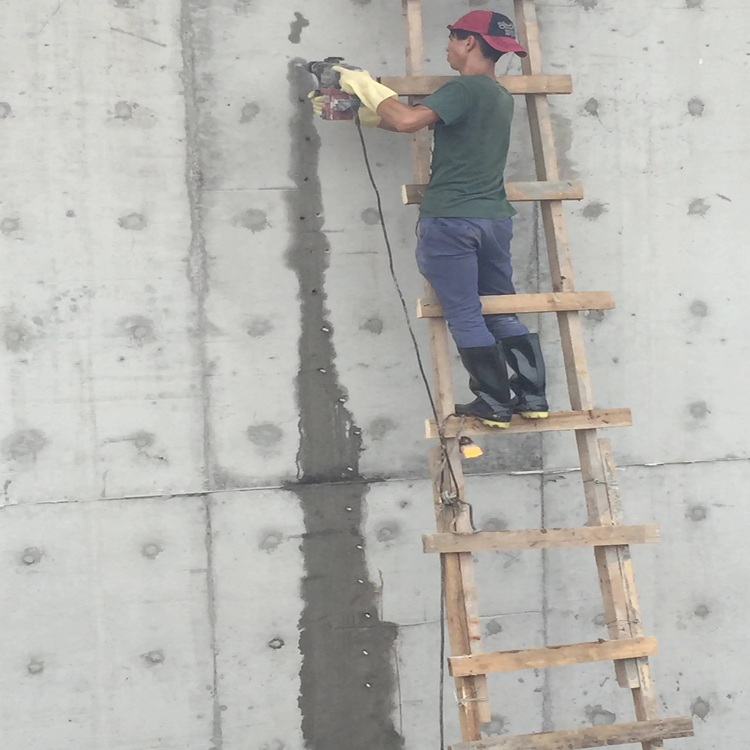
1. For visibly severe cracks, treat by creating a 20mm x 20mm groove at the crack location, then compact and level with膨胀水泥砂浆.
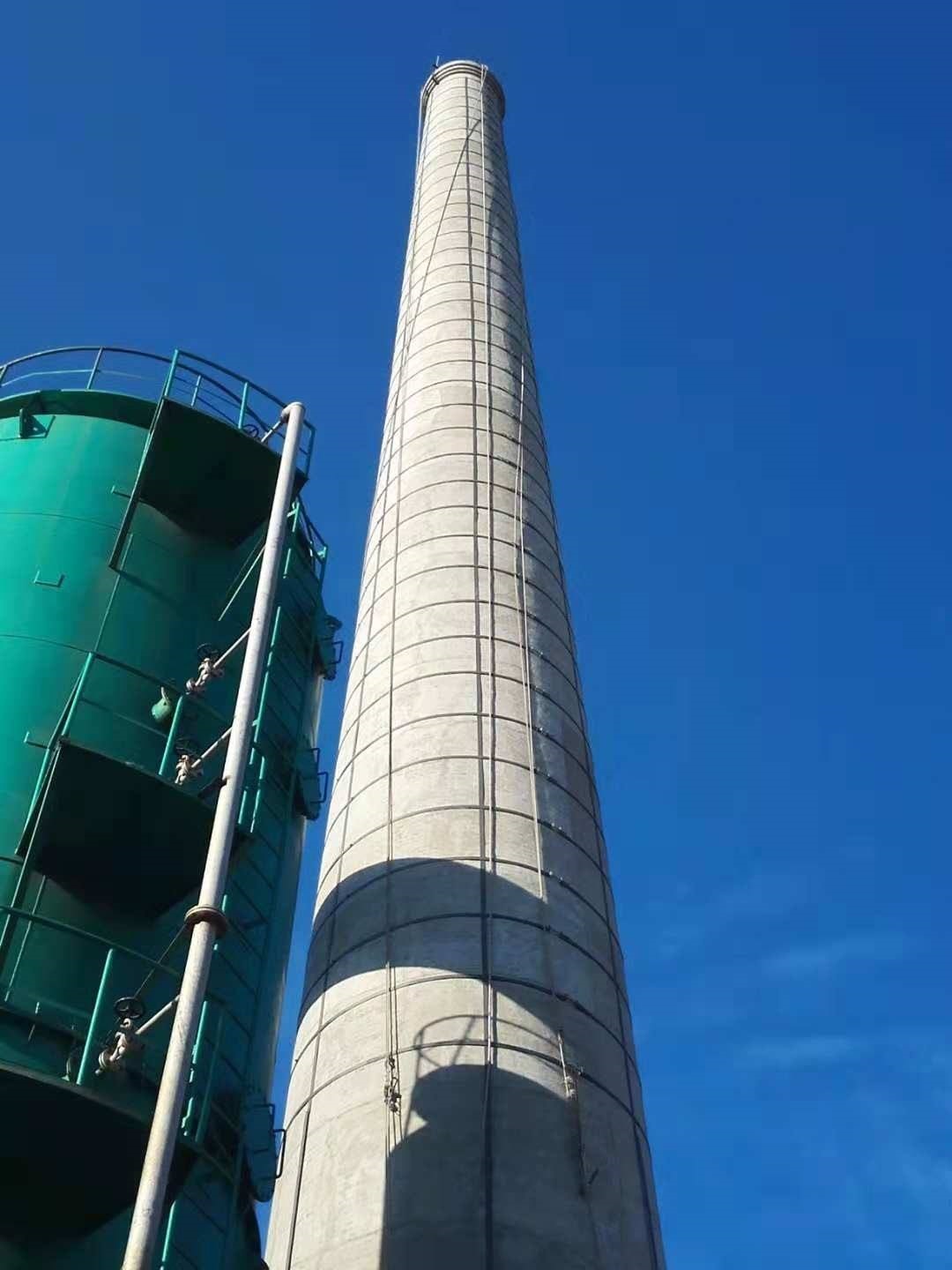
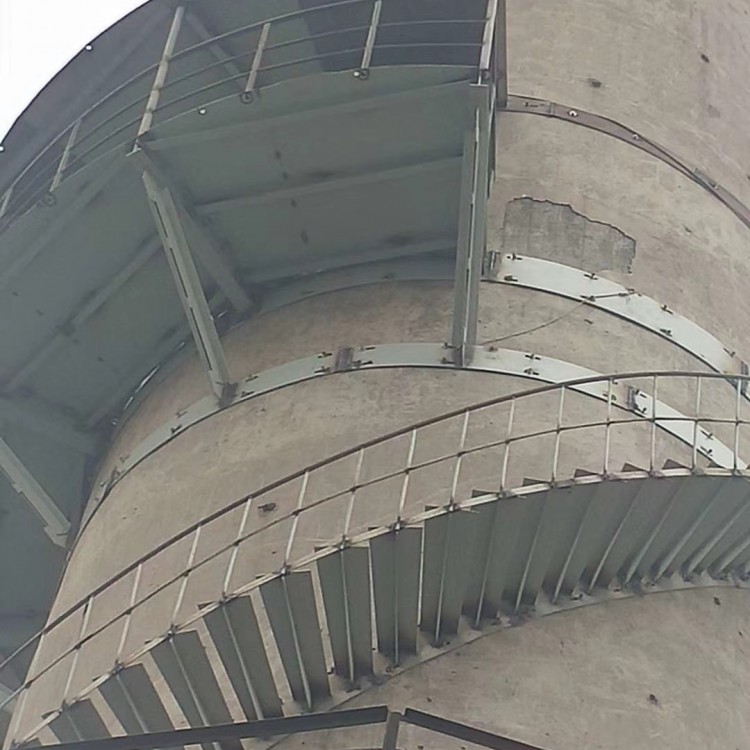
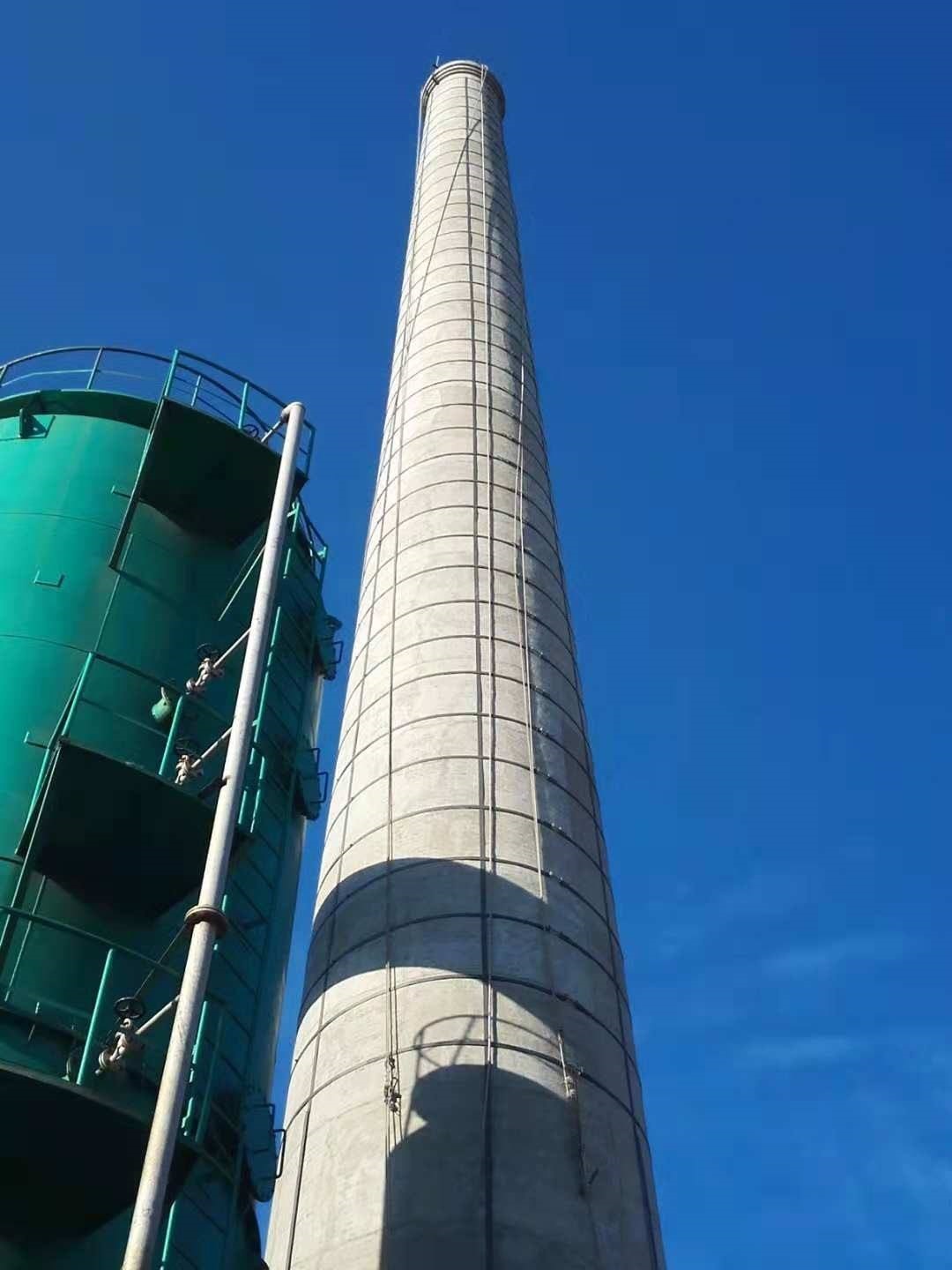
2. Ring girdles and longitudinal steel plate reinforcement are designed on the chimney body.
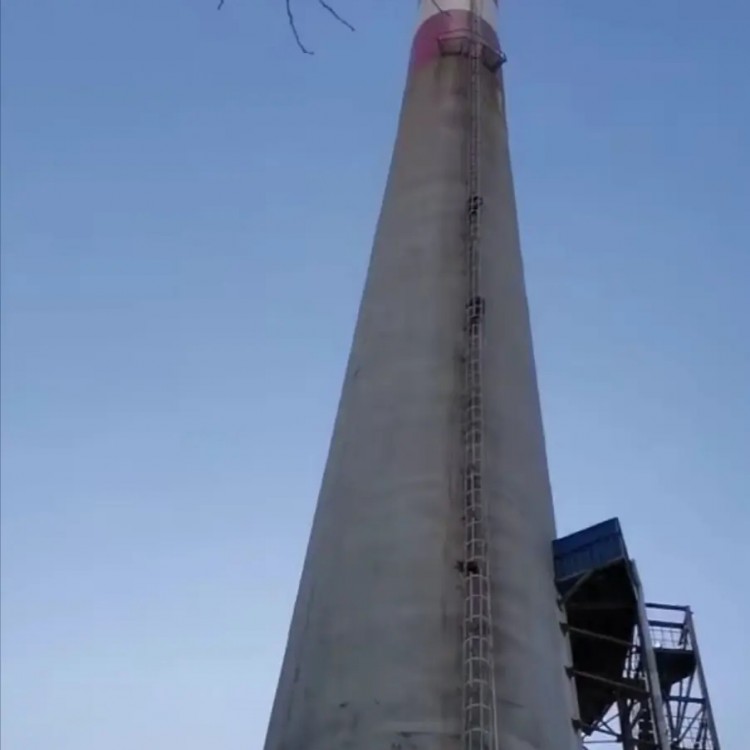
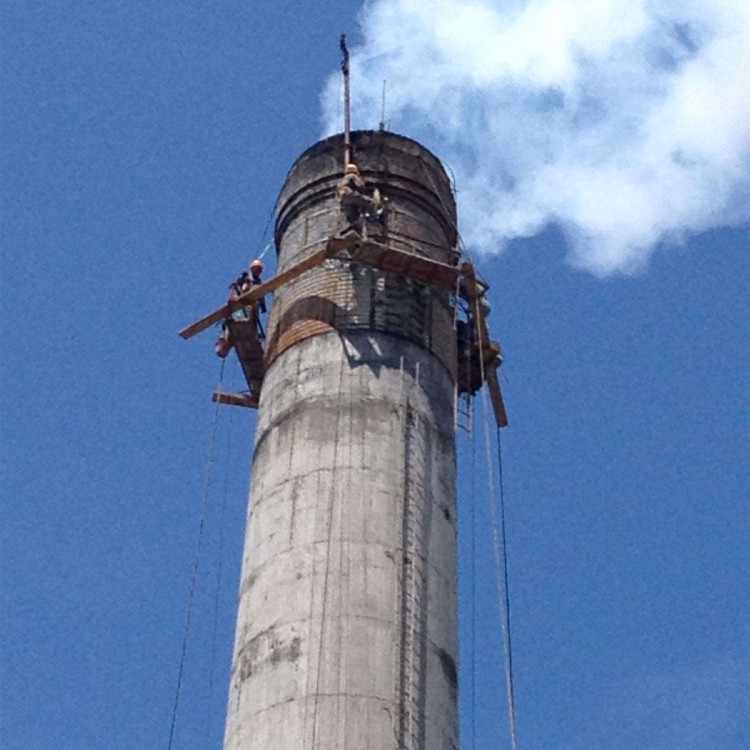
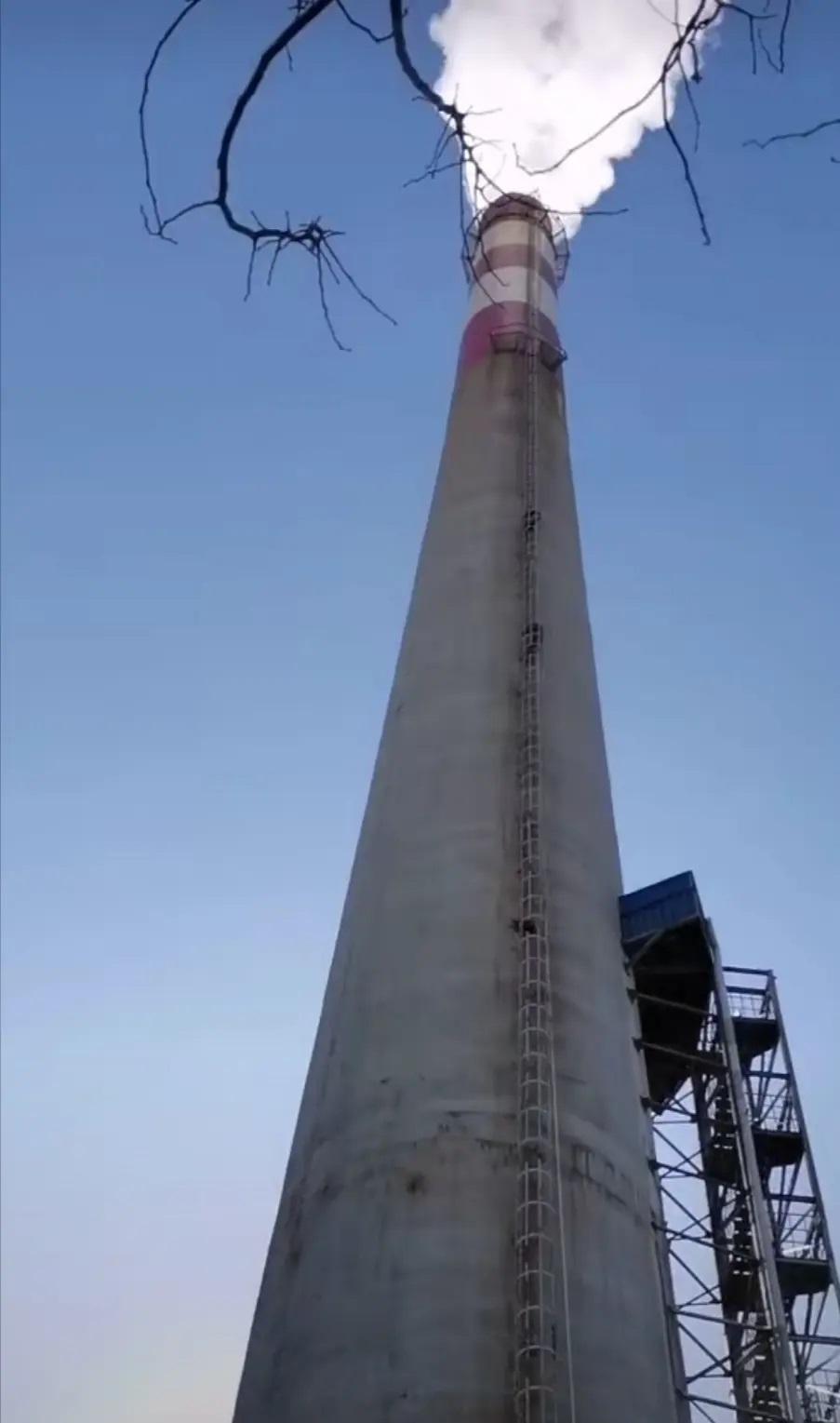
The chimney body within the range of +45.00m to +0.00m is reinforced using a method that incorporates annular steel hoop plates and longitudinal steel plates. In the area of the chimney body at the top (elevation +45.00m to +42.50m), very few cracks are visible, reportedly due to the absence of inspections for this elevation range due to high-altitude reasons. According to the original structural design drawings, there is one reinforced ring beam at this elevation range, with the thickness of the chimney wall increased to 490mm, and within a 1500mm height range of the ring beam, the wall thickness is 160mm. Based on this, we estimate that the cracks within this height range will not be severe. It is recommended that during construction, the net flue gas from the desulfurization system, after mist removal, should contain water droplets (≥20μm) at approximately 75mg/m3 (standard state, dry basis). As the mist removal unit operates for a longer period, its efficiency decreases, and the content of water droplets in the net flue gas will increase. Additionally, the water vapor content at the outlet of the desulfurization tower is also around 75mg/m3. In cold regions, during winter, outdoor temperatures can drop to as low as -30°C. Without a GGH unit, the net flue gas carrying water droplets and water vapor is emitted into the atmosphere through the chimney. When the net flue gas enters the atmosphere through the chimney, the temperature drops sharply from around 45°C to approximately -30°C. Some of the water droplets and water vapor carried by the net flue gas may freeze at the top of the chimney, leading to icing. In severe cases, the thickness of the ice at the top of the chimney can exceed 1m, the height can reach 5m, and the volume of ice can reach several cubic meters. The weight of the ice at the top of the chimney can be several tons, severely affecting the structural safety of the chimney. If the ice mass at the top of the chimney falls off, it can cause serious damage to the desulfurization equipment below the chimney and may also cause personal injury to passersby, with very serious consequences. Technical personnel should carefully inspect the situation before considering reinforcing the chimney body at this elevation range.
In the range of +43.50m to +00.00m, use 6mm thick, 600mm wide flat iron to manufacture annular steel hoop plates. The spacing in the hoop height direction is 1000mm, and the body is reinforced with 8 pieces of 6mm thick, 600mm wide flat iron in the longitudinal direction. First, fix the longitudinal steel plates to the chimney wall using Φ10 bolts. Level the position for the hoop steel hoop plates with cement, then install the annular steel hoop plates. The steel hoop plates must be tightly fastened with M18 bolts to ensure they are tightly against the wall. Fill the gap between the hoop steel hoop plates and the wall with expansion cement. Finally, weld the joints of the annular steel hoop plates and the intersections between the longitudinal and hoop steel plates.
Construction sequence
1. Chimney Flue Crack Repair - Crack Sealing - Installation of Longitudinal and Circular Steel Plates
Section 2: Construction Subdivision Methods
1. Construction Preparation
To better complete the construction tasks of the project and prevent any disruptions in progress due to insufficient technical preparation, it is essential to organize technical personnel effectively, ensuring thorough technical preparation. This includes a careful and detailed study of the construction documents and technical specifications.
According to the tool and equipment usage plan, each construction team shall verify, inspect, repair, or purchase the required tools and equipment for this team, ensuring completion three days prior to guaranteeing normal construction.
B) Material Control
This project utilizes steel banding for packaging, with strict control over material quality, particularly steel and cement.
c) Cement
Clinker Cement. Certificate of Conformity and inspection report provided.
d) Sand and gravel
Maintain control over the content of stones and sand; the indicators must comply with the specifications.
e) Steel quality with certificate of conformity
2. Treatment for cracks in the chimney shaft
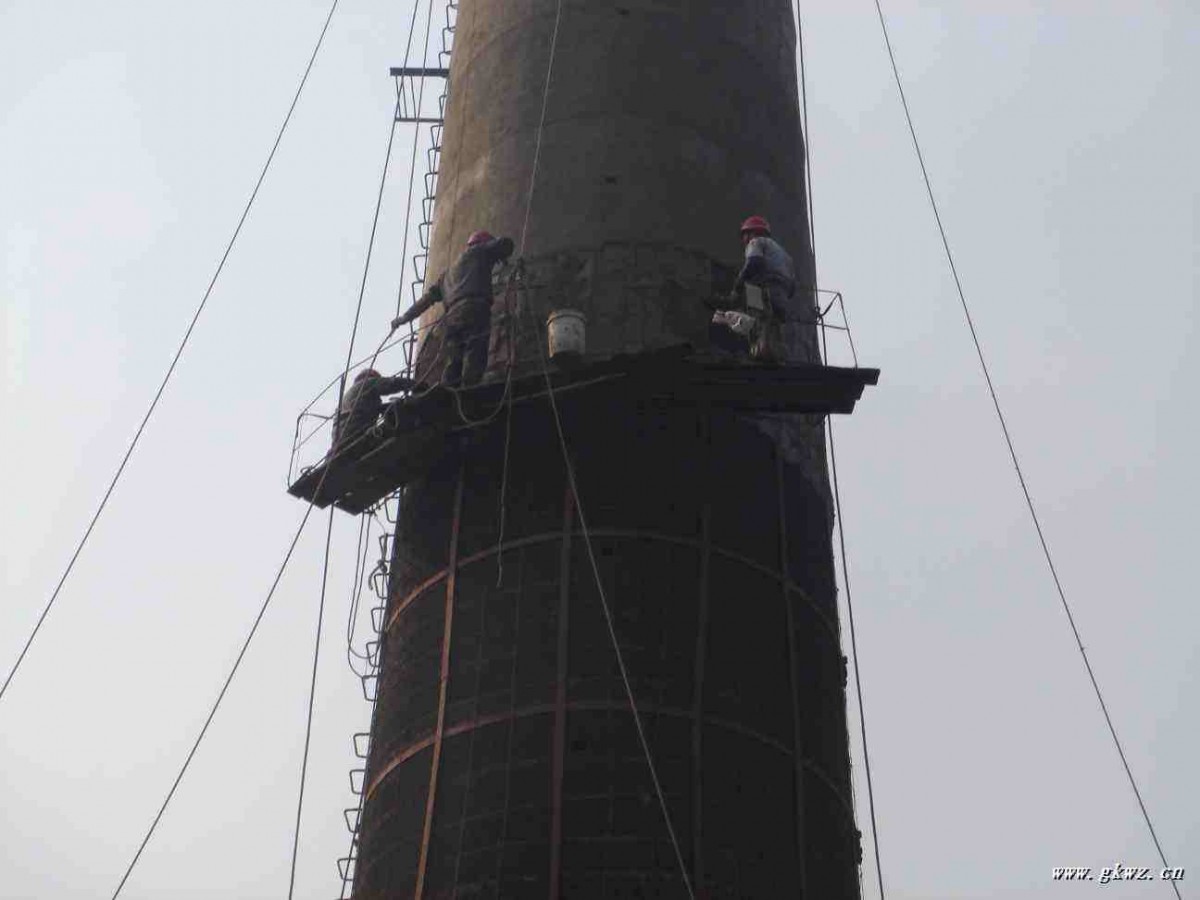
a) This project employs the construction method of using a standing ladder platform.
b) The construction method involves gently tapping the locally酥裂部位 with a small hammer to loosen it, and then expanding the area. The loosened concrete is then removed using specialized tools and transported vertically to the ground via a lifting device.
c) Quality Control: Workers inspect the chimney surface by tapping with a small hammer, checking each section twice by location.
3. Crack Repair
a) This project employs a fixed construction method, leveling with cement mortar.
b) The construction method involves manually chiseling open the cracks to meet the design requirements. The broken bricks are then knocked off and transported vertically to the ground using specialized tools.
c) Quality Control: Workers inspect the surface cracks on the chimney. Each worker checks each section of the chimney twice.
d) Inspect and clean with water; fill in with cement mortar.
3. Install longitudinal and circumferential steel plates
a) First, measure the circumference of the chimney and record it. Prepare the chimney clamps on the ground first. Then, apply anti-corrosion materials.
b) Installation of longitudinal and circumferential steel plates in construction.
c) First install the vertical steel plates and secure them to the chimney with expansion screws. Then, attach the horizontal steel hoops for the construction platform and weld them in place.
d) Quality Control: Chimney collars are installed according to the drawings.
f) The connections between the circumferential and longitudinal flanges are welded, followed by the application of anti-corrosion material.