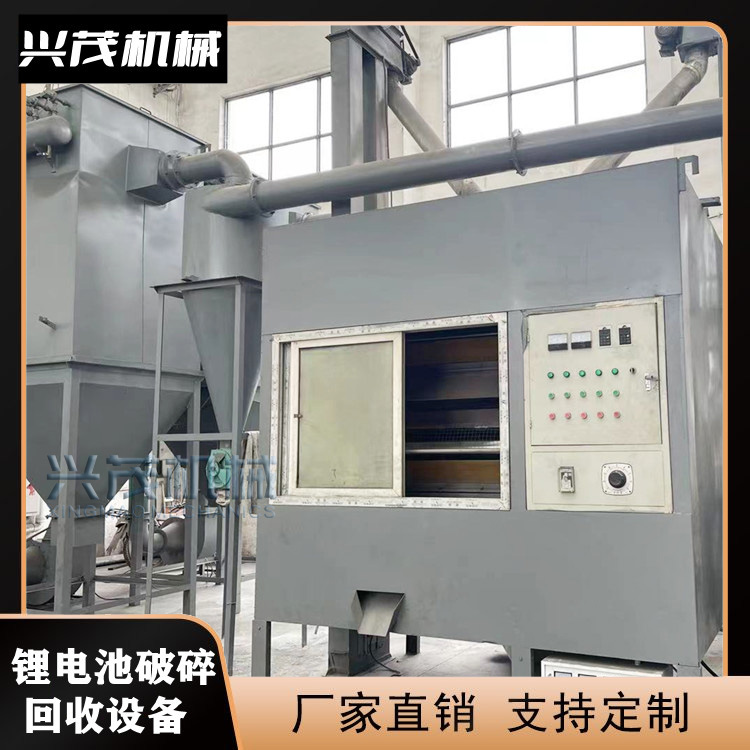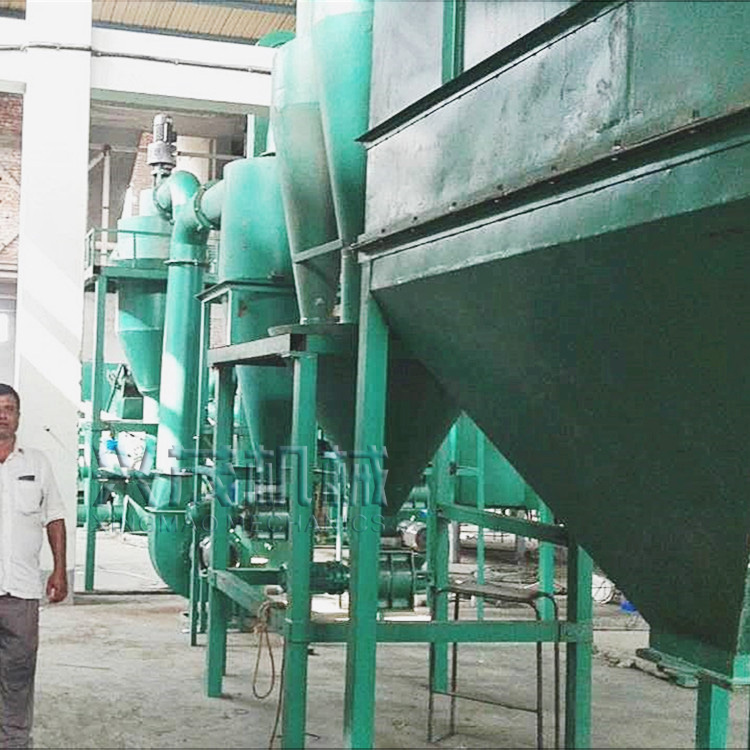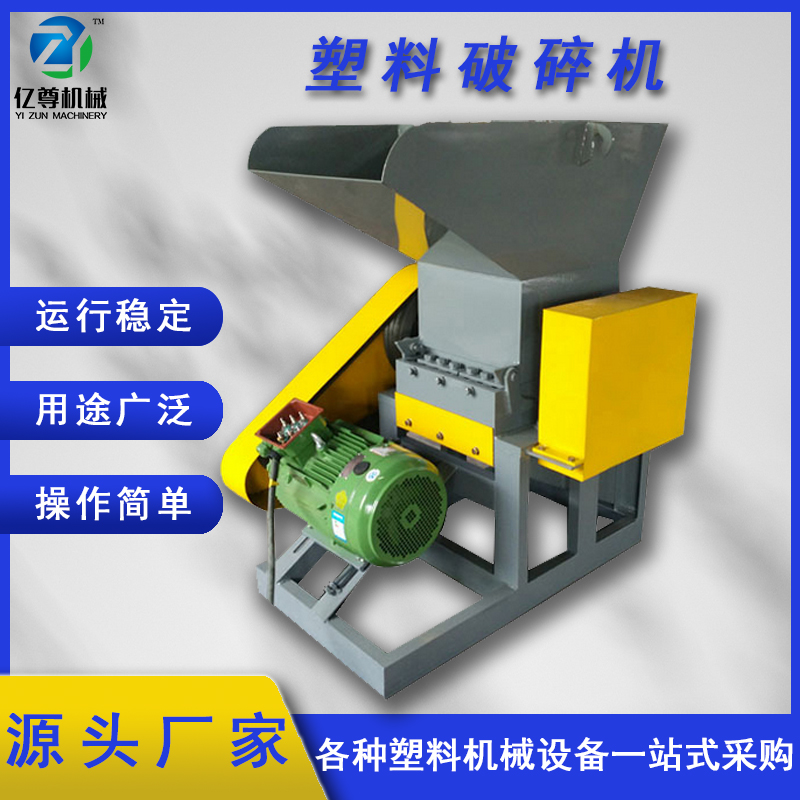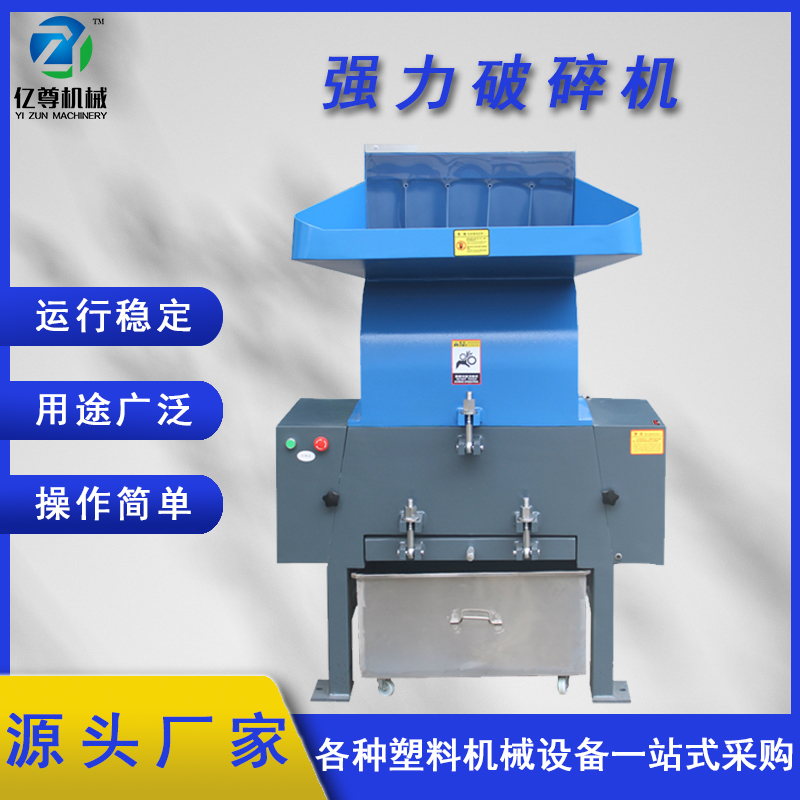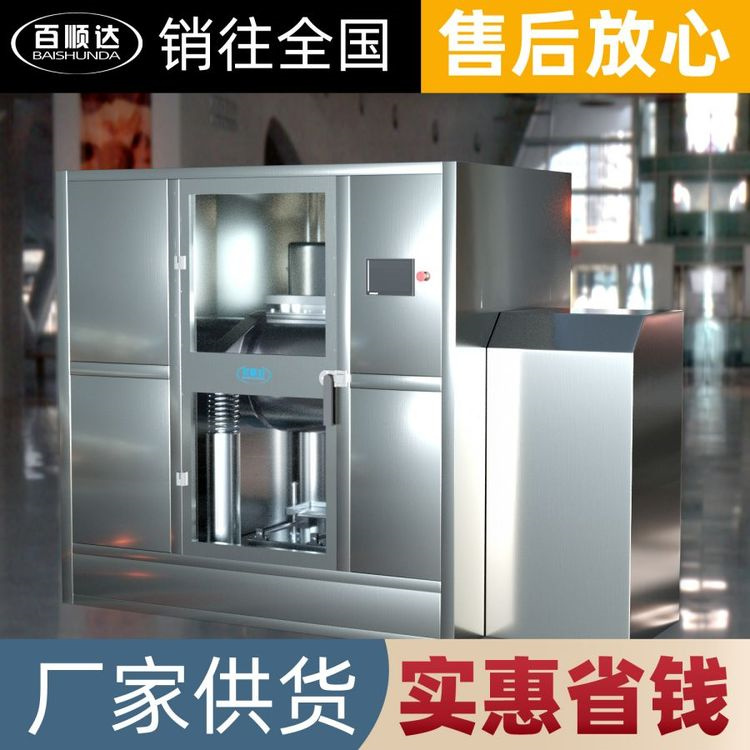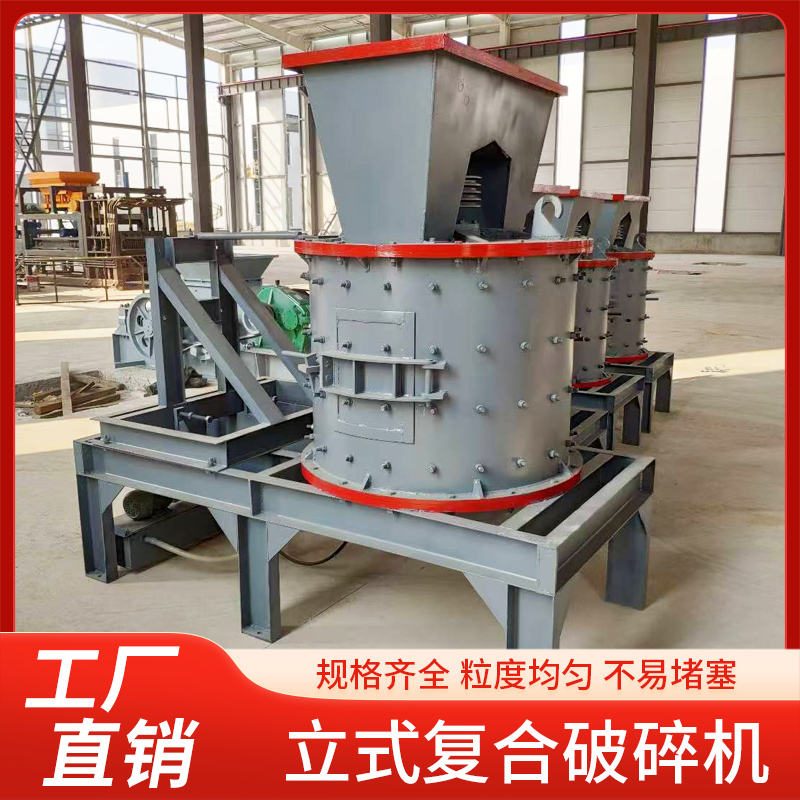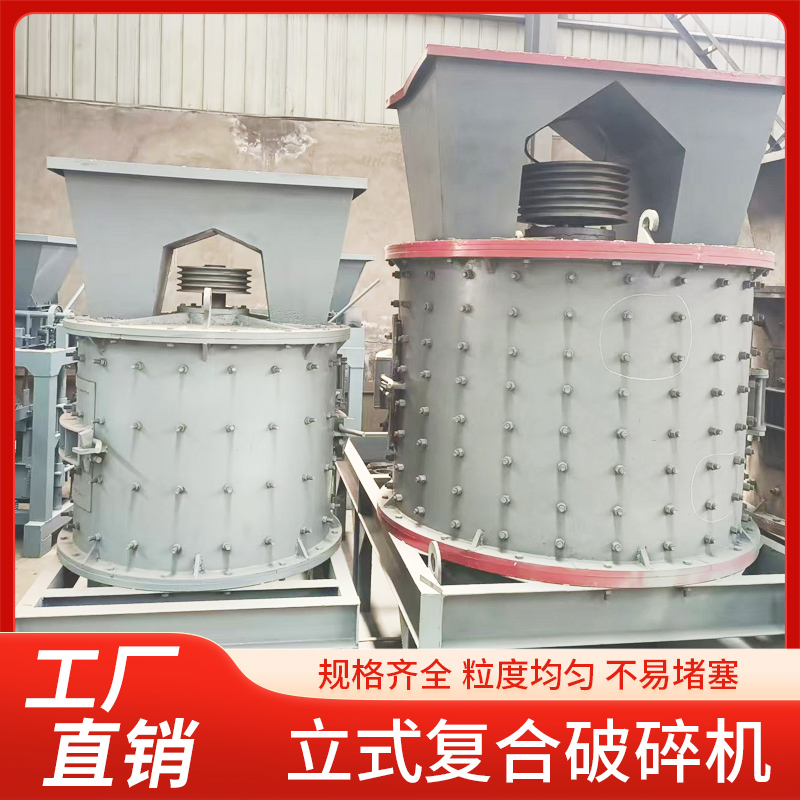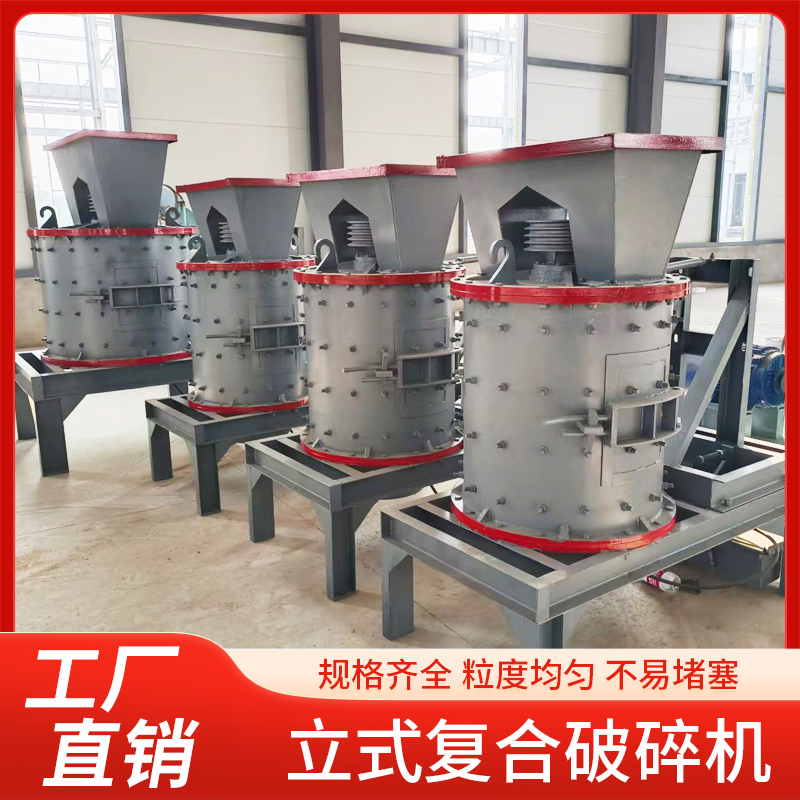








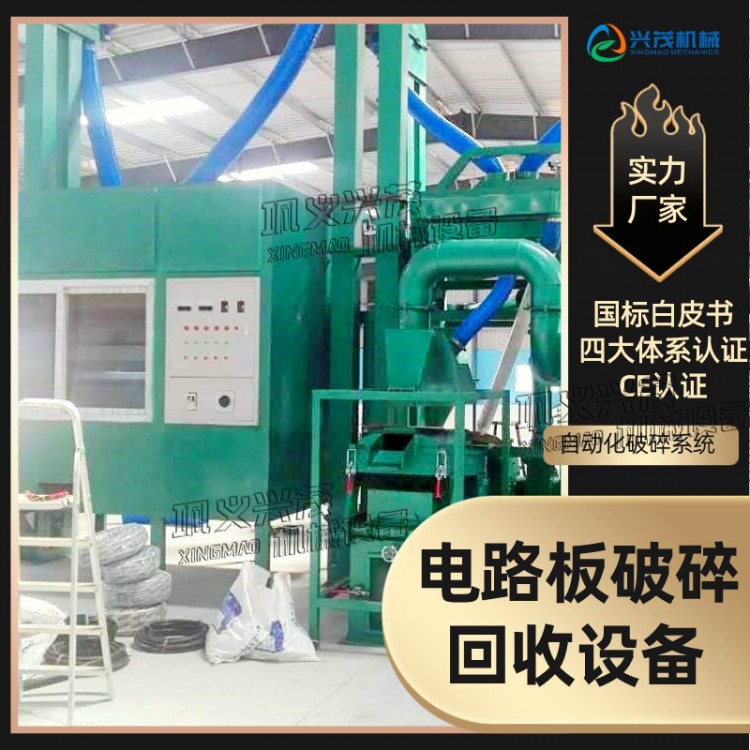
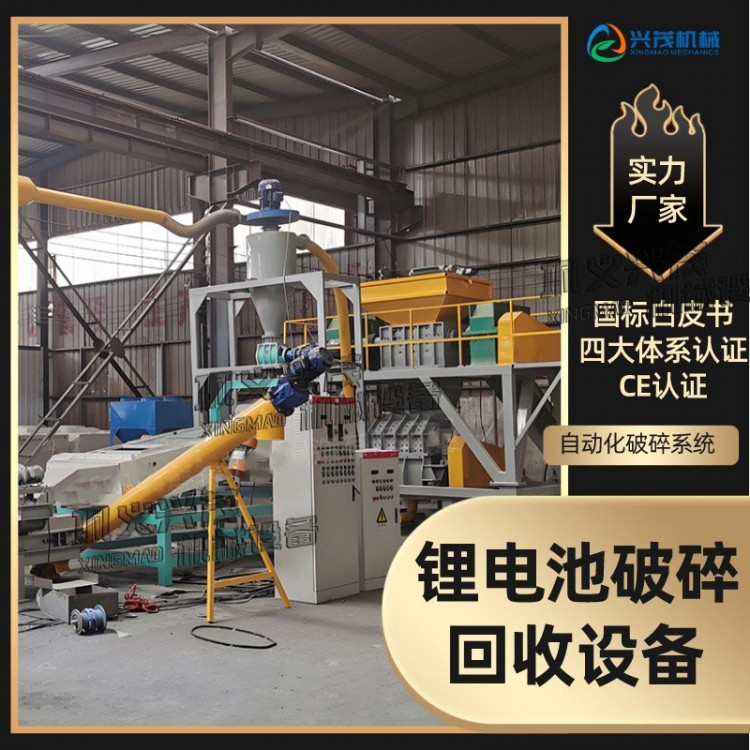
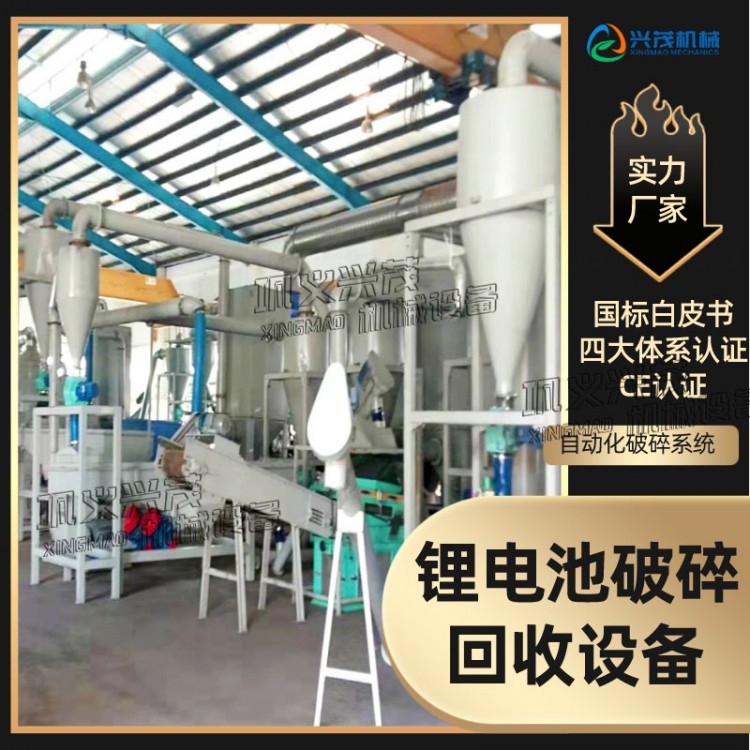
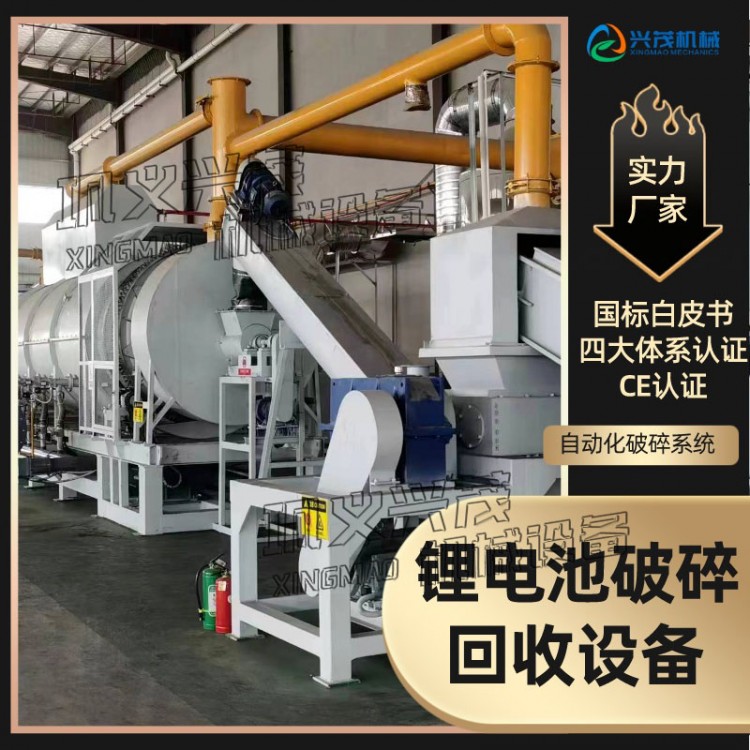
The waste circuit board crushing and recycling production line is mainly used for the separation of metals and non-metals from waste circuit boards, copper clad boards, printed circuit boards, and scraps. The successful development of this machine not only improves the quality of recycled copper but also prevents secondary pollution. This production line uses secondary crushing for the regeneration processing of waste circuit boards, turning them into a mixture of metal and resin fiber powder. Then, the metal is separated from the resin through wind and static separation. To prevent dust pollution during the processing, a pulse dust removal device is added after the air flow separation process, effectively solving the dust pollution issue.
The waste PCB crushing and recycling production line is mainly used for the separation of metals and non-metals from waste circuit boards, copper clad boards, PCBs, and scraps.
1. Excellent comprehensive performance, effective for recycling computer boards, computer circuit boards, TV boards, and other line control boards. Also compatible with the recycling of various circuit boards containing capacitors.
2. This production line is an upgraded and updated version of the A-type product. It consumes less electricity than the A-type, operates silently, requires minimal labor, and has a high level of automation, resulting in increased efficiency. Additionally, it occupies less space, making it an ideal production line for recycling and utilizing old circuit boards.
3. The complete set of equipment utilizes a modern dust collector, featuring a three-in-one dust removal system (cyclone dust removal + electrostatic dust removal + dedusting) for air, with no waste gas emissions.
4. The equipment boasts a clean appearance with no dust bags, overcoming the traditional dust collector's inability to address dust and odors effectively.
5. To prevent dust pollution during the processing, a pulse jet dust removal unit is added after the air flow sorting process, effectively solving the dust pollution issue.
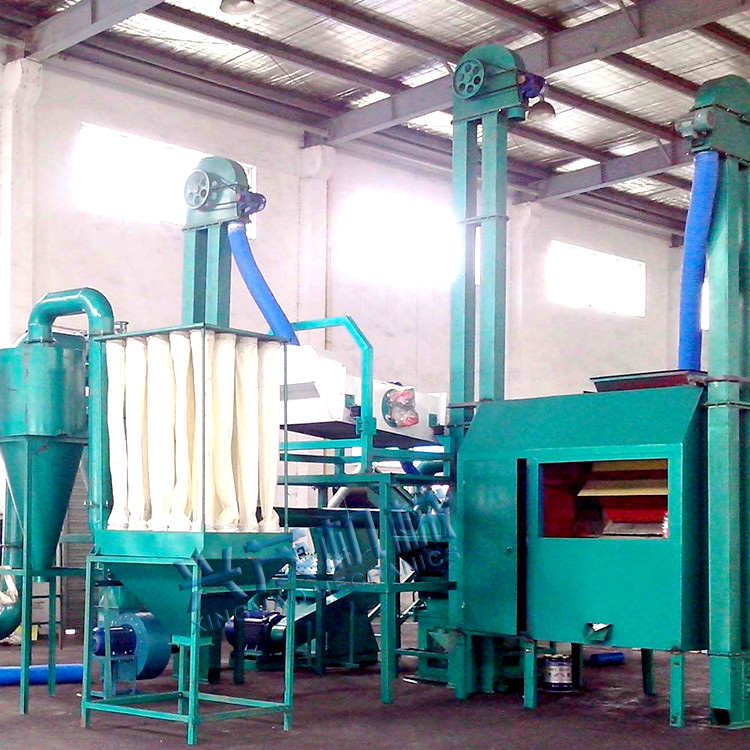 PCB Shredding and Recycling Equipment Process Flow Diagram
Shredder: Shreds the plain boards into pieces of 2-3 cm.
2. PCB Shredder: Shreds the broken circuit boards to a particle size of approximately 20 mesh.
3. Analytical Separator: Separates the crushed material through air classification, distinguishing between resins, copper, dust, and fibers. Dust and fibers are drawn into the collector by an exhaust fan, while resins and copper are fed into a grading sieve.
4. Collector: Collects dust and fibers; fibers are discharged after collection.
5. Pulse Jet Cleaner: Collects dust and ultra-fine fibers generated during the crushing process.
6. Grading Screen: Separates resin and copper. Unseparated resin and copper are returned to the main machine for further crushing, while separated resin and copper are sent to the gravity separator for sorting.
7. Density Separation: Perform a density separation of resin powder and copper. As the weight of copper is greater than that of the resin, the copper will be separated to one side, while the resin will be separated to the other. This achieves the separation of metals from non-metals. This is a technique currently in use domestically, capable of achieving a metal separation efficiency of over 99%.
8. High-voltage Electrostatic Separation: Further process the tailings from the gravity separation machine through high-voltage electrostatic separation to separate fine copper powder and resin contained in the tailings (The principle of high-voltage electrostatic separation is: adjust the input power through a transformer to 100,000 volts of high voltage, forming a high-voltage magnetic field that has an adsorption effect on conductive metals, thereby achieving the separation of metals from non-metals).

Economic Analysis of Electrical (Circuit) Board Recycling Equipment
Total production line power: 98 Kw, processing capacity: 700 Kg/h, copper content in circuit boards is approximately 18% (varies for different types of scrap circuit boards, generally between 13%-35%), 5 operators required.
(1) Production Estimate (calculated based on 300 days a year, 8 hours per day)
(a) Annual copper production: 300(days) × 8(hours) × 700(Kg) × 18%(copper content) = 302.4 tons of copper. At a price of 50,000 yuan/ton, the annual value of copper production is: 302.4 × 50,000 = 15,120,000 yuan (15.12 million yuan)
(b) Annual glass fiber powder production: 300(days) × 8(hours) × 700(Kg) × 82%(content) = 1377.6 tons. At a price of 1000 yuan/ton, the annual value of non-metallic materials is: 1377.6 × 0.1(thousand yuan) = 137.76 thousand yuan.
(c) Total annual output: 1512 + 137.76 = 1649.76 (10,000 yuan)
(2) Estimate
(a) Annual Electricity Consumption (with electricity cost at 0.8 yuan/kWh): 100 (Kw) × 300 (days) × 8 (hours) × 0.8 (yuan/kWh) = 19.2 (10,000 yuan)
(b) Labor Cost: 2000 RMB per person/month × 12 months × 5 people = 120,000 RMB
(c) Depreciation expenses (at 10% depreciation), approximately: 260,000 x 10% = 2.6 (10,000 RMB)
(d) Approximate Repair Cost: 10,000 yuan
(e) Scrap Circuit Board Collection Fee: 300 (days) × 8 (hours) × 700 (Kg/h) × 6 (RMB/Kg) = 1,008 (Million Yuan)
Rent: 2,000 RMB/month × 12 months = 24,000 RMB
Total: 19.2 + 12 + 2.6 + 1 + 1008 + 2.4 = 1034.2 (10 million yuan)
Gross Profit: 1649.76 - 1034.2 = 615.56 (Ten Thousand Yuan)