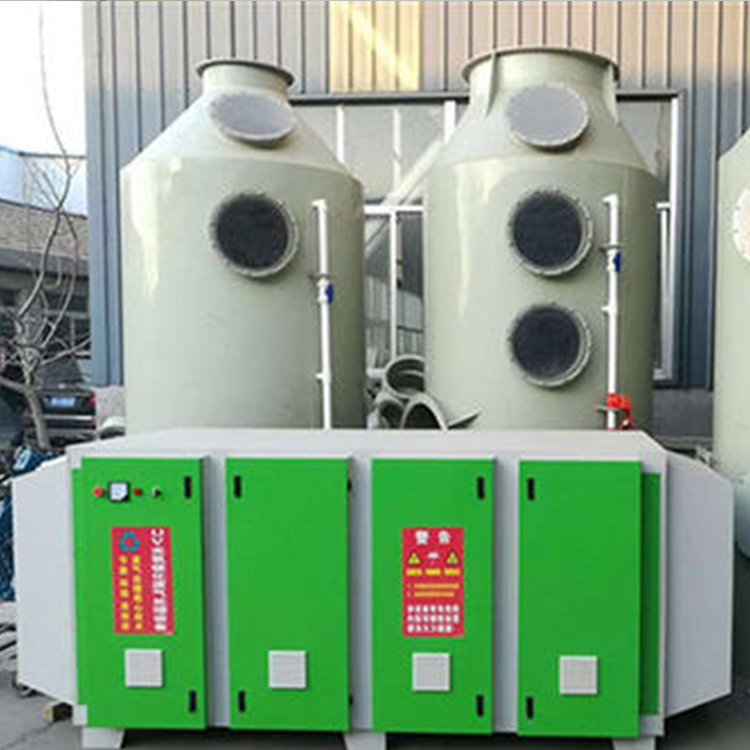

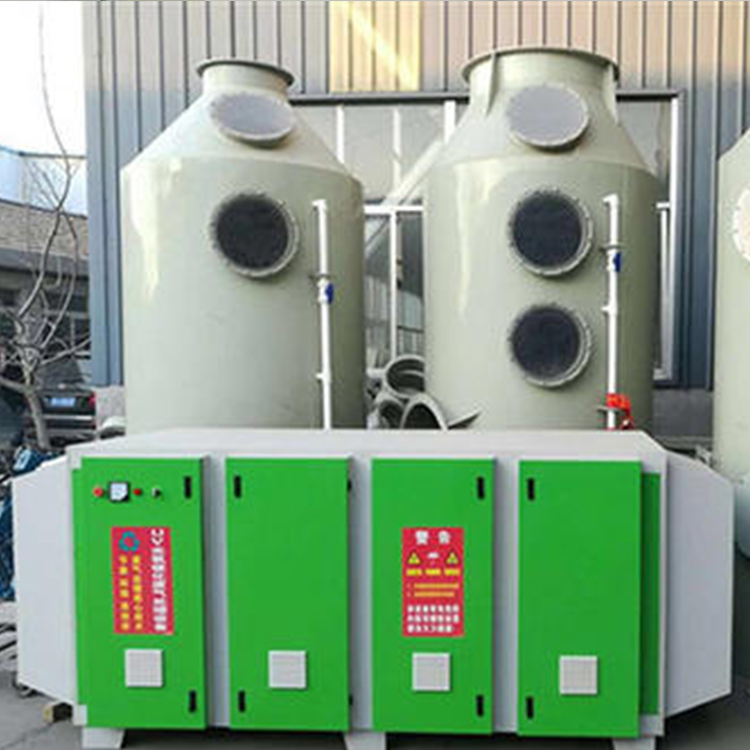







1、 Working principle of UV photocatalytic equipment:
1. By using a specially designed high-energy high ozone UV beam irradiation to crack and discharge waste gas, it can effectively treat the molecular chain structure of waste gas such as hydrogen sulfide, hydrogen sulfide, methyl mercaptan, methyl sulfide, styrene, sulfide H2S, VOC, etc., so that the molecular chains of organic or inorganic polymer waste gas compounds can be degraded and transformed into low molecular compounds such as CO2, H2O, etc. under high-energy UV beam irradiation, thereby achieving effective treatment and meeting emission standards.
2. Utilizing high-energy and high ozone UV beams to decompose oxygen molecules in the air to produce free oxygen, also known as reactive oxygen species. Due to the imbalance of positive and negative electrons carried by free oxygen, it needs to combine with oxygen molecules to produce ozone. Ozone has a strong oxidizing effect on organic matter decomposed by ultraviolet beam irradiation, and has a good removal effect on odorous gases and other irritating odors.
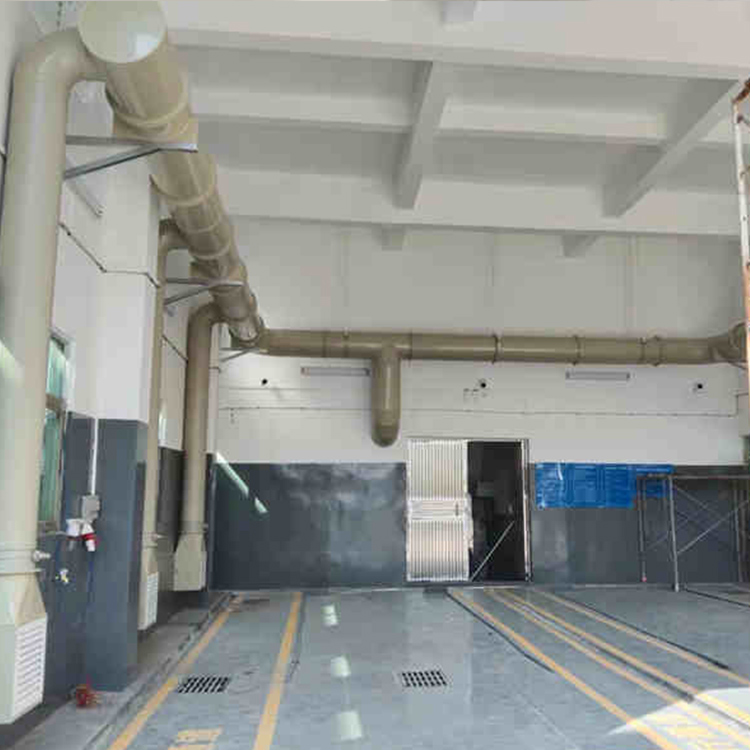
3. After the odorous gas enters the reaction chamber equipped with a UV photocatalytic oxidation module through the exhaust gas collection and exhaust equipment, high-energy UV beams and ozone synergistically decompose and oxidize the odorous gas, causing it to degrade and convert into low molecular weight compounds, water, and carbon dioxide, which are then discharged outdoors through exhaust pipes.
4. By using high-energy UV beams to break down the molecular bonds of bacteria in odorous gases, the nuclei of bacteria are destroyed, and then oxidized by ozone to achieve deodorization and kill bacteria.
2、 Characteristics of UV photocatalytic equipment:
1. UV photocatalytic equipment can effectively remove inorganic pollutants such as volatile organic compounds, hydrogen sulfide, ammonia, as well as various odors, with a deodorization efficiency of over 98%. The odor pollutant emission standard (GB14554-93) has been issued for deodorization effect
2. UV photocatalytic equipment can adapt to the deodorization and purification treatment of most high concentration, atmospheric volume, and different odorous gases. Through reasonable module configuration, it can be widely used in the deodorization, sterilization, and purification treatment of odorous gases in refineries, rubber plants, chemical plants, sewage treatment plants, garbage transfer stations, sewage pump rooms, central air conditioning, and other areas. It can work continuously 24 hours a day, with stable and reliable operation.
3. UV photocatalytic equipment has no mechanical devices, no movement noise, no need for dedicated management and daily maintenance, only requires regular inspection and maintenance, low maintenance and energy consumption costs, low wind resistance, and can save a lot of exhaust power energy consumption, achieving the goal of energy conservation.
4. The UV photocatalytic equipment adopts the principle of photolysis and adopts explosion-proof treatment, eliminating safety hazards. It has high fire prevention, explosion prevention, and corrosion resistance performance, and stable equipment performance, especially suitable for high concentration flammable and explosive waste gas applications.
5. UV photocatalytic equipment does not require special pre-treatment of odorous gases, such as heating, humidification, etc. The working environment temperature of the equipment is between -30 ° C and 95 ° C, humidity is between 30% and 98%, and pH value is between 2 and 13. It can work normally without adding other substances or chemicals to participate in the treatment.
6. UV photocatalytic equipment can be flexibly configured according to the size of air volume and gas concentration. It adopts a drawer style plug-in installation form, with uniform accessories and easy installation and maintenance. Spare parts can be maintained and replaced online, which is convenient and flexible.
3、 Advantages of UV photocatalytic equipment:
1. Effective Odor Removal: It can effectively remove major pollutants such as volatile organic compounds (VOCs), inorganic substances, hydrogen sulfide, ammonia, thiols, as well as various odors. The purification and deodorization efficiency can reach over 98%, exceeding the odor pollutant emission standards issued in 1993
2. No need to add any substances: just set up corresponding exhaust pipes and exhaust power to decompose and purify industrial waste gas through this equipment, without adding any substances to participate in chemical reactions.
3. Strong adaptability: It can adapt to high concentration, atmospheric volume, and purification treatment of different industrial waste gases. It can work continuously 24 hours a day and operate stably and reliably.
4. Low operating cost: This equipment has no mechanical action, no noise, no need for dedicated management and daily maintenance, only requires regular inspections. The energy consumption of this equipment is low (only about 0.2 kWh of electricity is consumed per 1000 cubic meters/hour of processing), and the equipment has low wind resistance