














Overview
In order to reduce energy consumption, air heat exchangers are installed in the flue gas of heating furnaces to recover a large amount of waste heat from the flue gas, achieve fuel savings, reduce production costs, increase combustion temperature, and increase furnace output. Air heat exchangers are suitable equipment for waste heat utilization and are widely used in various industrial furnaces such as steel rolling heating furnaces, heat treatment furnaces, and calcination heating furnaces. There are many types of air heat exchangers used in furnaces, and currently the vast majority of them both domestically and internationally are metal heat exchangers. Air heat exchangers use the heat from the exhaust gas discharged from the furnace to preheat the air to a certain temperature and return it to the furnace for combustion assistance or use in other equipment. Metal heat exchangers have the characteristics of small volume, high heat exchange efficiency, good tightness, and simple structure.
preheater
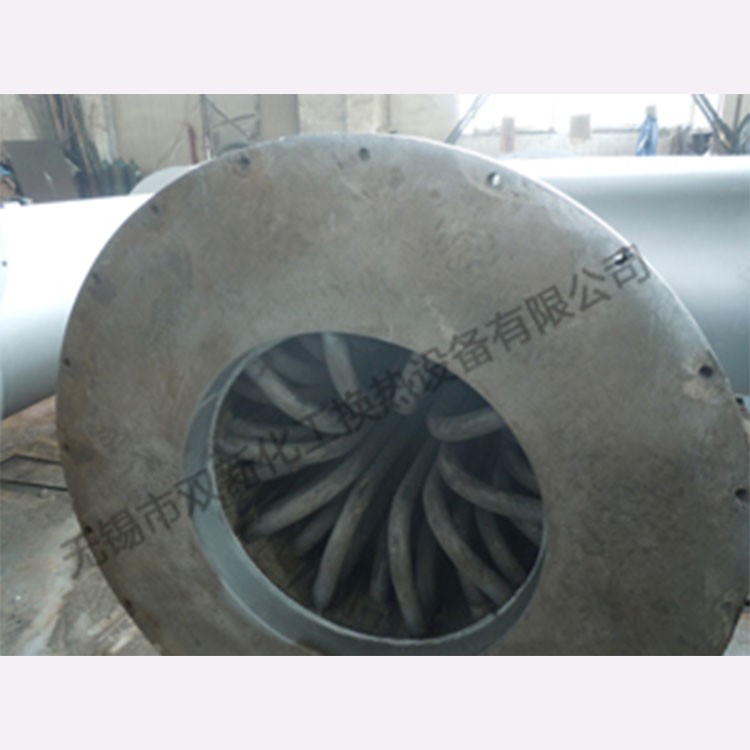
In order to reduce energy consumption, air heat exchangers are installed in the flue gas of heating furnaces to recover a large amount of waste heat from the flue gas, achieve fuel savings, reduce production costs, increase combustion temperature, and increase furnace output. Air heat exchanger is a heat exchanger used for waste heat utilization in heating furnaces. In order to reduce energy consumption, air heat exchangers are installed in the flue gas to recover a large amount of waste heat from the flue gas, achieve fuel savings, reduce production costs, increase combustion temperature, and increase furnace output. The air heat exchanger is a TFH type cylindrical air heat exchanger with a compact structure for waste heat utilization, suitable for vertical or horizontal flue gas ducts. The heat exchanger is a cylindrical structure, ingeniously composed of an inner cylinder, a middle cylinder, and an outer cylinder. The inner cylinder is the heat exchange cylinder, and the middle cylinder is the jet cylinder, or additional tube bundles can be added to the inner side of the inner cylinder as needed. The flue gas passes through the inner cylinder, and the preheated air is sprayed onto the inner cylinder through the middle cylinder at a certain speed inside the outer cylinder, thereby obtaining heat. This heat exchanger is suitable for high-temperature flue gas and flue gas with high dust content. It is easy to install and can be used as part of a chimney.
Manufacturing Inspection
1. After welding the steel pipes and tube plates of the tubular heat exchanger, remove the welding slag and conduct a leakage test with kerosene. Before leaving the factory, the heat exchanger undergoes individual or overall pressure testing. The test medium is air, with a pressure of 2000 millimeters of water column. If there is no leakage within 1 hour, it is considered qualified. For large heat exchangers, due to transportation reasons, they cannot be assembled as a whole and only undergo individual pressure tests before leaving the factory. After the equipment arrives at the construction site, it is assembled and welded, and then subjected to overall pressure testing.
2. For cylindrical heat exchangers, steel plates are used for forming, and after forming, an overall pressure test is conducted. The test medium is air, with a pressure of 2000 millimeters of water column. If there is no leakage within 1 hour, it is considered qualified.
Install
1. Install according to the requirements of the heating furnace design layout plan or heat exchanger installation diagram.
2. Lift the heat exchanger into the constructed flue, and in special circumstances, the flue can be constructed after it is in place.
3. For heat exchangers with shells, they should be directly connected to the flue after being in place.
4. Connect the inlet and outlet air ducts and wrap them with insulation.
Use
1. When the flue gas temperature reaches 400 ℃ or above, the heat exchanger must be in the air supply state. When the preheating temperature exceeds the high design value, the air volume should be increased to release the excess hot air. When the temperature of the flue gas entering the heat exchanger is too high, cold air mixing measures can be taken.
2. When the furnace is shut down, the heat exchanger should continue to supply air and the fan should not be stopped immediately. The hot air should be released. The fan can only be turned off when the temperature of the flue gas entering the heat exchanger is below 400 ℃.
3. Sudden power outages can easily cause the heat exchanger to burn out, and should be prevented as much as possible. If this situation occurs, the flue gate should be immediately closed or effective measures should be taken to reduce the flue gas temperature, so that the heat exchanger will not overheat and be damaged.
4. If any abnormal situation is found in the heat exchanger, the cause should be identified and dealt with in a timely manner.
Negotiate and place orders
In order to maximize the efficiency of the heat exchanger, customers are requested to provide the following technical parameters when selecting our products:
1. The flow rate of flue gas entering the heat exchanger.
2. The airflow entering the heat exchanger.
3. The temperature of the flue gas entering the heat exchanger.
4. The required air preheating temperature.
5. Heating furnace type.
6. Types of heating furnace fuels.
7. Smoke exhaust method.
8. Allow for the loss of flue gas resistance in the heat exchanger.
9. Allow for air resistance loss in the heat exchanger.
10. Allow for large external dimensions and interface sizes of the heat exchanger.

















