
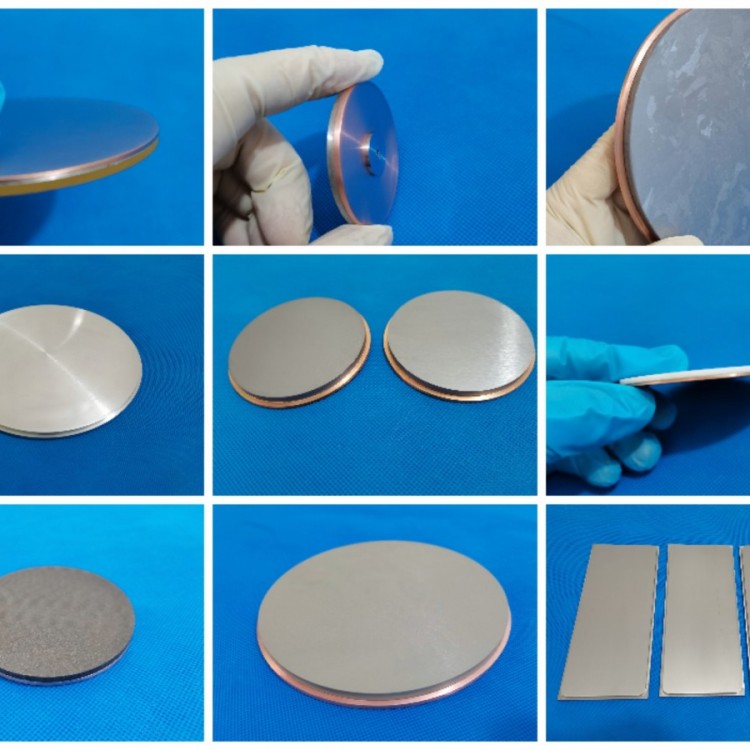
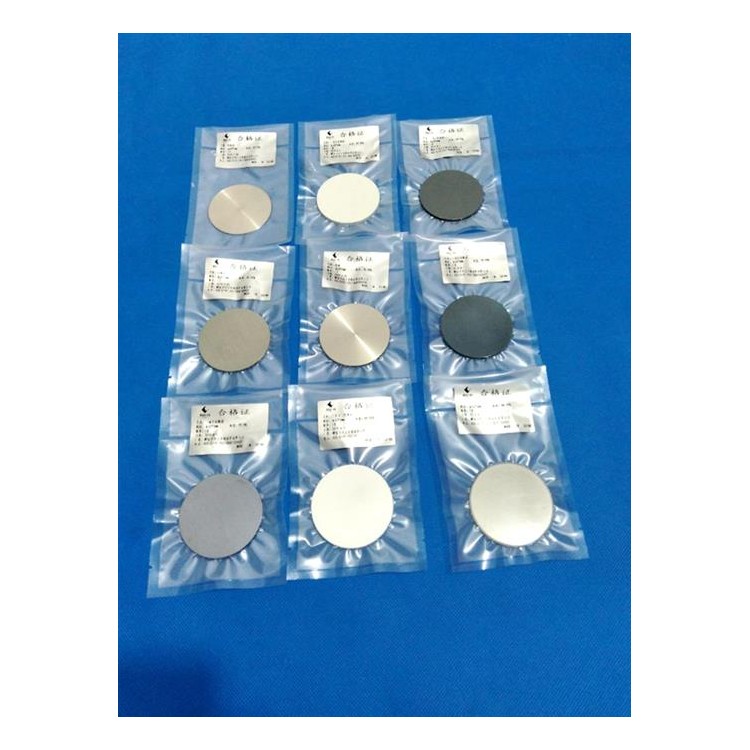












The double-layer glow plasma surface technology was used to perform tungsten molybdenum co infiltration on the surface of Ti6Al4V titanium alloy, and the structure and high-temperature friction and wear properties of the infiltration layer were studied. The results showed that a tungsten molybdenum co diffusion layer with good bonding to the substrate was formed on the surface of Ti6Al4V alloy; The infiltration layer consists of a deposition layer, a transition layer, and a diffusion layer. The infiltration layer is composed of tungsten, molybdenum, and their solid solutions TixW1-x and MoTi in titanium alloys; Compared with the matrix, the friction coefficient of the co infiltrated layer slightly decreases at 450 ℃, while the wear resistance is significantly improved. After wear, the surface wear marks of the infiltrated layer are significantly reduced, and the adhesion and abrasion phenomena are significantly reduced. The wear mechanism is mainly adhesive wear and a small amount of micro cutting.
The explosive compaction method was used to study the W70Ti30 (mass ratio) mixed powder, and the specimens have the characteristics of high density (greater than 97% theoretical density), high hardness, and uniform microstructure. The research results indicate that the explosive powder sintering method is a feasible method for producing W-Ti composite materials; The charge ratio is an important factor affecting the quality of compacted parts. As the charge ratio increases, the density of compacted parts first increases, and then decreases when it reaches a certain critical value; As the charge ratio increases, the number of Mach holes decreases from present to absent, but as the charge ratio continues to increase, Mach holes will reappear with some tendency; When the dosage is too high, there is an increase in circumferential cracks and radial microcracks near the Mach hole in the sample
The importance of metal tungsten and titanium powder production in the extraction metallurgy of tungsten and titanium is obvious, and the performance of tungsten titanium powder greatly affects the performance of tungsten products. The quality of tungsten titanium powder is the guarantee for the superior performance of tungsten titanium and tungsten titanium alloys. The challenges faced by the tungsten titanium powder industry are that it must meet the increasingly high requirements of the market. The production of tungsten titanium powder not only has chemical purity requirements, but also physical and process performance requirements, especially for the preparation technology of ultrafine tungsten titanium powder to meet some applications, which still needs to be solved.
WC TiC% 26mdash; Co alloy and WC% 26mdash; TiC%26mdash; Tac%26mdash; The characteristic of the production process of Co alloy is to first prepare solid solutions of various carbides, namely complex carbides. Composite carbides can be prepared by heating a mixture of tungsten powder, TiO2, Ta2O5, and carbon black in a vacuum induction furnace to 2000C for carbonization, resulting in TiC% 26mdash; TaC or WC% 26mdash; TiC solid solution. Using vacuum in the later stage of carbonization can ensure sufficient carbon content. Another method is to heat a mixture of several carbides in high vacuum to 2000-2500C for carbonization, which can reduce the oxygen and nitrogen content in the mixture. Another way to produce WC 26mdash; The method of TiC solid solution is called% 26ldquo; Solvent method% 26rdquo; First, dissolve various single carbides in liquid nickel, and when cooled, the solid solution carbides precipitate out in a crystalline form. The other processes are the same as the production process of tungsten cobalt hard alloy
WeChat Official Account

Scan to follow Official Account