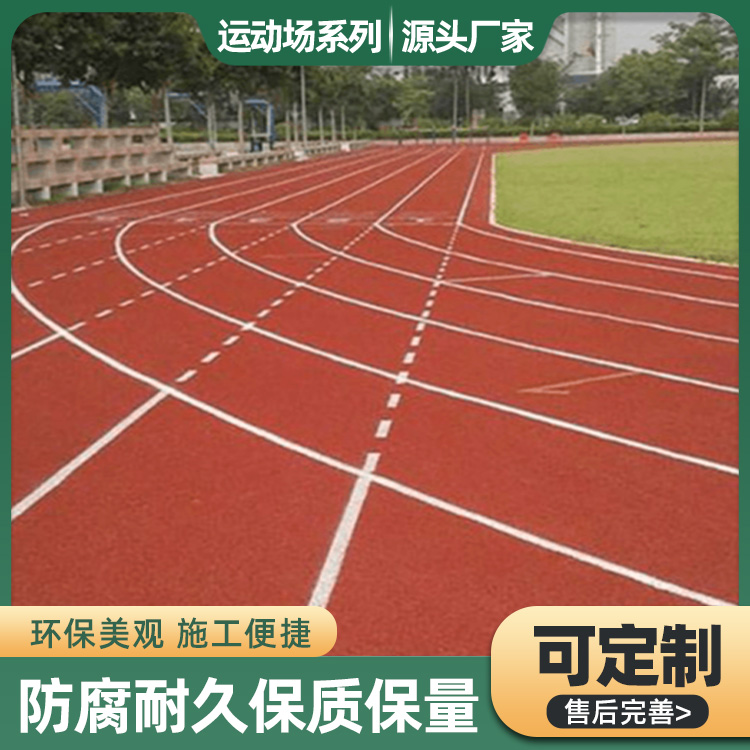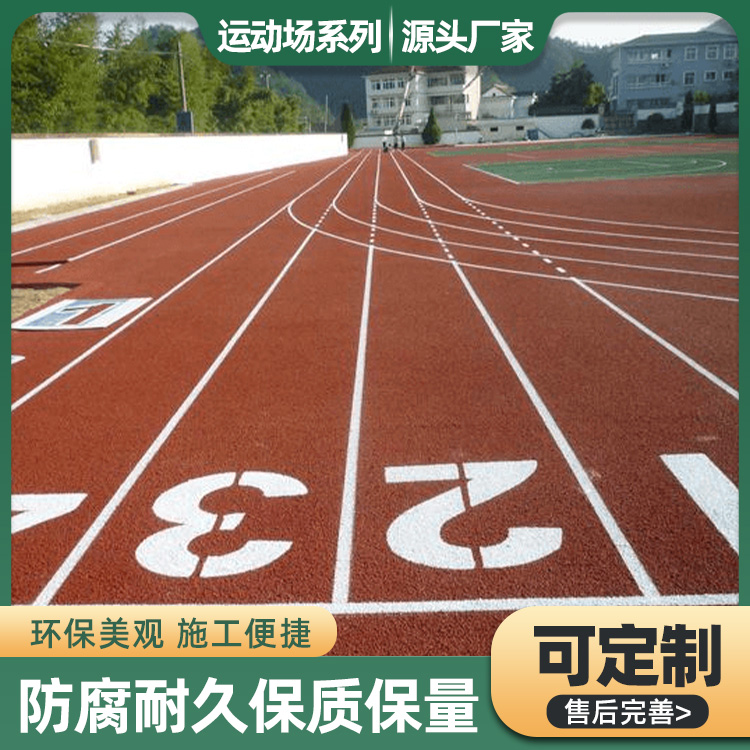








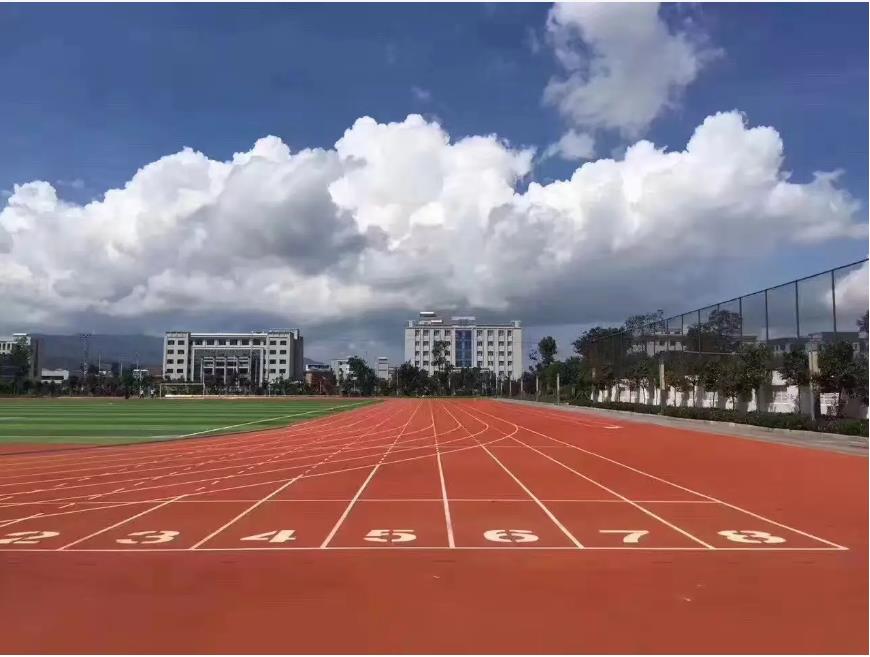
1. The standard runway has a total length of 400 meters and should consist of two parallel straight lanes and two curves of equal radius. Except for grass runways, the inner side of the runway should be divided by protrusions made of suitable materials. The protrusion is about 5 centimeters high and at least 5 centimeters wide.
2. The length of the runway should be measured 30 centimeters beyond the outer edge of the protruding edge inside the runway. If there is no protrusion, the measurement should be taken 20 centimeters beyond the outer edge of the marking line.
3.400 For track events of meters and below, each athlete should have a lane with a width ranging from 1.22 meters to 1.25 meters and a width of 5 centimeters. All lanes should have the same width.
Note: The width of the lane should include the right lane
Plastic runway construction is carried out on asphalt or cement foundations, and the foundation construction method is roughly the same as road construction. The basic surface requires high flatness to ensure consistent thickness and even elasticity of the plastic surface layer. The quality requirements for the foundation are as follows:
Slope: Horizontal<1 ‰ (bend 8 ‰, straight 5 ‰, semi-circular 5 ‰), vertical<1 ‰, high jump area<0.4, the surface should be flat, smooth, and well drained.
Flatness: The pass rate of flatness is above 95%, and the error of a 3-meter ruler is 3 mm。
Positioning: For accurate construction and line drawing needs, use strong and distinct markers to mark the four semi-circular tangent points and two center points of the runway site.
Drainage: The drainage system discharges accumulated water two hours after heavy rain. In frozen areas, add a geotextile buffer layer between the asphalt layer and the gravel layer. The foundation along the drainage ditch should undergo special waterproofing treatment.
Strength and stability: The foundation should have a certain level of strength and stability, with a uniform and solid surface, no cracks, no rotten edges, and straight and smooth joints. The cushion layer is compacted with a density greater than 95, and after being compacted by a medium-sized roller, there are no significant wheel marks, loose floating soil, waves, or other phenomena.
Runway characteristics
Color: Polyurethane particles, with a soft surface color and granular surface to prevent glare and glare from sunlight reflection. They are aesthetically pleasing and durable, and can be paired with multiple colors.
Economy: Maintain convenience and save governance costs.
Adhesive properties: Special construction treatment, strong adhesive force, can resist moisture rise, no bubbles, peeling or other phenomena.
Flatness: Self leveling materials are used for construction, with a flat surface that can meet the requirements of particularly flat competition venues.
Impact resistance: It has a strong and resilient elastic layer and buffer layer, which can absorb strong impacts without damaging the surface.
Nail resistance: It will not be damaged by spikes or starting frames even at the frequently used 100 meter starting point.
Wear resistance: It will not be unable to recover due to the heavy pressure of track and field equipment.
Wear resistance: The wear resistance is less than 2.5, meeting the requirements of long-term and high-frequency use at all levels.
Impact absorption: Moderate absorption of foot impact, reducing sports injuries, suitable for long-term training and competition.