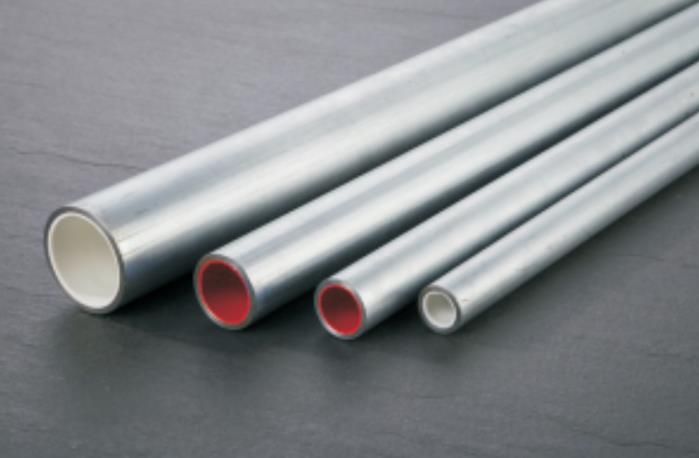

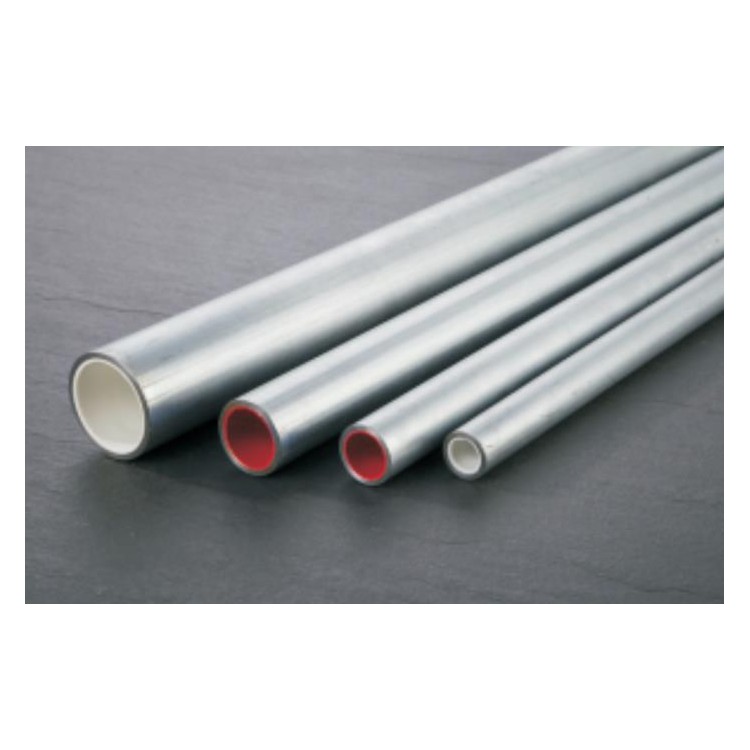







The production process for steel strip reinforced steel-plastic composite pipes is relatively complex. Unlike aluminum strips, steel strips have almost no flexibility, thus requiring a very high forming process. Furthermore, steel strips are typically thicker than aluminum strips and cannot be焊接 using overlap welding techniques; only precision-based butt welding methods can be employed. Even after steel strips are processed into pipes that meet all specifications, the challenge of achieving a perfect bond between the steel and PE remains, posing another difficulty in the manufacturing of steel-plastic composite pipes. The Ministry of Construction introduced the CJ/T183-2003 "Standard for Steel-Plastic Composite Pressure Pipes" in 2003 (revised again in 2008 to the CJ/T183-2008 standard).
1. Retains the stiffness and strength of traditional metal tubing, far superior to plastic and aluminum-plastic pipes.
2. Features smooth inner walls, low friction resistance, and non-scaling; the outer wall is more aesthetically pleasing and luxurious; lightweight, excellent toughness, impact-resistant, and high pressure resistance; applicable temperature range is wider from -30℃ to 100℃;
4. Connection methods with pipe fittings can include thread, socket, flange, grooved, and welded, offering various options for convenience and efficiency.
5. The thermal expansion coefficient difference at the connection points with fittings is small, offering greater safety and reliability; 6. Reasonable price-performance ratio, with a lower overall cost compared to copper pipes and stainless steel pipes. Perforated steel strip
The steel belt in the middle has been pierced with numerous holes, which integrate the outer and inner layers of PE into a single entity, thus resolving the composite issue between steel and plastic. However, this sacrifices the oxygen-blocking property of the steel-plastic pipe. Moreover, due to the presence of the hole mesh on the steel belt, it significantly reduces the pressure-bearing strength of this type of steel-plastic pipe. Under high-pressure working conditions, it is prone to localized bursting of the pipe material.