















"Article 4.5.4, Paragraph 5: 'Beams and slabs may develop cracks along the main reinforcement direction due to corrosion, with crack widths exceeding 1 millimeter, or there may be severe defects in the concrete components, or the concrete protective layer may be severely deteriorated and exposed reinforcement.' There should be a quantifiable standard for the loss of cross-sectional area due to reinforcement corrosion. Some reinforced concrete structures may have their protective layer peeled off and reinforcement exposed without losing their load-bearing capacity; however, there is a possibility that they may corrode and affect their load-bearing capacity in a short period of time. Since corrosion is a process, it is not easy to determine whether this situation counts as a hazard. For instance, in the Jining and Jiaxiu Maintenance Sheds (540 square meters and 530 square meters respectively), which were constructed of reinforced concrete columns, reinforced concrete roof beams, trough-shaped roof decks, and some bidirectional slabs and put into use in 1987, the concrete protective layer of the roof decks began to peel off in the early 1990s due to the corrosion from steam locomotive steam. By the time the steam locomotives were retired, the areas of the roof decks where maintenance was performed had corroded the reinforcement to the point of no existence, leaving only rust stains, while the reinforcement in other areas had become like needles for knitting or sewing, having lost their load-bearing capacity. Yet, these structures are still in use for other purposes. Over the past ten years of use of the Maintenance Sheds, it is difficult to determine from which stage they should be considered hazardous. Therefore, it is recommended that this clause be amended to 'or the concrete protective layer is severely deteriorated, and the effective cross-sectional area of reinforcement corrosion is less than four-fifths'."
House safety inspections are closely related to our daily lives, even affecting our quality of life and safety. Due to natural aging, structural alterations, reuse, and construction activities at neighboring building sites over the long-term use of a house, damage may occur, and in severe cases, it may collapse. When should a house safety inspection be conducted?
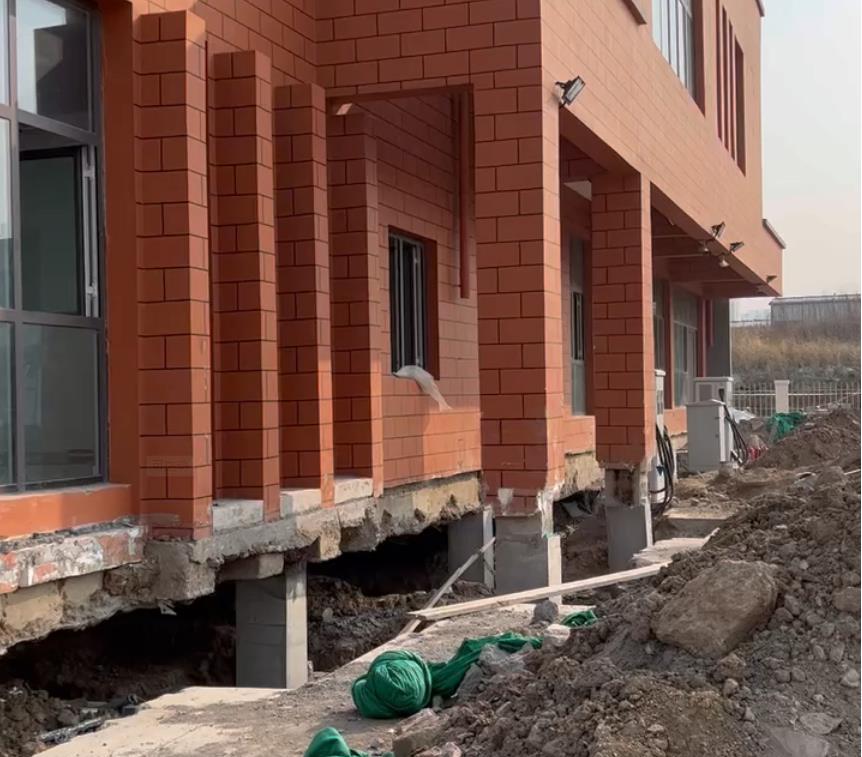
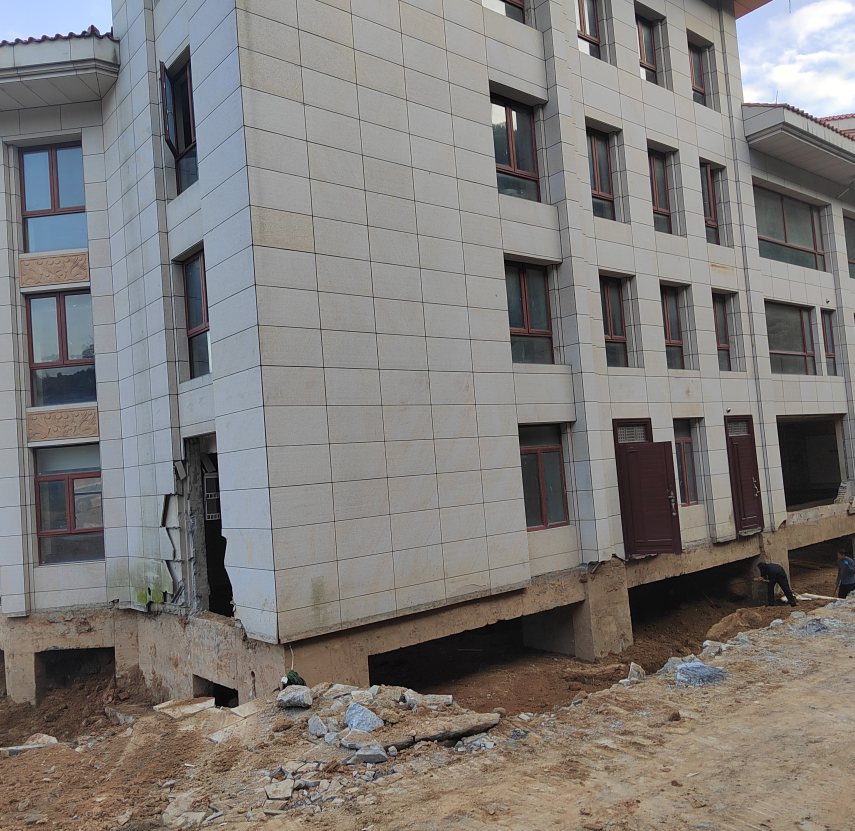
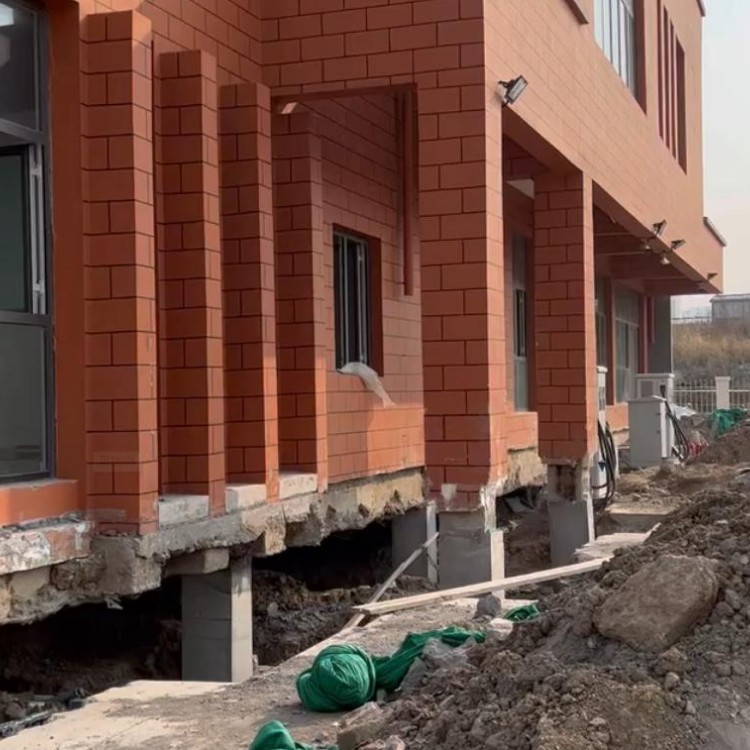
1. Foundations or main structures of buildings showing significant sinking, cracks, deformation, or corrosion.
2. Houses that have exceeded their designed service life and require continued use.
3. Damage to the main structure of the building caused by natural disasters or accidents such as explosions and fires.
4. Requires alterations to the main structure or load-bearing components of the building, changes in the building's use function, or significantly increased loads on the building.
5. Other situations that may pose a threat to the house safety and require inspection.
When these issues arise with the house, it's important to promptly hire a dedicated house inspection company to investigate the structural safety, address the repairs accordingly, to avoid any impact on the house's usability or living safety.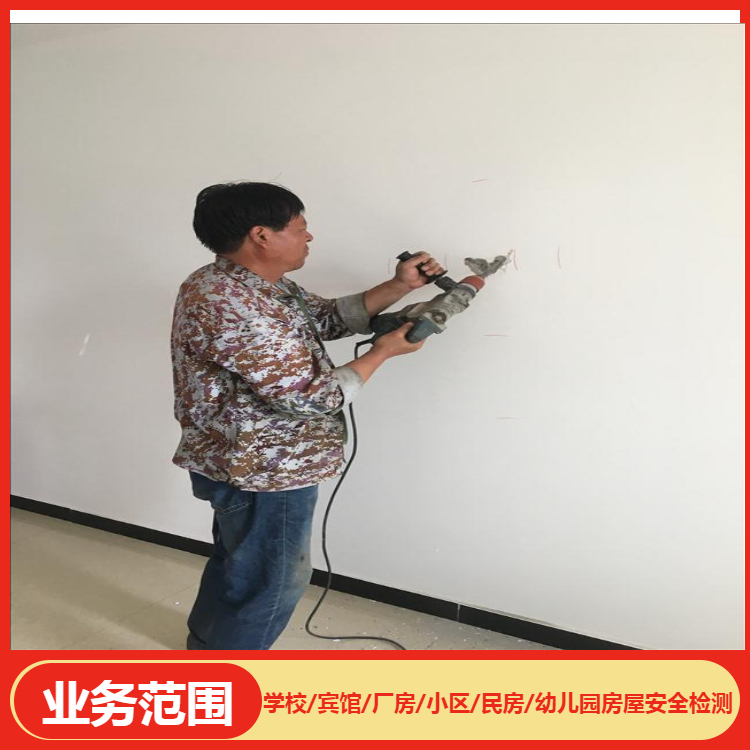
Field inspection methods for structural concrete houses
主要有: rebound method, ultrasonic method, and core sampling method. Each testing method has its pros and cons, and all have varying degrees of impact on the damage to concrete. Below is a detailed introduction to several on-site concrete testing methods.
1. Resilience Test: Non-destructive method
Based on the correlation between concrete strength and certain physical quantities, test these physical quantities, and then calculate the standard strength conversion value of the measured concrete based on the correlation.
The rebound method is currently the most widely used structural concrete compressive strength testing method in China, with advantages such as: no damage to the structure, portable equipment, easy to use, fast testing speed, relatively low testing costs, and can basically reflect the compressive strength regularity of the structural concrete.
The principle of the rebound method for testing is:
The rebound method is a technique that determines the concrete strength by utilizing the correlation between the hardness and strength of the concrete surface. Its basic principle involves using a spring-driven weight hammer to strike the concrete surface through a rebound rod (force transfer rod), measuring the distance the weight hammer rebounds, known as the rebound value (the ratio of the rebound distance to the initial length of the spring), as an indicator related to strength. It also considers the effect of hardness changes on the concrete surface after carbonation to estimate the concrete strength.
Surface hardness method, non-destructive method. The testing basis for concrete strength is the national industry standard of the Republic: JGJ/T23-2001 "Technical Code for Measuring Concrete Compressive Strength by Rebound Method" is applicable for the testing of ordinary concrete compressive strength in engineering structures.
Utilizing two or more non-destructive testing methods to obtain various physical parameters, establishing a comprehensive correlation between concrete strength and multiple physical parameters, thereby evaluating the concrete strength comprehensively.
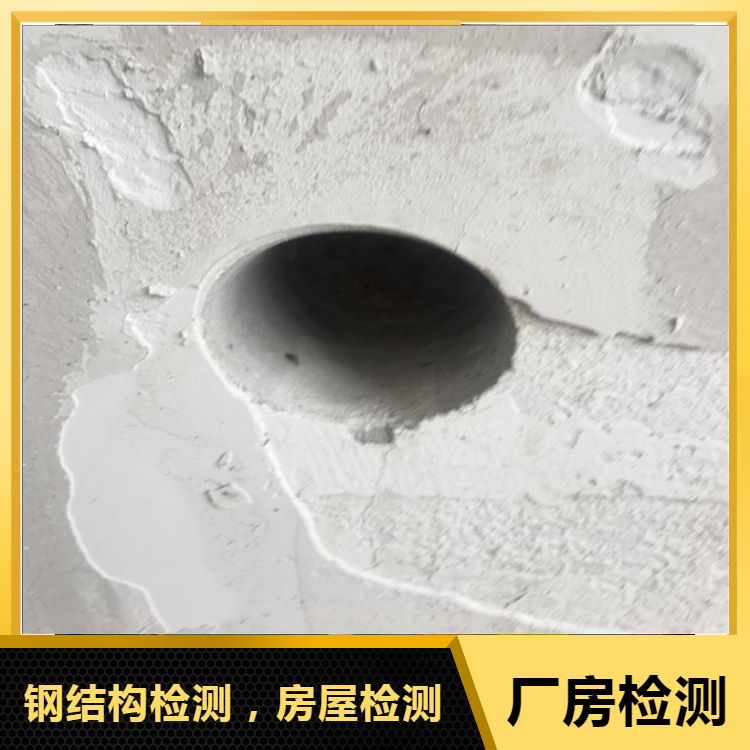
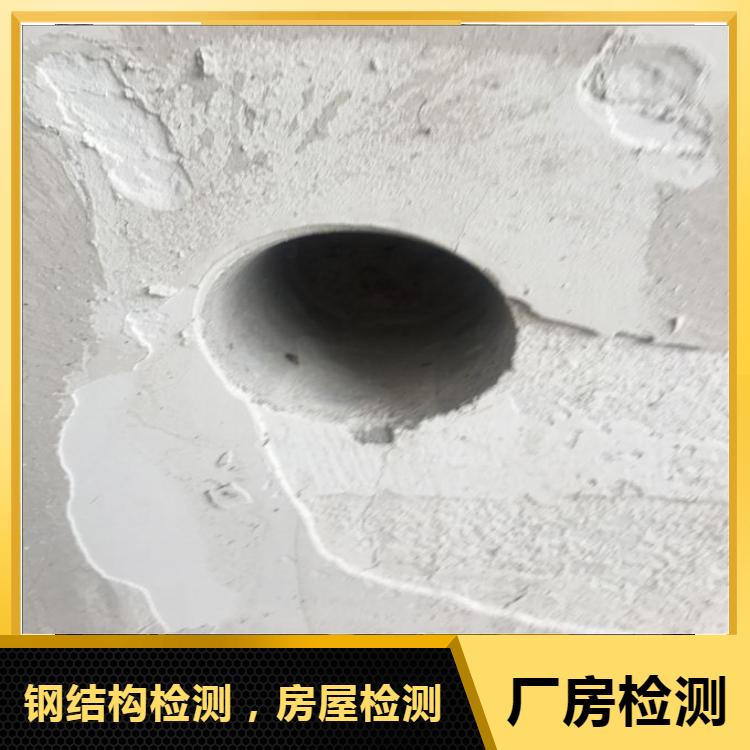
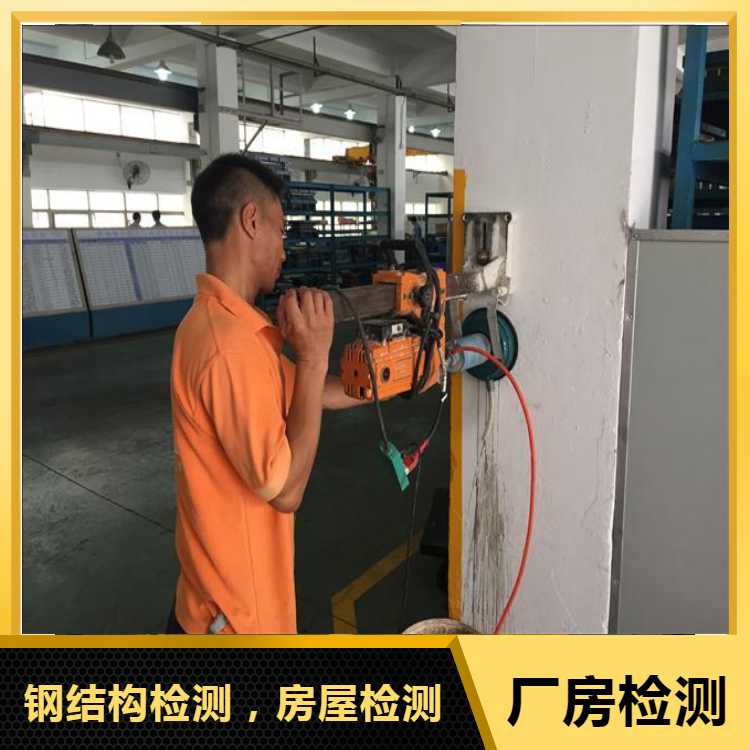
Core Drilling Method: Semi-Destructive Method.
Conducted local destructive tests directly on the structure or component, or extracted core samples for destructive testing, without affecting the load-bearing capacity of the structure or components, and calculated the estimated value or characteristic strength of the strength standard.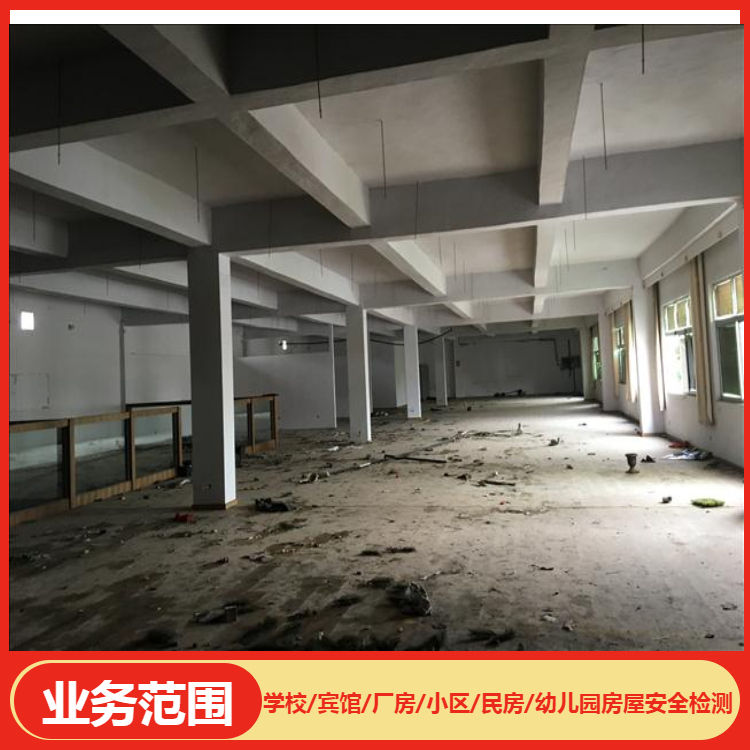
The main structure of the house is crucial to the overall safety of the property, which concerns your personal and property safety. If there's an issue with the main structure, it signifies a very serious problem with the house's quality. Although many acknowledge the importance of the main structure and the significant interests it affects, most still aren't aware of how to determine if there are problems with the main structure or what those problems might be, nor whether the house is safe.
So now, I'll give you a general overview of how we can determine if there are any safety hazards in the main structure of a house. *First, let me explain what the main structure of a house is?
The main structure, also known as the primary components of a building, are akin to the skeletal system in the human body, serving as the crucial support for the entire structure. Common main structures include the main beams, columns, floors, load-bearing walls, stairwells, roof, and walls. According to the building laws, the main structure of a building encompasses the foundation engineering, roof waterproofing project, and other civil engineering works, as well as the installation of electrical and plumbing lines, heating, and air conditioning systems.
WeChat Official Account

Scan to follow Official Account