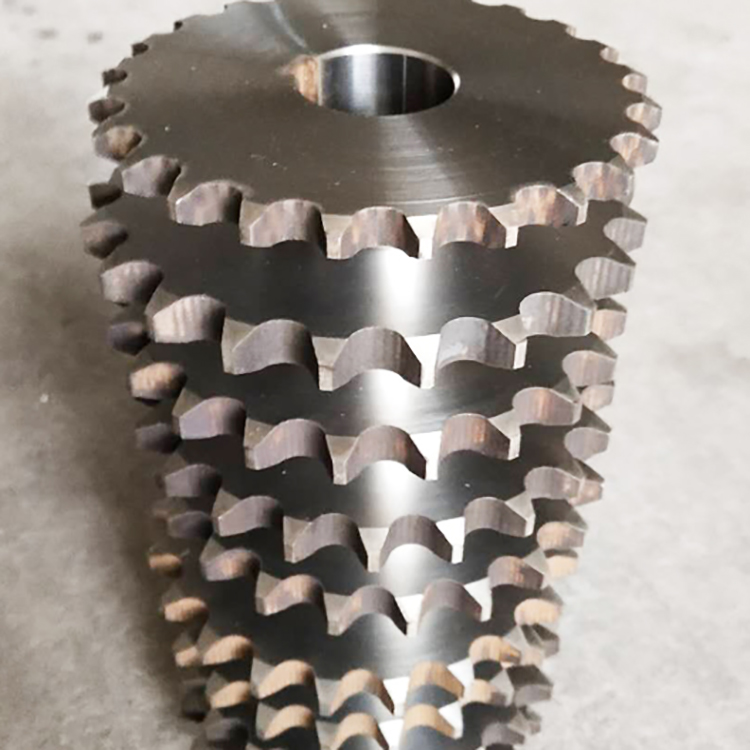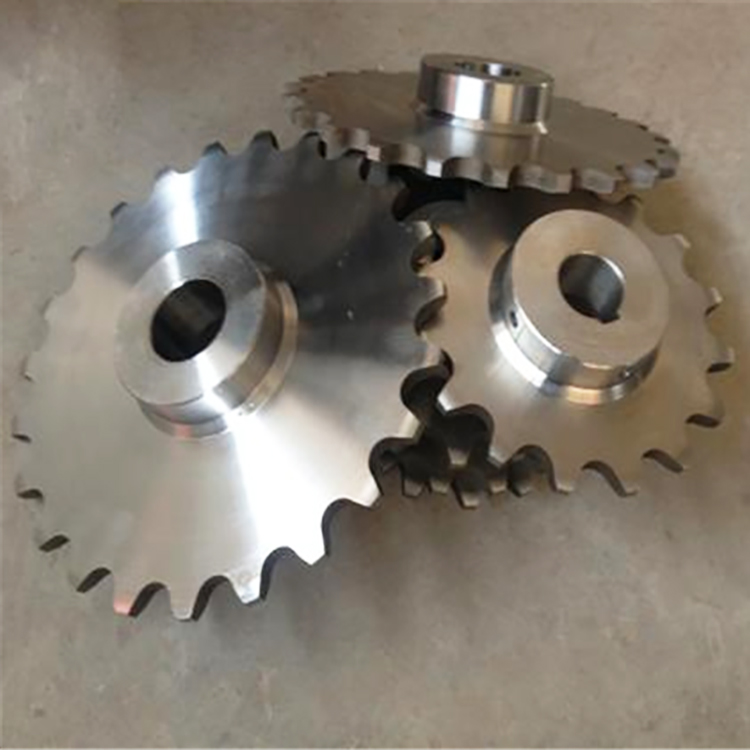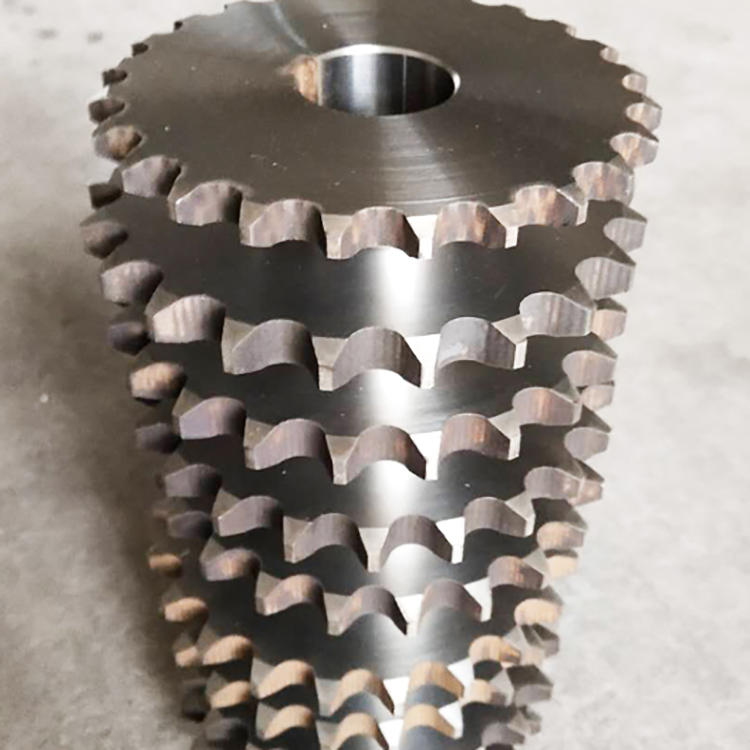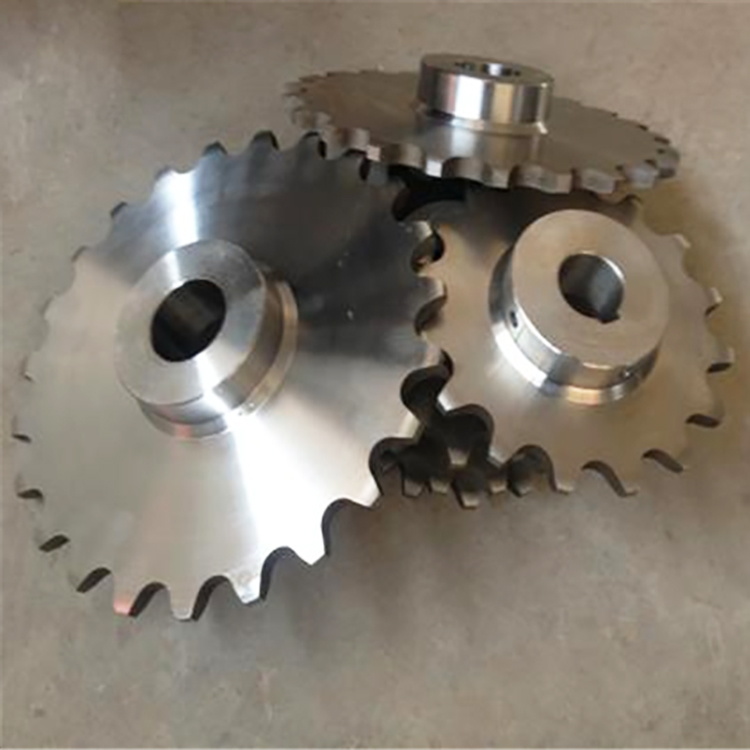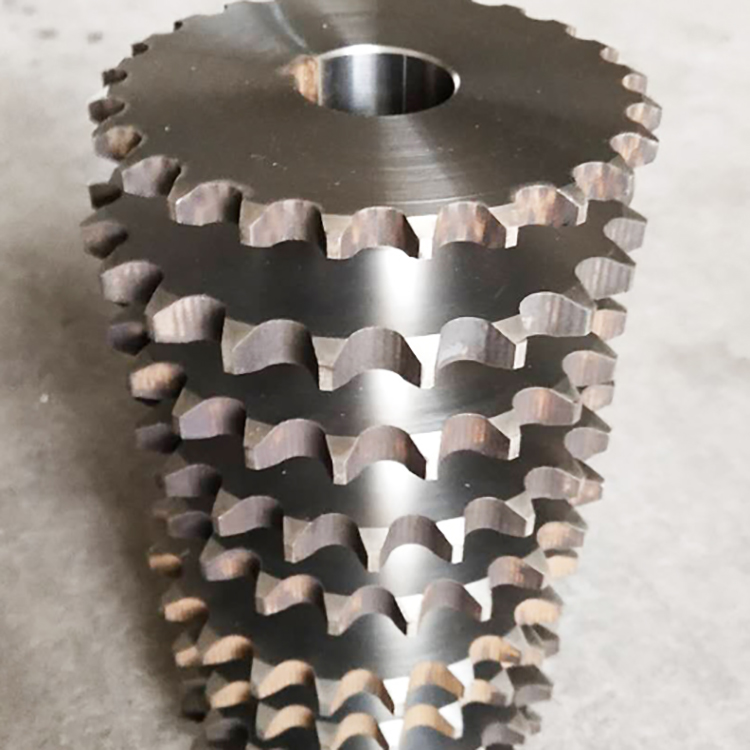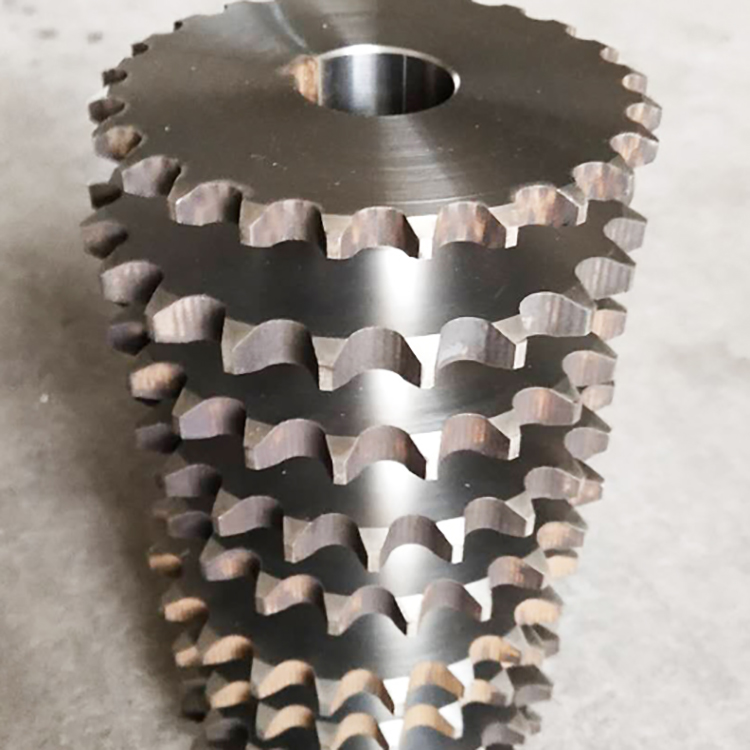

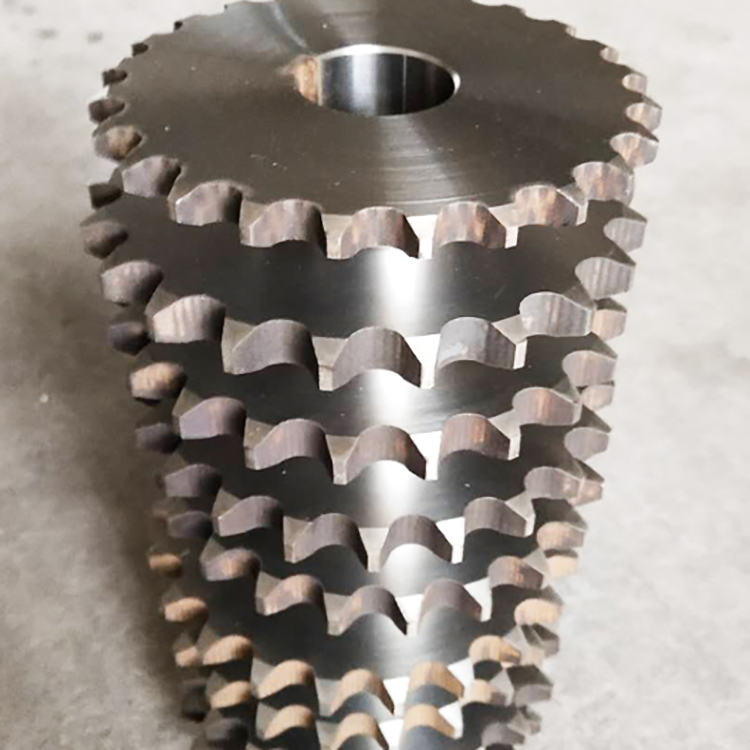

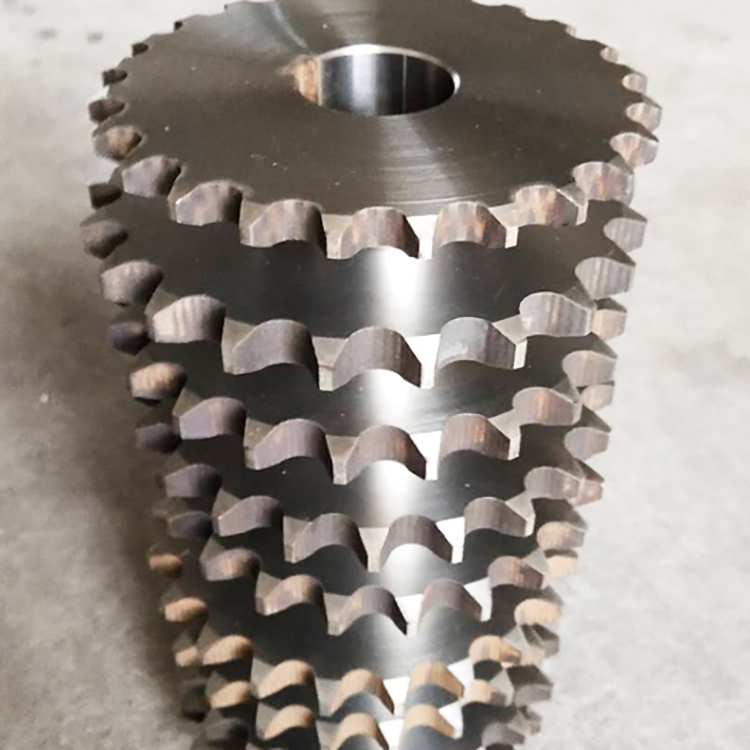







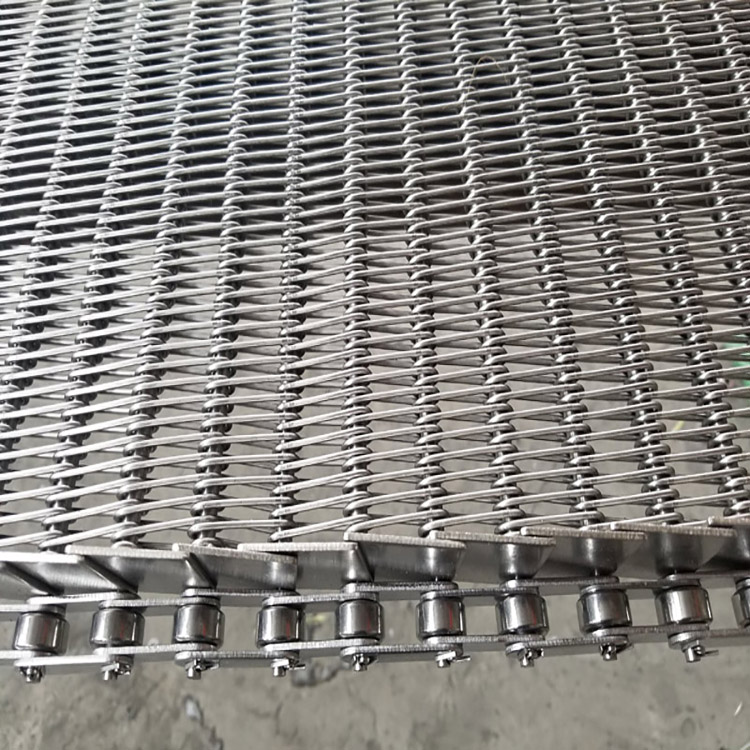
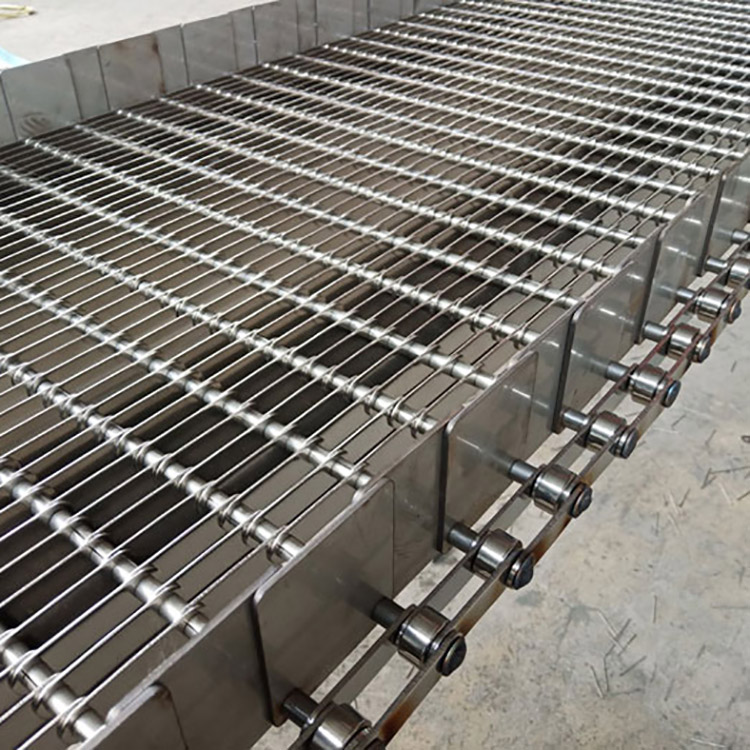
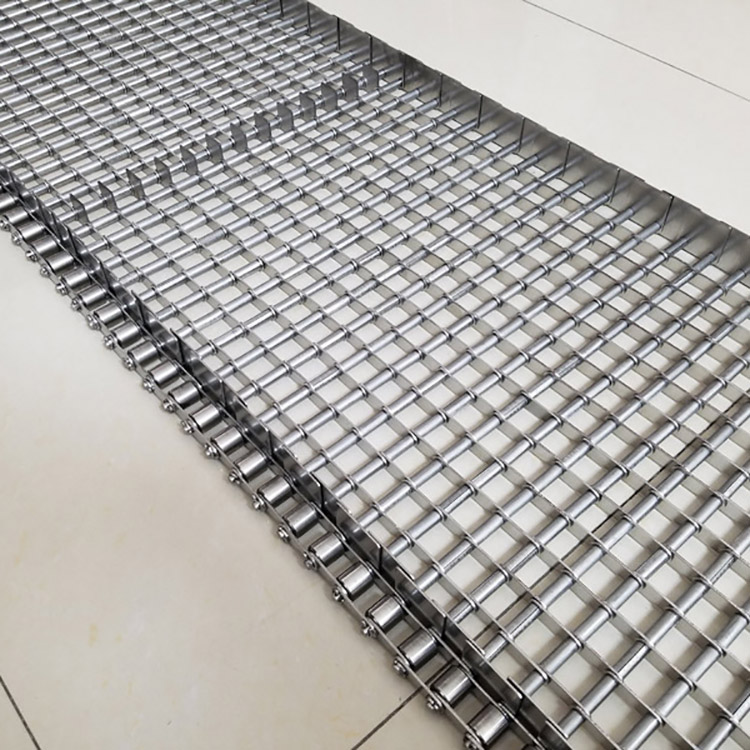
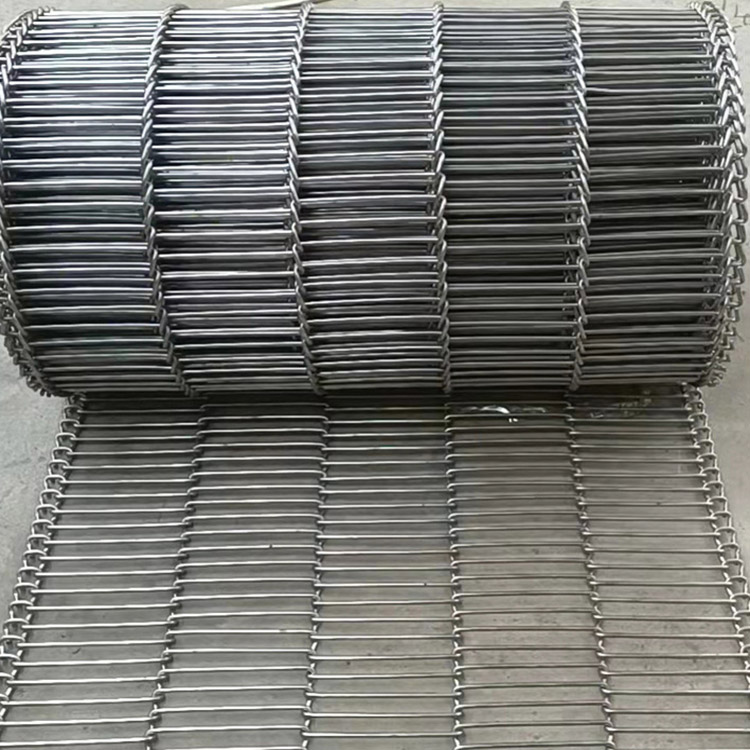
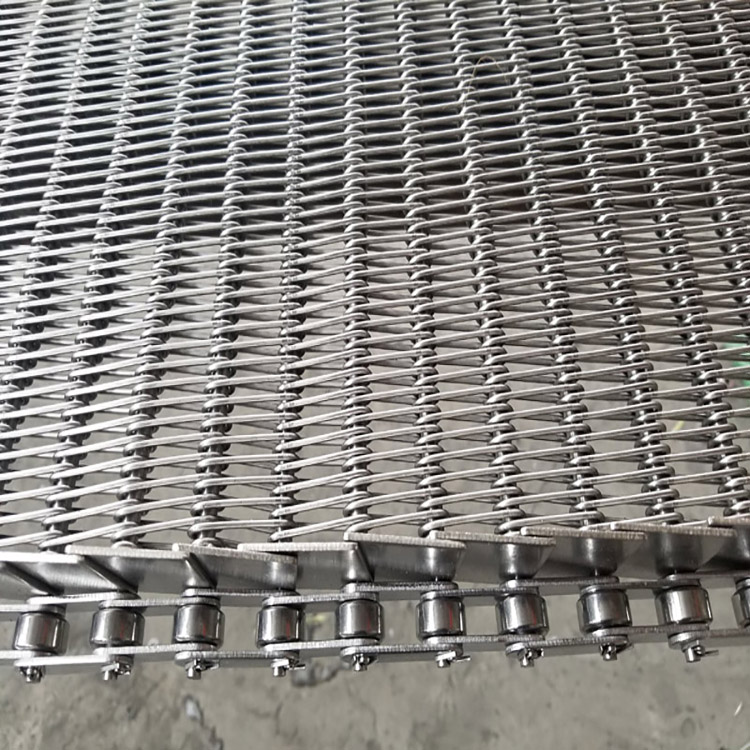
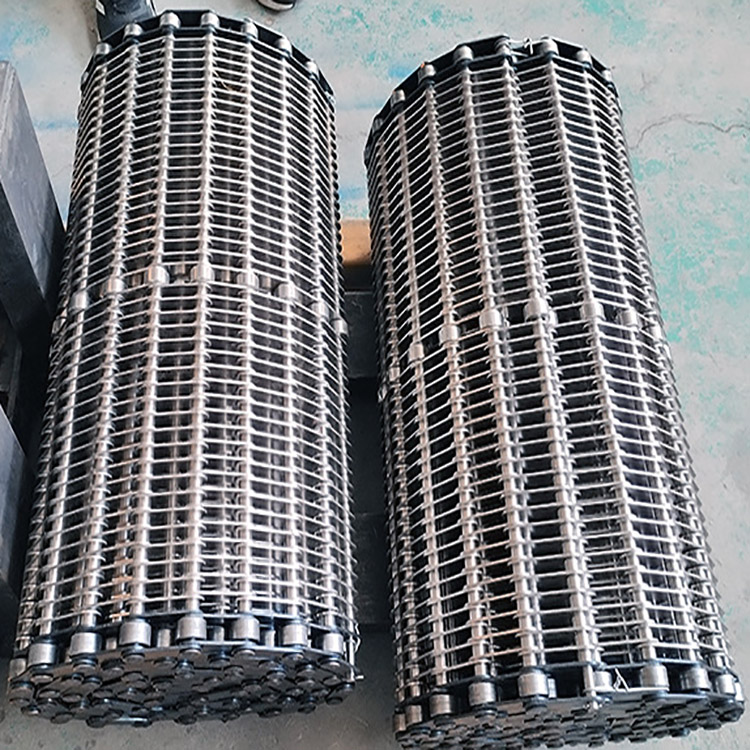
A chain wheel is a wheel with toothed sprockets for engaging with accurately spaced blocks on chains or cables. It is widely used in mechanical transmission in various industries such as chemicals, textile machinery, escalators, wood processing, multi-level parking garages, agricultural machinery, food processing, instruments, and the oil industry.
Sprocket maintenance and care
The tension of the chain wheel should be appropriate; too tight and it increases power consumption, causing the bearing to wear easily; too loose and the chain wheel may jump and come off. The tension level is: starting from the middle of the chain wheel or pressing down, it should be about 2-3 times the distance between the two chain wheels.
2. The sprocket should be mounted on the shaft without any vibration or misalignment. In the same transmission component, the end faces of the two sprockets should be in the same plane. When the center distance of the sprocket is below 0.5 meters, a deviation of 1 millimeter is permissible; when the center distance is above 0.5 meters, a deviation of 2 millimeters is permissible. However, there should be no friction against the side of the sprocket teeth. If the two wheels are misaligned, it may cause chain jump and increased wear. When replacing the sprocket, pay attention to checking and adjusting the misalignment.
3. After severe wear on the sprocket, both the sprocket and the chain should be replaced simultaneously to ensure proper engagement. It's not enough to replace just the sprocket or the chain. Otherwise, it may lead to uneven wear on either the sprocket or the chain. Once the sprocket teeth wear down to a certain degree, the sprocket should be flipped (if adjustable) to extend its service life.
4. Sprockets may become longer or elongate after use, making adjustment difficult. In such cases, the chain links can be removed as needed, but only in even numbers. The links should be threaded through the back of the sprocket, with the locking pins inserted on the outside, and the locking tabs should face the opposite direction of rotation.
5. Chain wheels should be timely lubricated during operation. The lubricant enters the clearance between the rollers and the inner sleeve to improve working conditions and reduce wear.
6. Do not mix the old chain sprocket with the new one; otherwise, it may cause shock during transmission and break the chain sprocket.
7. When storing machinery long-term, the sprockets should be removed, cleaned with kerosene or diesel, and then coated with machine oil or grease before being stored in a dry location.