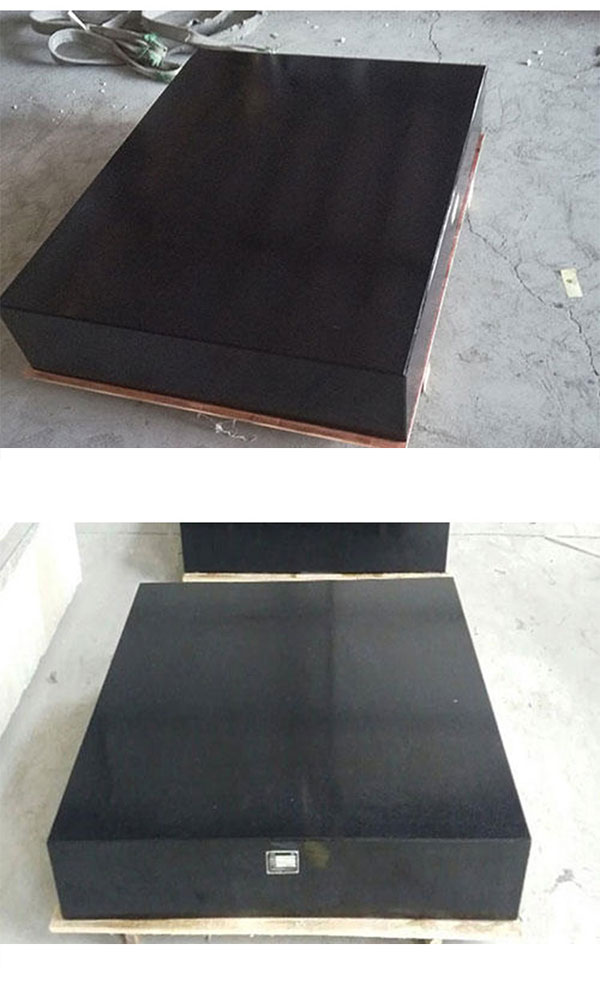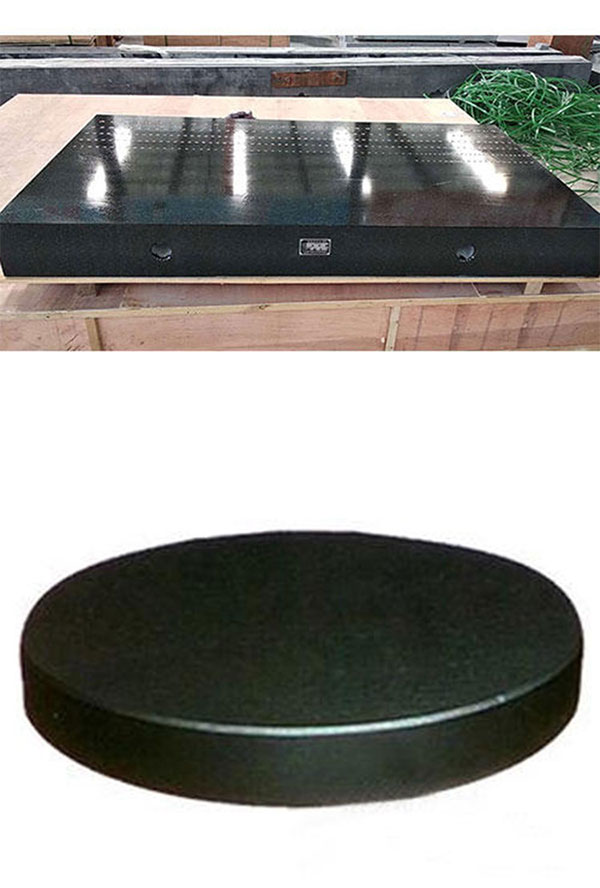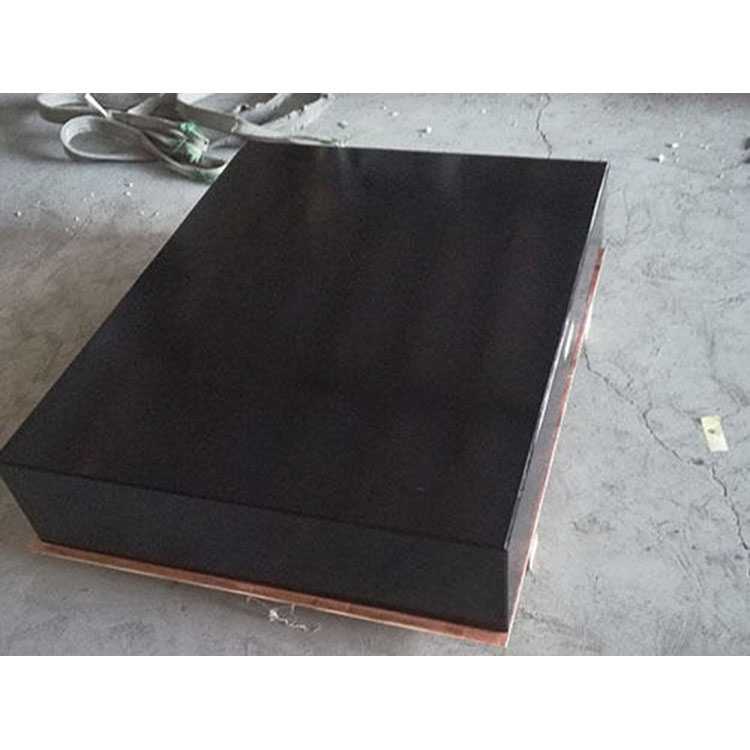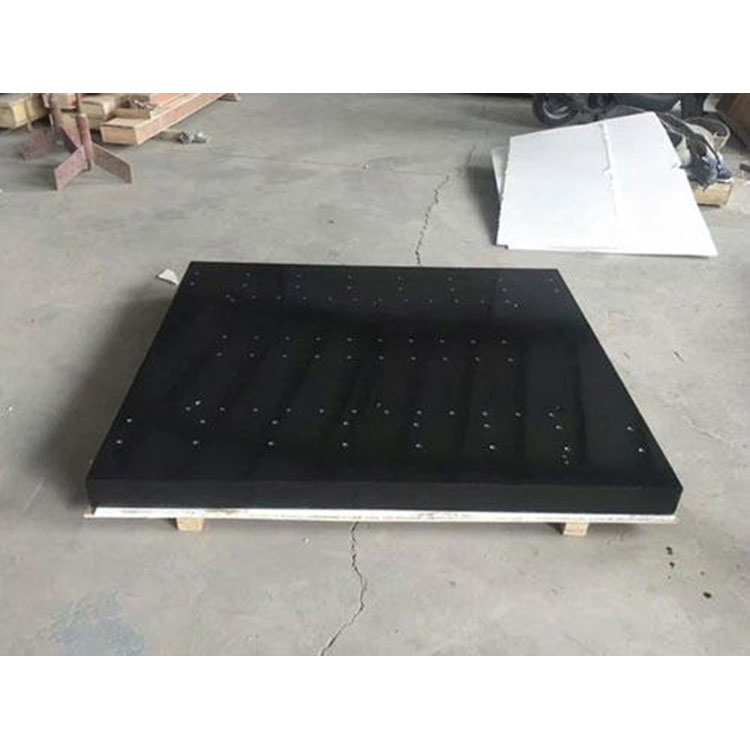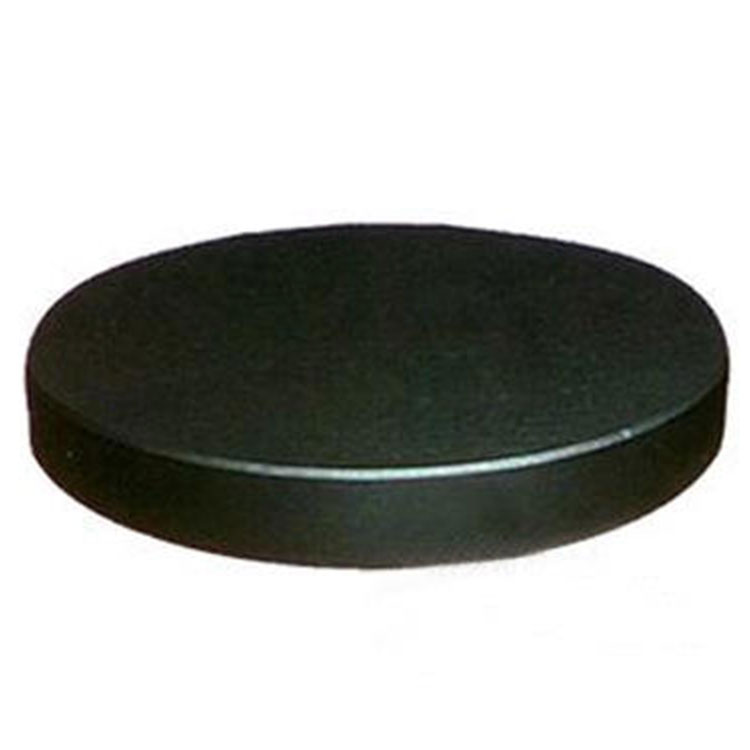

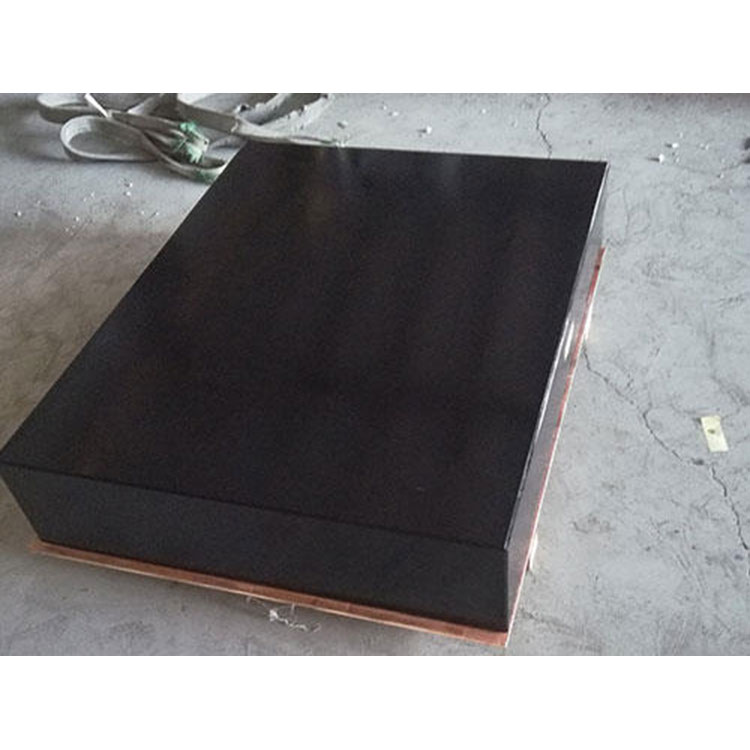

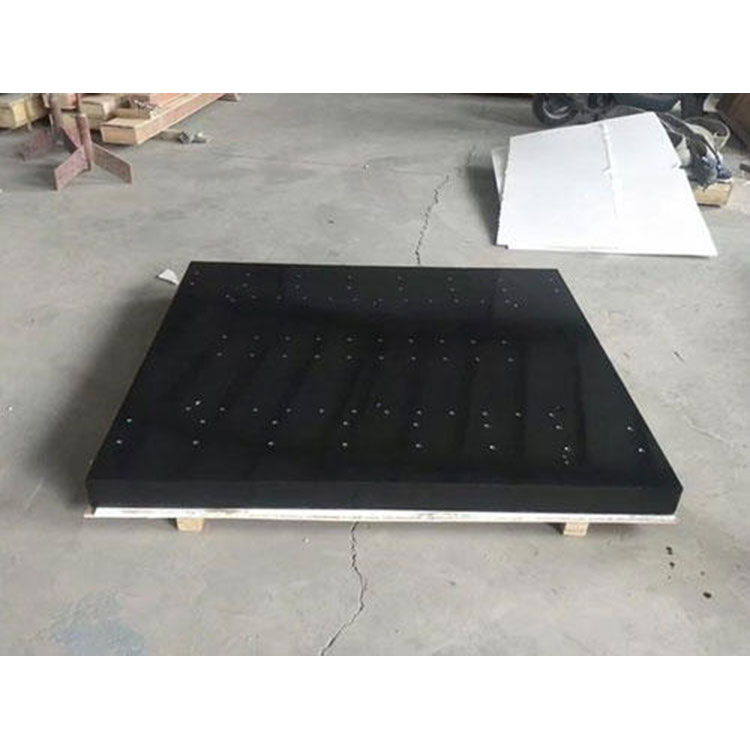
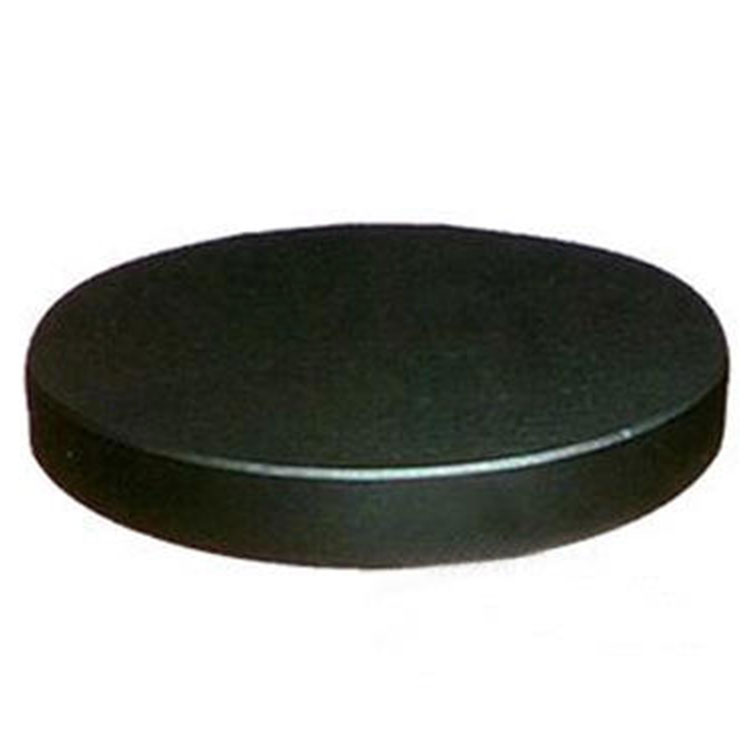












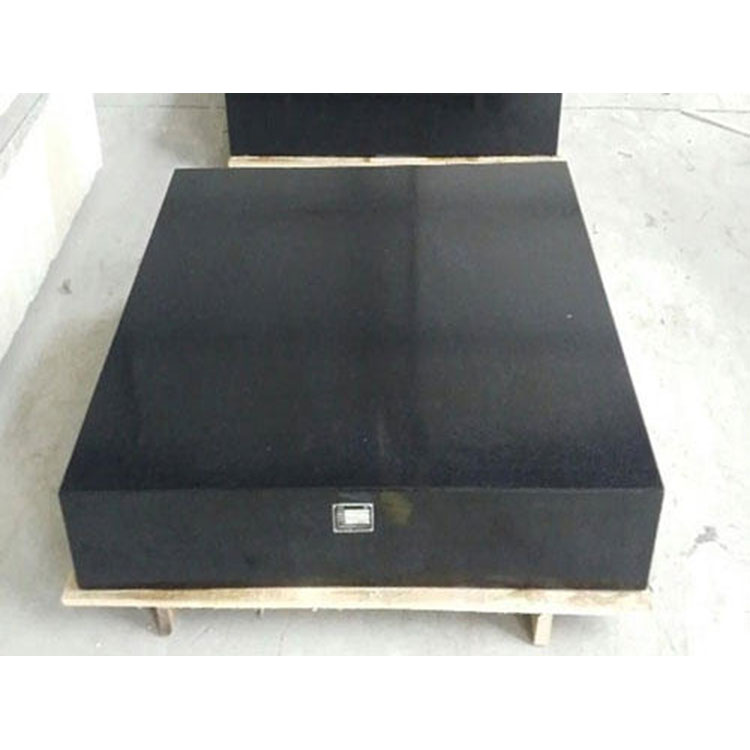
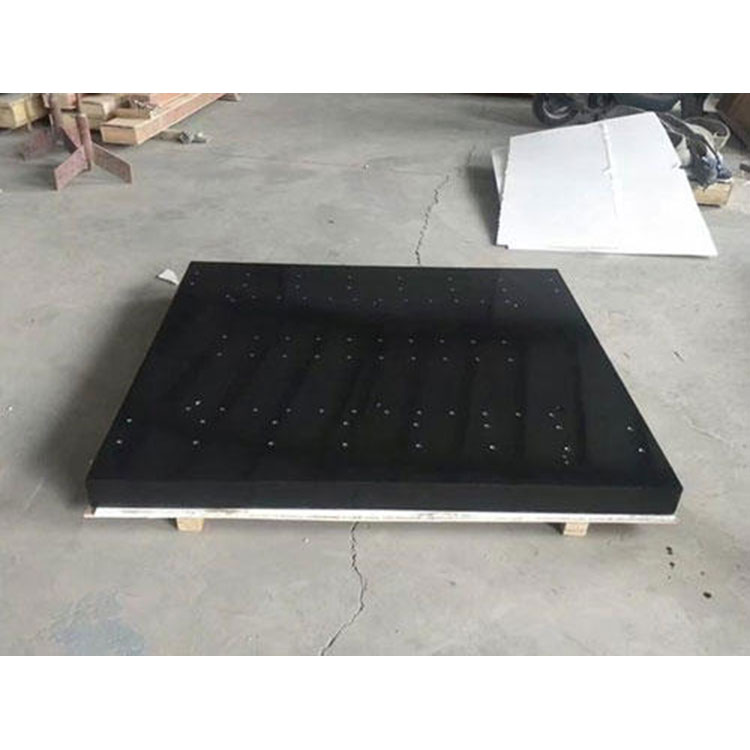
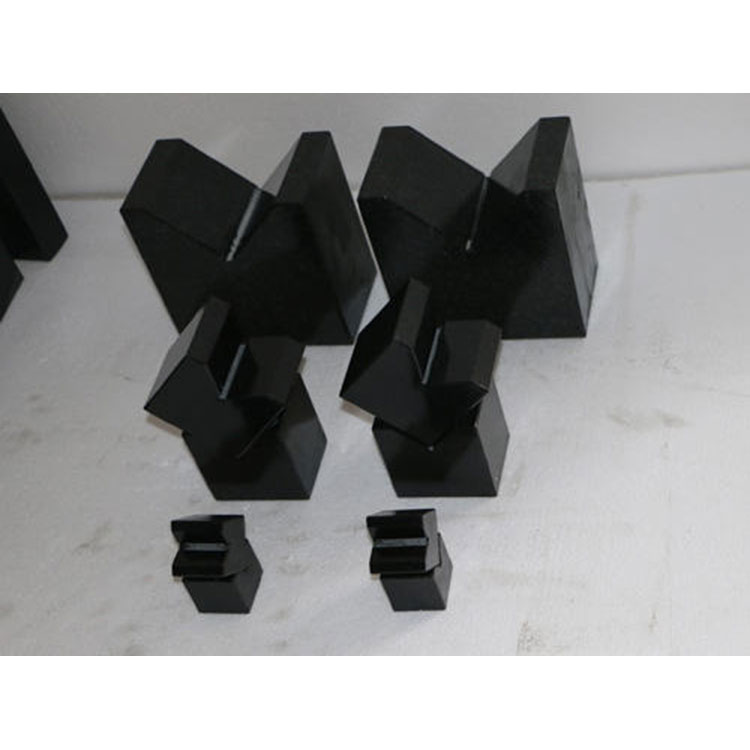
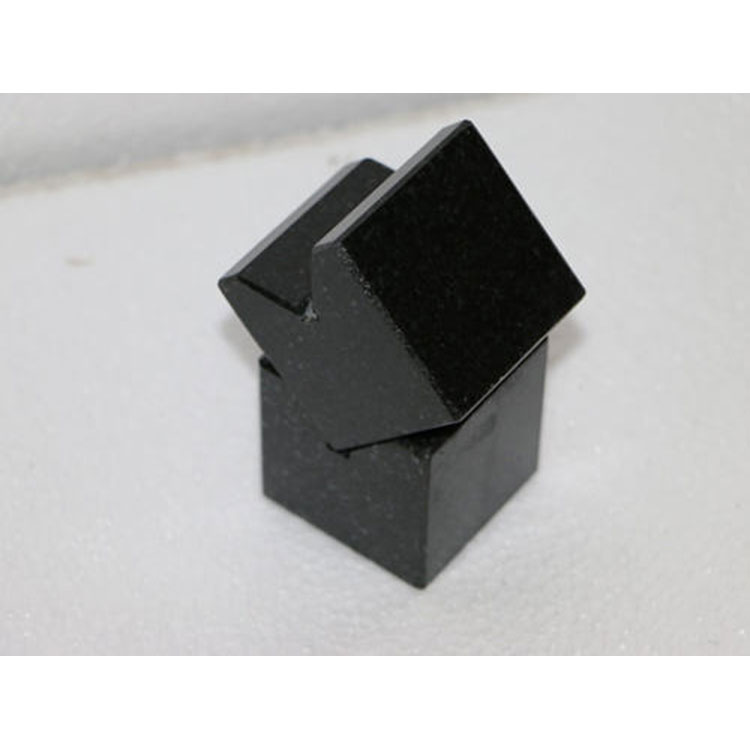
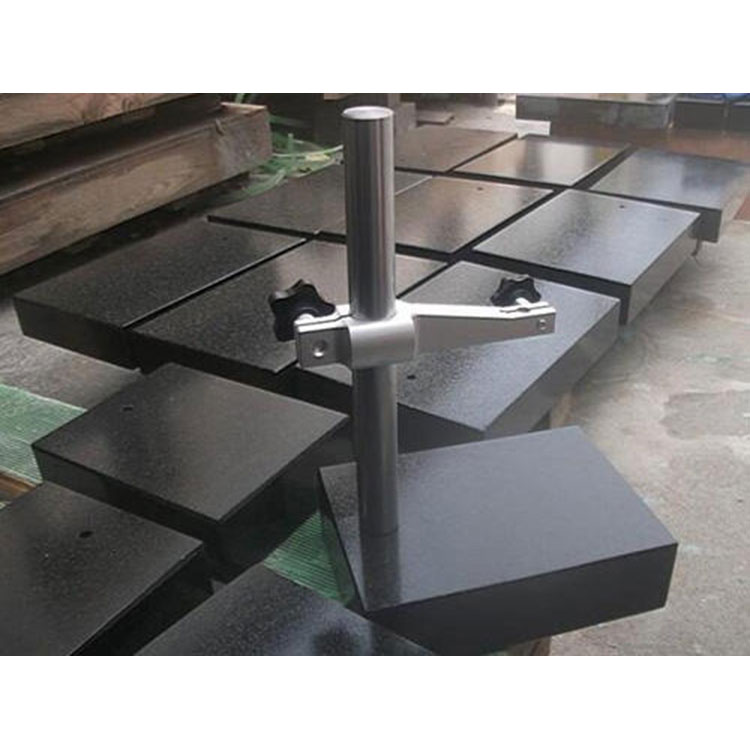
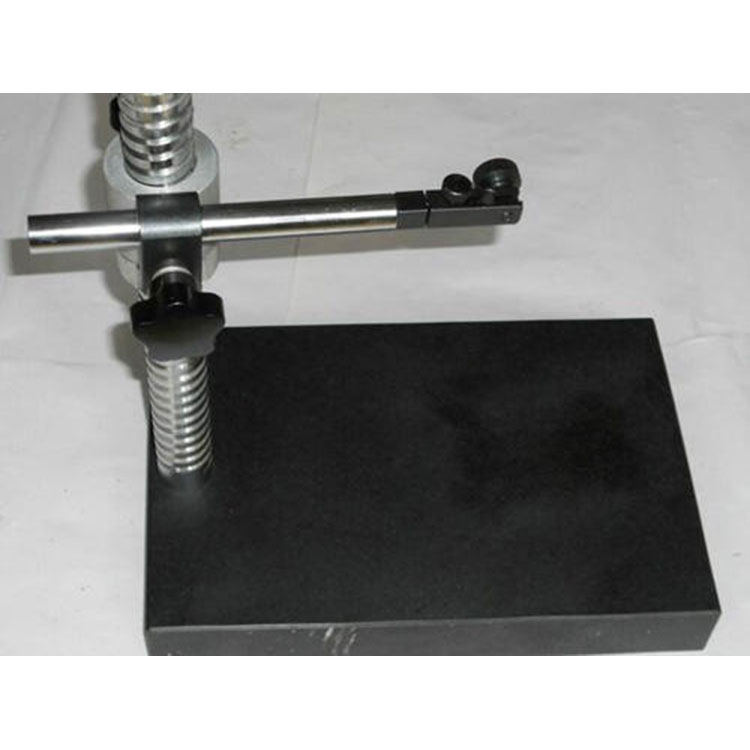
Marble slab materials primarily consist of pyroxene, plagioclase, trace amounts of olivine, biotite, and a negligible amount of magnetite. They exhibit a black luster, have a dense structure, and, after billions of years of aging, feature uniform texture, excellent stability, high strength, and hardness, maintaining high precision under heavy loads. Used in industrial production and laboratory measurement tasks.
Marble slab precision refers to the standard, and flatness tolerance is based on: GB4987-85 standard.
000 grade = 1 × (1 + d/1000) um, 00 grade = 2 × (1 + d/1000) um
0 Grade = 4 × (1 + d/1000) um 1 Grade = 8 × (1 + d/1000) um
d (mm) diagonal (measured temperature generally at 20 ± 2°C)
Physical Properties: Density: 2970 - 3070 kg/㎡, Compressive Strength: 245-254 N/mm², Coefficient of Linear Thermal Expansion: 4.61×10^-6/℃
Moisture Absorption: <0.13% Shore Hardness: Hs70+
Advantages of Marble Slabs
Manufacturing
Crafted from high-quality marble, the flat marble slabs are mechanically processed and hand-finished for superior finish. They feature a black luster, dense structure with uniform texture, and excellent stability. They possess high strength and hardness, as well as corrosion resistance, demagnetization, shape stability, and good wear resistance. They maintain stability under heavy loads and general temperatures.
Measurement
Marble flats are precision measurement tools made from high-quality stone material, serving as ideal reference surfaces for the inspection of instruments, precision tools, and mechanical components. Particularly in high-precision measurement applications, their characteristics make cast iron flats appear inferior.
Marble slabs are made from "Jinan Qing" stone material, processed by machinery and hand-polished. They feature a black luster, dense structure, even texture, excellent stability, high strength, and hardness. They can maintain high precision under heavy loads and general temperatures, and offer advantages such as corrosion resistance, wear resistance, non-magnetism, and non-deformation. Granite slabs are suitable for measuring tools in machine factories.
Precision granite flat plate (granite platform) from cutting and shaping, coarse grinding to fine grinding in the controlled environment, high precision is required throughout, with suitable temperature. The precision requirement exceeds cast iron gauges. Suitable for production projects with high precision requirements.
Marble Slab vs. Granite: Characteristics and Advantages Comparison
Characteristics and advantages of granite for platform:
Non-deforming, high hardness, excellent wear resistance.
2. Corrosion-resistant, maintenance-free.
3. Physically stable, with a tight structure; grain detachment upon impact does not cause burrs on the surface, without affecting planar accuracy. The granite measuring platform is easy to maintain and service on its working surface, maintains material stability, ensures long-term shape retention, has a low coefficient of linear expansion, high mechanical precision, and is rustproof, magnet proof, and insulated.
One, rocks undergo long-term aging, resulting in uniform tissue structure, extremely low linear expansion coefficient, dissipation of internal stress, and no deformation.
Two, high rigidity, hardness, and wear resistance, with minimal temperature deformation.
Three: Resistant to acidic and alkaline liquid erosion, non-corrosive, oil-free, dust-resistant, easy to maintain and care for, and long service life.
Four, it will not show scratches, is not hindered by constant temperature conditions, and can maintain the accuracy of temperature measurement at room temperature.
Five, Non-magnetizable, capable of smooth movement during measurement without sticking, unaffected by humidity, and the surface is well-calibrated. Physical Properties: Specific Gravity: 2970-3070 kg/m³, Compressive Strength: 2500-2600 kg/cm³, Elasticity Coefficient: 1.3-1.5×10^6 kg/cm², Water Absorption Rate.