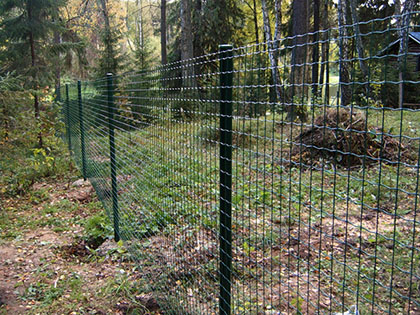
Livestock fence mesh, also known as livestock enclosure mesh, includes types such as wavy fence mesh and knitted mesh fence.
Raising fence materials: Low-carbon steel wire, galvanized wire, etc.
Fence Netting for Aquaculture: After galvanized wire welding, it possesses strong corrosion and oxidation resistance.
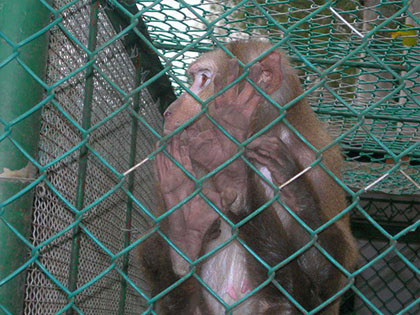
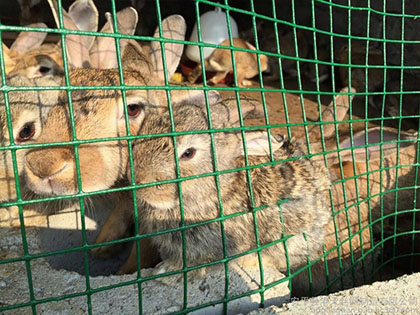
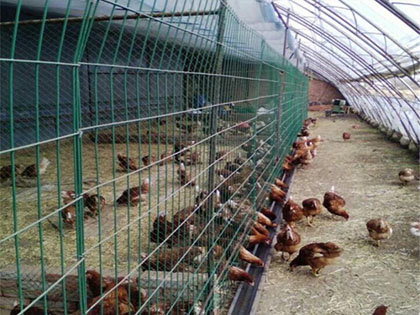
Livestock Fencing Applications: Animal enclosures, free-range chicken fences, zoo fencing, etc.
Grazing fence mesh is made of low-carbon steel wire, precision-welded into shape by automated machinery, then treated with zinc-coating for surface finish. It is produced to standard British specifications, featuring a smooth and even mesh surface, robust structure, and excellent overall performance. Even when cut locally or subjected to pressure, it does not become loose. It boasts superior corrosion resistance among all iron mesh products.A robust and iron mesh type, its corrosion resistance makes it highly favored in the animal husbandry industry. The smooth and even surface enhances the aesthetic appeal, serving as a certain decorative function. This feature also makes it stand out in the mining industry. Made from low-carbon materials, it possesses flexibility that is not typically found in iron mesh screens, determining its malleability during use.
The farm fence mesh features a novel, sturdy, and precise structure, with a flat mesh surface, uniform aperture size, and strong overall integrity. The farming fence mesh is highly flexible, non-contracting, anti-slip, pressure-resistant, shockproof, and corrosion-resistant. It effectively prevents wind and rain, regardless of the harsh local climate, geography, or natural conditions, and boasts a long service life. Even with partial cutting and local pressure, it does not loosen or deform. Livestock fence netting boasts excellent corrosion resistance and strong anti-corrosion and anti-oxidation properties, with a one-time installation that does not loosen.
Fencing net for farming can enclose grasslands and implement targeted grazing, as well as partitioned grazing. Livestock fence nets facilitate the planned use of grassland resources, effectively enhancing grassland utilization and grazing efficiency, preventing grassland degradation, and protecting the natural environment. Livestock fence mesh is also suitable for farmers and herders to establish family farms.*New products are also quite challenging to produce, especially those with wavy designs. The fish farming fence uses an innovative wave-pressing technique, which makes the mesh surface flatter. This feature helps to alleviate thermal expansion and contraction in areas with drastic climate changes in winter and summer, and also prevents the mesh from automatically returning to its original position when struck by a wild animal, enhancing the buffer force of the mesh.