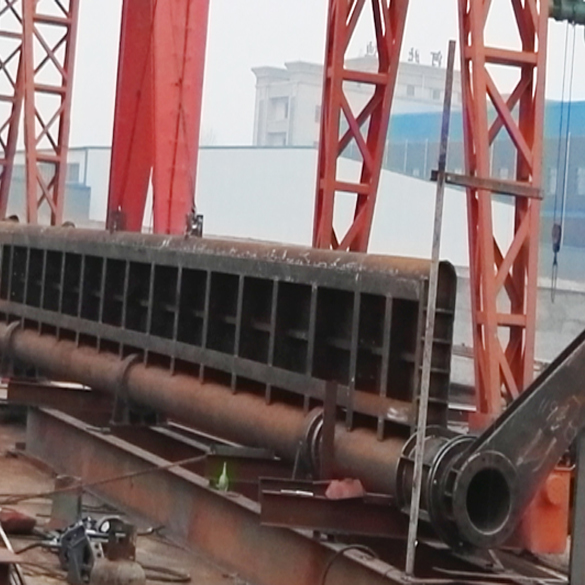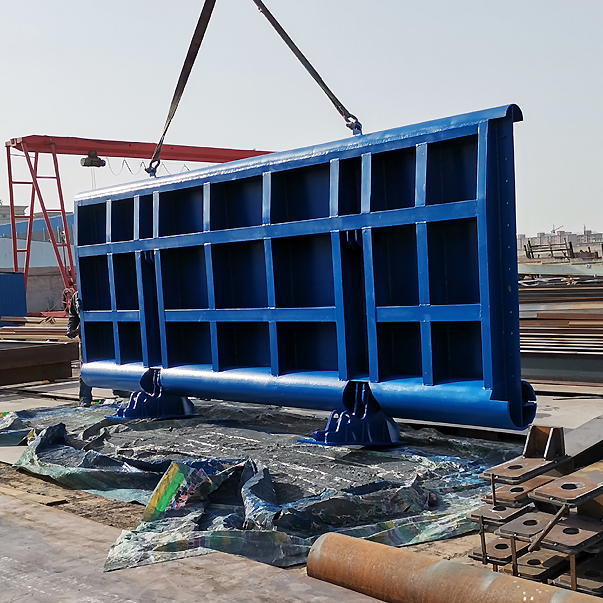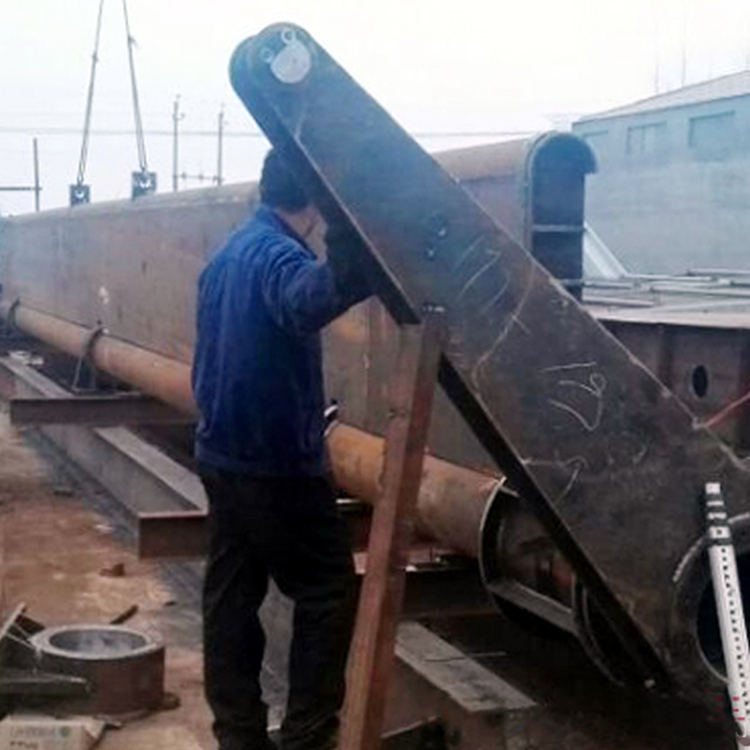


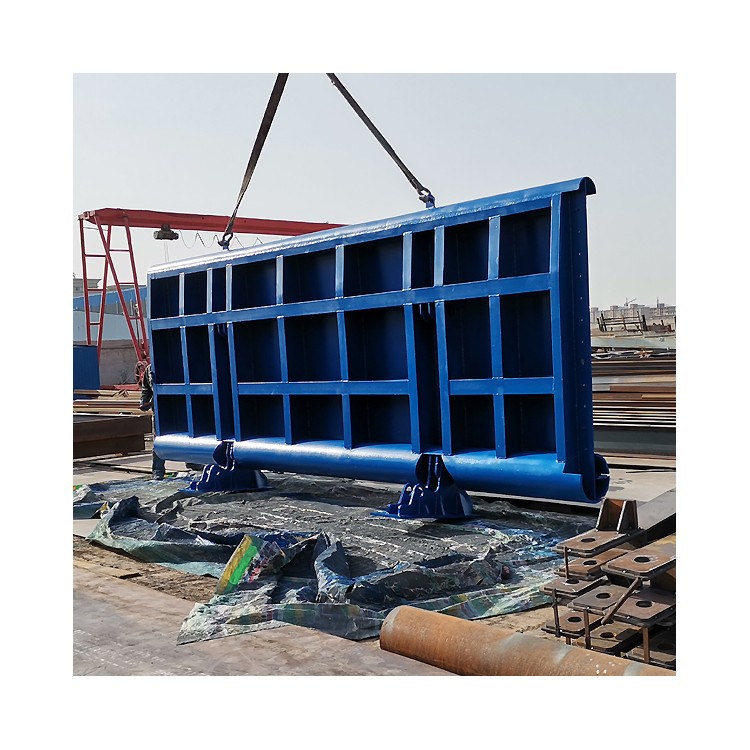












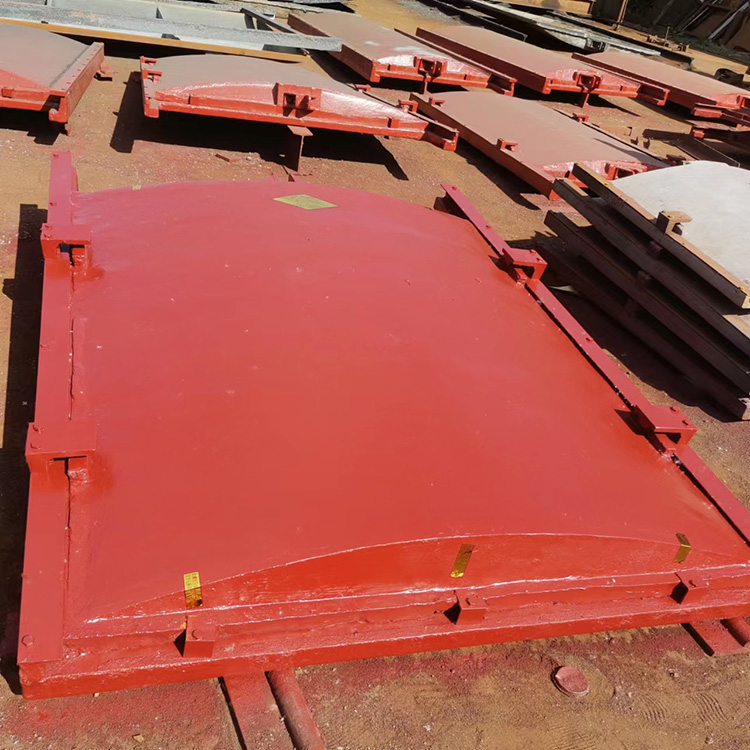
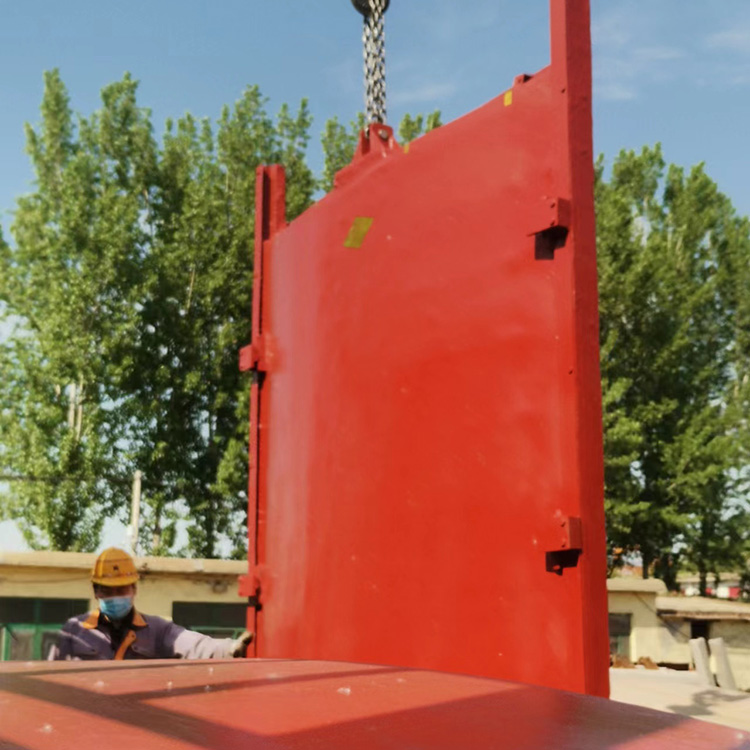


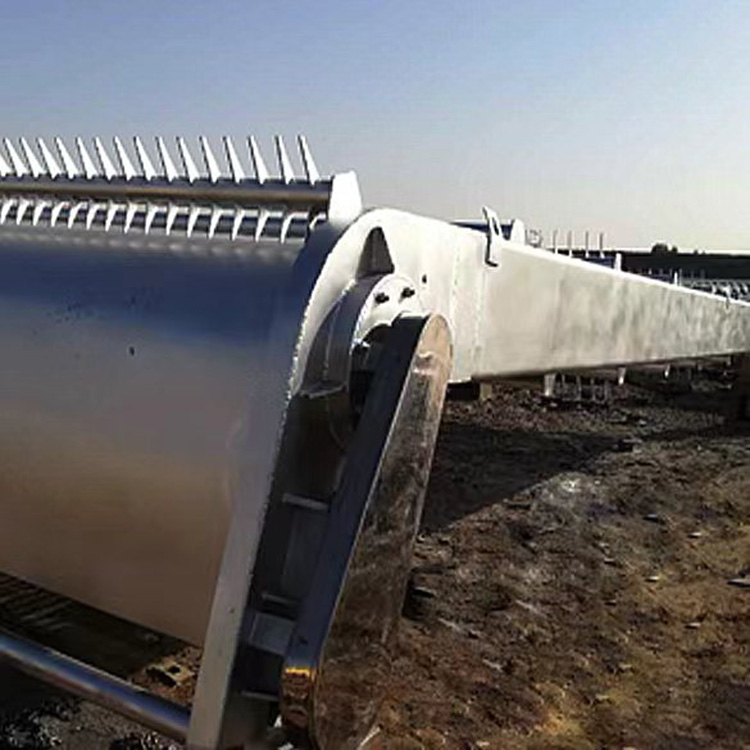
The hydraulic steel dam operates stably and can safely endure winter without worrying about ice freezing issues. The dam's inherent hardness and unique manufacturing process allow ice crystals to overflow and spill over the top after thawing. The dam is connected with large-sized, high-strength bottom shaft structures, and the support is solely dependent on the connecting plates, enabling long-term, high-flow overflow from the top to create a waterfall effect.
App Introduction
In water conservancy and hydropower construction, due to the needs for urban water supply, landscape construction, environmental improvement, irrigation, and power generation, flap gates, sluice gates, and rubber dams are widely used. However, the production of rubber dams is relatively complex, and the time for filling (inflating) to raise the dam or draining (deflating) to collapse the dam is lengthy, affecting rapid flow control or flood release. Additionally, the drawback of rubber's aging propensity can lead to quality accidents. Currently, the market is seeing a surge in the availability of steel structural gates, or flap gates, whether lifting or horizontal, which are difficult to fit into wider river channels with a single opening. Steel坝gates are a new type of adjustable air-controlled overflow gate, consisting of civil structures, steel gate bodies with fixed axes, and operating equipment. This type of structure is suitable for wider gate openings (10 to 100 meters) with smaller water level differences (1 to 7 meters). As it can be designed to be quite wide, it can save several piers, thus not only simplifying the structure but also significantly reducing civil engineering investments. Moreover, it can store water with the gate upright and drain floodwater with the gate horizontal. It can also be appropriately opened to adjust water levels and utilize the gate's top for water passage, creating a景观 effect of artificial waterfalls.