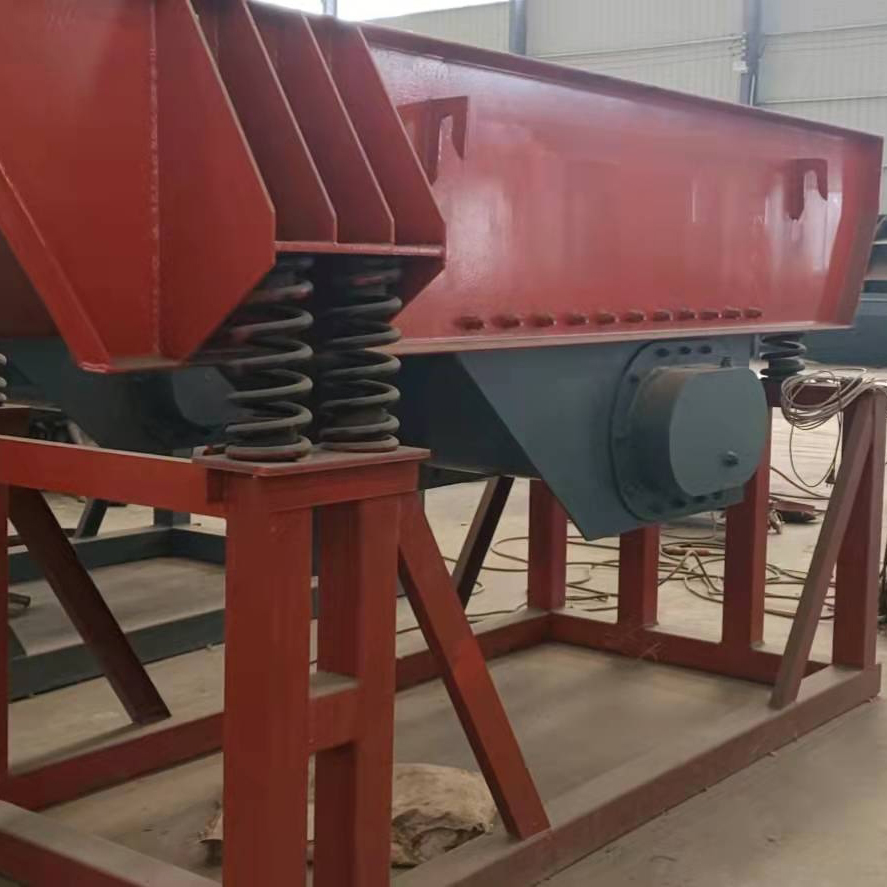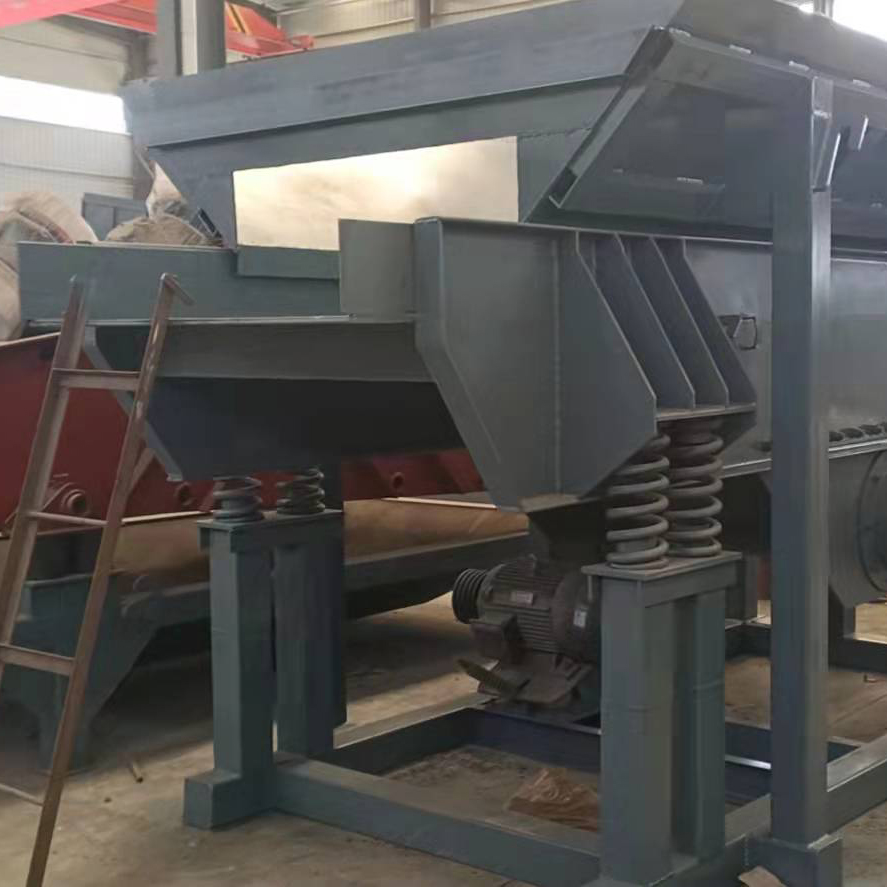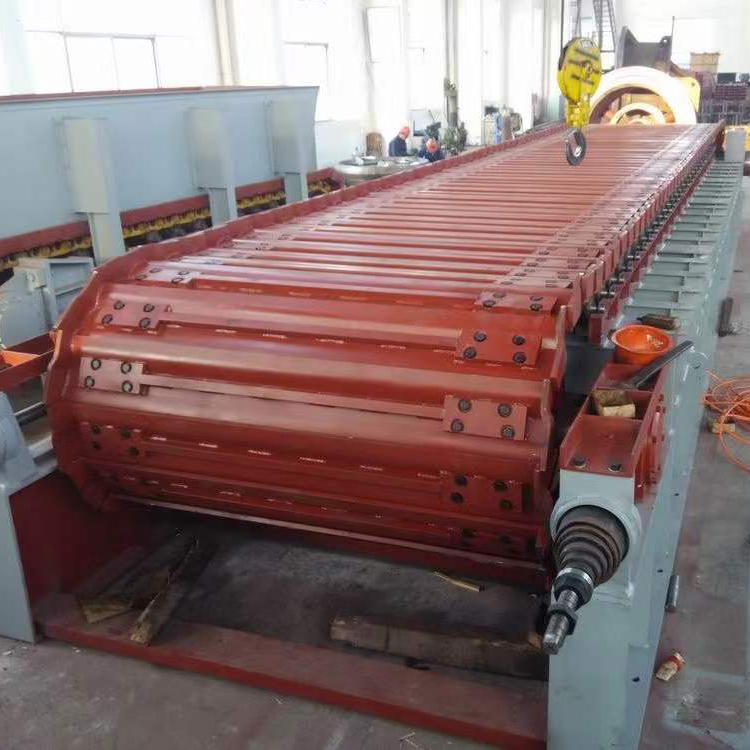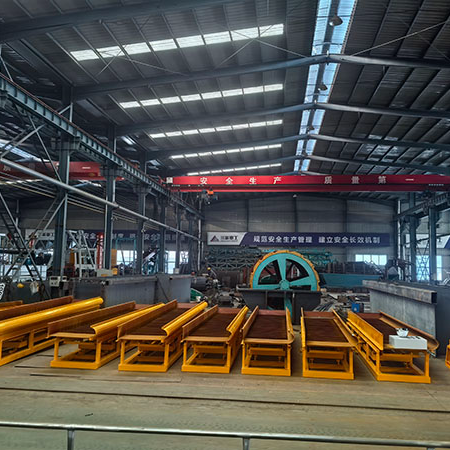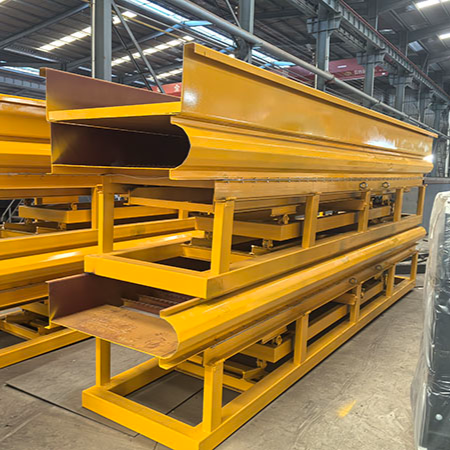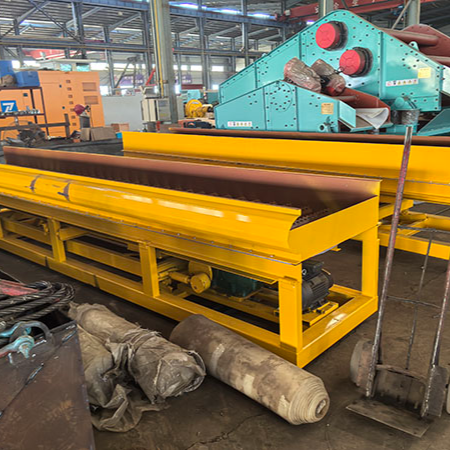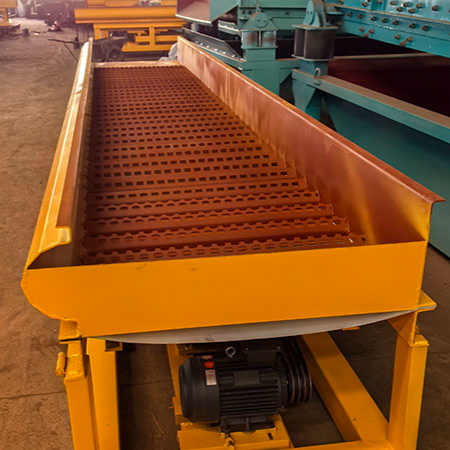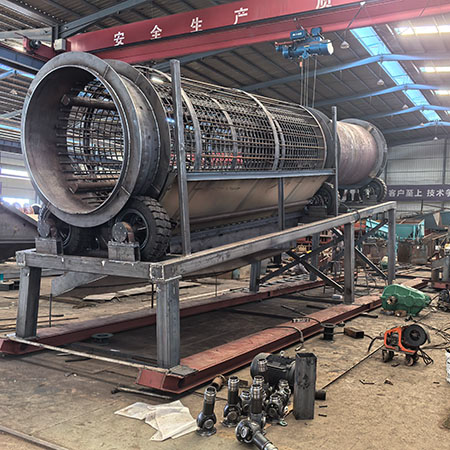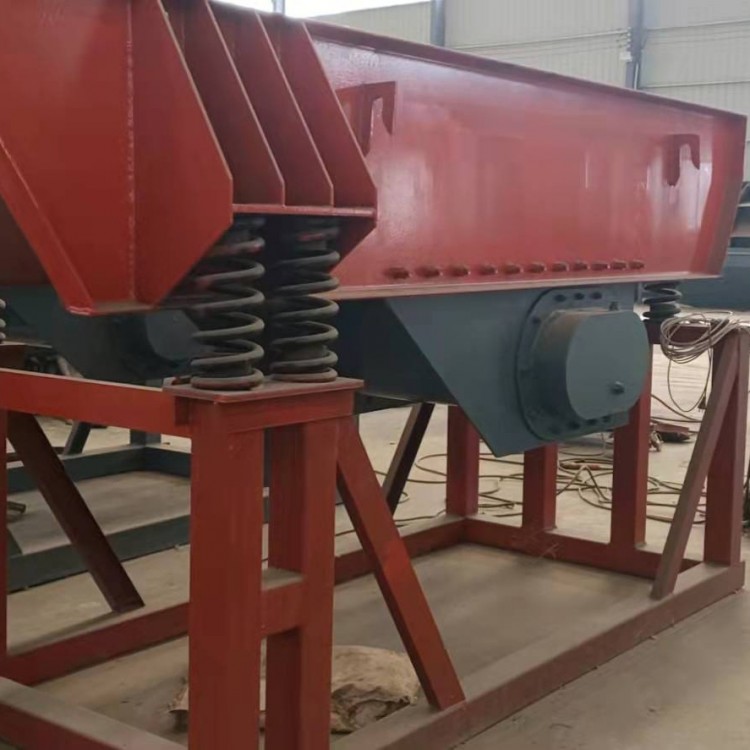

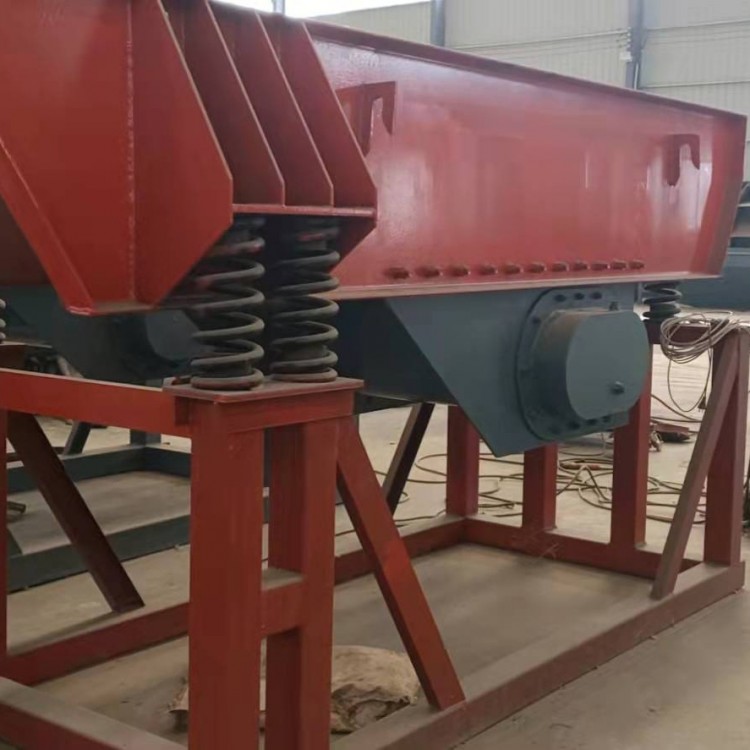

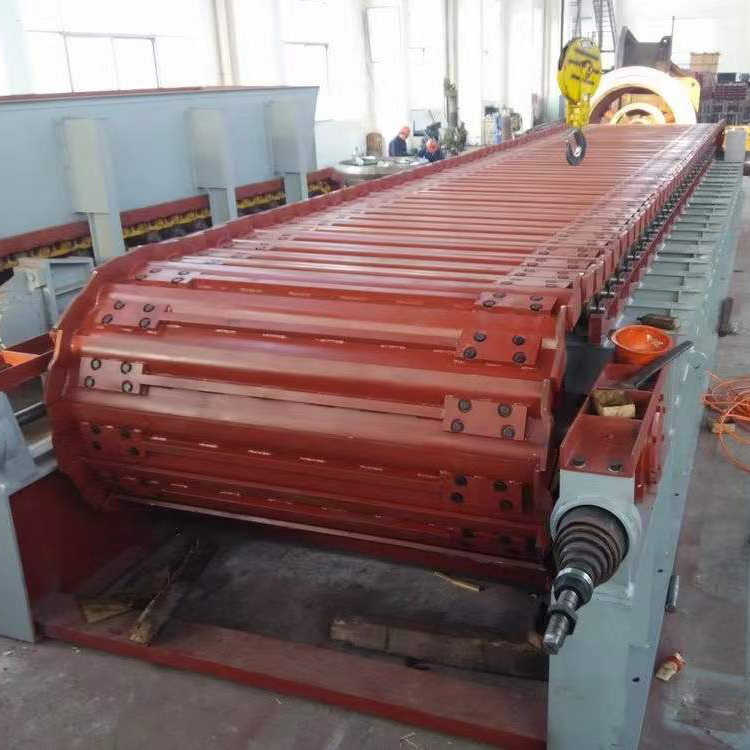


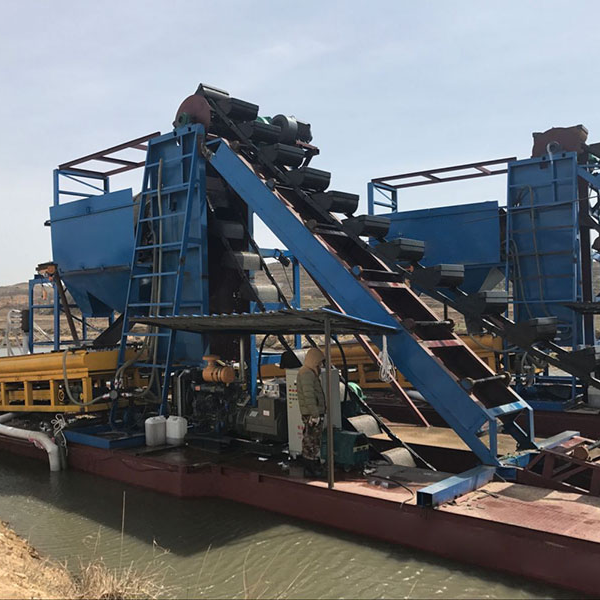
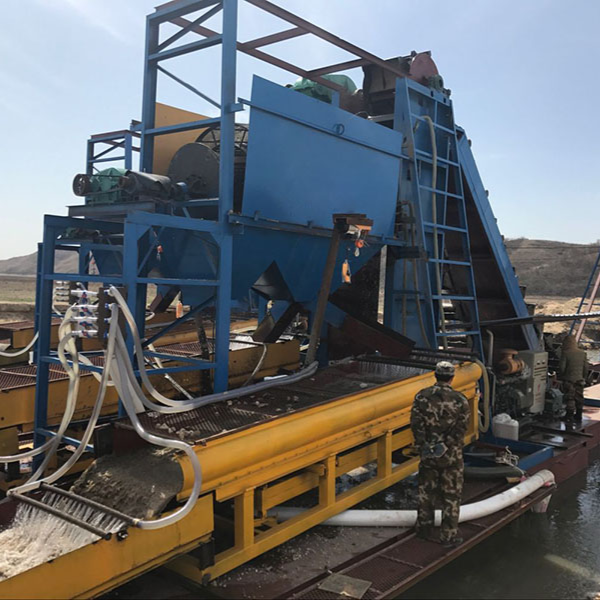
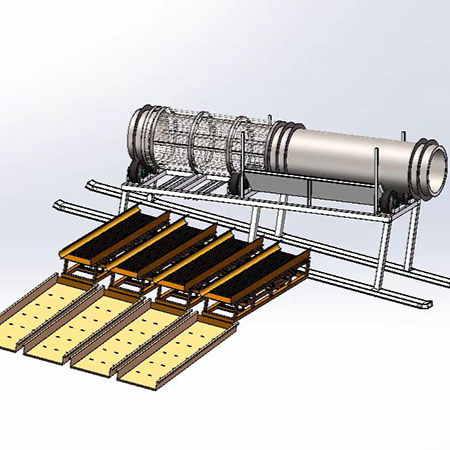
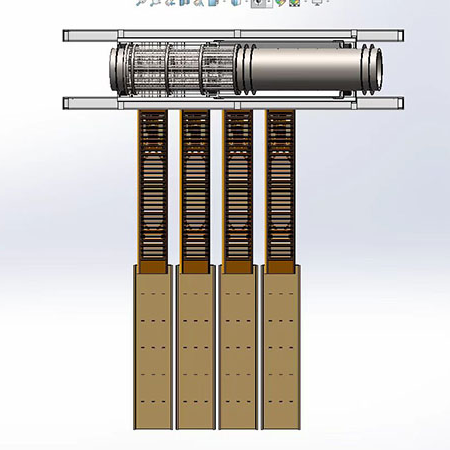
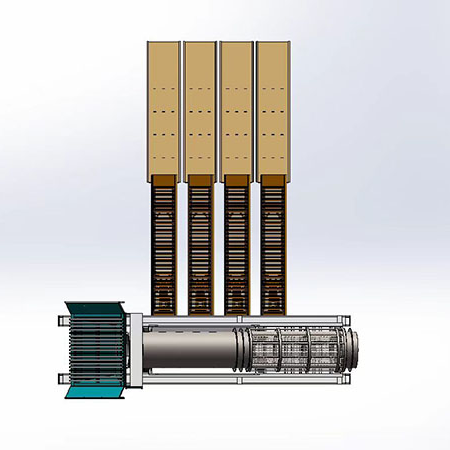





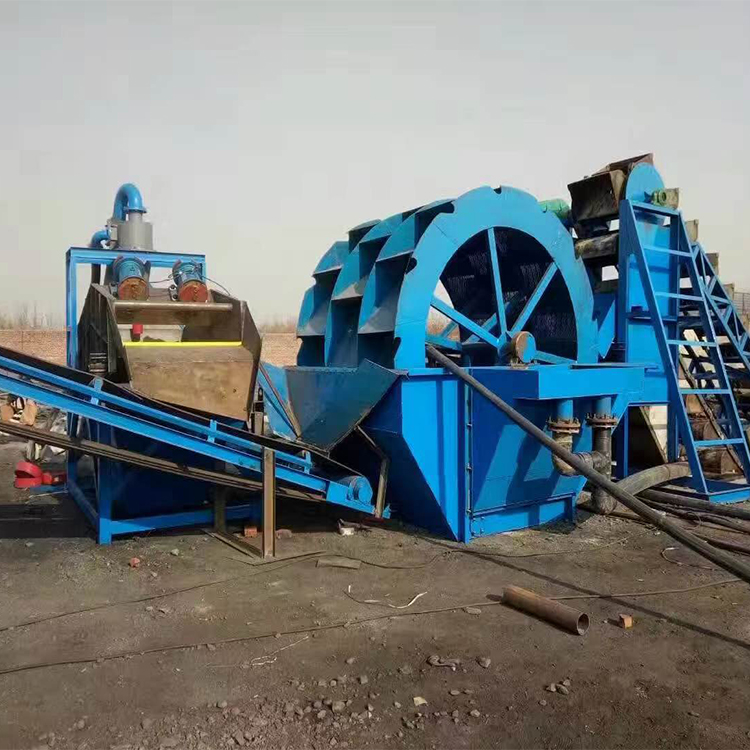

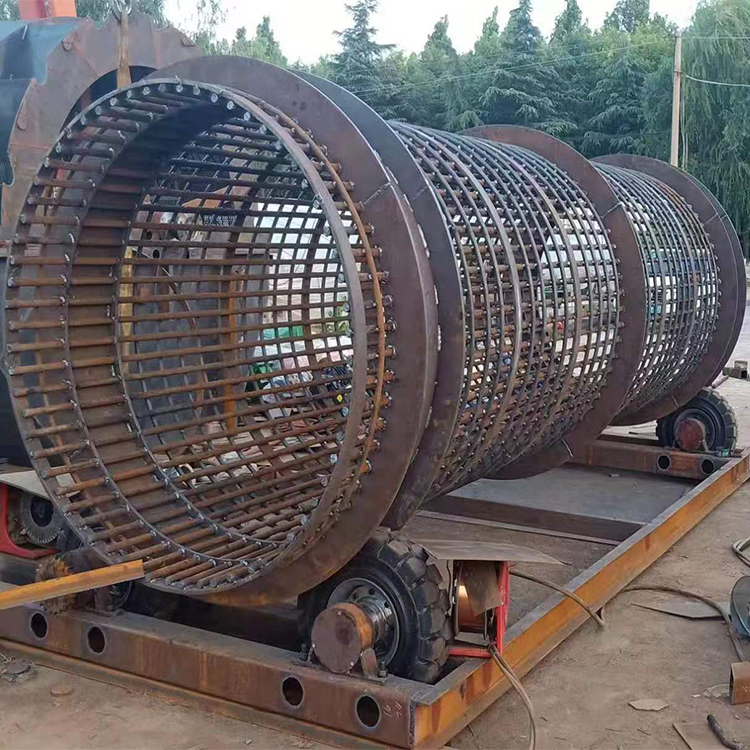


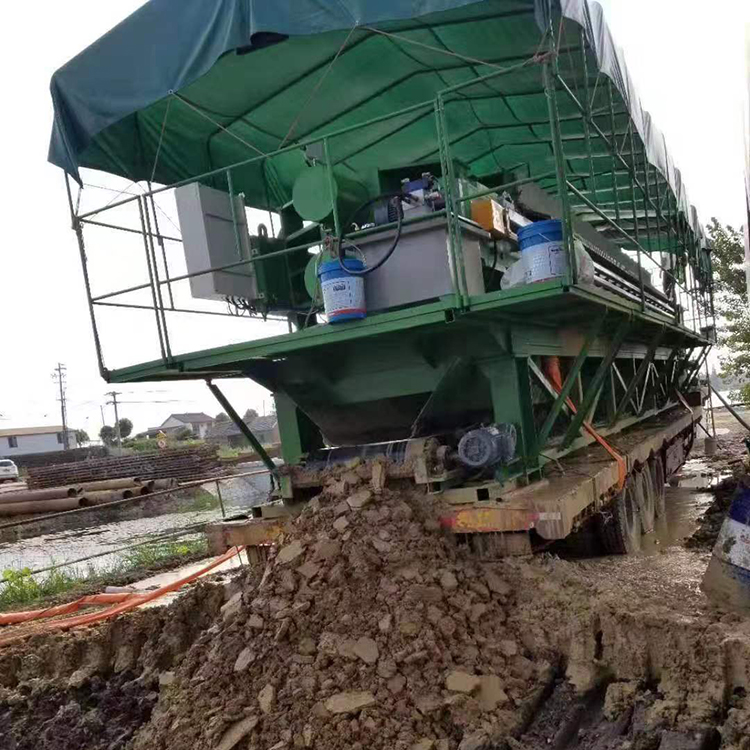
Utilizing high-strength pusher forging chains with a pitch of 228.6mm (9 inches) as the traction elements, two chains are wrapped around a pair of drive sprockets installed at the machine's head and a pair of tensioning wheels at the tail, forming a closed loop. Each link of the two rows of chains is equipped with an overlapping, heavy-duty conveyor trough, creating a continuous conveyor line capable of transporting materials. The self-weight and material weight are supported by multiple rows of support wheels, chain idler wheels, and guide beams mounted on the machine body. The drive system is connected to a reducer via an AC variable-frequency speed control motor, which is then directly connected to the driving unit through expansion sleeves to drive the conveying mechanism at a low speed. The material unloaded into the tail hopper is transported along the conveyor line to the front of the machine body for discharge, achieving the purpose of continuously and evenly feeding the work equipment below.