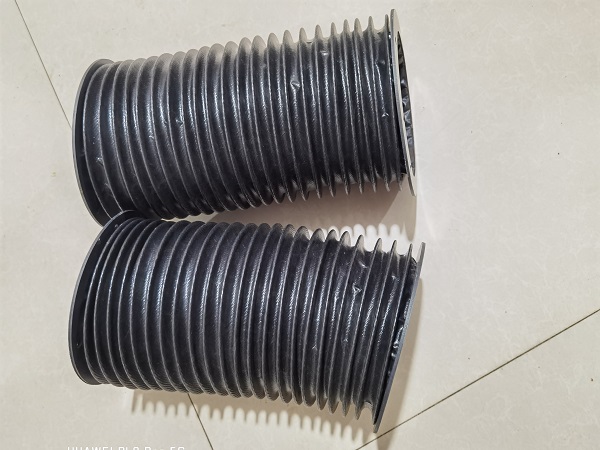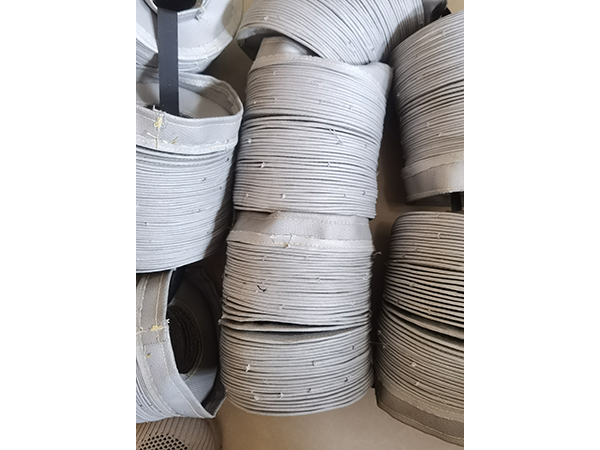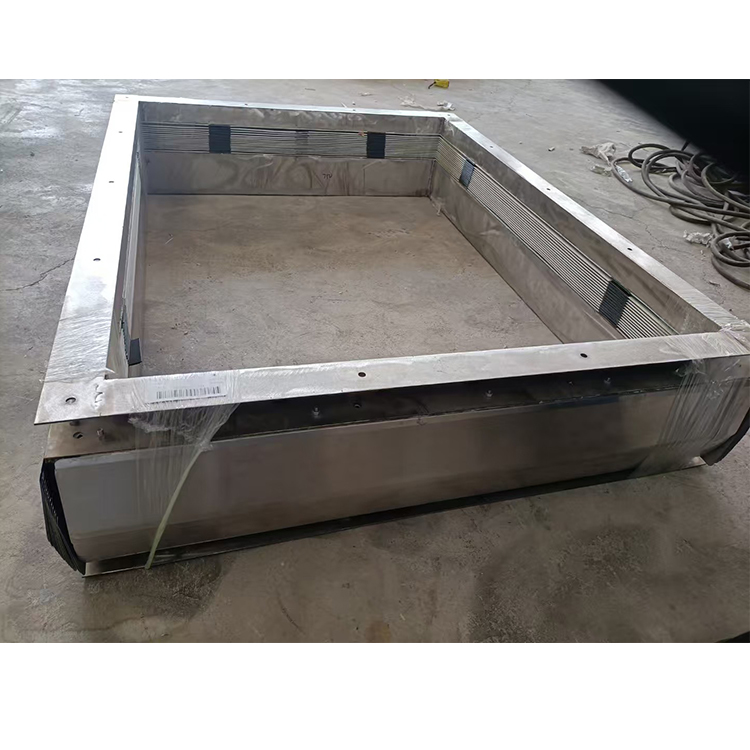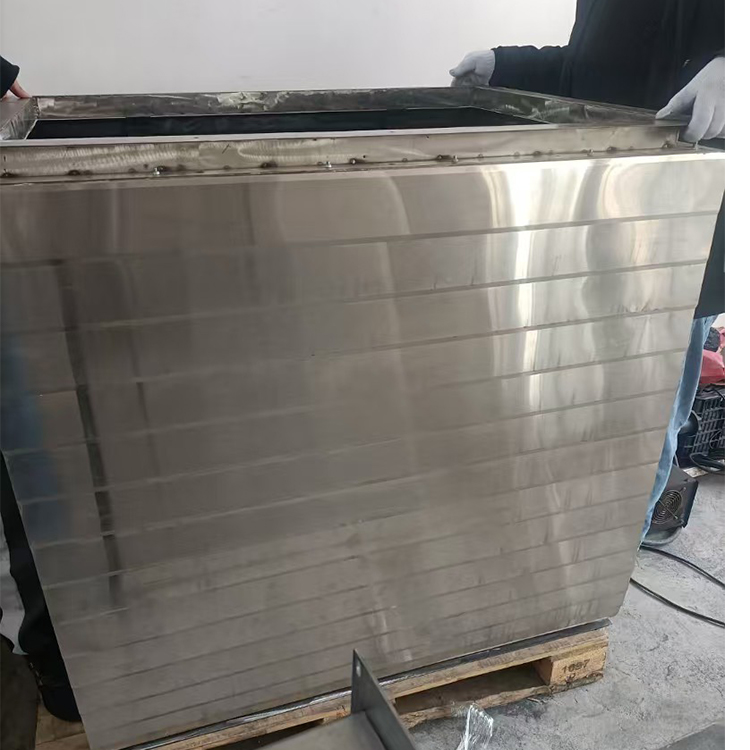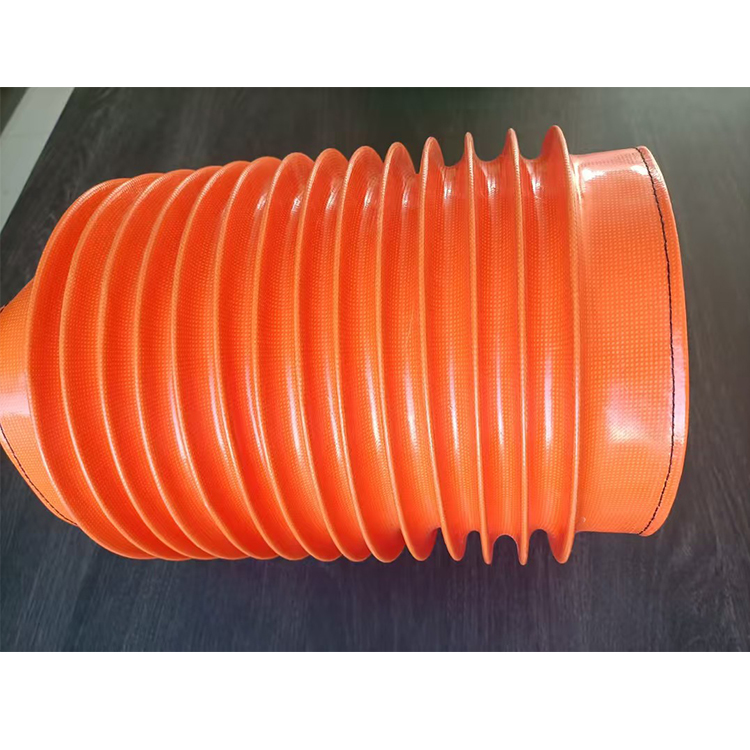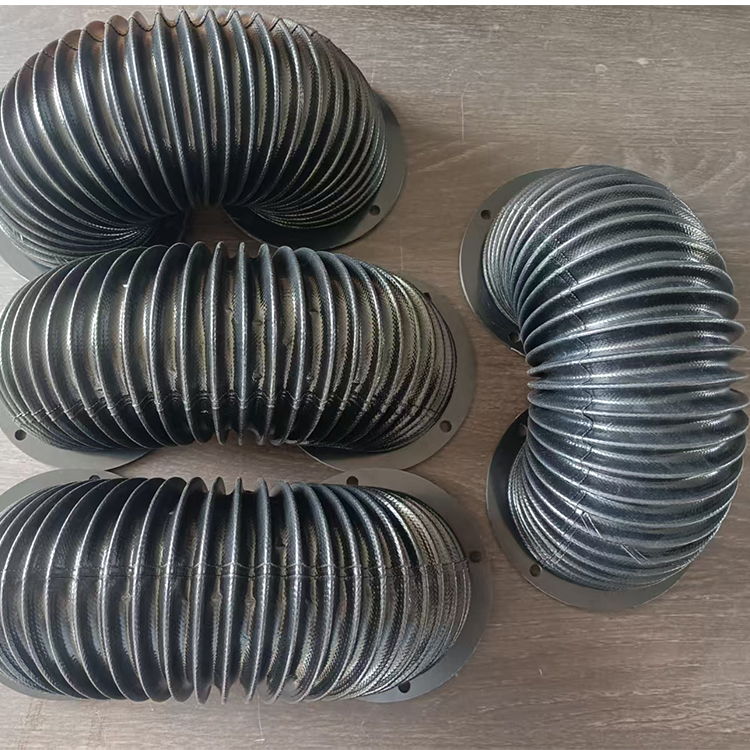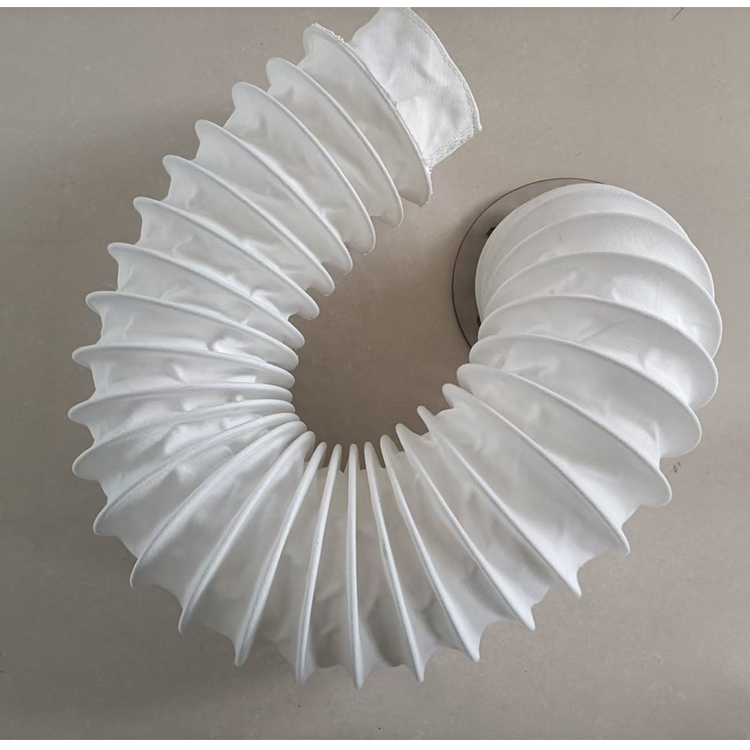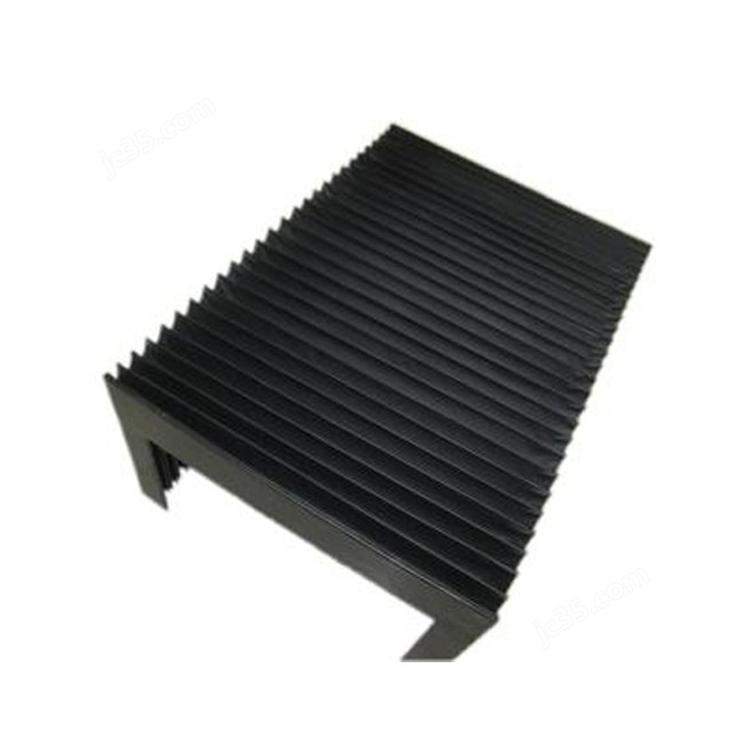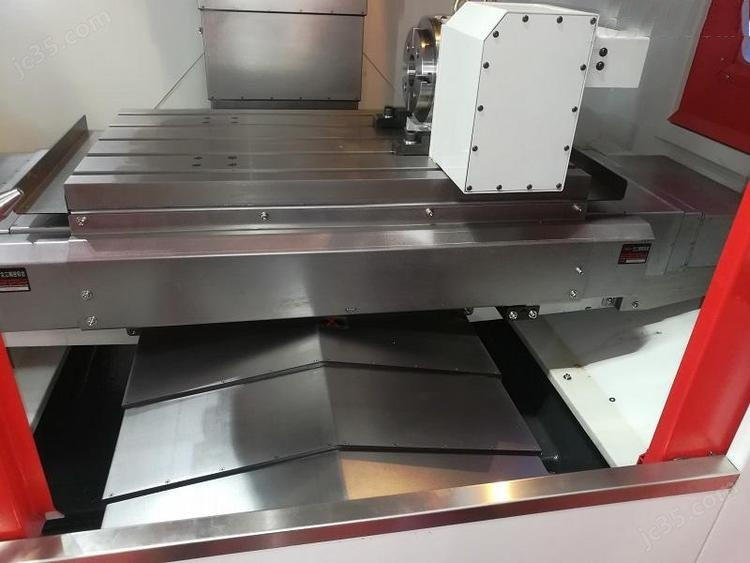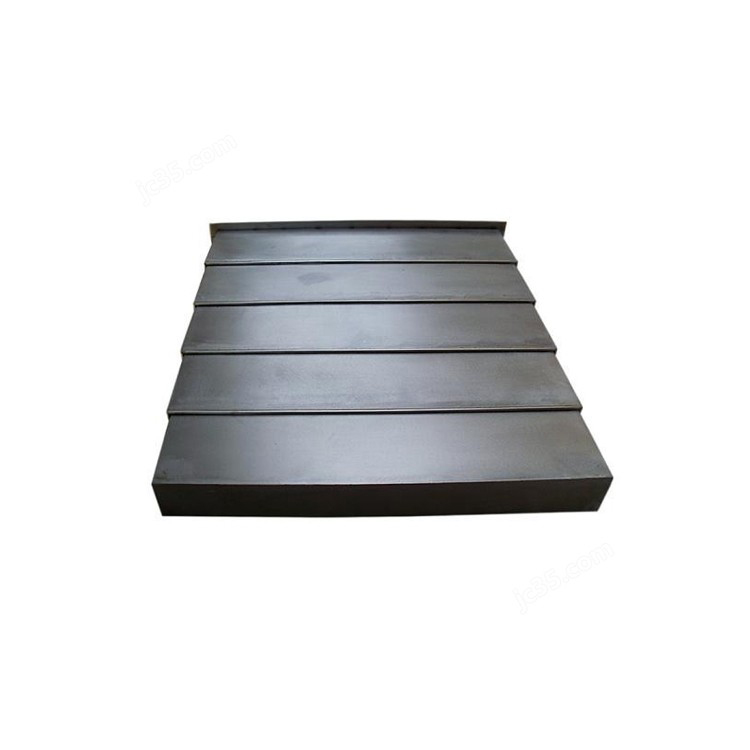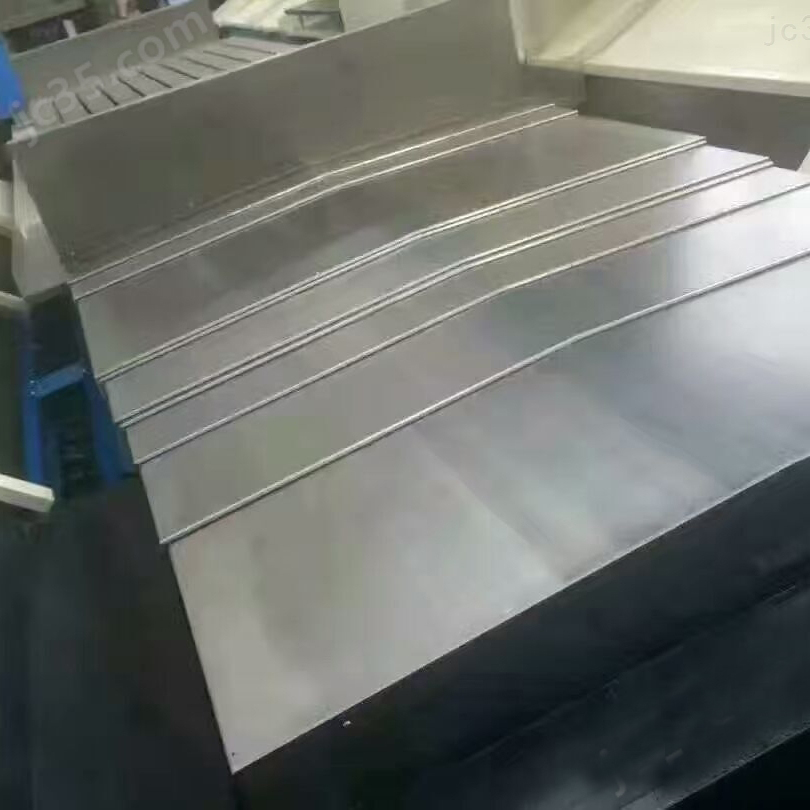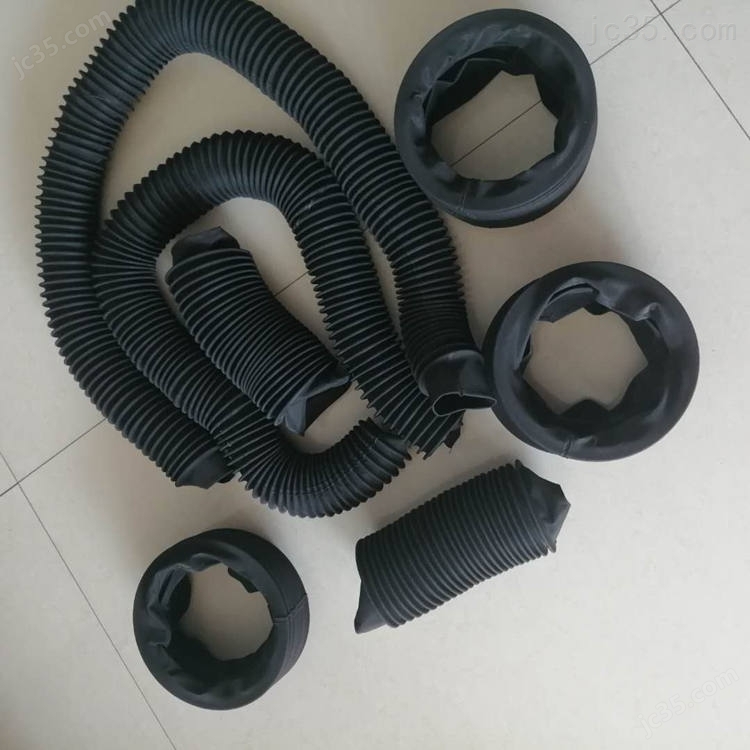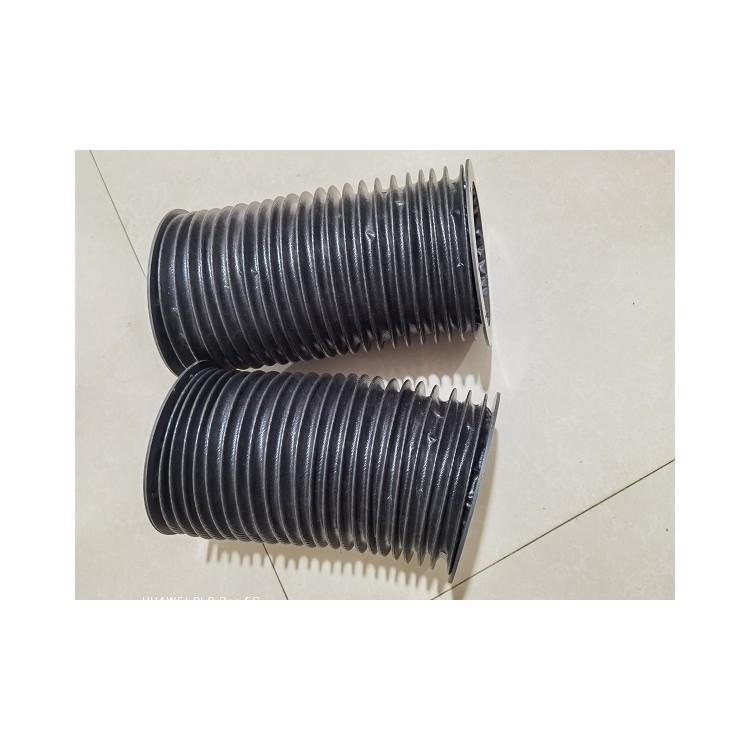

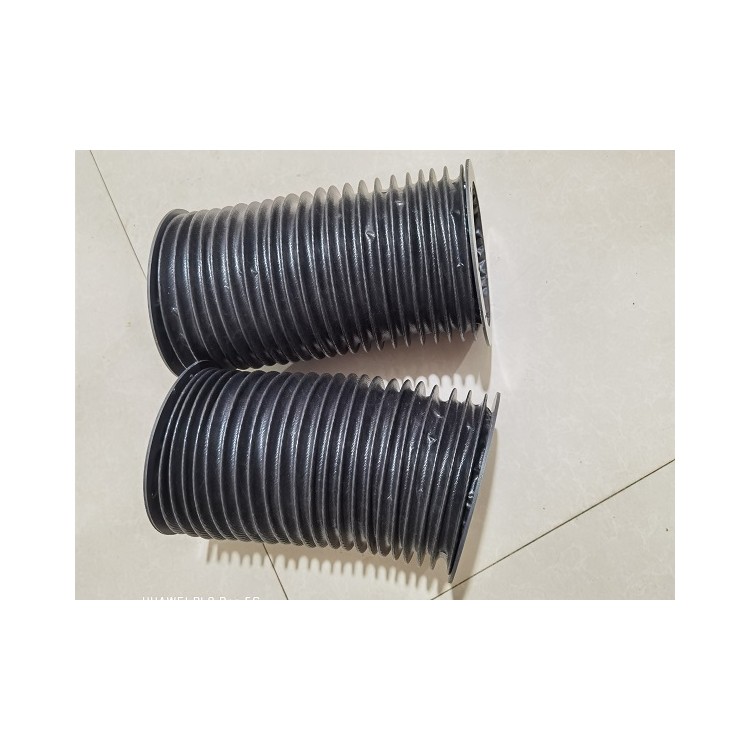
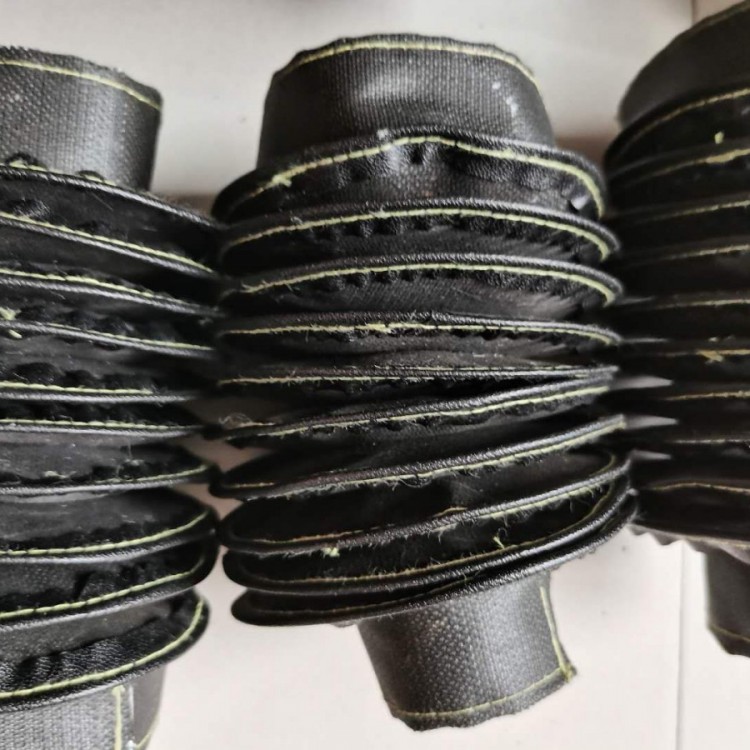


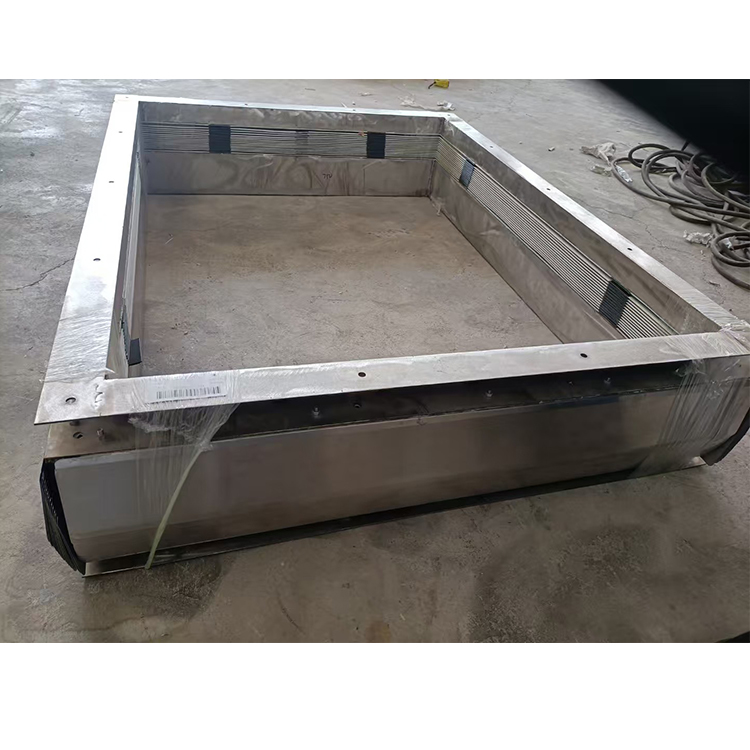
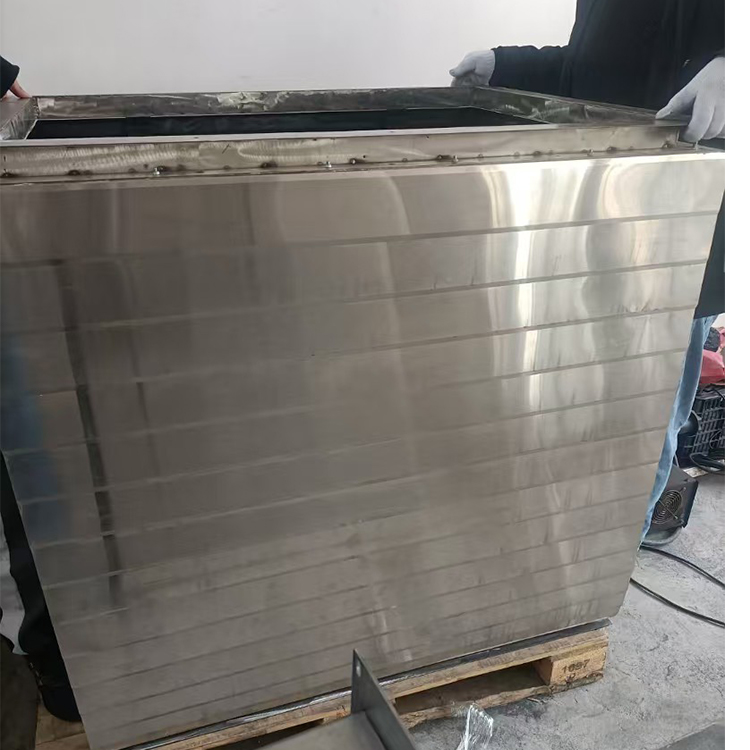
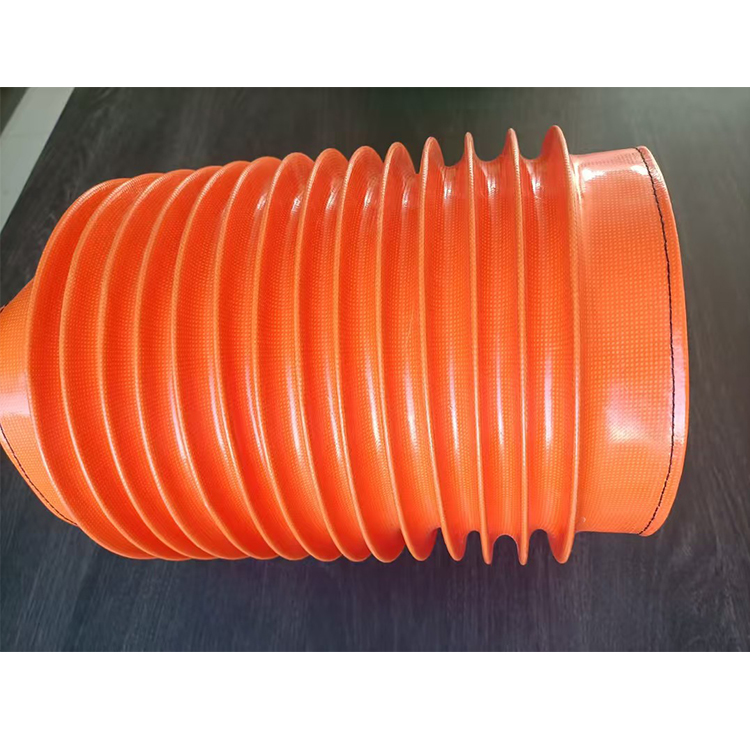
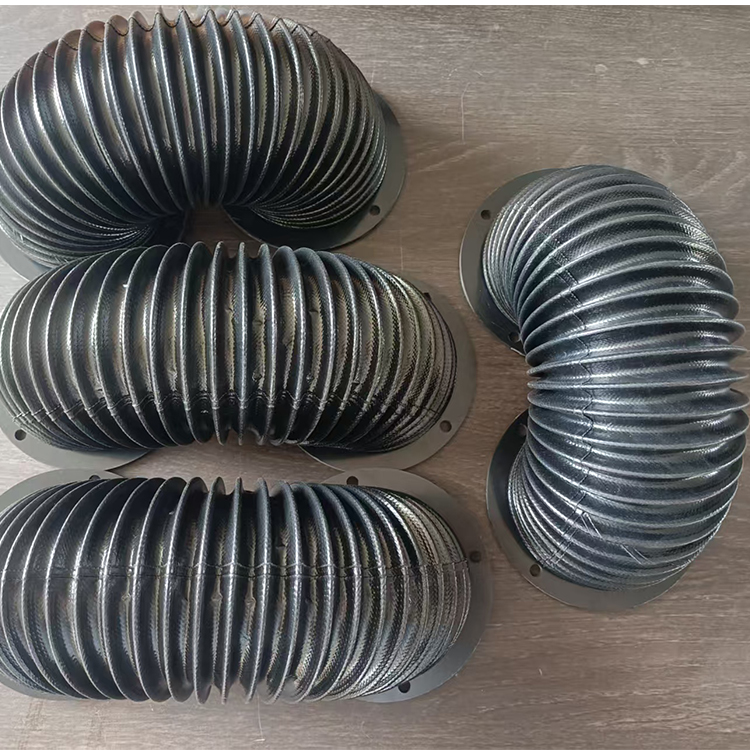
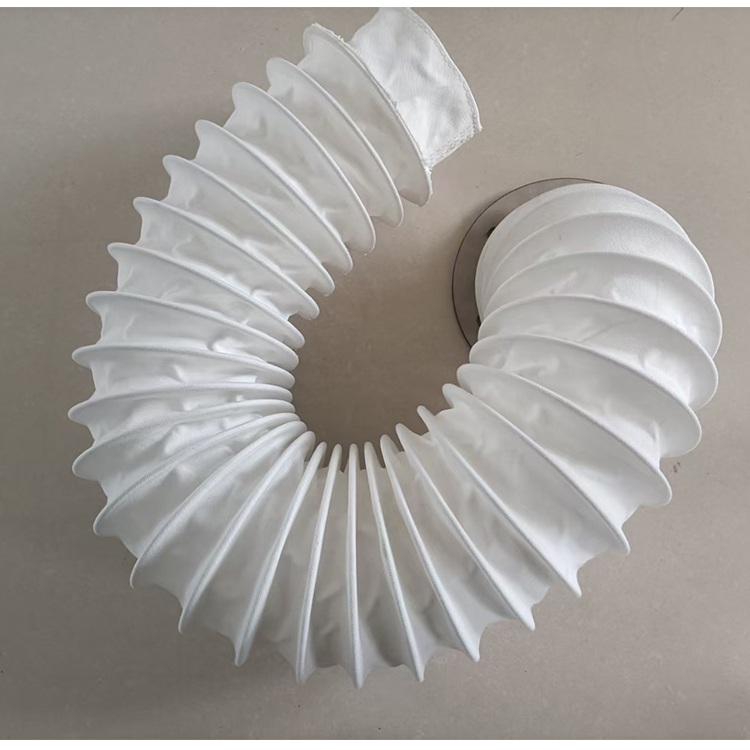





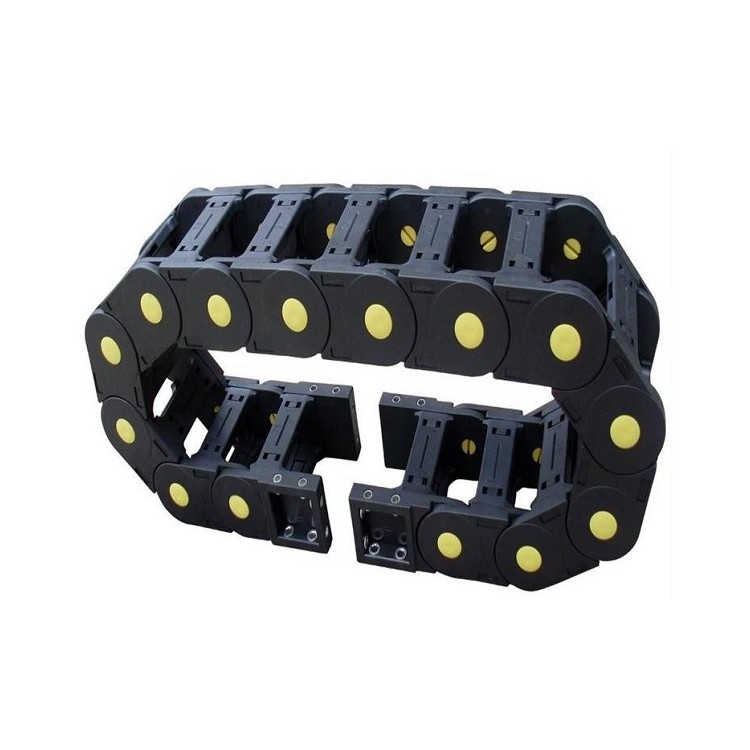
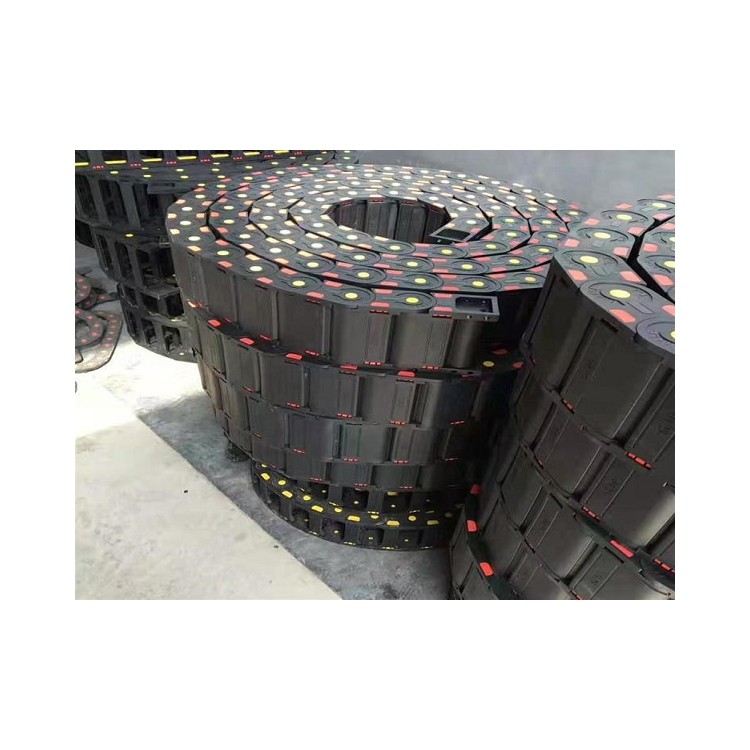
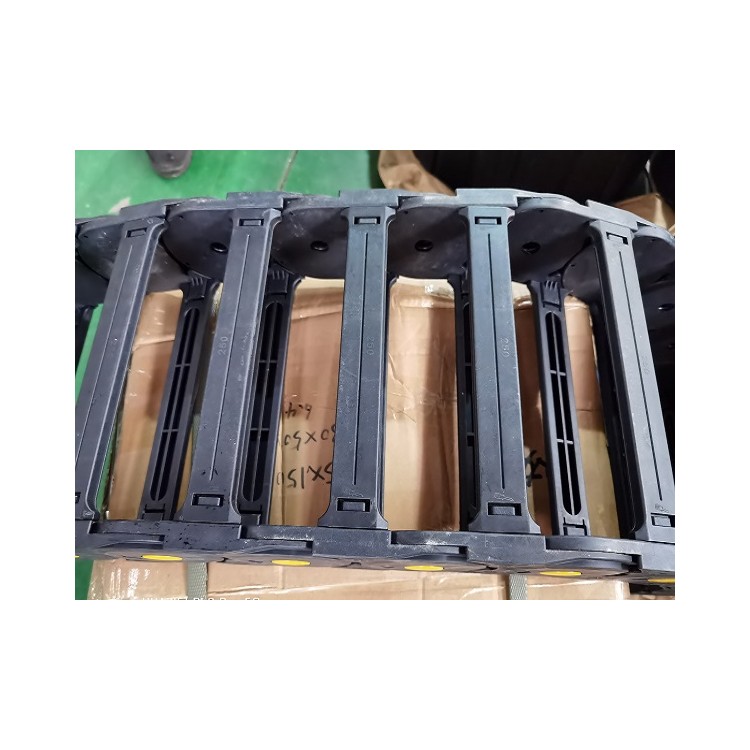
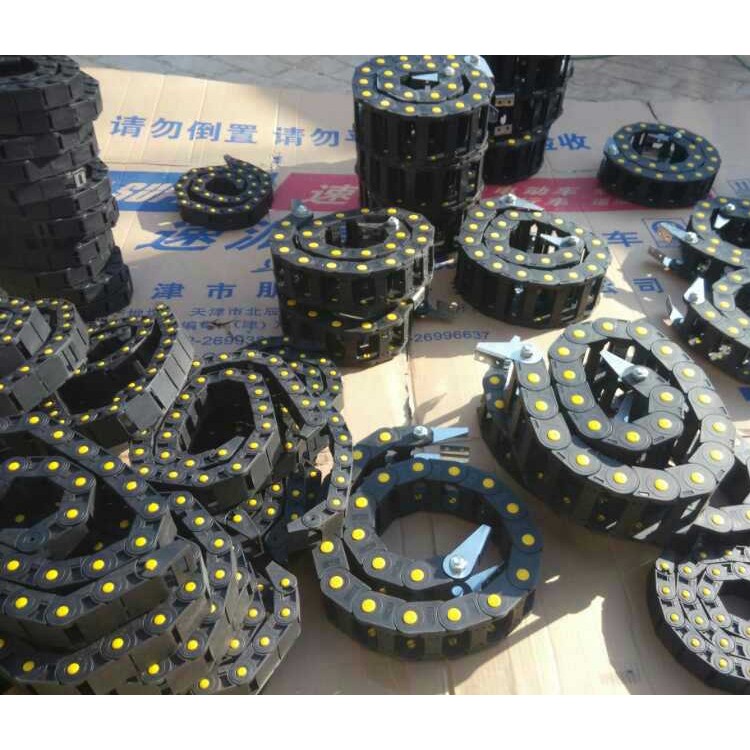
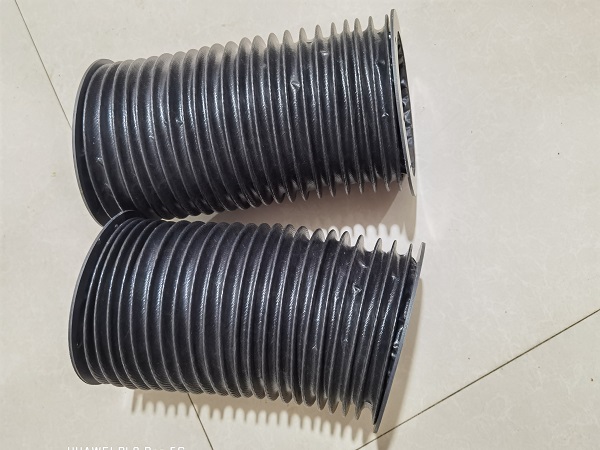
 When using the screw cover horizontally, it is recommended to use plastic or aluminum support rings to maintain a certain even distance between the inner cavity of the cover and the screw, extending its service life. For large tensile lengths, add metal rings at each fold to enhance the stability of the cover. The connecting or fixed ends usually employ metal flanges, or you can opt for clamp-style connections.
Screw shaft guards can be divided into two types based on the processing method, taking into account the factors that different materials are suitable for different processing techniques.
A steel cage-supported screw cover that employs various fabrics, internally supported by sturdy steel wires, operates normally between 110°C and -40°C. It effectively resists dust, water, oil, emulsions, and chemicals. The cover is neatly shaped and resists deformation. Its tightness and rigidity make it suitable for ventilation and dust control in numerous machines. The flexibility of this product lies not only in the choice of materials but also in its ability to determine the required diameter and length according to specific needs.
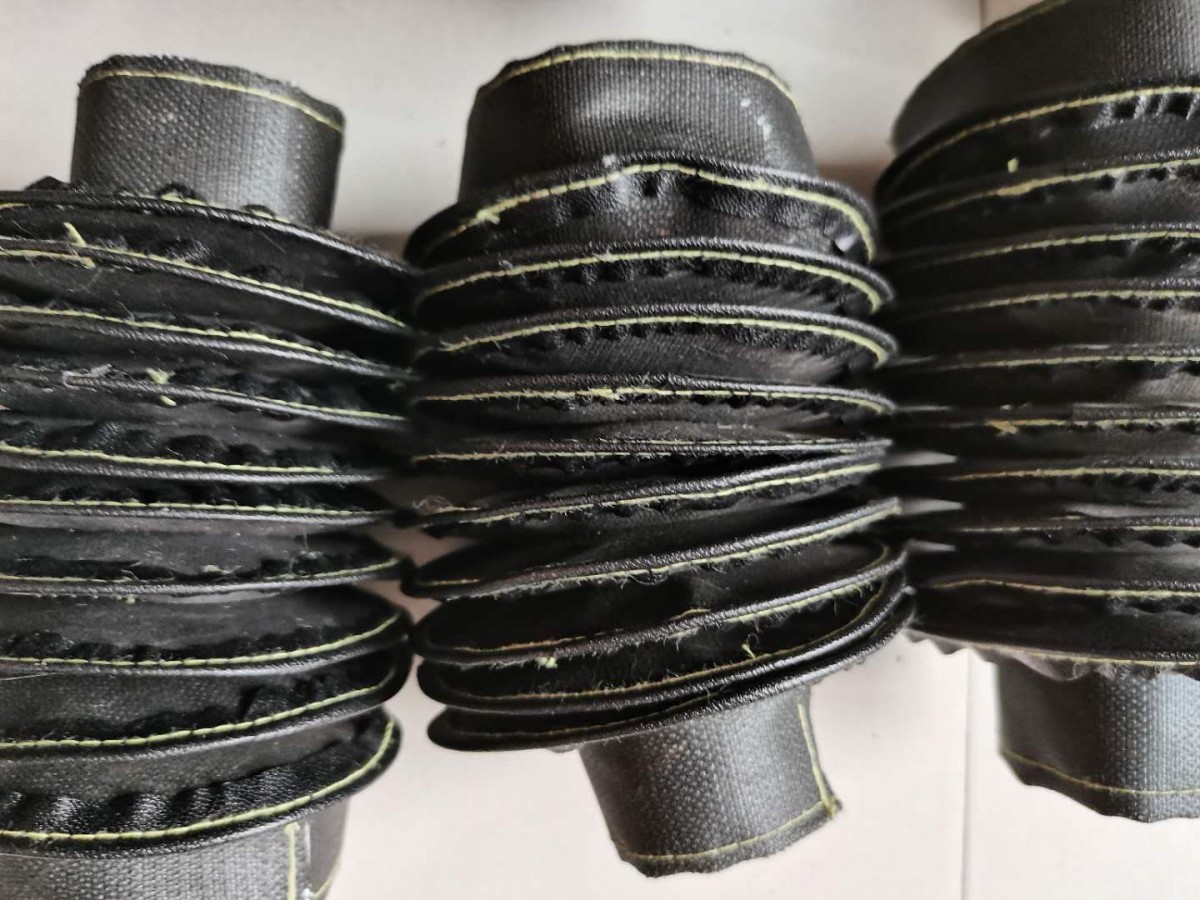
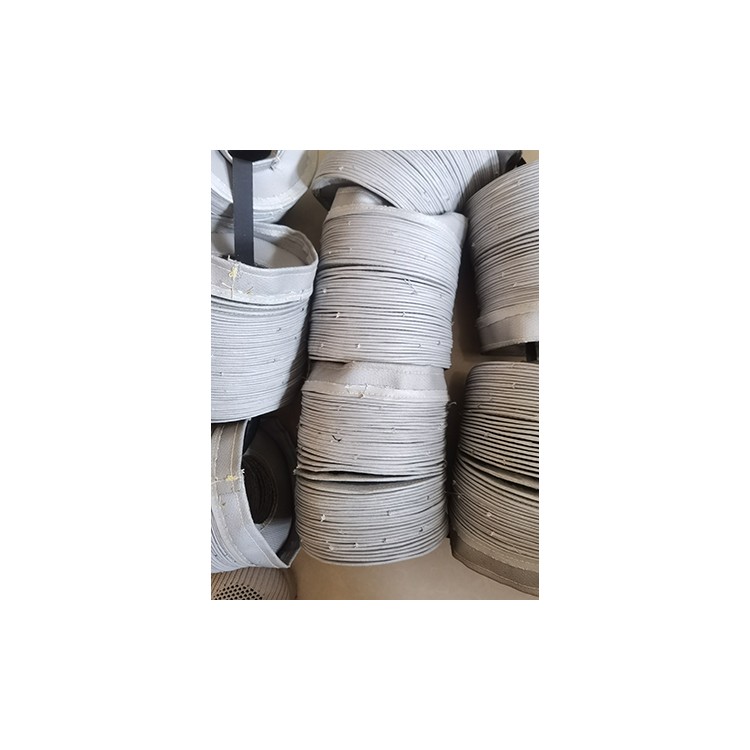
Another option is the sewing rod protector, with the circular sewing rod protector being stitched from a stamped circular disc. The two adjacent inner edges and two outer edges are sewn together, achieving good shape stability and firmness in the horizontal direction through the stitching process. The material can be selected from a variety of options depending on the working environment, including rubber-coated fabric, oil-resistant fabric, waterproof fabric, flame-retardant fabric, acid and alkali-resistant fabric, asbestos fabric, and fire-resistant fabric.
WeChat Official Account

Scan to follow Official Account