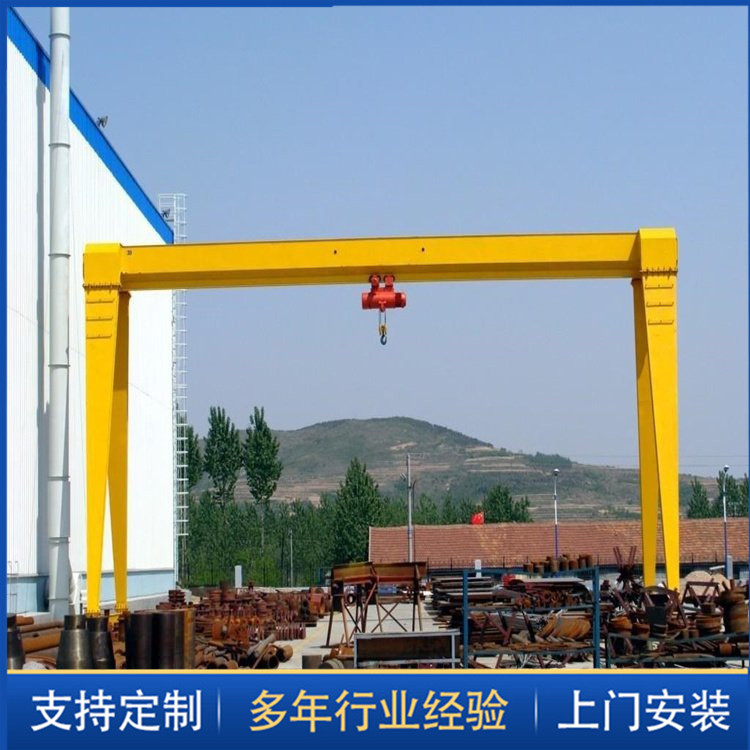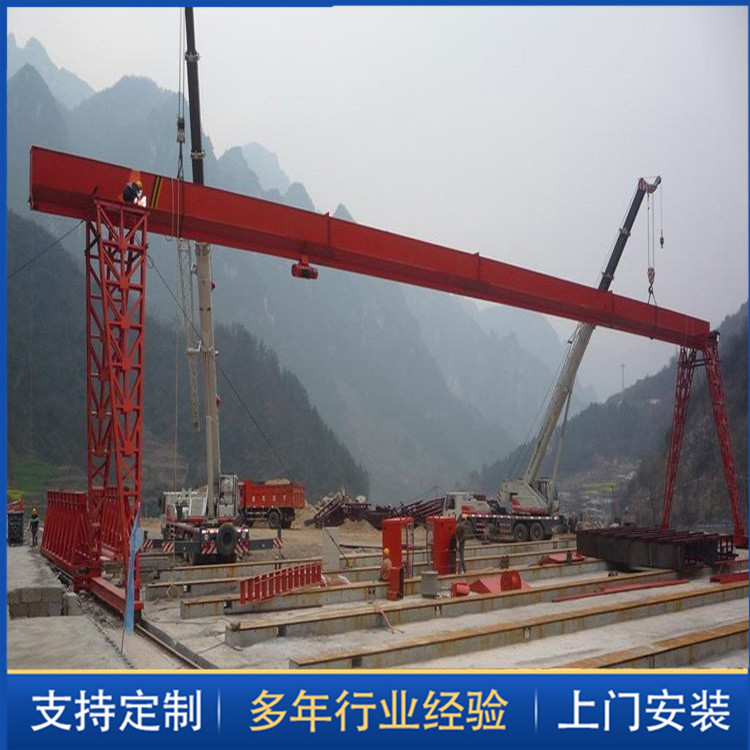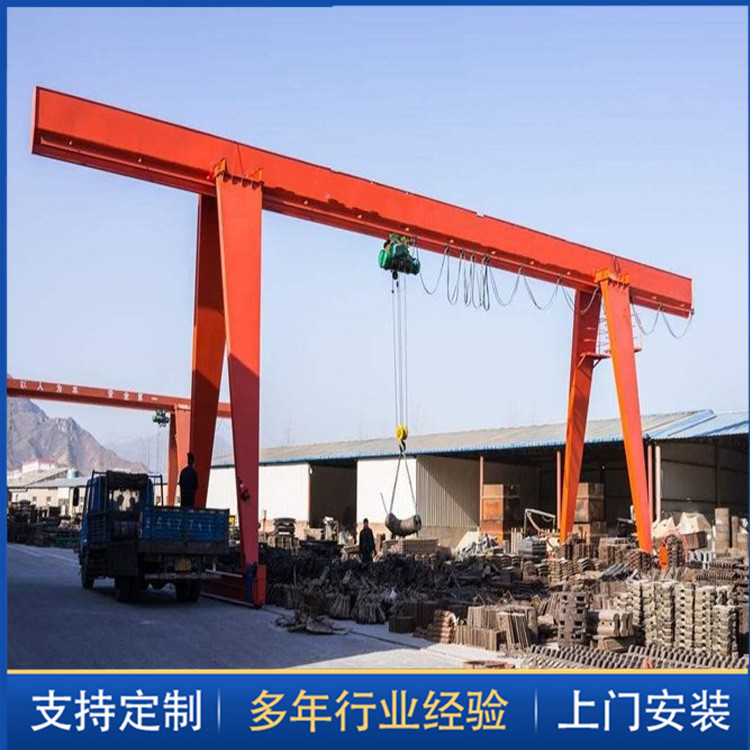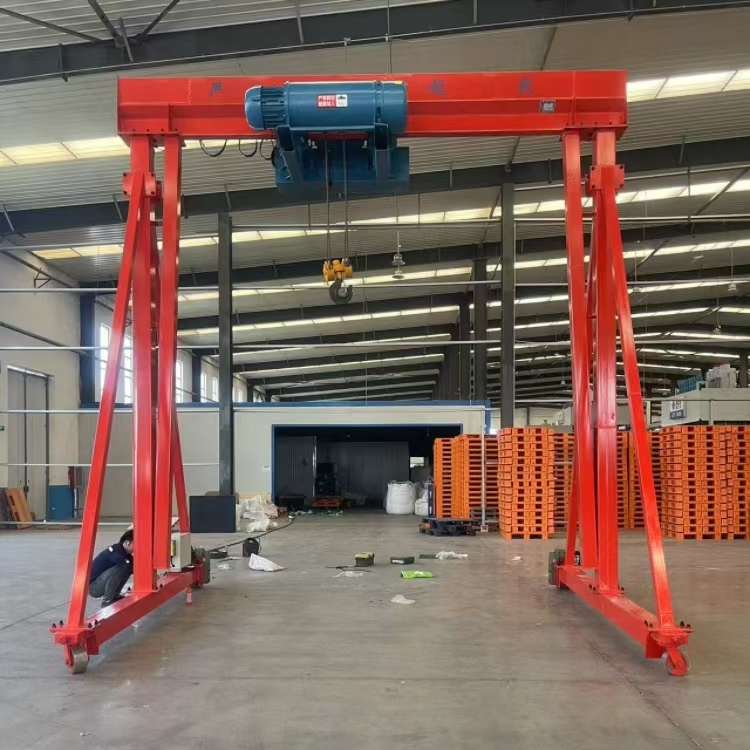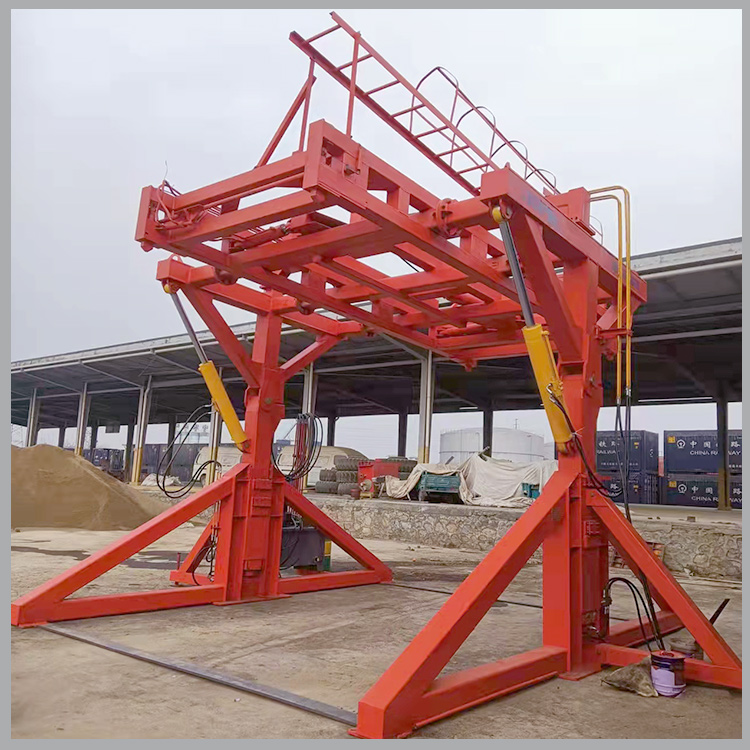

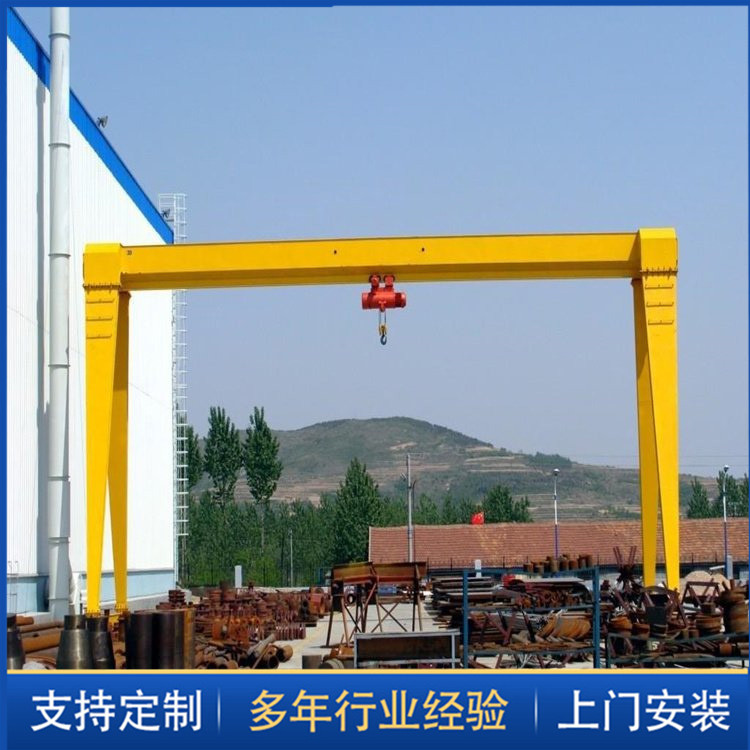


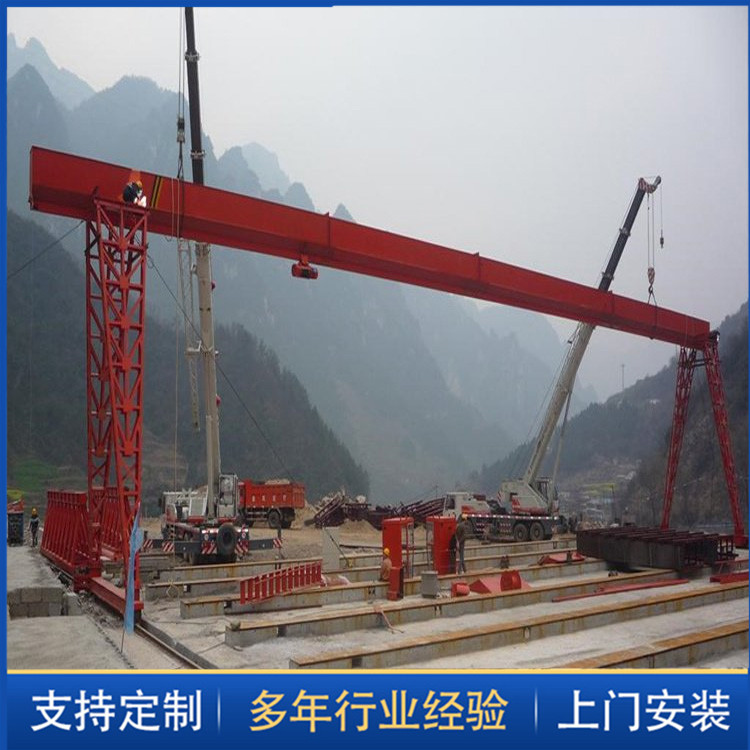
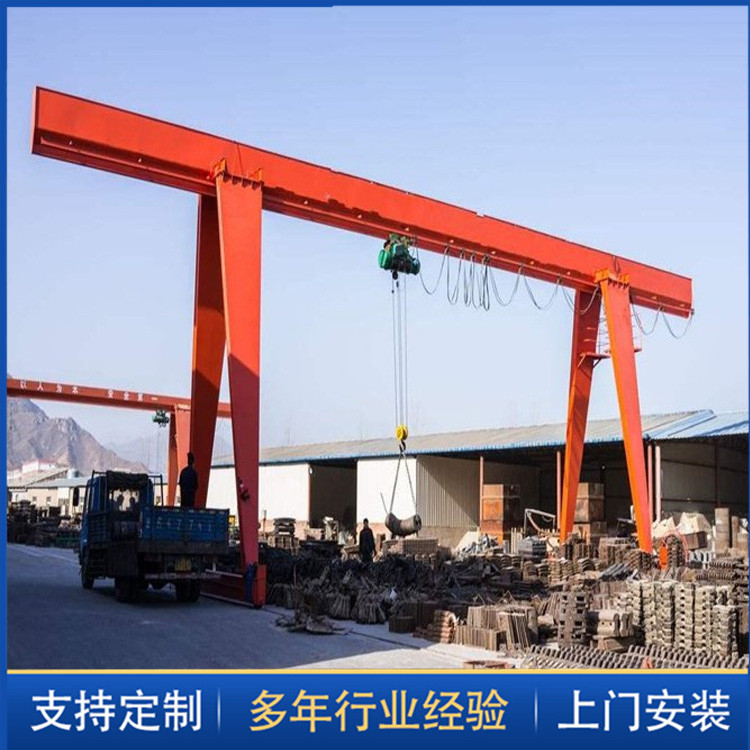


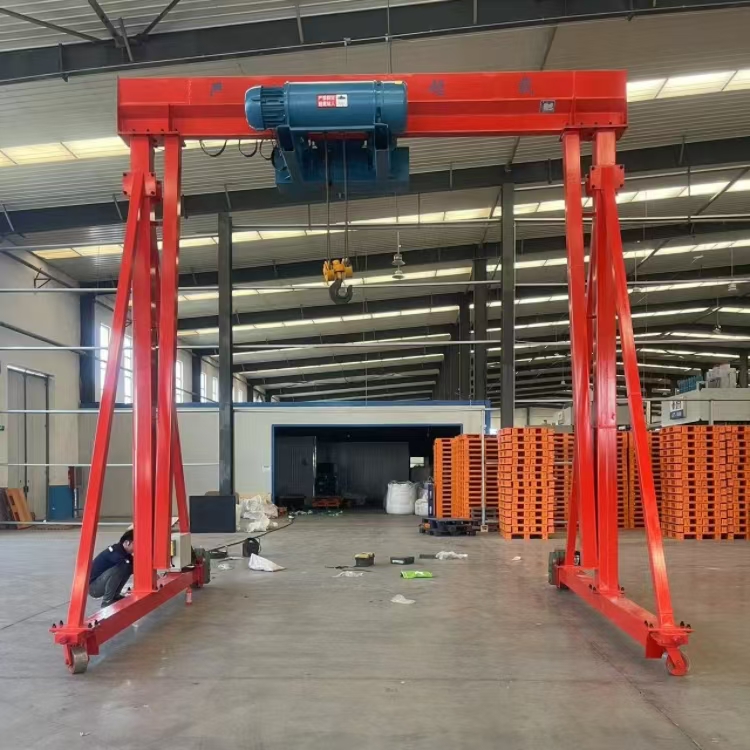









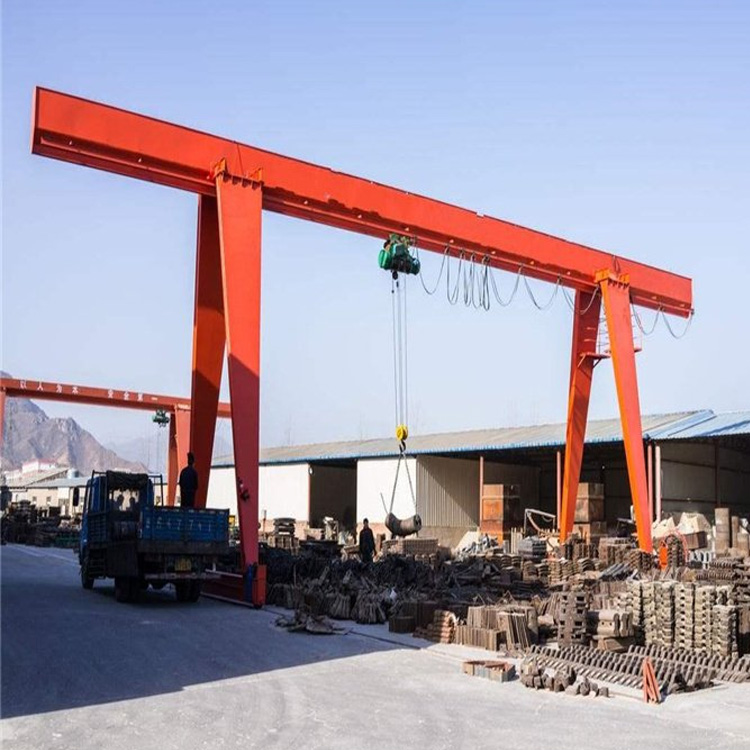
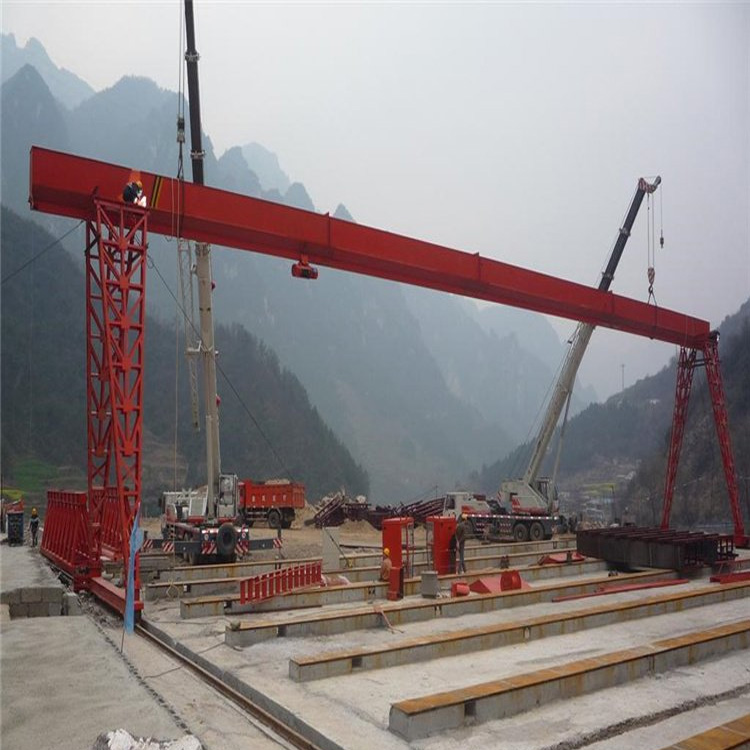
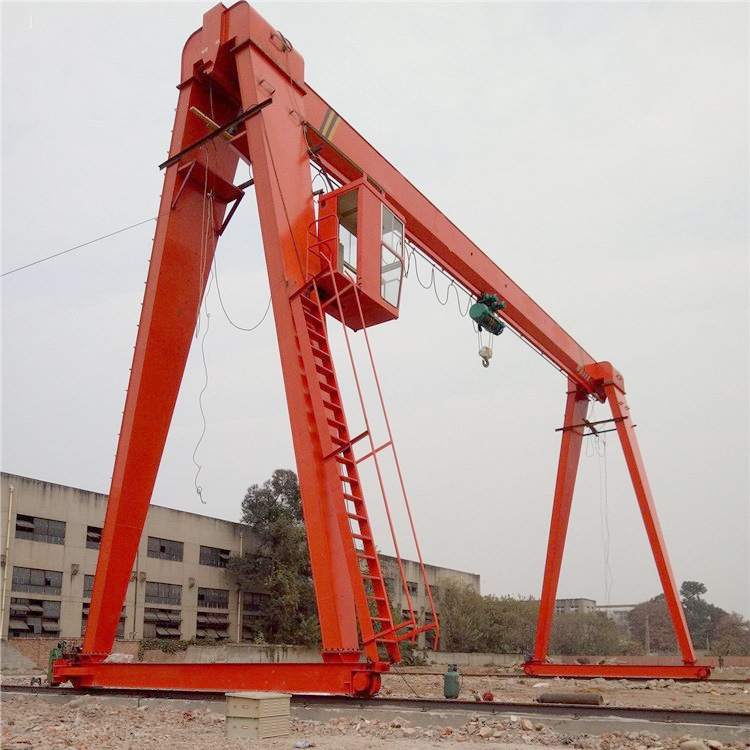
The gantry crane is a variation of the bridge crane, also known as a portal crane. It is primarily used for loading and unloading operations of cargo, materials, and loose goods in outdoor yards and quarries. Its
Metal structures resemble gate frames, supporting two legs under the main beam, which can directly move on ground tracks, with the main beam ends having outwardly projecting overhangs.
Arm beam. The gantry crane boasts high site utilization, wide operation range, broad adaptability, and strong versatility, making it widely used in port cargo yards.
Generally, for capacities under 50t and spans within 35m, without special usage requirements, a single girder design is recommended. If the requirement for the door leg width
Large, high-speed operation, or frequent lifting of heavy or long pieces, a double girder overhead crane is recommended.
Span and cantilever length
The span of the gantry crane is a crucial factor affecting the crane's own quality. In the selection process, priority should be given to meeting the equipment's operational conditions and complying with the span series standards.
Under proper conditions, it is advisable to minimize the range.
Section II: Determination Principles for Wheelbase
1. Meets the stability requirements along the crane track direction of the gantry.
2. The physical dimensions of the goods must be able to pass through the leg plane steel frame smoothly.
3. Ensure a proportional relationship between wheel spacing B and span S, typically with B = (1/4 to 1/6)S.