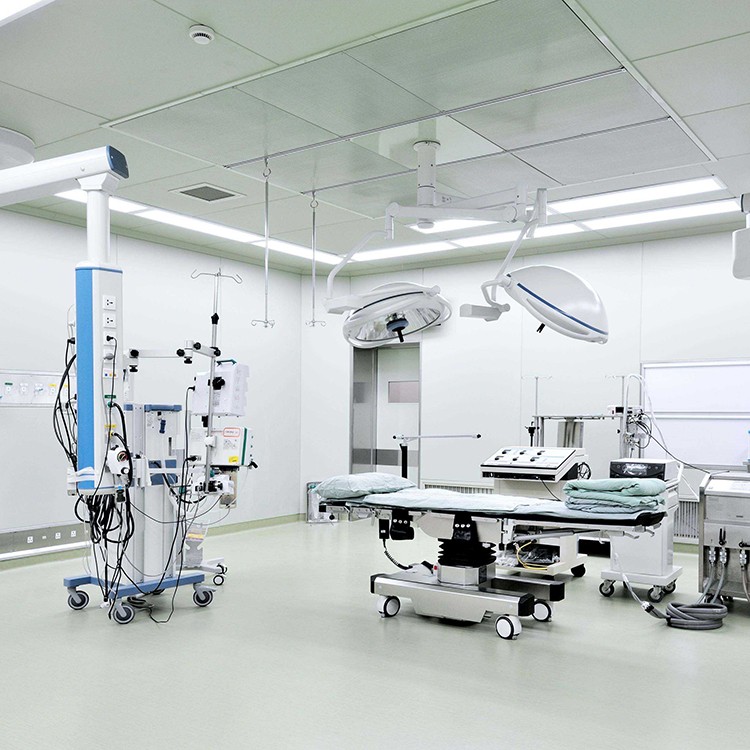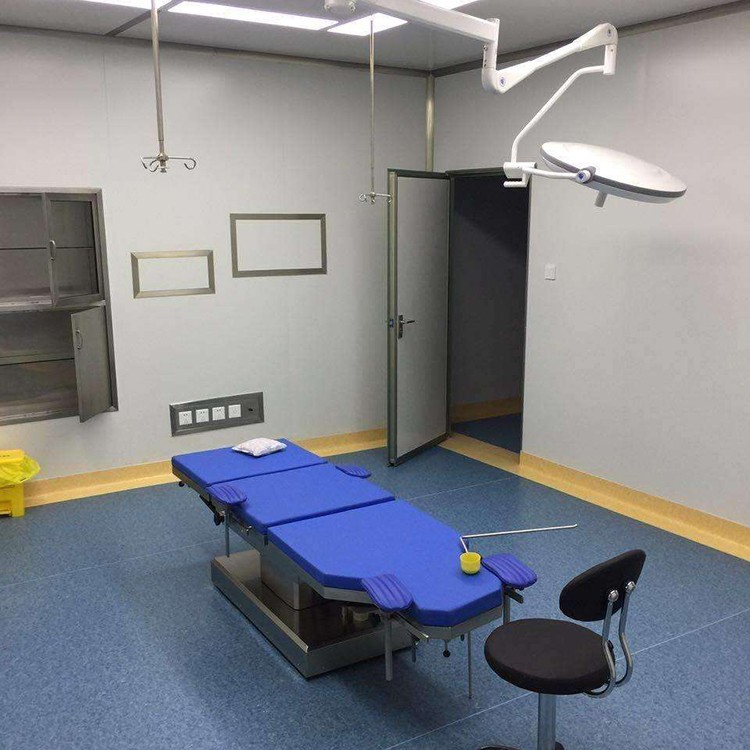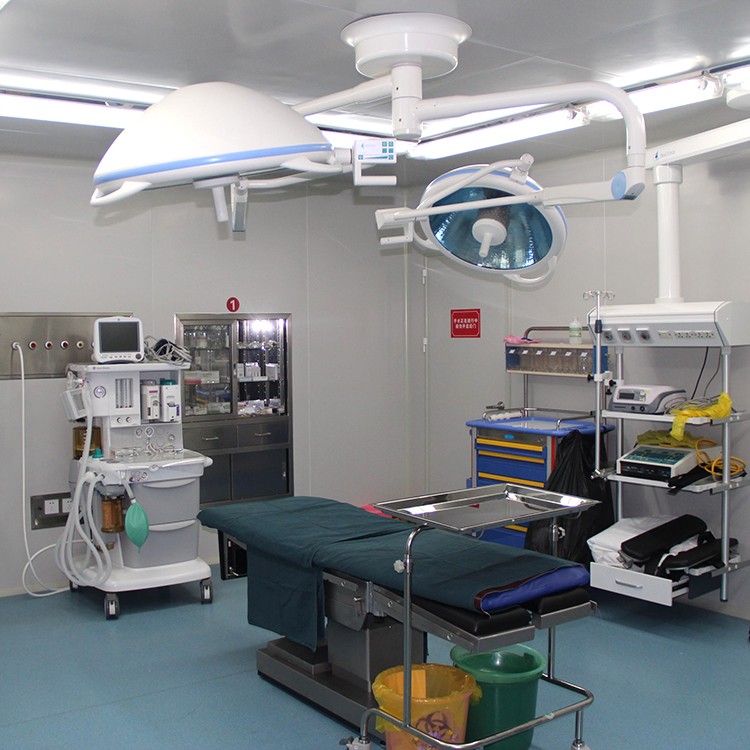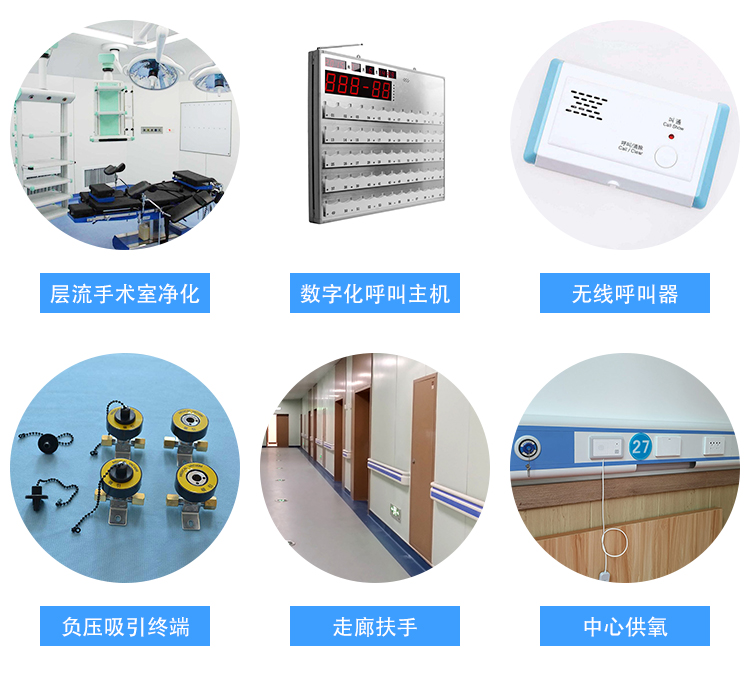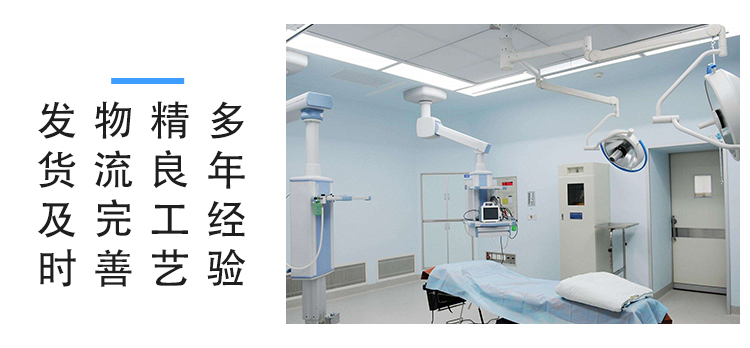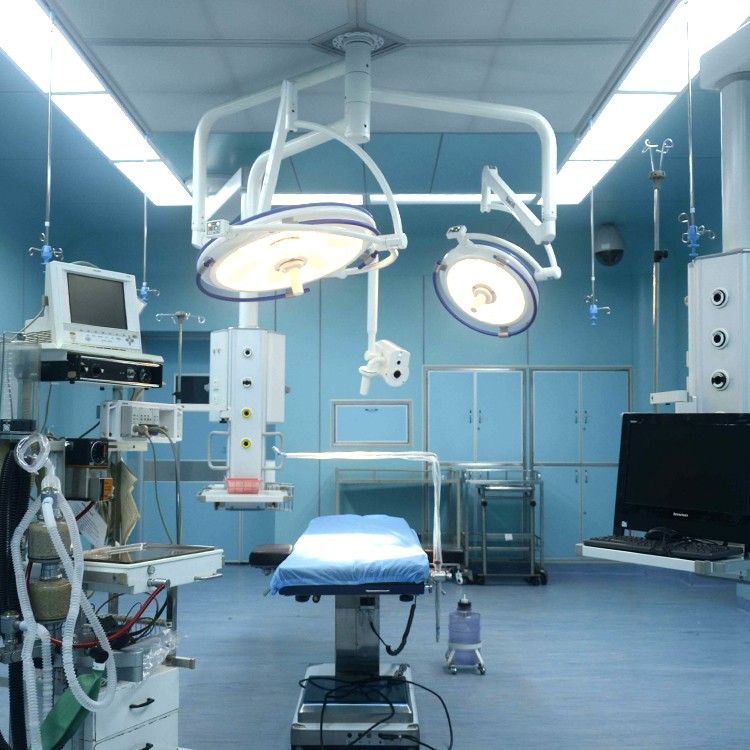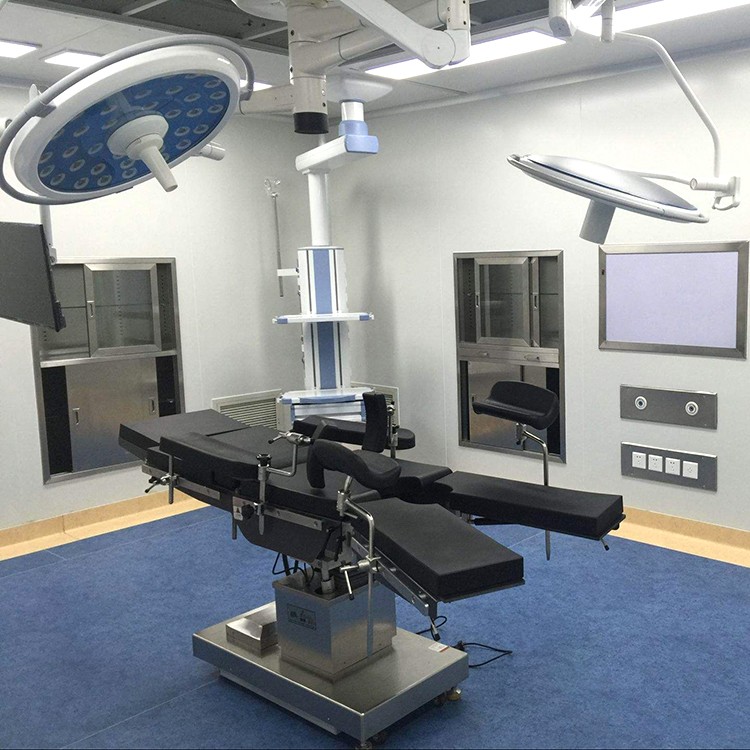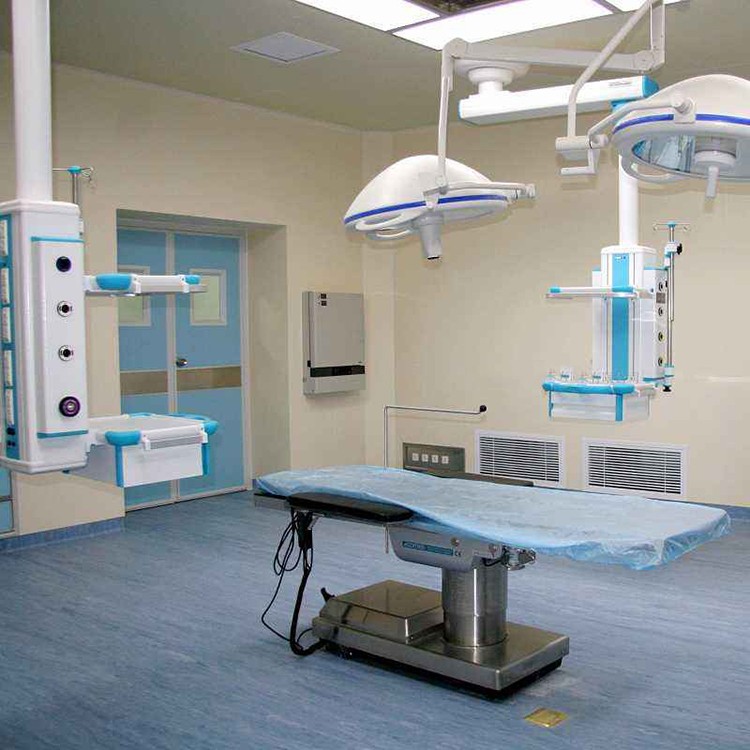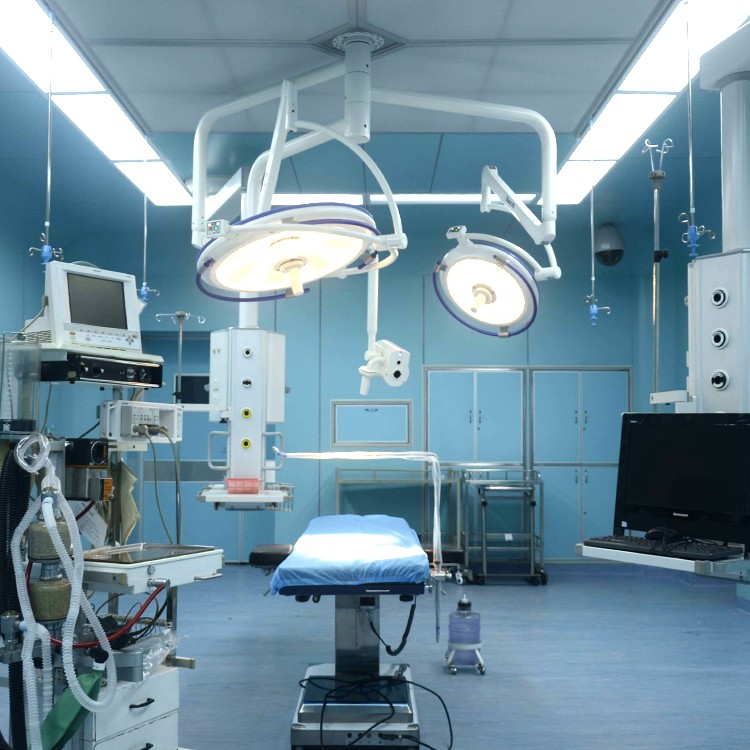
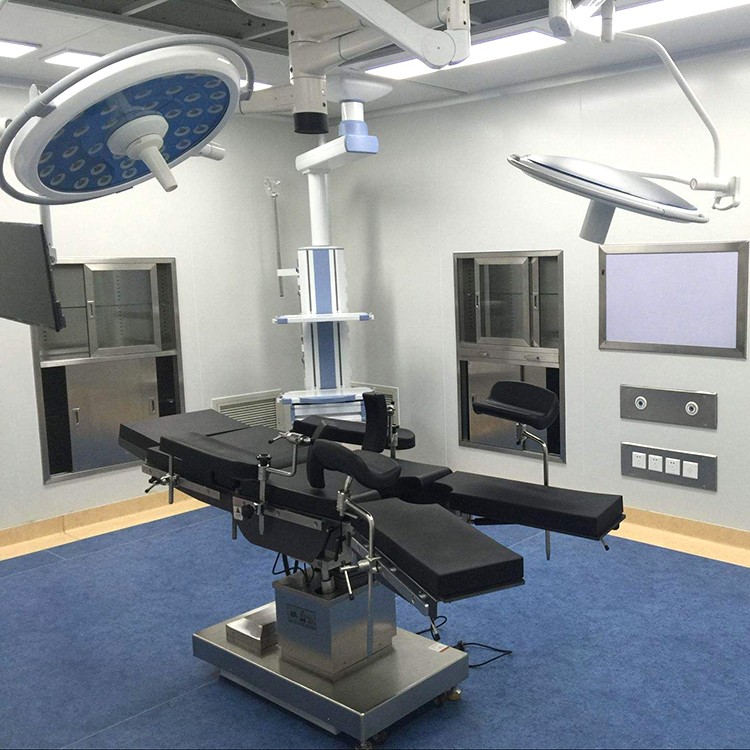
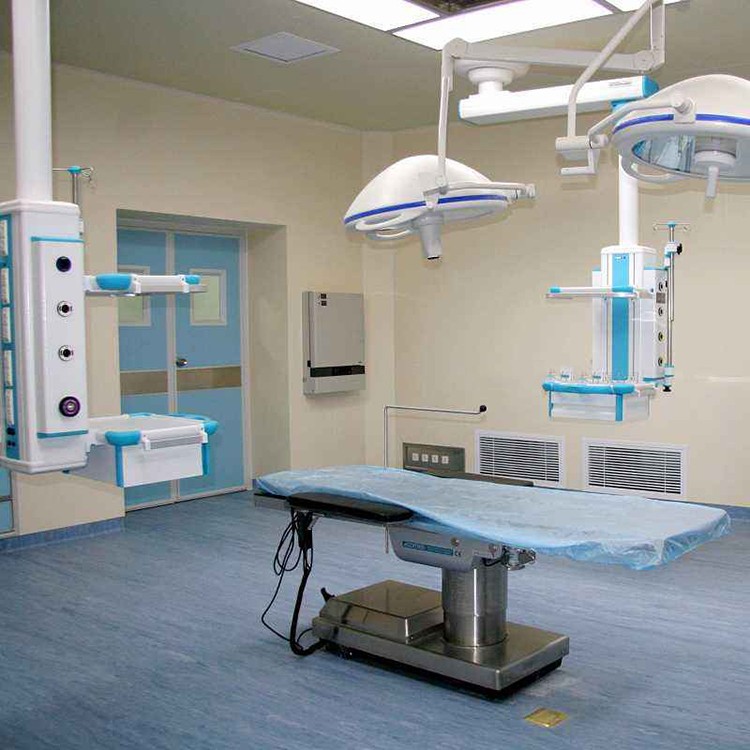







The walls and ceilings of laminar flow operating rooms are made of soundproof, solid, smooth, void free, fire-resistant, wet, and easy to clean materials. It is advisable to use light blue or light green colors. The viewing lights, cabinets, and workstations should be installed inside the wall. The corners of walls and ceilings, walls and floors, and the intersections of different walls and walls should be made into small rounded corners (R ≥ 50mm) to avoid dust accumulation and facilitate cleaning.
The door should be wide, without threshold, and the net width should not be less than 1.4m to facilitate the entry and exit of flat cars. Spring doors that are prone to swinging should be avoided to prevent dust and flying due to airflow. The laminar flow operating room should adopt an electric suspended automatic sensing door with an automatic delay closing device. The window should be double layered and made of aluminum alloy frame, which is beneficial for dust insulation.
The laminar flow operating room should be constructed using hard, smooth, and easily washable materials. A floor drain is installed at a slightly inclined angle towards a lower corner to facilitate the discharge of sewage. The drainage hole is covered to prevent polluted air from entering the room or being blocked by foreign objects. It should be flat, smooth, (acidic, alkaline, medicinal), easy to clean, and can be made of rubber, polyurethane coatings, resin boards, etc., with few joints to avoid the accumulation of dirt and dirt. It is resistant to dirt and easy to clean, comfortable to the foot, diverse in pattern styles, and easy to install and replace.
Power supply: There should be a dual phase power supply facility to operate. Each operating room should have sufficient electrical sockets to facilitate the power supply of instruments and equipment. The socket should have a spark device, and there should be conductive equipment on the floor of the operating room to cause explosions with sparks. Electrical sockets should be sealed with a lid to prevent water ingress and prevent circuit malfunctions from affecting surgery. The main power cord should be centralized inside the wall, and the central suction and oxygen pipeline devices should be installed inside the wall.