








Methods for treating industrial wastewater
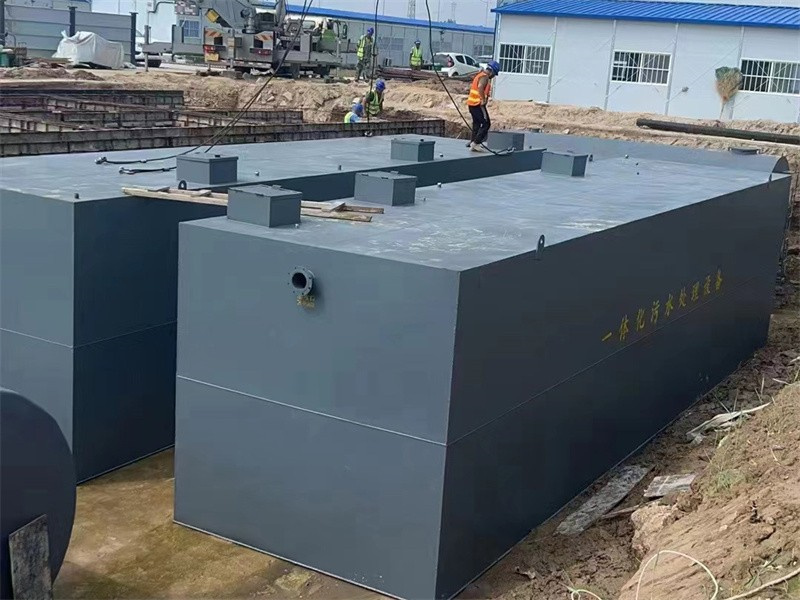
A method for treating industrial wastewater, belonging to the field of wastewater treatment technology. It is to divert the sewage to the collection tank, adjust the pH at the end of the collection tank, use a first stage dissolved air pump to lift it to the first stage pressure dissolved air tank, while inhaling air and coagulation decolorizing agent, and suddenly release the first stage saturated dissolved air water in the first stage pressure dissolved air tank to the first stage air flotation tank to form the first stage treated water; The first stage treated water overflows into the buffer tank, and then the pH is controlled by using a second stage dissolved air pump to lift the first stage treated water into the second stage pressure dissolved air tank. At the same time, air and coagulation decolorizing agent are sucked in, and the second stage saturated dissolved air water in the second stage pressure dissolved air tank is suddenly released into the second stage air flotation tank to form the second stage treated water, which overflows to the sedimentation tank for sedimentation before being discharged; 1、 The floating mud in the secondary air flotation tank enters the floating mud tank, is filtered into a filter cake, and the filtrate is returned to the collection tank. The CODcr, decolorization rate, SS, and BOD5 removal rates of industrial wastewater treated by this method are 80-90%, 95%, over 90%, and 75-80%, respectively, which comply with the first level water discharge standard of GB8978-1996. Biogas power generation is a new energy comprehensive utilization technology that integrates environmental protection and energy conservation. It utilizes the biogas produced by anaerobic fermentation treatment of industrial wastewater to drive a biogas generator set for power generation, and can fully utilize the waste heat of the generator set for biogas production, achieving a comprehensive thermal efficiency of about 80%, which is significantly higher than the general power generation efficiency of 30-40%. The economic benefits for users are significant, making it a good method for treating industrial wastewater.