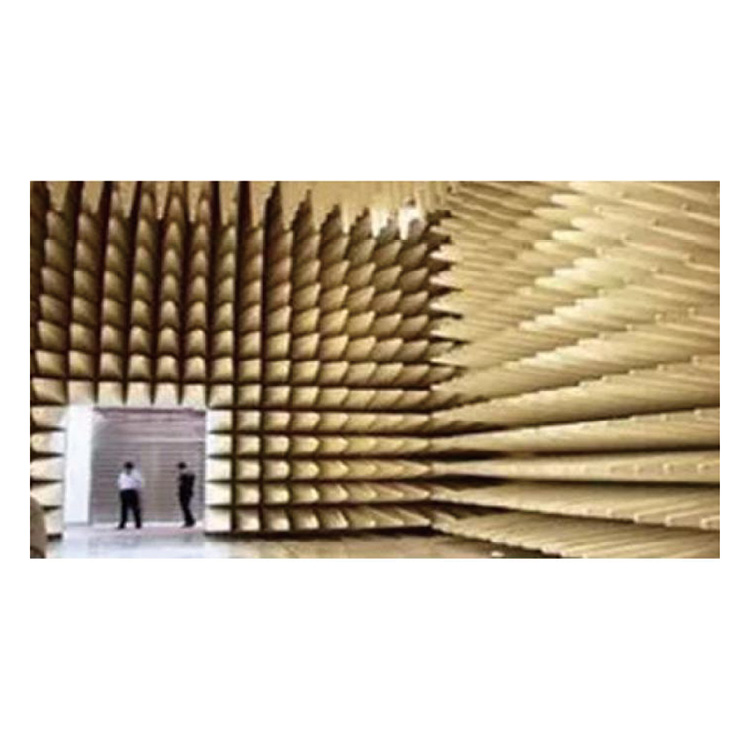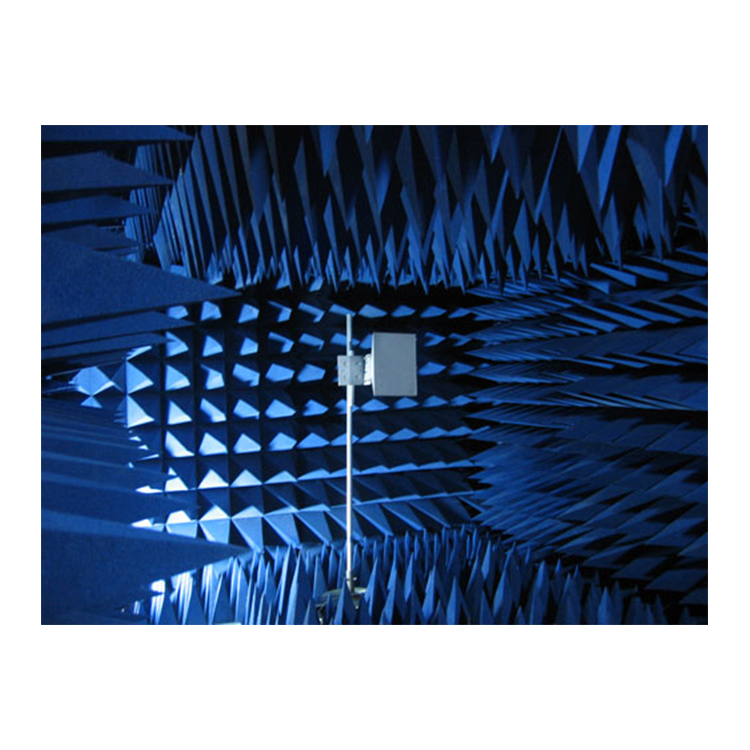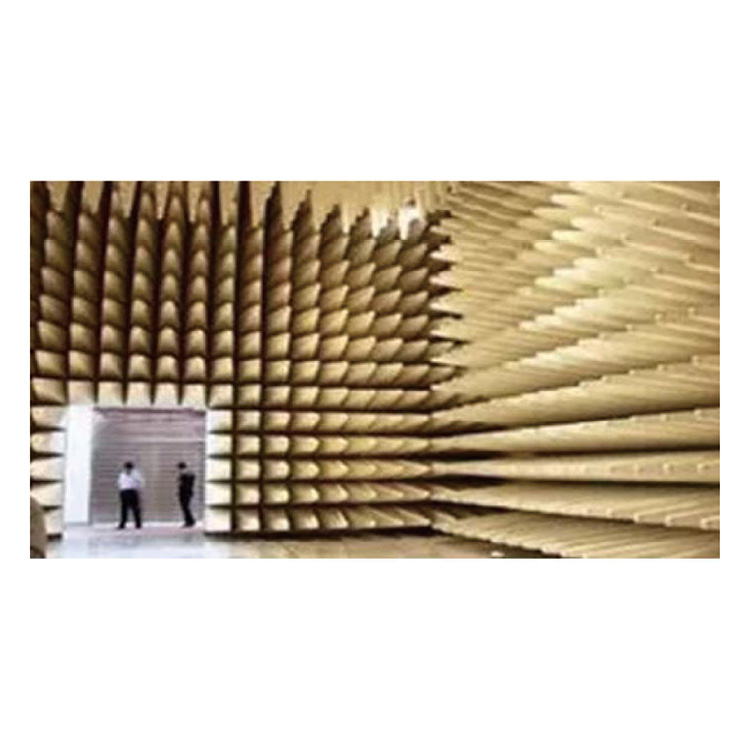

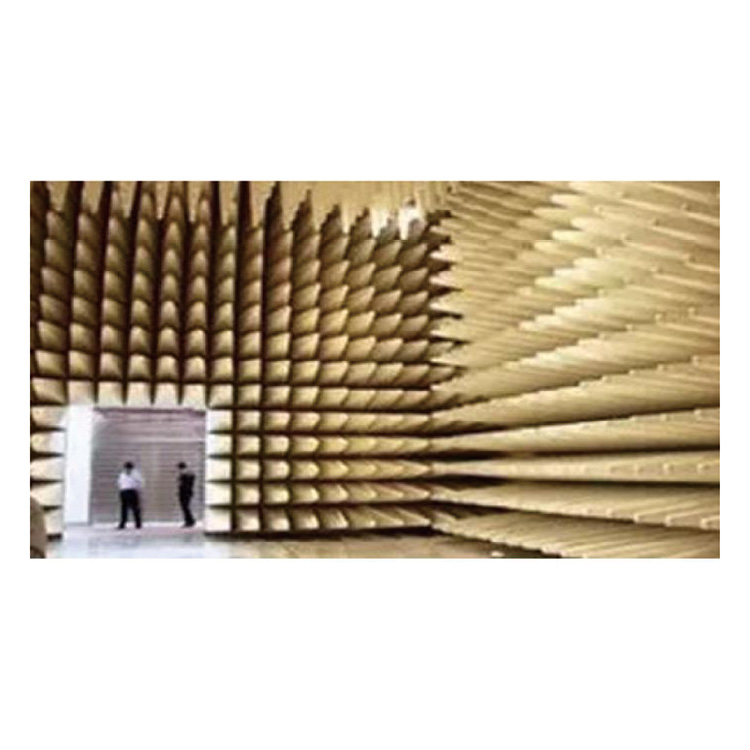
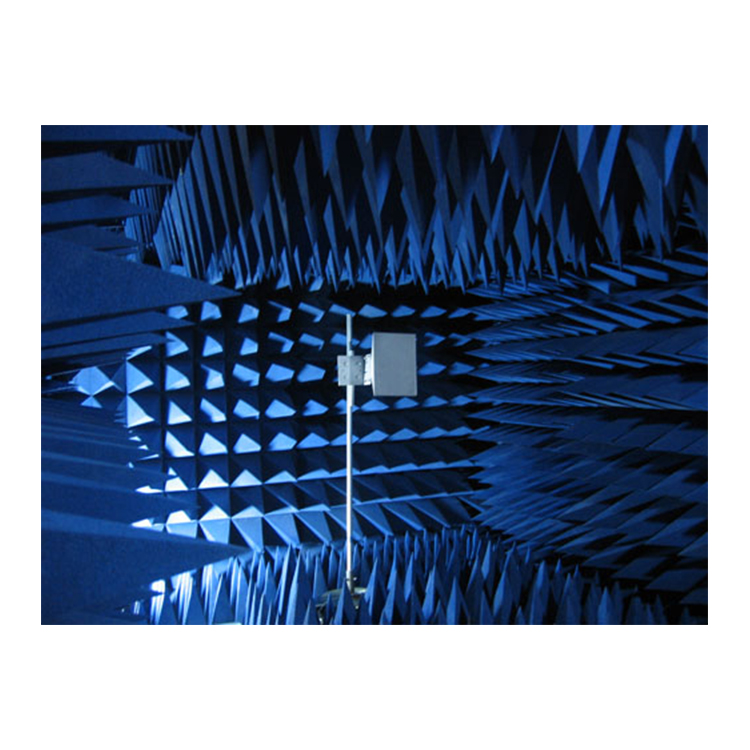







The anechoic chamber (LSA-754) is usually used for radiation testing, and the testing site is divided into three types: full anechoic chamber, semi anechoic chamber, and open field. The radiation tests conducted in these three testing sites can generally be considered to comply with the propagation law of electromagnetic waves in free space.
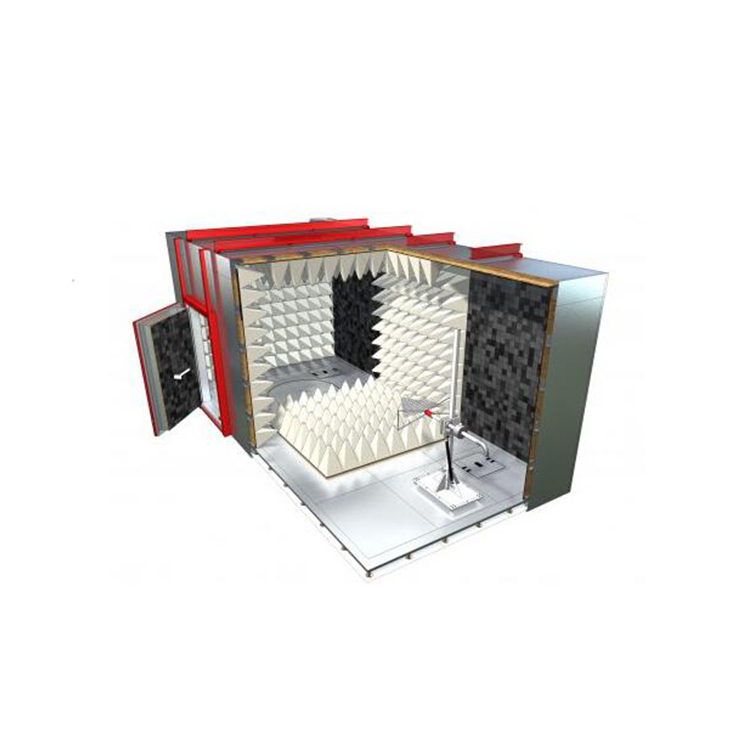
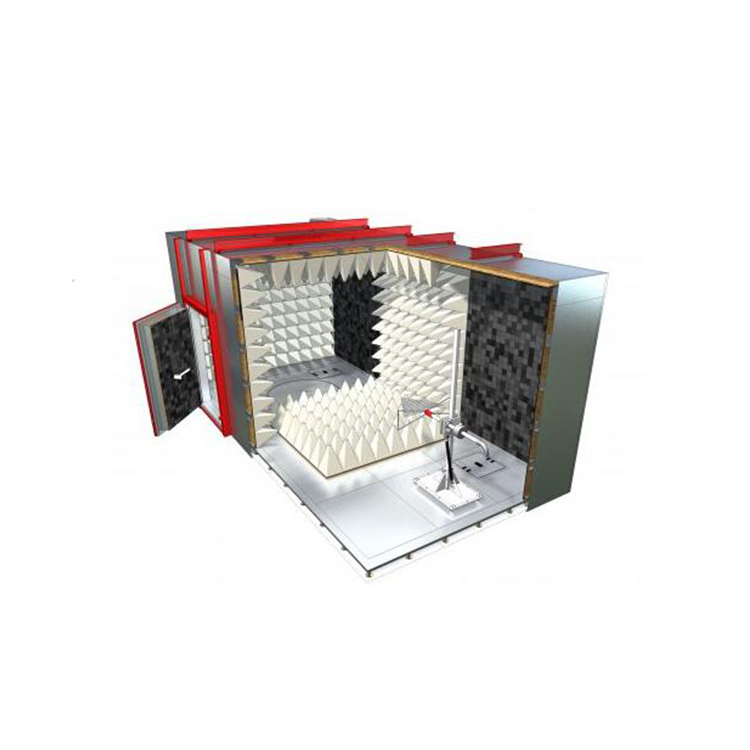
The full anechoic chamber reduces the interference of external electromagnetic wave signals on test signals, and electromagnetic wave absorbing materials can reduce the multipath effect caused by reflections from walls and ceilings on test results, making it suitable for emission, sensitivity, and anti-interference experiments. In practical use, if the shielding effectiveness of the shielding body can reach 80dB~140dB, the interference from the external environment can be ignored, and the situation in free space can be simulated in a fully anechoic chamber. Compared with the other two testing sites, the ground, ceiling, and walls of the full anechoic chamber have less reflection, are less affected by external environmental interference, and are not affected by external weather. Its disadvantage is that it is constrained by cost and has limited testing space.
A semi anechoic chamber is similar to a fully anechoic chamber in that it is a shielded hexagonal box covered with electromagnetic absorbing material inside. The difference is that a semi anechoic chamber uses a conductive floor and is not covered with absorbing material. A semi anechoic chamber simulates an ideal open field situation, where the site has an infinitely large, well conductive ground plane. In a semi anechoic chamber, due to the lack of absorbing materials covering the ground, a reflection path will be generated, and the signal received by the receiving antenna will be the sum of the direct and reflected path signals.