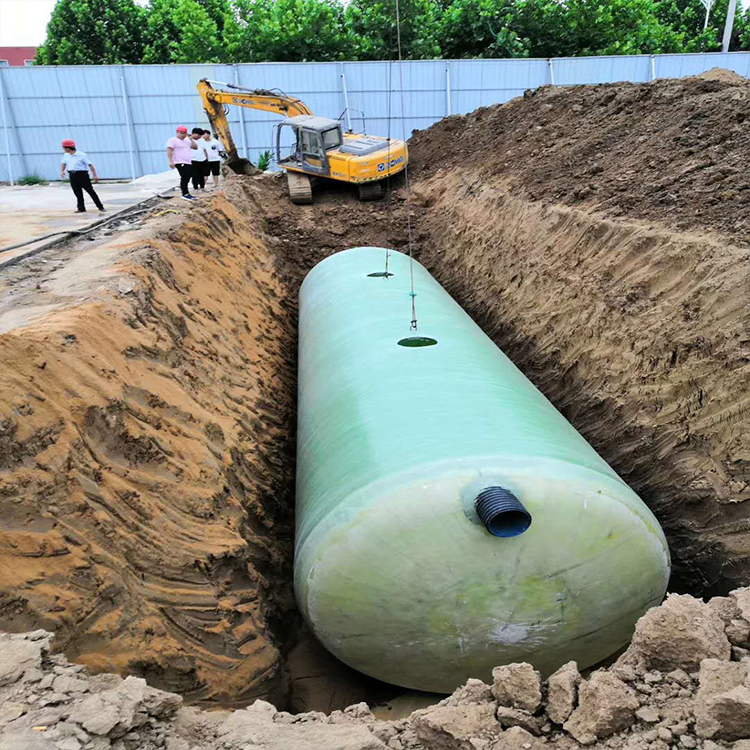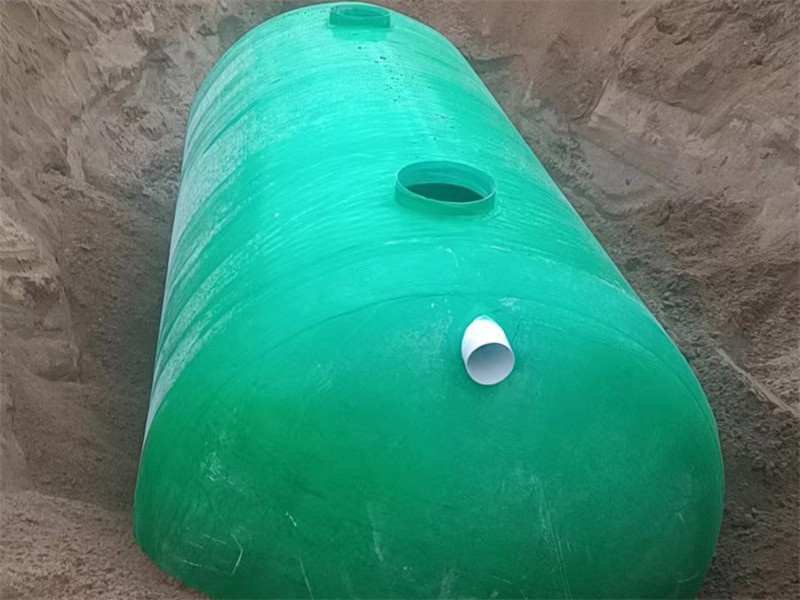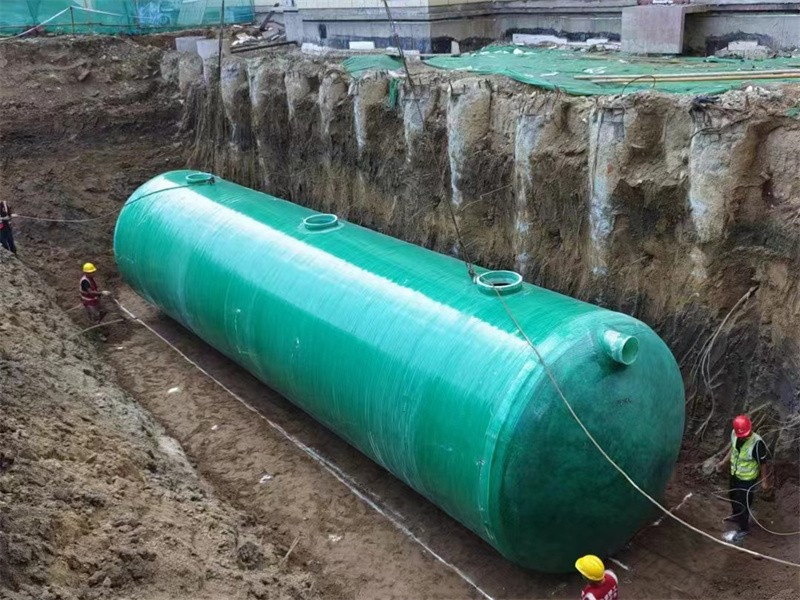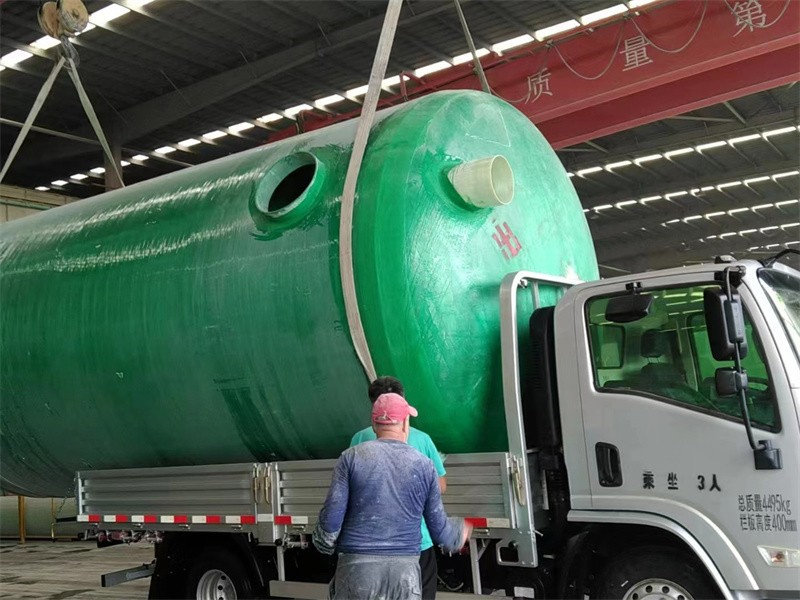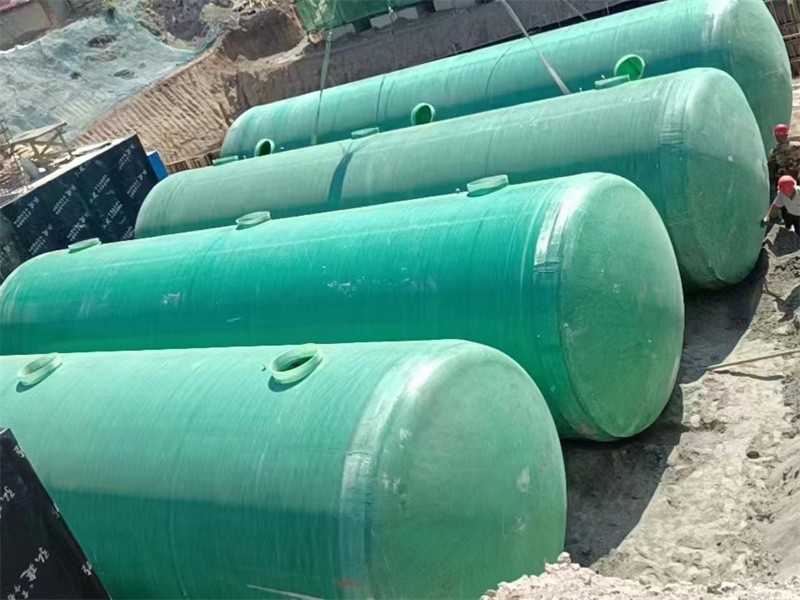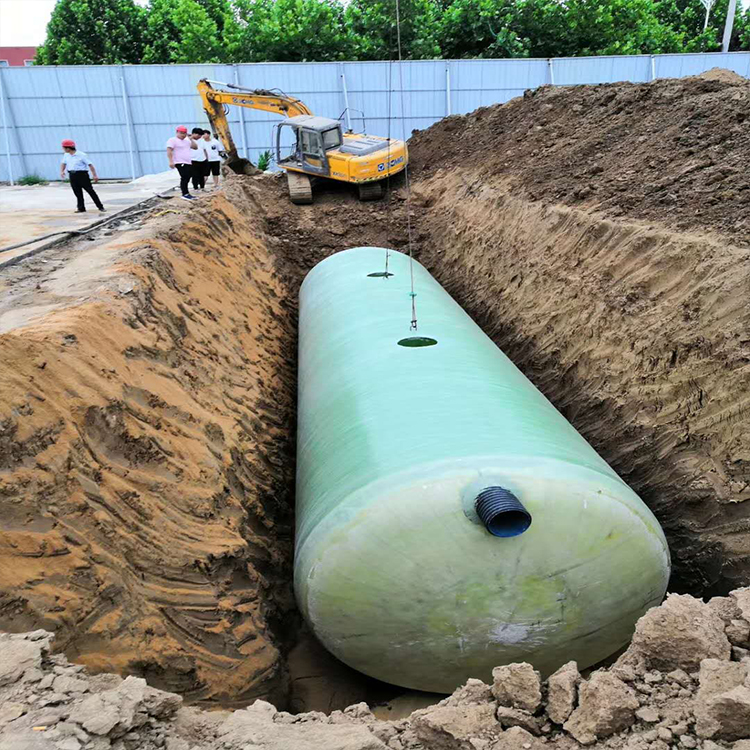

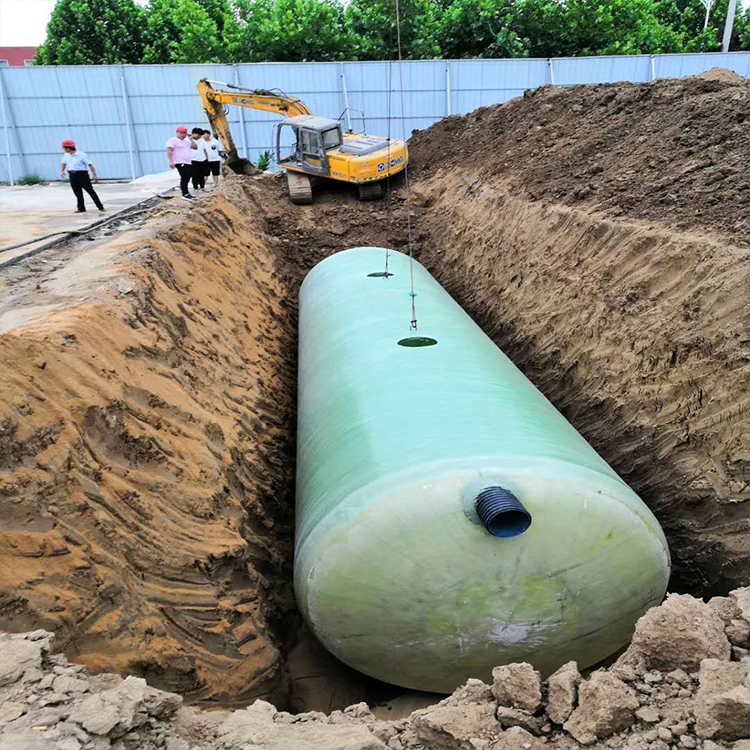


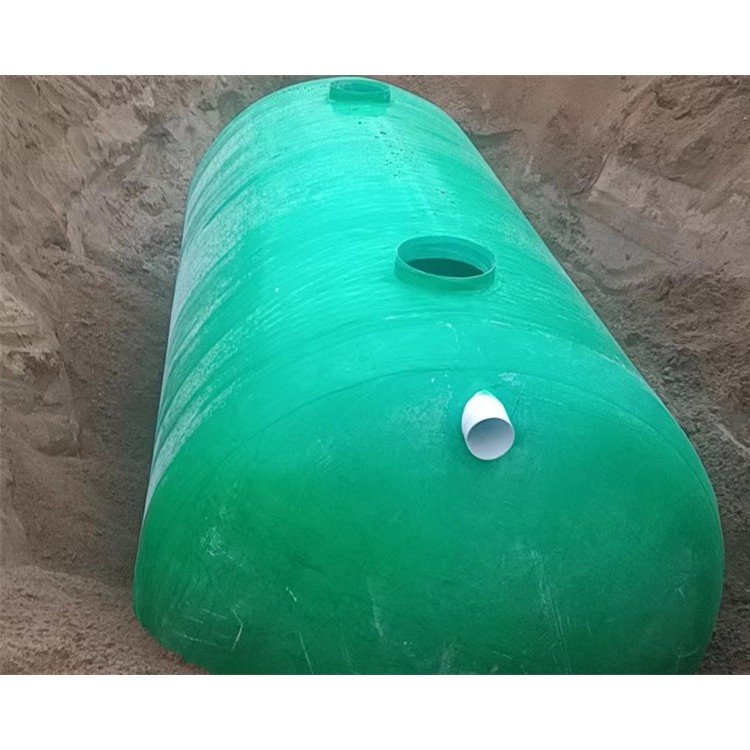
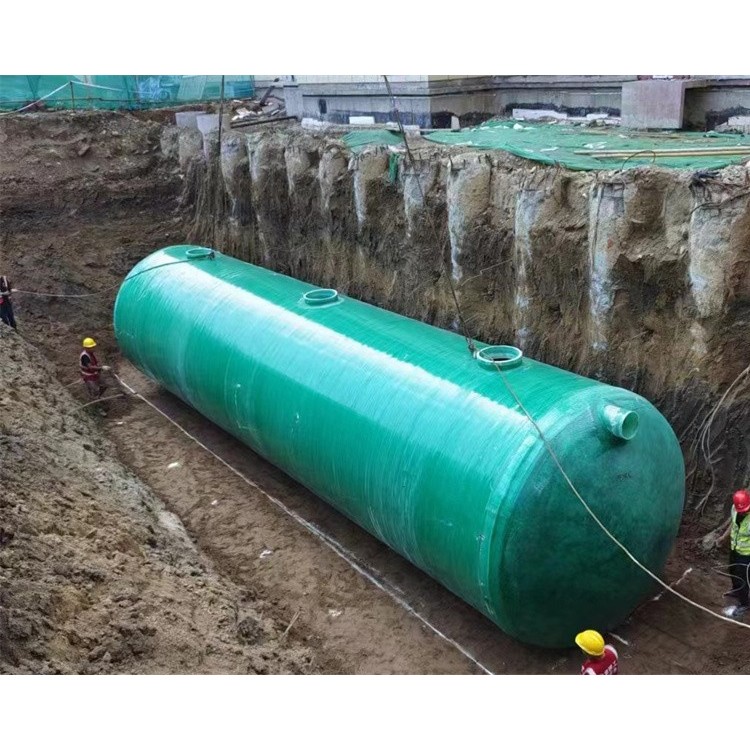
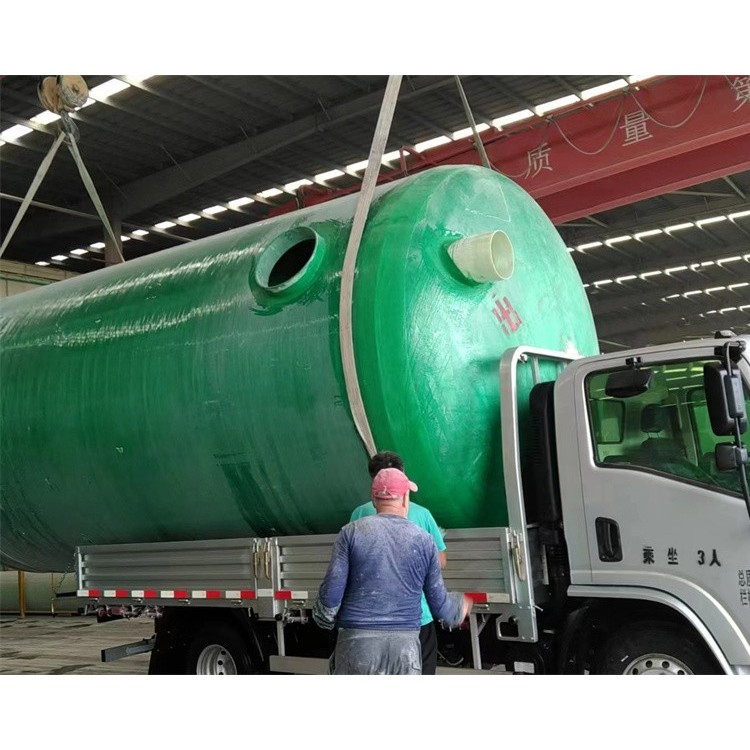
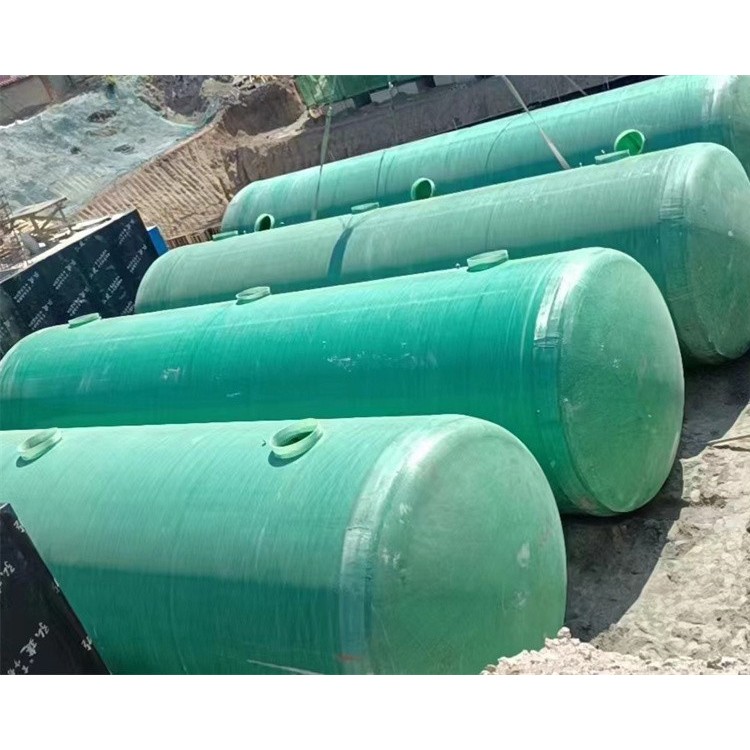





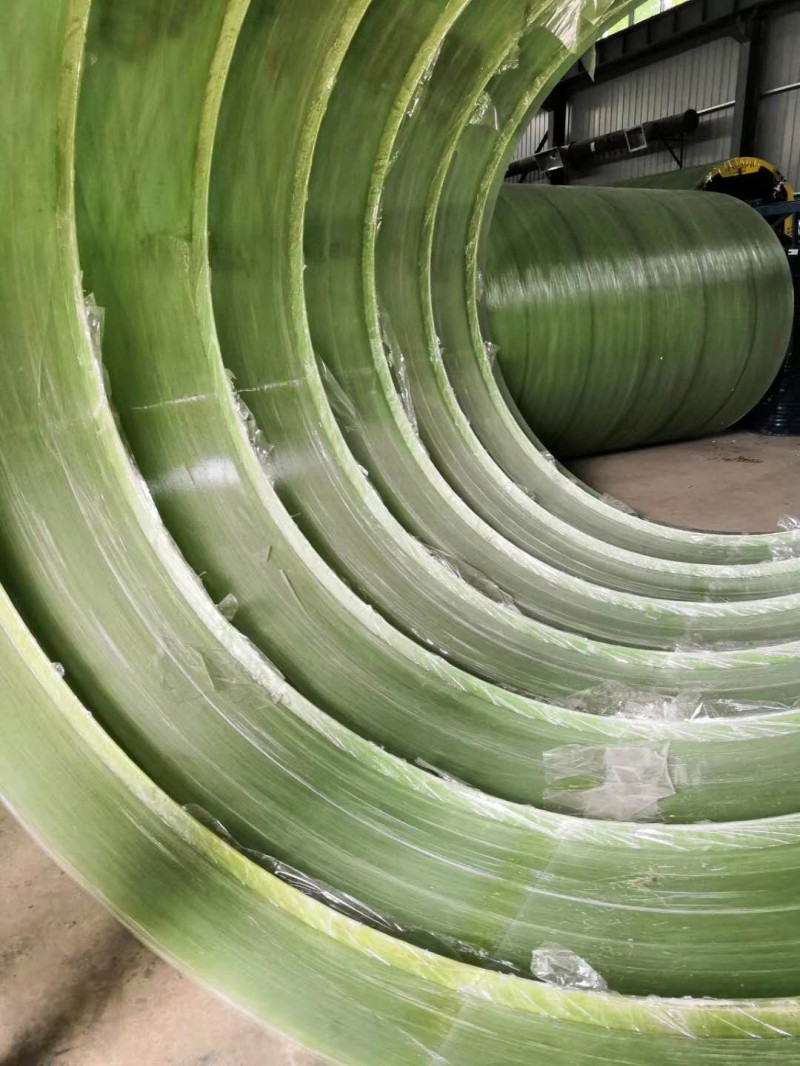

Glass reinforced plastic septic tank is used to store solid organic matter continuously flowing from sewage pipesUntil it decomposes due to the action of anaerobic microorganisms and reaches a certain discharge standard to alleviate the pressure on urban sewage treatment plants. Glass reinforced plastic septic tank refers to a tank made of synthetic resin as the matrix and glass fiber or its fabric as the reinforcement material, specifically used for treating fecal sewage and domestic sewage. It is a treatment facility that utilizes the principles of sedimentation and anaerobic fermentation to remove suspended organic matter from domestic wastewater, and is a primary transitional treatment structure. Domestic sewage contains a large amount of feces, paper scraps, and pathogenic insects. The suspended solids concentration is 100-350mg/L, and the organic matter concentration BOD5 is between 100-400mg/L. Among them, the suspended organic matter concentration BOD5 is 50-200mg/L. The sewage enters the septic tank and undergoes 12-24 hours of sedimentation, which can remove 50% -60% of suspended solids. The settled sludge undergoes anaerobic digestion for more than 3 months, which decomposes the organic matter in the sludge into stable inorganic substances, easily transforming raw sludge into stable mature sludge, and changing the
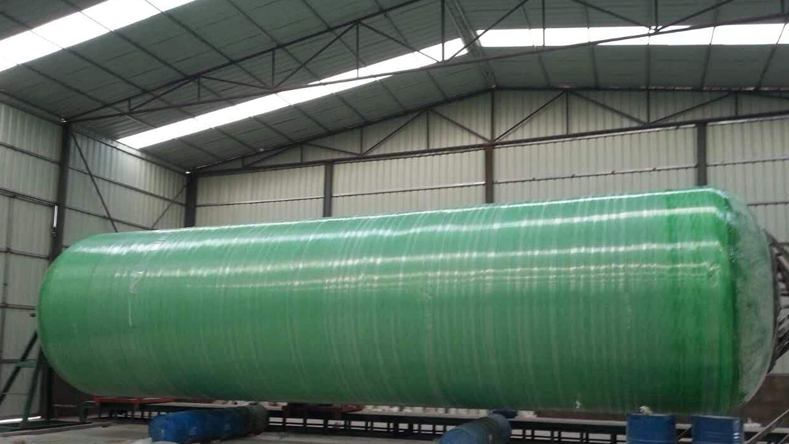


Installation process of septic tank:
1. Excavation and treatment of foundation pit: The positioning and layout of the product should be determined according to the engineering design drawings, and the excavation of the foundation pit can refer to the given dimensions according to the selected model. When the excavation of the foundation pit reaches the predetermined elevation, the bottom gray soil cushion layer should be compacted, and the foundation bearing capacity should not be less than 100KN/m2. Then, yellow sand with a thickness of 50mm-100mm should be used as the cushion layer to remove large bricks, stones or hard debris carried in the sand, and level and compact it to prepare the installation position of the integrated septic tank. When installing in combination or when there is groundwater and the soil quality of the foundation is poor, a 100mm thick layer of pebbles or crushed stones should be laid and compacted. A 100mm to 300mm Grade 10 concrete cushion layer should be set on top of it, and a 100mm sand cushion layer should be laid on top of the concrete cushion layer. Both sides of the tank should be filled with plain soil.
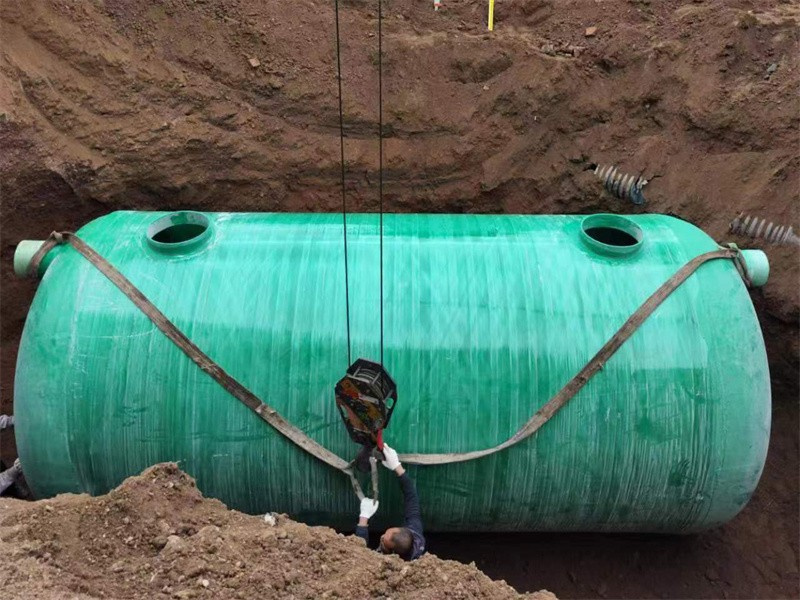
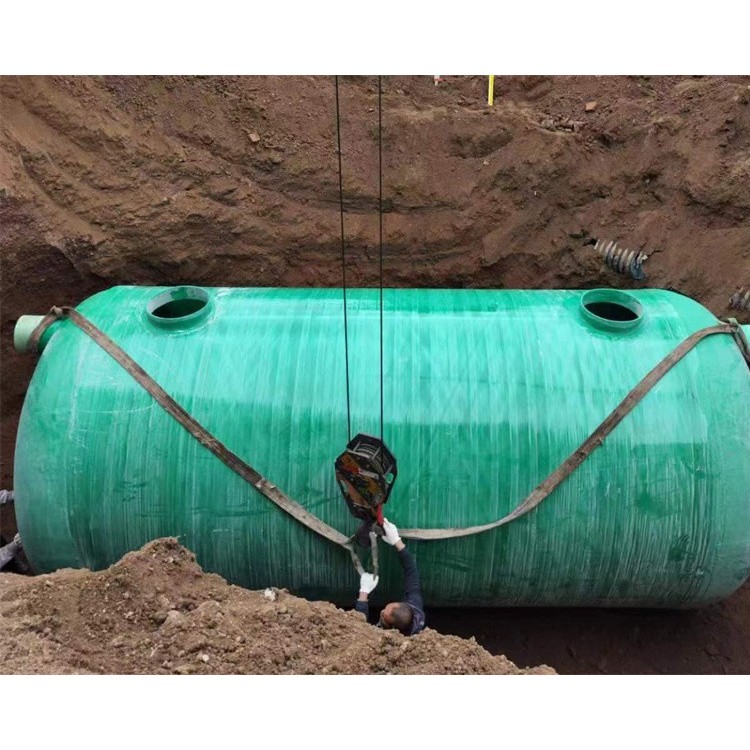
2. Lifting precautions:
(1) The base cushion layer must be leveled before the lifting position;
(2) Attention must be paid to the direction of the inlet and outlet of the septic tank during lifting;
(3) The elevation of the septic tank must comply with the engineering design requirements;
(4) After the lifting position of this product, adjust it locally to make it horizontal.
3. Septic tank water injection: After the septic tank meets the requirements at the lifting position, clean water must be injected into the tank to stabilize it, and then manually compacted.
4. Layered backfilling: The fiberglass septic tank should be backfilled in a timely manner, and the lower part of the tank should be filled with sand and soil (the height should not be less than one-third of the tank diameter). It is strictly prohibited to use construction waste as soil backfill. The stones in the backfill soil should be removed, and the backfill soil should be compacted layer by layer, with each layer being compacted by 30mm. It is recommended to use manual compaction, and avoid local strong force during backfilling; In case of medium impact (such as pneumatic compaction), the backfill soil around the pool must be compacted.
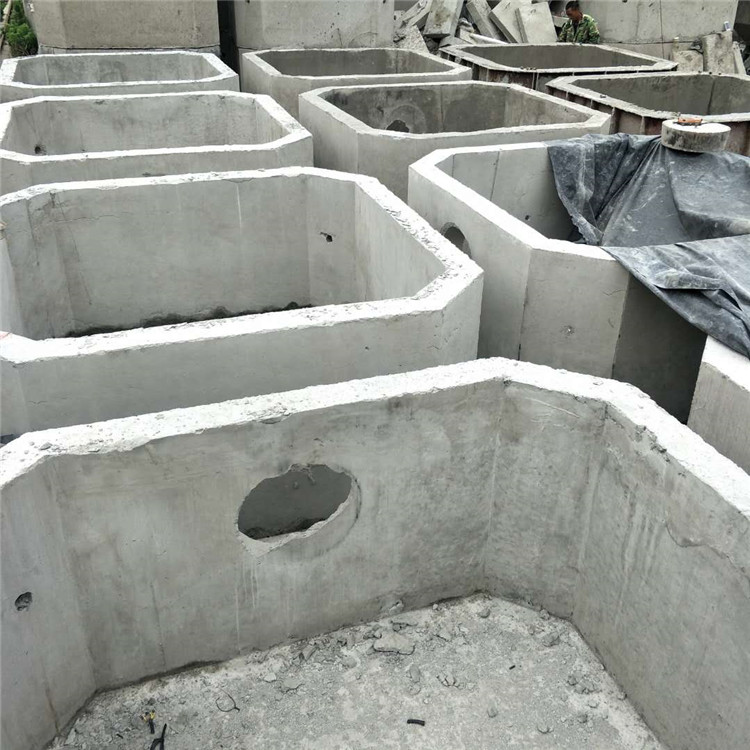
5. Cleaning well: After the backfilling meets the construction specifications, a cleaning well (inspection well) can be built on the upper part of the pool body. There are two types of cleaning wells: brick built wells and prefabricated reinforced concrete wells. The designer can choose according to the specific situation. To prevent leakage from the brick wall of the inspection well, it is required to apply a 20mm thick waterproof mortar plastering layer on the inner and outer walls of the well (1:2 waterproof mortar, with 5% waterproofing agent based on the weight of cement). A 45 'slope should be applied at the corners with a thickness of 50mm. When there is groundwater, two coats of hot asphalt (or other waterproof coating) should be applied to the plastering layer on the outer wall of the well, and the soil should be covered to the floor requirements.