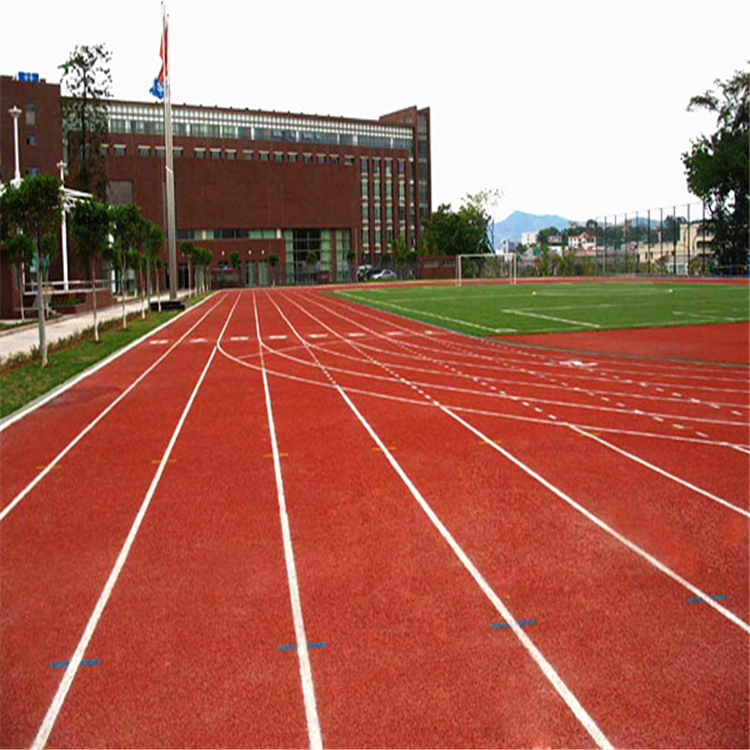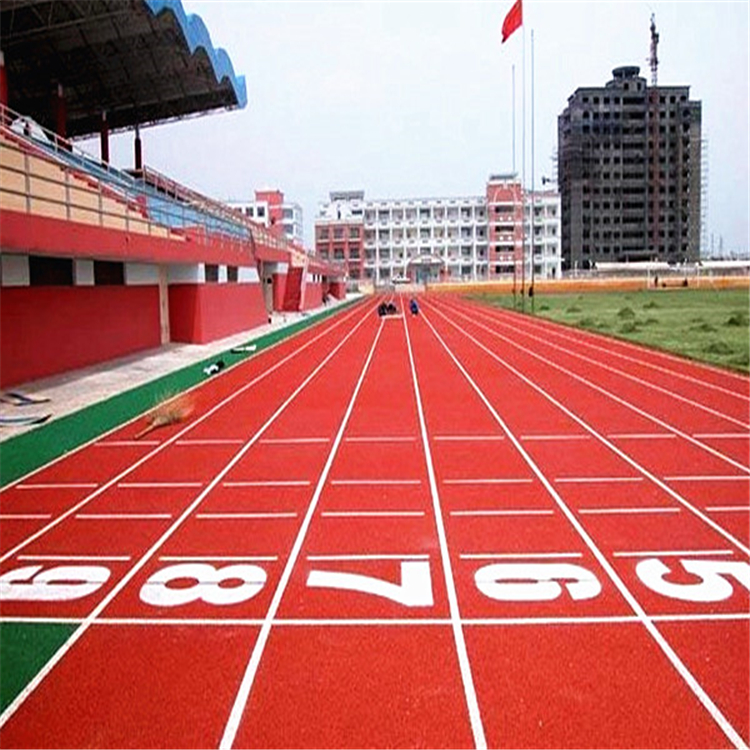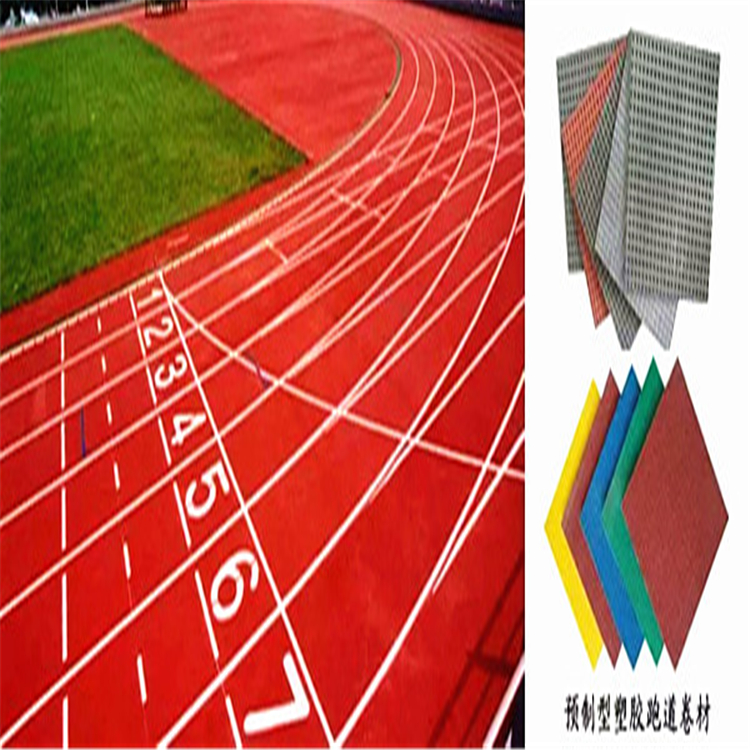

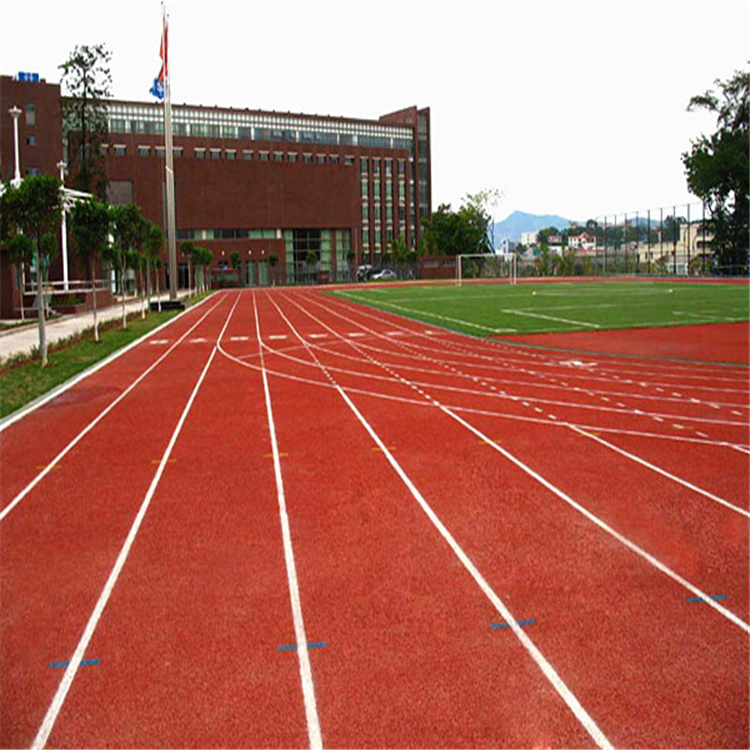
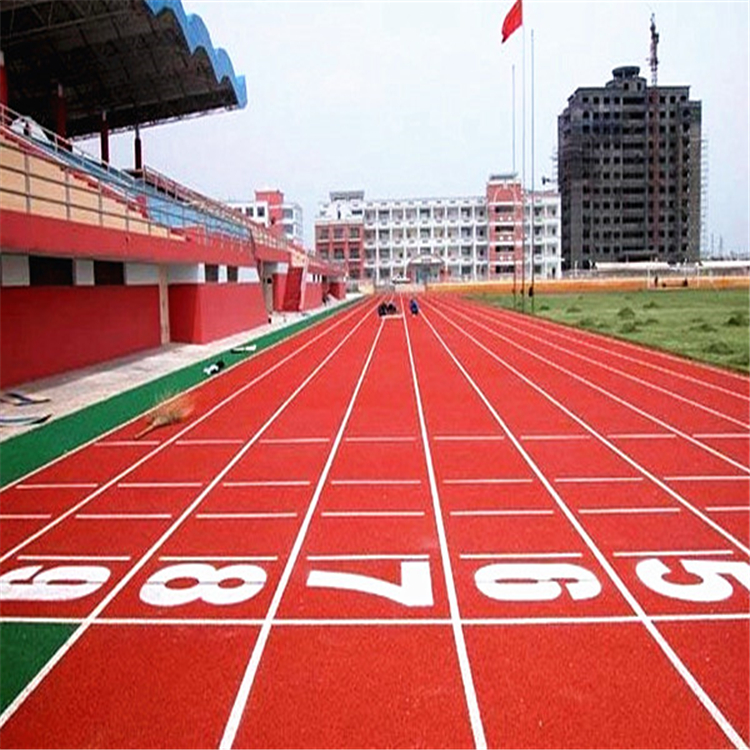
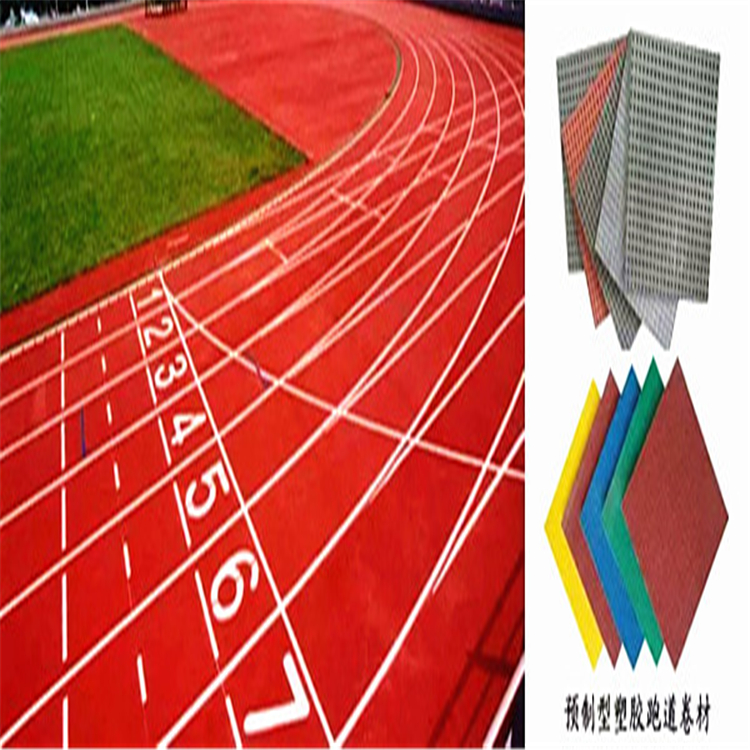










Full plastic type:
The plastic layer is laid with a smooth fully molded surface, with a 3mm base material and a 2mm surface material
Structure: 3mm substrate+2mm surface material
Composition ratio: substrate - component A: component B=1:4 composite material 3mm
Surface material - component A: component B=1:3 composite material 2mm
Additives: Diluents and catalysts are adjusted according to the temperature and humidity at the construction site. The diluent is generally about 3% of the composite material, and the catalyst is about 0.8%, depending on the actual situation.
2. Construction sequence and process
entry
(1) Check the flatness, slope, and drainage ditch of the school's plastic track.
1.1 Flatness: At any position and direction on the asphalt surface site, a 3m ruler and plug gauge should be used to detect that there should be no local unevenness greater than 3mm, and the proportion of uneven parts should not exceed 85%.
1.2 Slope: The slope in any position and direction cannot exceed 1%.
1.3 Drainage ditch: Check whether the drainage ditch cover plate is bent or uneven.
(2) Based on the on-site inspections of the three aspects mentioned above, write a handover report for the inspection of the ground foundation conditions upon entry, and ask Party A to sign and approve it.
(3) Inspect the raw materials and paving materials produced by our company for any abnormal changes upon arrival.
Plastic laying construction
If it is found during the on-site ground inspection that the flatness of the school's plastic track is not good enough, a two-step operation method will be adopted, that is, the ground treatment involves throwing stones into the well, laying the complete bottom glue first, and then conducting a water test after curing to check for water accumulation. If there is water accumulation, draw a line and mark the water accumulation area to measure the difference in flatness. In this way, corresponding adjustments will be made when laying the surface glue layer. Step by step paving the surface layer, then sprinkle particles. After the particles solidify, spray a layer of protective film on top. In this way, the construction period will be about 3-5 days longer than the one-step operation method.
(1) Ground treatment:
For the ground treatment of the site mentioned in section 1.1 above, larger asphalt concrete slag protrusions are manually cleaned using tools such as chisels and shovels; Use a slag cleaning machine to clean the entire ground of the site once; For areas with severe cracks or dents, use our company's bottom adhesive and first repair and level it until it solidifies. This project requires time to complete.
(2) Laying of Bottom Adhesive Layer:
Use our company's two component base adhesive raw materials, A and B, in a 1:4 combination. Add an appropriate amount of catalyst and curing agent according to the on-site sample test to pave the entire base adhesive on the site.
(3) Paving surface adhesive layer:
After the bottom adhesive layer is completely cured, use two sets of surface adhesive materials, A (A) and B (B), in a 1:3 combination with appropriate catalysts and curing agents for paving and anti slip treatment
(4) Site line drawing:
Use specialized paint, lay out and position according to the national track and field competition rules and your factory's design requirements, and then complete the line drawing.
(5) Clean up the construction site: