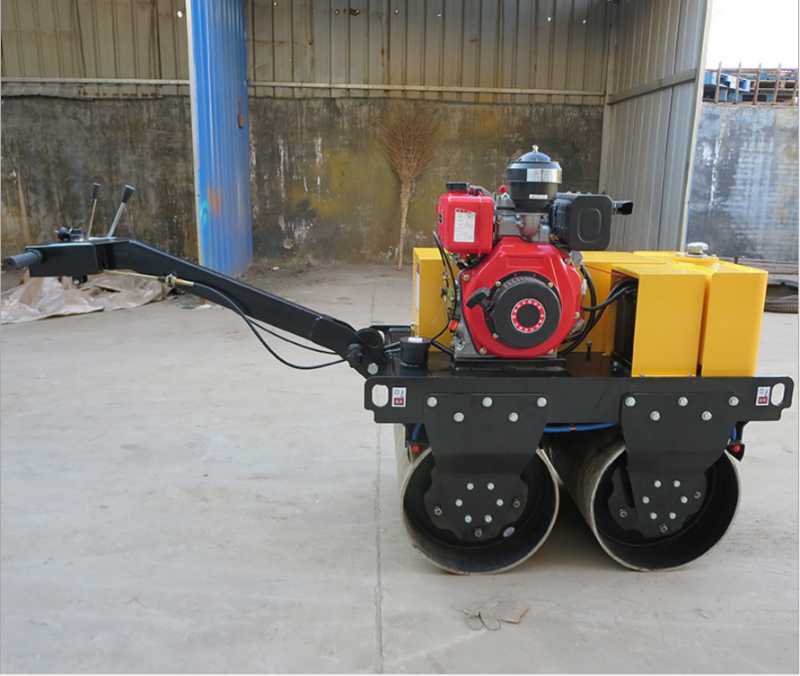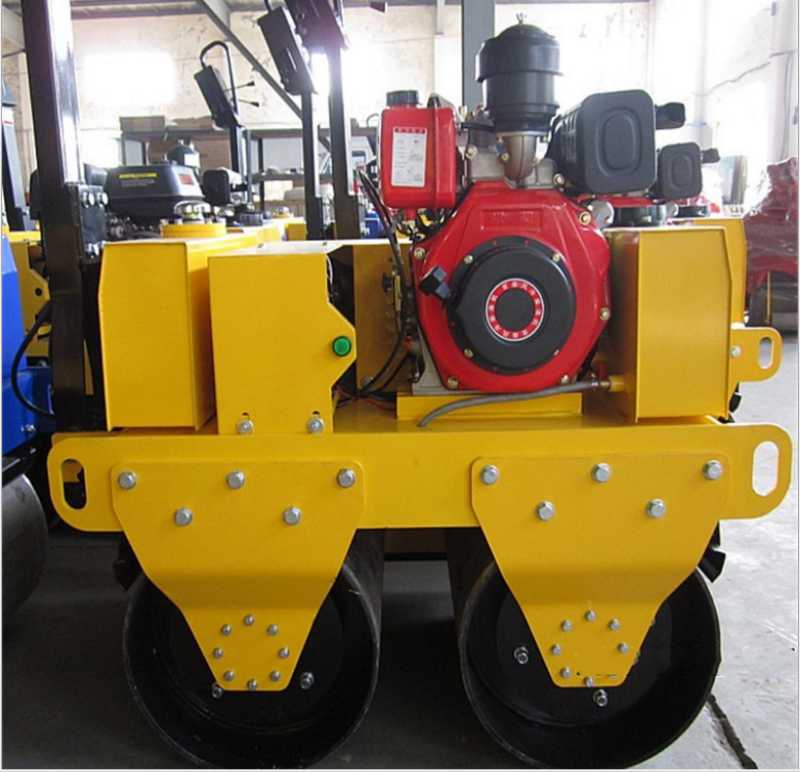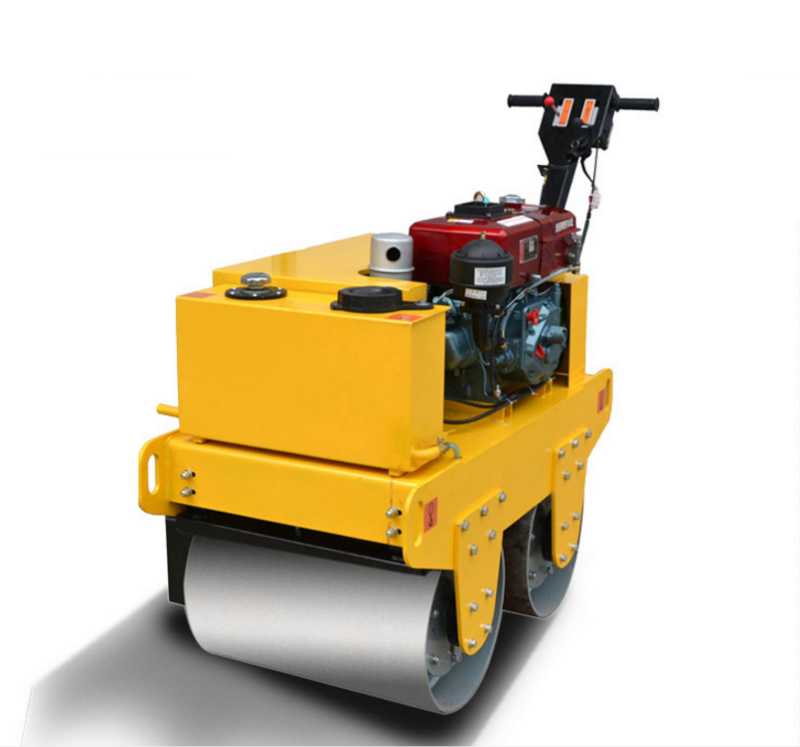







Explanation of Hand held Roller
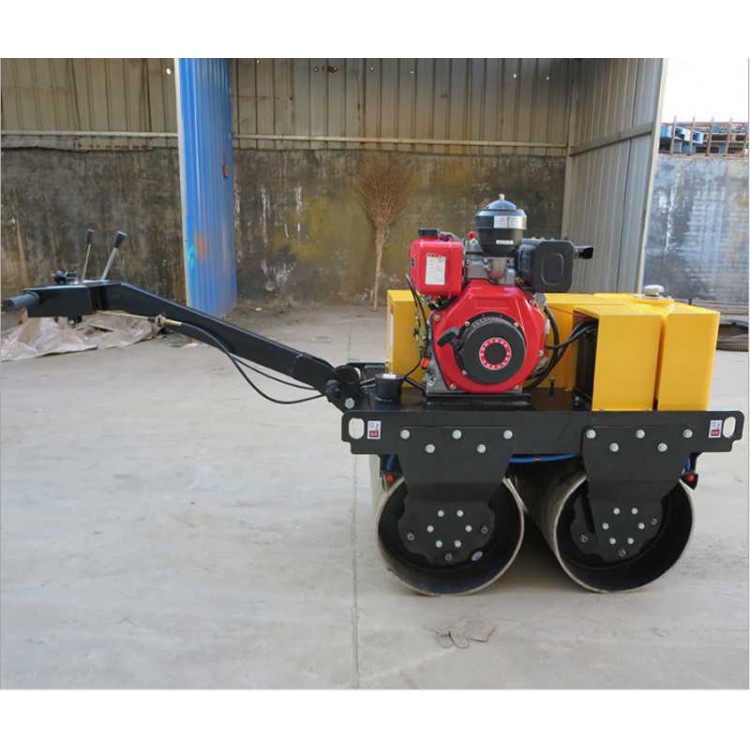
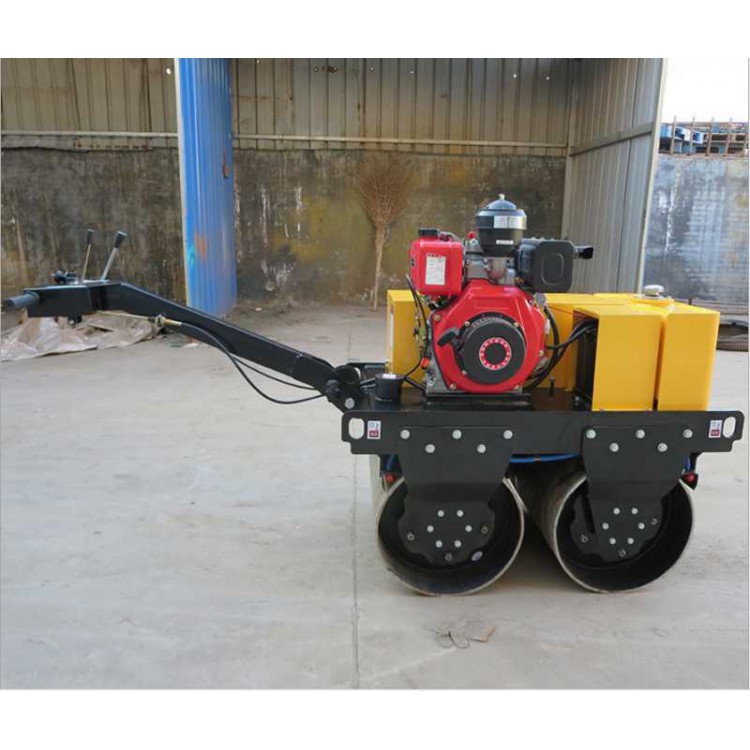
Operating conditions of hand-held roller: 1. Layered compaction of cement stabilized layer in highway municipal maintenance and replacement construction; Compaction of asphalt concrete at the edges and corners of ditches and wells. 2. During highway construction, when backfilling structures such as culverts, passages, and bridge piers, large rollers are unable to carry out compaction operations in areas where they cannot work. 3. Municipal garden landscape, residential area landscape, paving of access roads in golf course construction, and compacted pavement of sidewalks 4. In other construction areas that are narrow and sensitive to the weight of compaction equipment, the compaction work can be completed flexibly and efficiently.

Hand held roller style
3. Select based on the type (grade) of the highway: 1) For primary and secondary trunk highways and automobile dedicated roads, large vibratory rollers with high compaction capacity of 6-10t should be used; For highways below level three, or when compaction operations are not frequently carried out, it is advisable to equip a motorized and flexible vibratory roller with a capacity of about 2 tons. 2) For cement concrete pavement, a tire driven series vibration roller can be used; 3) For asphalt concrete pavement, a fully driven vibratory roller should be selected; 4) For the bottom layer of the road subgrade, it is advisable to use a tire roller or a tire driven vibratory roller for compaction to achieve uniform density; 5) When repairing the road surface, a static action type light wheel roller can be used. 4. Select based on the type of compressed material: 1) For rock filling and compaction, a large tonnage roller should be selected to cause displacement of large block materials; 2) For the compaction of clay, it is advisable to use a convex block compaction roller; 3) For compacting the mixture, it is advisable to choose a vibratory roller to ensure even mixing of small and large particles; 4) For deep compaction, heavy-duty vibratory rollers should be used for slow rolling, while static action rollers should be used for shallow compaction.
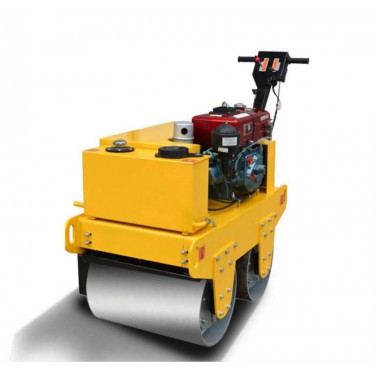
Description of Hand held Roller
4. Pay attention to regularly reviewing the levels and quality of lubricating oil, hydraulic oil, coolant, brake fluid, and fuel oil (water), as well as the sealing performance of the entire machine. During the inspection, it was found that there was an excessive lack of oil and water, and the reasons should be analyzed. At the same time, the lubrication of each lubrication point should be strengthened. It is recommended to add lubricating grease to the lubrication points during the running in period for each shift (except for special requests). 5. Keep the machine clean, adjust and tighten loose parts in a timely manner to prevent further wear or loss of parts due to looseness. 6. During the break in period, the machine should be forced to take care of, and proper review and adjustment work should be carried out. At the same time, attention should be paid to the exchange of oil. In short, the requirements for the use and maintenance of construction machinery during the running in period can be included as: enhancing training, reducing load, paying attention to inspection, and strengthening lubrication. As long as the maintenance and upkeep of construction machinery during the break in period are valued and carried out according to requirements, the occurrence of early failures will be reduced, the service life will be extended, the operational efficiency will be improved, and the machine will bring you more benefits.