
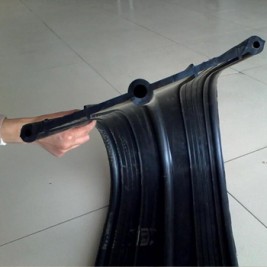







Recommended high-quality suppliers
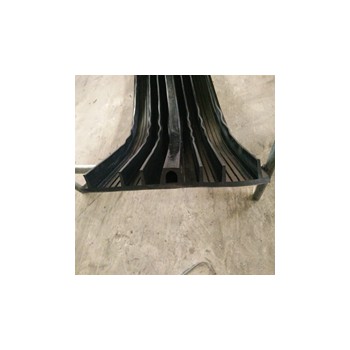
Chinese name: Professional waterstop manufacturer
Main raw materials: natural rubber and various synthetic rubbers
Temperature range: -45 ℃ -+60 ℃
Brand: Henghai Rubber
Suggested retail price: 20
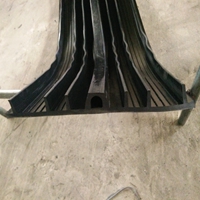
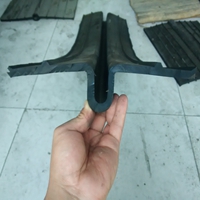
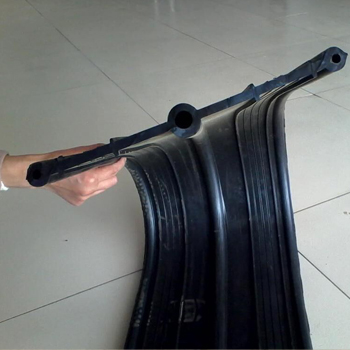
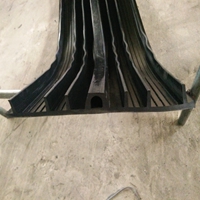
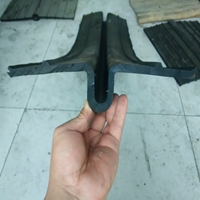
rubber waterstop
Specification Model
200*6 200*8 200*10
250*6 250*8 250*10
280*6 280*8 280*10
300*6 300*8 300*10
350*8 350*10 350*12
400*8 400*10 400*12
450*8 450*10 450*12
500*8 500*10 500*12
24-hour service hotline: 15632866999
The series of rubber waterstops produced by our company are produced according to the national standard GB18173.2-2000, and the appearance quality requirements are all in accordance with the national standard. If the user has special requirements, it can be manufactured according to the user's requirements.
Rubber waterstop utilizes the high elasticity and compression deformation characteristics of rubber to produce elastic deformation under various loads, thereby effectively and firmly sealing, preventing water leakage and seepage in building structures, and providing shock absorption and buffering effects. In the architectural design of larger projects, due to the inability to continuously pour, deformation of the foundation, or thermal expansion and contraction of concrete components caused by temperature changes, construction joints, settlement joints, and deformation joints need to be left. Waterstops must be installed at these joints to prevent water leakage problems. It can prevent groundwater (external water) from leaking into the building structure and also prevent water leakage from inside the building to the outside. Waterstops are mainly used in foundation engineering where they are integrated with concrete structures and installed in construction joints and deformation joints during cast-in-place concrete, such as underground facilities, tunnel culverts, water conveyance aqueducts, water retaining dams, reservoirs, river gates, and liquid storage structures.
Analysis of the causes of waterstop breakage:
1. Concrete shrinkage: Most buildings using expansion joints are ultra long structures. Due to the large footprint of the structure and the use of more construction materials, the construction period of the expansion joint is relatively long. Therefore, the construction period of the expansion joint is also long. During the construction of the expansion joint, the shrinkage of the concrete may cause the rupture of the water stop strip. Mid buried rubber waterstop, also known as mid mounted rubber waterstop or embedded rubber waterstop, is a type of waterstop that is installed inside concrete deformation joints, expansion joints, and other concrete structures. It has the ability to adapt to concrete expansion deformation with the elasticity and structural form of the waterstop material. The buried rubber waterstop can utilize the high elasticity and compressive deformation characteristics of rubber itself to produce elastic deformation under various loads, thereby effectively fastening and sealing, preventing water leakage, seepage, and shock absorption in building structures.
The function and principle of the buried rubber waterstop are the same as that of the back mounted rubber waterstop. It utilizes the high elasticity of rubber to produce elastic deformation under various loads, thereby providing a strong seal, effectively preventing water leakage and seepage in building structures, and playing a role in shock absorption and buffering. In many engineering and architectural designs, there are certain expansion and contraction requirements between civil engineering and water and soil structures, as well as issues such as waterproofing and earthquake resistance. Therefore, the use and installation of rubber waterstops is an effective means to solve these problems.
This product is mainly used for foundation engineering, underground facilities, tunnel culverts, water conveyance aqueducts, water retaining dams, etc. that are integrated with concrete structures and installed in construction joints and deformation joints during cast-in-place concrete, ensuring the service life of engineering construction.
Performance characteristics:
The buried rubber waterstop is produced according to the national standard GB18173.2-2000 "Polymer Waterproof Material Waterstop". Therefore, we can produce rubber waterstops in various shapes and sizes according to user requirements. In addition, we also have cross shaped, T-shaped, inclined, and inner and outer corner products for different projects and parts, which can be suitable for any design requirements. When transporting waterstop products, direct sunlight should be avoided and contact with heat sources, oils, and harmful solvents should be avoided.
The finished product should be placed straight and flat without heavy pressure. It is best to keep the storage location at -10 ℃ -+30 ℃ and a relative humidity of 40% -80%. Scope of application of waterstop: It is used for waterproofing deformation joints in underground structures, dams, water storage tanks, swimming pools, roofs, and other building materials and structures.
Installation and precautions:
1. The concrete interface of the fixed water stop strip should be kept flat and dry. Before installation, remove the floating slag, dust, and debris from the interface. Use steel nails or adhesive to fix the water stop strip at the determined installation location. But the surface with grouting pipes must be placed on the original concrete interface.
2. When the grouting pipe type is connected to the water swelling water stop strip, the parallel overlapping method is used, and no breakpoint is left in between. The water stop strip at the connection is reinforced and fixed with steel nails, and the reserved grouting connection pipe on the water stop strip is inserted into another equal water stop strip and connected to the two-way joint.
3. According to the length of the installed water stop strip, a three-way joint should be installed at a distance of about 30 meters. One end of the straight three-way joint should be inserted into the water stop strip, the other end should be inserted into the grouting connection pipe, and the other T-shaped end should be inserted into the spare grouting to prevent chemical grouting water leakage in case of gaps.
4. The grouting connection pipe in the connected waterstop must be firmly bonded to the three-way connector, and the grouting pipe of the installed waterstop must be ensured to be completely unobstructed. The spare grouting pipe installed on the tee should be placed in the direction of the inner wall.
5. Each box contains a bottle of grouting pipe adhesive (used for connecting the grouting pipe to the two-way and three-way joints on the water stop strip), as well as a spare grouting pipe placed inside the inner wall for connecting the three-way joint