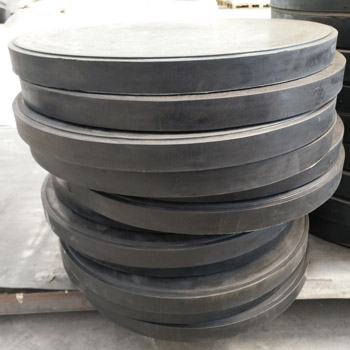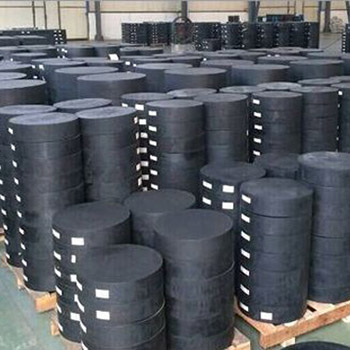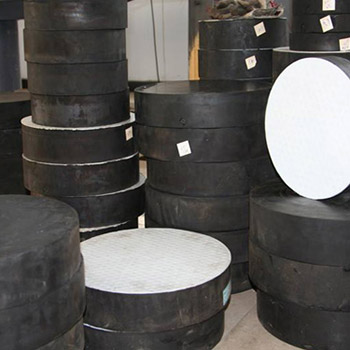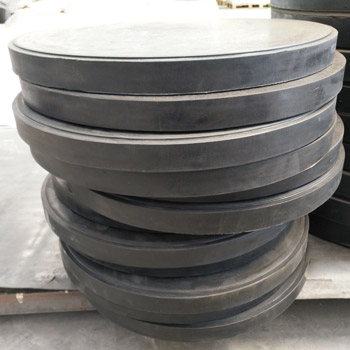

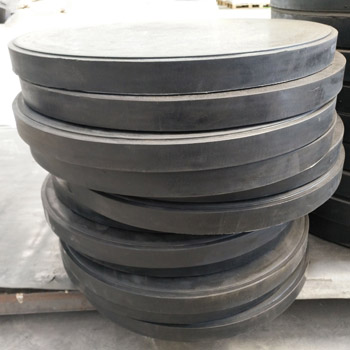
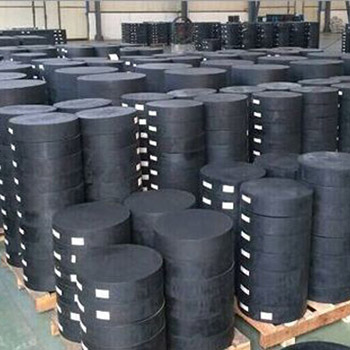
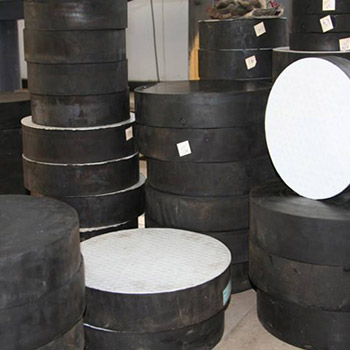












Chinese name: Rubber Bearing;
Foreign name: ubber bead
Jian Introduction: Bearing vibration and seismic loads during operation;
Materials Quality: Rubber
Brand: Henghai Rubber
Suggested retail price: 20;
Rubber bearings are a type of bridge bearing product made by embedding, bonding, and vulcanizing multiple layers of natural rubber and thin steel plates. This type of rubber bearing has sufficient vertical stiffness to withstand vertical loads and can reliably transmit the pressure of the upper structure to the pier; Has good elasticity to adapt to the rotation of the beam end; There is significant shear deformation to meet the horizontal displacement of the upper structure
It has the characteristics of simple structure, easy installation, steel saving, low price, easy maintenance, and easy replacement.
By sticking a layer of 1.5mm-3mm thick polytetrafluoroethylene plate on the surface of the plate bearing, a polytetrafluoroethylene sliding rubber bearing can be made. In addition to vertical stiffness and elastic deformation, it can withstand vertical loads and adapt to beam end rotation. Due to the low friction coefficient of the polytetrafluoroethylene plate, the beam end can slide freely on the surface of the PTFE plate, and the horizontal displacement is not limited. It is particularly suitable for bridges with medium to small loads and large displacement. 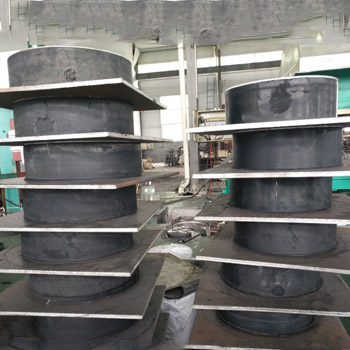
The correct placement of bridge bearings first ensures that the bridge bearings and supporting pad stones are accurately positioned according to design requirements. When erecting and lowering the beam, the longitudinal axis of the T-beam should coincide with the centerline of the support; The longitudinal axis of the slab beam and box beam is parallel to the centerline of the support. To ensure accurate beam placement, when erecting the first span slab beam or box beam, the center of the cross position of two supports can be marked at the bottom of the beam, and the lead line of the center line of the two supports can be marked on the end face of the beam. When placing the beam, it should coincide with the center line of the pier. Subsequent spans can be based on the first span beam.