












Introduction: Bearing vibration and seismic loads during operation
Material: Rubber
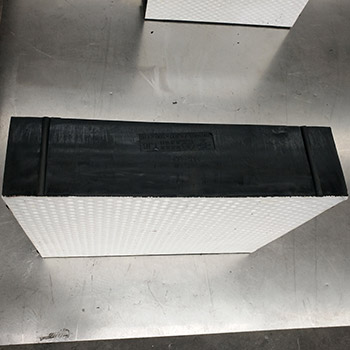
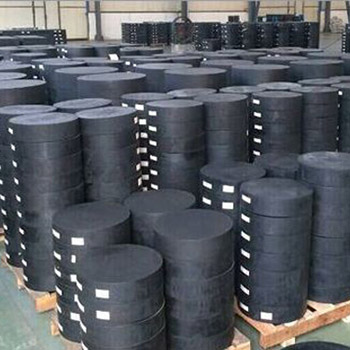
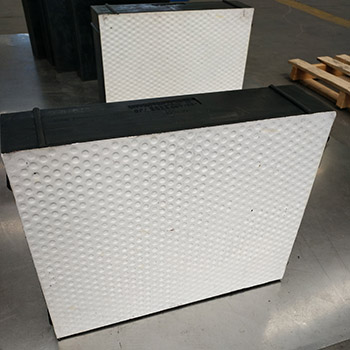
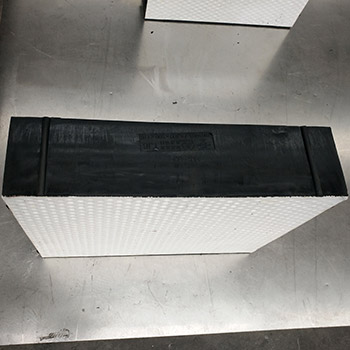
Rubber bearings can be mainly divided into several types: plate type rubber bearings, PTFE rubber skateboard bearings, bowl type rubber bearings, and ball crown rubber bearings.
Below is a brief introduction to the different usage rules of rubber bearings for highway bridges:
(1) Plate rubber bearing
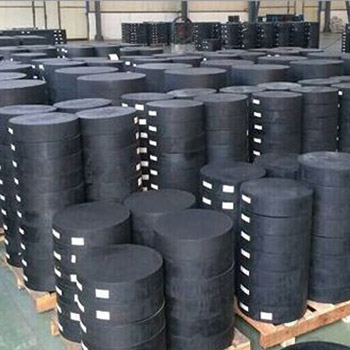
The working principle of plate rubber bearings is to achieve vertical rotation of beams through elastic compression of rubber, and to ensure horizontal displacement of beams through shear deformation of rubber blocks. Therefore, there is no distinction between fixed supports and movable supports for laminated rubber bearings. Due to its horizontal displacement being achieved through the shear deformation of rubber, the allowable horizontal displacement is relatively small, making it suitable for small and medium span highways, urban bridges, and railway bridges. Bridges with a standard span of less than 20m can generally use plate type rubber bearings. Plate type rubber bearings can be divided into two types: rectangular and circular. Circular plate type rubber bearings are mainly used for bridges with circular piers. The model and height of the laminated rubber bearing should be determined based on the actual displacement and the magnitude of the bearing reaction force. Plate rubber bearings should be installed horizontally as much as possible. When inclined installation is necessary, the maximum longitudinal slope should be ≤ 2%.
(2) PTFE rubber skateboard support
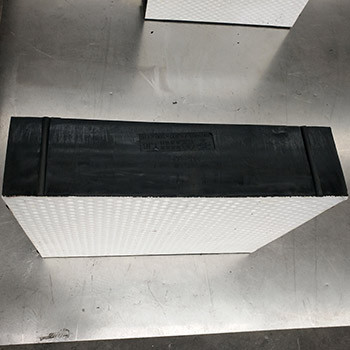
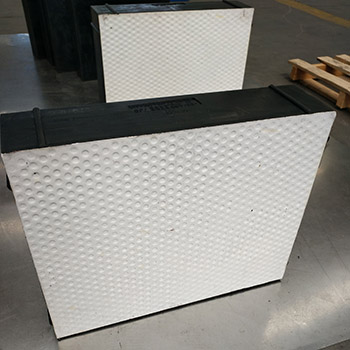
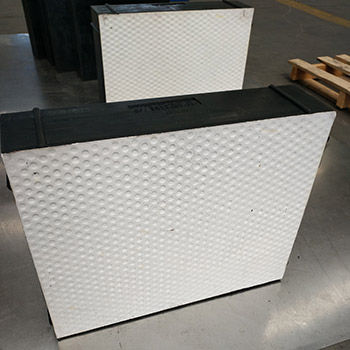
The PTFE sliding plate support is a layer of PTFE plate with the same plane size pasted on the top surface of the plate rubber support, and a stainless steel plate is set on the bottom surface of the beam for relative sliding motion. This utilizes the characteristic of low friction coefficient between polytetrafluoroethylene and stainless steel during relative motion, making it a movable support. In addition to the advantages of plate rubber bearings, it can also meet the requirements of large horizontal displacement. Therefore, it is suitable for simply supported beams and continuous beams with larger spans, as well as bridges with continuous bridge decks. PTFE rubber skateboard supports are divided into two types: closed type and simple type. For urban bridges and areas severely affected by ultraviolet radiation, air pollution, and dust, enclosed types should be used, while simple types can be used for others. The model and height of the PTFE rubber skateboard support should be determined based on the actual displacement and the magnitude of the support reaction force. The PTFE rubber skateboard support should be installed horizontally as much as possible. When inclined installation is necessary, the maximum longitudinal slope should be ≤ 2%.
(3) Basin type rubber bearing
The pot type rubber bearing is a rubber block placed inside a pot shaped base, which utilizes the fluid properties of rubber under three-phase stress to achieve large turning angles. At the same time, the low friction coefficient between the polytetrafluoroethylene plate placed on the middle supporting steel plate and the stainless steel plate during relative motion is used to achieve horizontal displacement of the beam. Basin type rubber bearings can meet the requirements of large bearing reaction force, large horizontal displacement, and large rotation angle, and are suitable for bridges with large spans and large bearing reaction force.
(4) Ball crown rubber support
Due to the fact that plate rubber bearings and PTFE rubber skateboard bearings are only suitable for bridges with small slopes (slopes<2%), when the longitudinal slope of the bridge is large, ordinary spherical crown circular plate rubber bearings and PTFE rubber sliding weight spherical crown circular plate rubber bearings are used. Spherical rubber bearings have good force transmission uniformity, especially under certain longitudinal and transverse slopes, the force effect is significantly better than that of plate rubber bearings and PTFE rubber sliding plate bearings. At the same time, it can avoid the bias and detachment phenomena caused by general plate rubber bearings during installation. Spherical rubber bearings are not only suitable for general bridges, but also for various structurally complex bridges, especially for bridges with large longitudinal slopes, suitable for slopes of 5% to 8%. The model and height of ordinary ball crown circular plate rubber bearings and PTFE rubber sliding plate rescue crown circular plate rubber bearings should be determined based on the actual displacement and bearing reaction force. The selection of bridge bearings should be based on factors such as bridge span, load level, continuous condition of the bridge deck, longitudinal and transverse slopes of the bridge, climatic conditions, structural form of the bridge, and bridge purpose, and should be reasonably selected in accordance with the principles of economy, safety, and practicality.