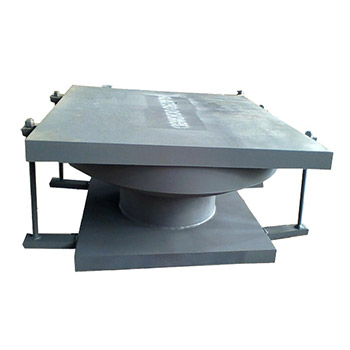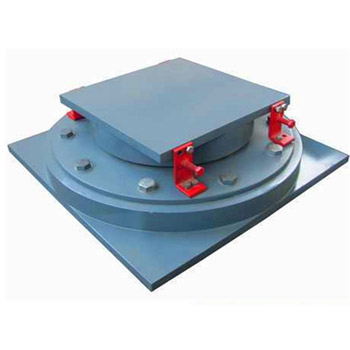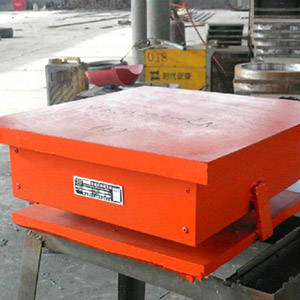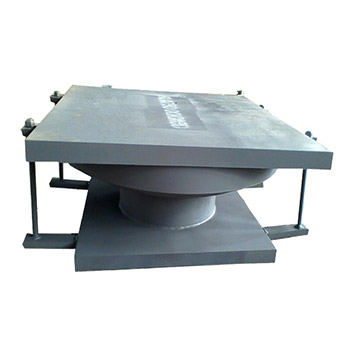

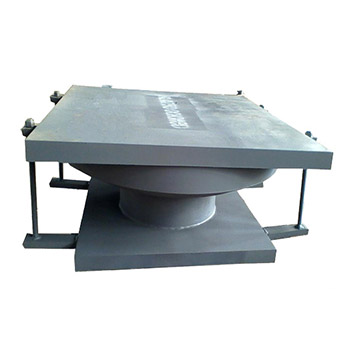
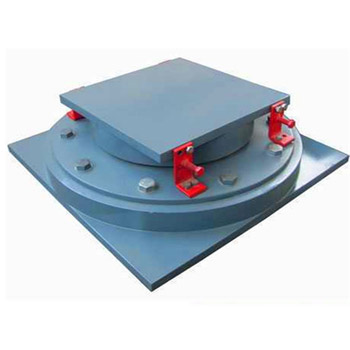
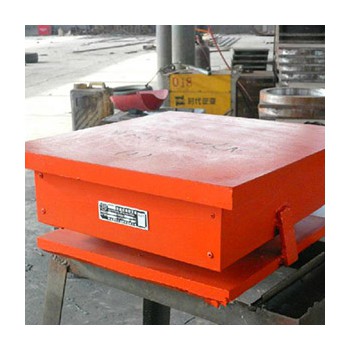












Secondary classification: bidirectional activity, unidirectional activity, and fixed type
First level classification: divided into four types
Technical performance: capable of bearing vertical loads
Brand: Henghai Rubber
Suggested retail price: 20Technical performance: capable of bearing vertical loads
Brand: Henghai Rubber
steel structureThe tensile and compressive strength of the component is relatively high, the cross-section of the component is small, the self weight is light, the structural performance is good, the construction speed is fast, and the environmental pollution is smallsteel structureEngineering is applicable to various structural forms and locations, such as columns, beams, trusses, rigid frames, arches, grid structures, suspension cables, etc. Applicable places include industrial plants, high-rise buildings, sports venues, steel residential buildings, bridges, and various public buildings. Especially the construction of Beijing Olympic venues and Shanghai World Expo venues,steel structure engineeringThe extensive application fully reflects the characteristics and advantages of steel structures. Although steel structure engineering is widely promoted and applieddesignMany complex issues and technical difficulties in processing and installation have not yet been deeply understood and recognized. Steel structure engineering, especially steel structure installation engineering, belongs to high-risk industries. Therefore, lightweight steel structures aredesignThe quality requirements for personnel, processing personnel, and installation personnel are relatively high. A slight carelessness, lack of consideration, and lack of experience can lead to quality and safety accidents, and even overall collapse, resulting in serious liability accidents. Steel structure engineering quality accidents can be divided into design related accidents, processing related accidentsconstructionCause accidents and usage accidents. According to the factors that cause accidents, they can be divided into single factors, multiple factors, and complex factors.
1Grid steel structure supportCommon quality accidents in engineering
(1) Common quality accidents in grid engineering
(1) Bending deformation or local fracture of the rod;
(2) Damage to the sealing plate or cone head weld connection of the rod;
(3) Node deformation or fracture
(4) The weld seam is not full or has bubbles, slag inclusions, and microcracks exceeding the specified limitstandard;
(5) High strength bolts break or are pulled out of the ball joint;
(6) Members collide at nodes, and when the upper chord is supported, the support web member collides with the supporting structure;
(7) Support node displacement;
(8) The deflection of the grid structure is too large, exceeding 1.15 times the corresponding design value specified in the design.
(2) Common quality accidents in portal frame engineering
(1) Deformation and distortion of main components;
(2) The embedded parts do not meet the requirements of the drawings and specifications, the height difference exceeds the standard, and the spacing exceeds the standard;
(3) The overall verticality and overall plane bending of the steel frame exceed the tolerance, and the hole positions of the beam column end plates do not correspond, resulting in size misalignment;
(4) The main load-bearing nodes have incomplete welds or bubbles, slag inclusions, micro cracks exceeding the specified standards, etc;
(5) Auxiliary stable structures such as supports, tie bars, corner braces, etc. are located improperly or processed incorrectly;
(6) The secondary components do not meet the quality requirements.