
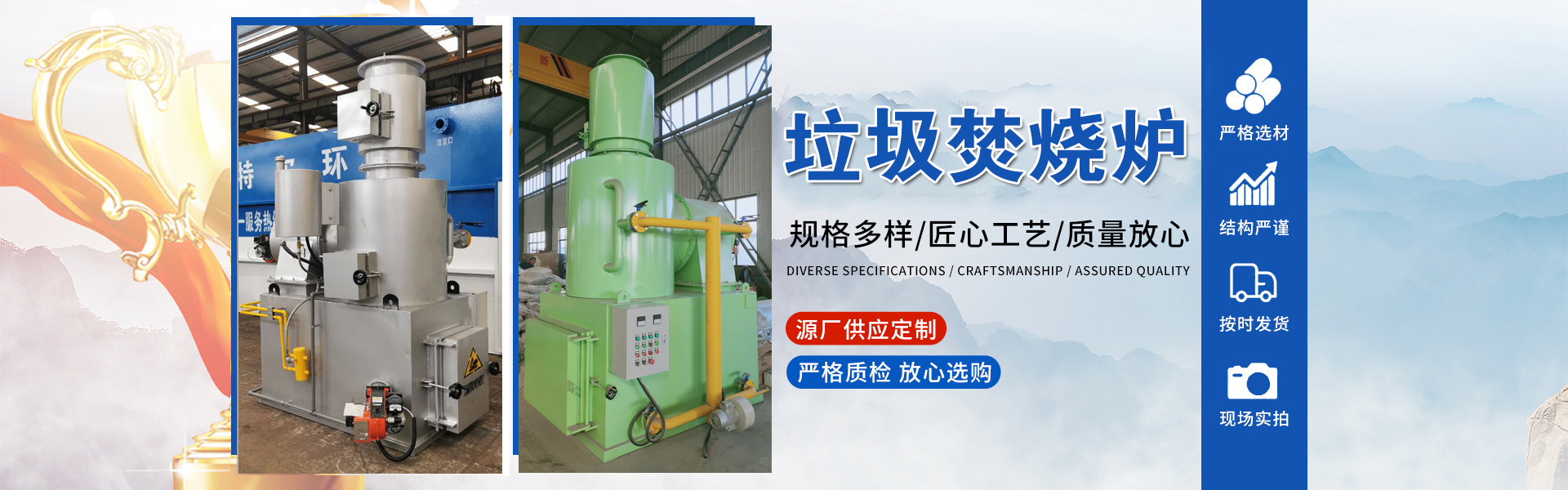
With the acceleration of urbanization and the improvement of people's living standards in our country, cities are expanding in size and the urban population is growing, leading to a continual increase in the amount of municipal solid waste. The crisis of being surrounded by waste is becoming increasingly severe. Landfilling and composting are no longer sufficient to meet the demand, and composting has a significant negative impact on soil. Most landfills are reaching their capacity, necessitating the selection of new landfill sites. Given the scarcity of land and environmental requirements, it is increasingly urgent to develop waste incineration (and heating) technology based on actual conditions in different cities for the harmless treatment of waste. The waste incinerator effectively addresses this issue.
Waste incinerators offer the advantages of "reduction, resource utilization, and harmless treatment," and they require less land for their facilities. The stabilization of waste is rapid, with significant reduction effects, and controlling the odor of domestic waste is relatively easy. The excess heat from incineration can be utilized, allowing for electricity (or heating) generation while safely and harmlessly processing domestic waste. This approach aligns with the principles of the circular economy and is widely recommended internationally and domestically as a waste management technology.
