

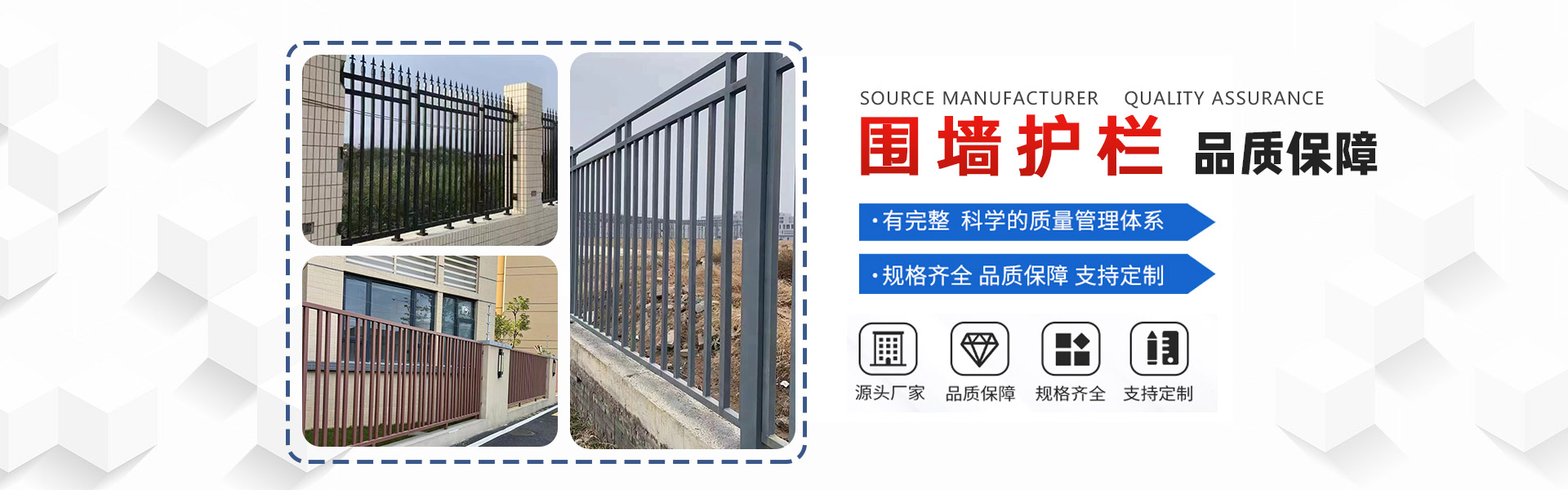


Two are guardrails, and perhaps those unfamiliar with them might confuse municipal guardrails with road guardrails. Today, we unveil their facades and provide a detailed introduction to the differences between municipal guardrails and road guardrails. Let's start with the scope of product application: Municipal guardrails are widely used for safety and decorative purposes in municipal projects, roads, factories, development zones, gardens, and squares. They can also be used in residential complexes, courtyards, and private homes, with their smooth, simple, and beautiful lines exuding a rich modern atmosphere, enhancing the beauty of residential complexes, illuminating courtyards, and elevating the status of private homes. Road guardrails, also known as highway guardrails, traffic guardrails, road barriers, municipal railings, street barriers, and urban fences, are a common type in the guardrail series. Made of steel pipes, they possess the characteristics of flexibility, durability, and practicality. Road guardrails are extensively used on many city roads today and have achieved positive results. Municipal guardrail products are beautifully designed, strong, corrosion-resistant, easy to install, simple to clean, cost-effective, easily repairable, structurally pleasing, and harmonious with the environment, making them a product for beautifying urban environments!
Road Barrier Features
The bright colors, smooth surfaces, high strength, excellent toughness, corrosion resistance, UV resistance, colorfastness, crack resistance, and non-curing properties make these guardrails a premium decorative option. Suitable for urban road medians, they complement clean, spacious streets with vibrant, attractive guardrails, creating a stunning visual appeal that enhances our city's charm. This elevates our high-quality urban construction to new heights.
Road Guardrail Function
1. The Dividing Function: Traffic barriers segregate motor vehicles, non-motorized vehicles, and pedestrians, separating the road traffic longitudinally across the cross-section. This arrangement allows for separate lanes for motor vehicles, non-motorized vehicles, and pedestrians, enhancing road traffic safety and improving traffic order.
2. Barrier Function: Traffic barriers will prevent undesirable traffic behaviors, including pedestrians attempting to cross the street, bicycles, or motor vehicles. It requires the barriers to have a certain height, density (referring to vertical panels), and strength.
3. Warning Function: By installing, the outline of the guardrail will be simple and clear, alerting drivers to be aware of the guardrail's presence and to pay attention to pedestrians and non-motorized vehicles, thereby preventing traffic accidents.
4. Aesthetically Functional: Achieving harmony and coordination with the road environment through various materials, forms, designs, and colors of guardrails.
