



- AllProduct Category
-
Waste Gas Treatment Equipment
Wastewater Treatment Equipment
River Purification Equipment
Laboratory Pure Water Systems
Reclaimed Water Equipment
EDI Ultra-Pure Water Equipment
Deionized/Demineralized Water Equipment
Reverse Osmosis Pure Water System
Water Softener, Ion Exchange System
GMP Pharmaceutical Purification Water Equipment


详情描述
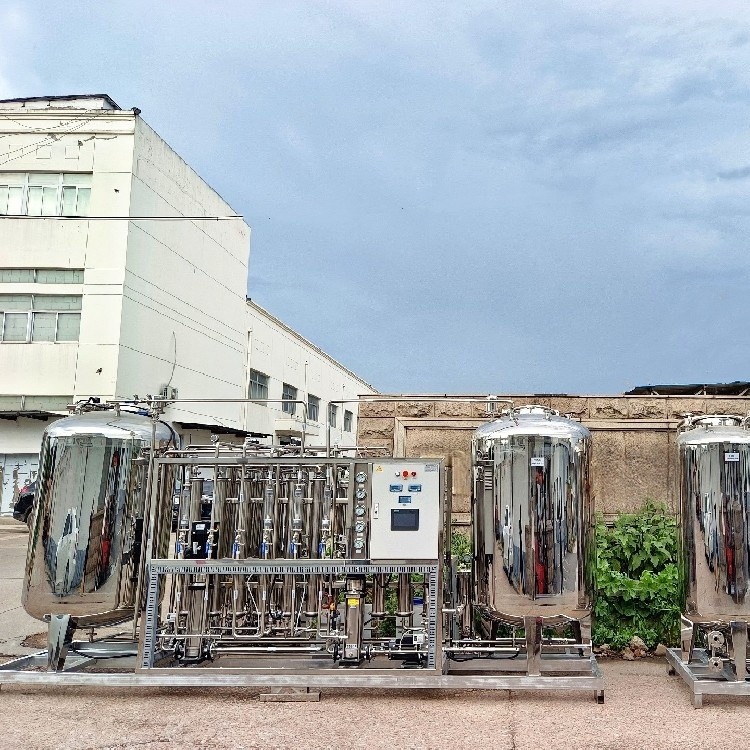
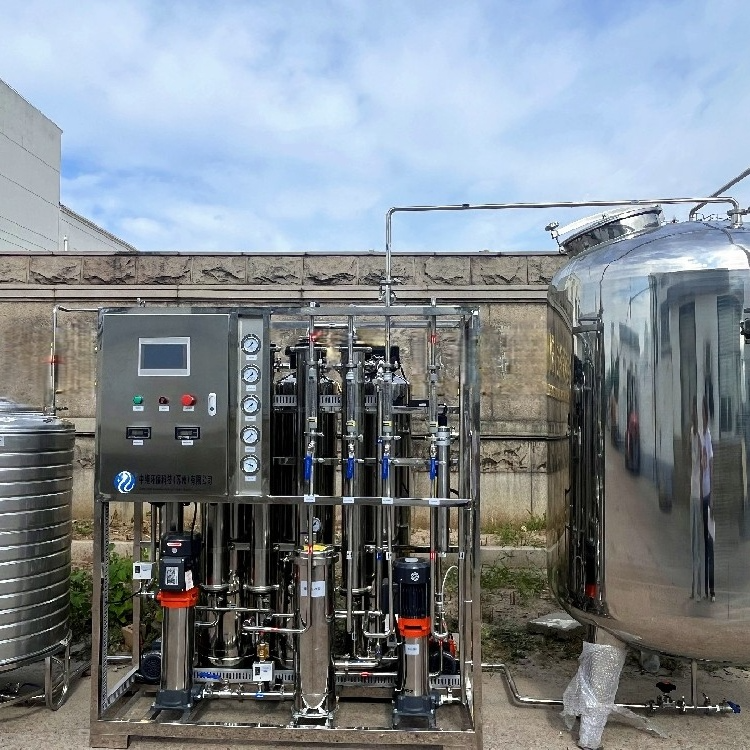
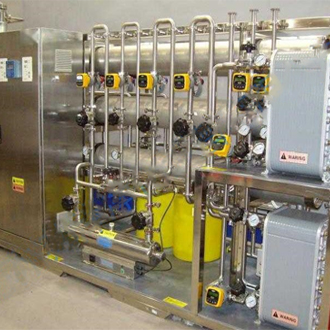
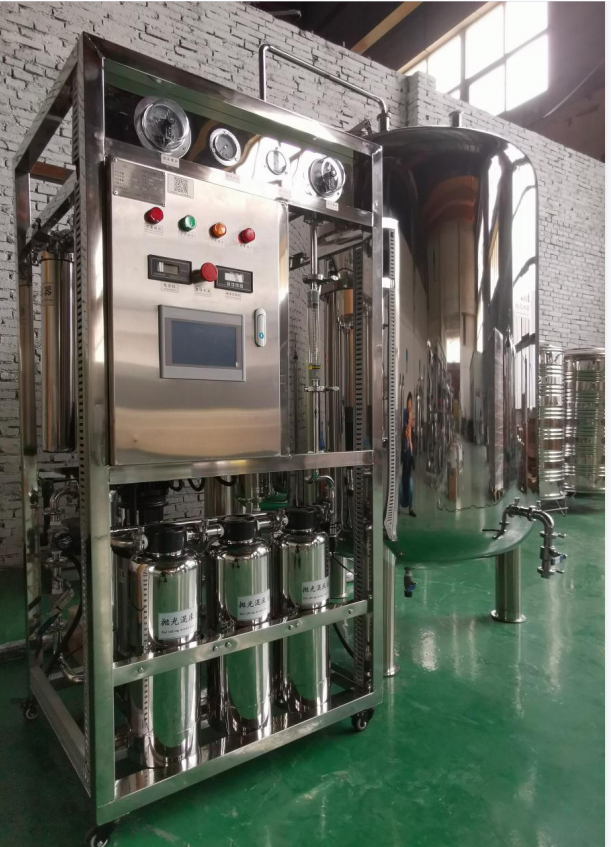
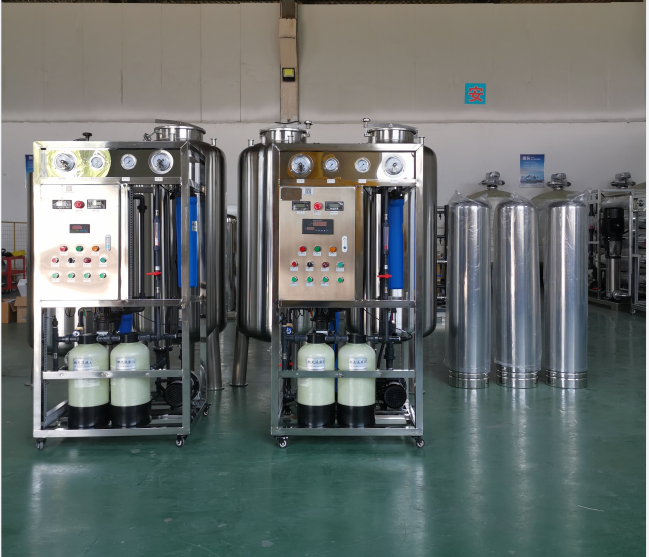
Primary applications of the small-scale laboratory ultra-pure water purifier:
Analytical Reagents and Medicines Dilution Water
Biological, electrochemical, and interface research water
Microorganisms, water for biological fermentation cultivation, biological laboratory use
* MedicalProcess Water
Total Organic Carbon (TOC), testing experiments, analytical water
High-precision optical lens cleaning water
Cleaning water for various components in the microelectronics industry
A variety of medical biochemical analyzers and water for analyzers
Biological, pathological, and toxicological experimental water
Environmental, environmental protection laboratory analysis water
All types of liquid chromatography, ion chromatography, salt spray test, and meteorological chromatography water
High-purity Laboratory Water for Polymer Experiments
Precision Electroplating Water
Associate degree research colleges, industrial and mining enterprise laboratory experimental water

※ Pure Environmental Protection Brand - "Design Advantages":
1. Personalized one-on-one services, complimentary on-site survey, considering placement area and entry space, and free water quality testing of raw water.
2. Understand the customer's daily water demand, peak water usage, water quality requirements, and their production process and industry characteristics.
3. Professional team collaboration in design, coupled with on-site inspections by dedicated service personnel, and one-stop water treatment solution services.
4. Intelligent design with precise control and high level of automation. Units can perform automatic forward wash/reverse wash/operation, with interlock protection and alarm indication. Features 4-20mA data openness, allowing remote transmission to the DCS central control system, truly achieving unattended operation.
5. Segmented testing according to process requirements, capable of measuring conductivity, resistivity, pH, ORP, temperature, flow rate, velocity, pressure, and other parameters. Ensures that water from each process stage meets quality standards without contaminating the final product water, emphasizing process control.
6. Design products that balance the principles of comprehensive investment and operational costs for customer suitability.
※ Pure Environmental Protection Brand 『Production Advantages』:
1. Core components are all imported, and we have established long-term cooperative relationships with numerous international brands such as American DOW, Hydranet, GE, Siemens, Rohm and Haas, Grundfos of Denmark, Rosemount, Nippon Paint of Japan, and Schneider, ensuring reliable quality of our products.
2. Suppliers conduct product assessments, eliminating substandard suppliers with poor quality and service, and selecting the best to enter the qualified supplier system.
3. Strictly adhere to the quality management system, where quality is paramount—conduct incoming material appearance and performance inspections—process inspections—final product quality checks.
4. Production staff produce according to assigned numbers, grouped and scheduled for shifts, with clear responsibility division. Performance assessment and traceability are established robustly.
5. Pre-shipment trial operation inspection and electrical point operation test to ensure delivery of qualified products to the customer.
※Chinese Pure Environmental Protection Brand『After-Sales Advantage』:
1. Professional installation and after-sales team providing one-on-one service, enhancing the timeliness of post-installation after-sales support and improving customer satisfaction.
2. Establish a post-installation after-sales service mechanism, conduct performance evaluations, set up a customer service department, a complaint window, and promptly address customer concerns.
3. Full guidance and training throughout the installation and debugging process, including theoretical training, hands-on machine operation training, and general troubleshooting training.
4. Establish customer electronic profiles, conduct monthly phone follow-ups, and promptly provide methods and suggestions for reducing equipment operation costs.
5. Multiple channels for after-sales feedback, nationwide after-sales maintenance services, quick response, rapid handling, 24/7 service.
6. We solemnly promise: two years of free warranty for the entire unit, lifetime free technical support.
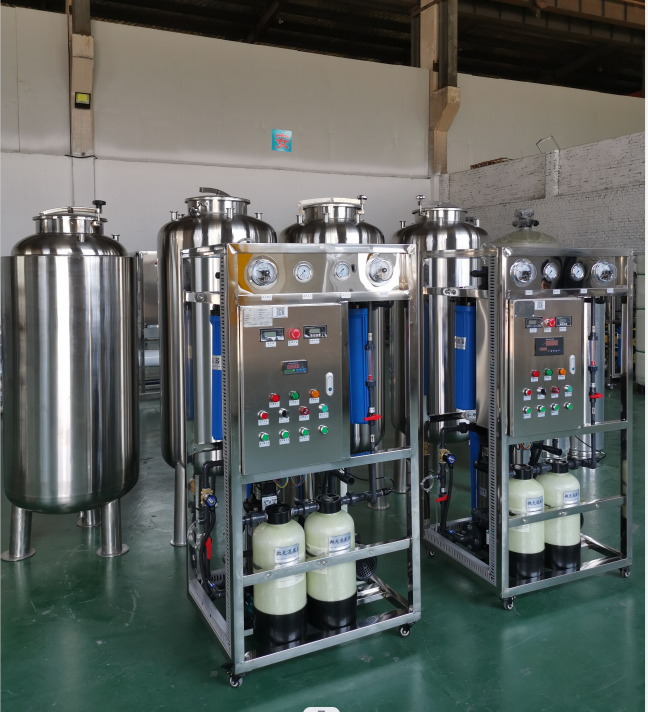
I. Recommended Production Process:
1. Primary Reverse Osmosis RO: Water Conductivity ≤ 10 μS/cm (25°C)
Source water → Activated Carbon Filtration → 10um Filtration → 5um Filtration → High-Pressure Pump → First Stage Reverse Osmosis RO → Pure Water Tank → Transfer Pump → Water Usage Point
Note: If the raw water pressure is unstable, it is recommended to add a raw water tank and a raw water booster pump.
The process can be optionally equipped with an ultraviolet sterilization/ozonation sterilization unit.
2. Primary Reverse Osmosis RO + Secondary Mixed Bed: Product Water Resistivity ≥ 5 MΩ·cm (at 25°C)
Water source with pressure → Activated Carbon Filtration → 10um Filtration → 5um Filtration → High-pressure Pump → Primary Reverse Osmosis RO → Primary Polishing Mixed Bed → Secondary Polishing Mixed Bed → Precision Filter → High Purity Water Tank → Feed Pump → Water Usage Point
Note: If the raw water pressure is unstable, it is recommended to increase the raw water tank and the raw water booster pump.
The process can be optionally equipped with an ultraviolet sterilization/ozonation sterilization unit.
3. First-level reverse osmosis RO + Triple-stage mixed bed: Product water resistivity: 15-18 MΩ·cm (25℃)
Water source with pressure → Activated Carbon Filtration → 10um Filtration → 5um Filtration → High-pressure Pump → First-stage Reverse Osmosis RO → First-stage Polishing Mixed Bed → Second-stage Polishing Mixed Bed → Third-stage Polishing Mixed Bed → Fine Filter → Ultra-Pure Water Tank (recommended with Nitrogen Protection) → Transfer Pump → Water Usage Point
Note: If the source water pressure is unstable, it is recommended to increase the source water tank and source water booster pump.
The process can be equipped with an optional UV sterilization/ozonation sterilization device.
II. Core Process Introduction:
1. Reverse Osmosis (RO) System
Reverse osmosis membranes, also known as RO, are a high-tech membrane separation technology invented by Loeb and Sourirtajan of the University of California, Los Angeles in 1960. Their pore size is as small as nanometers (1 nanometer = 10^-9 meters). Under certain pressure, H2O molecules can pass through the RO membrane, while inorganic salts, heavy metal ions, organic matter, colloids, bacteria, viruses, and other impurities in the source water cannot pass through the RO membrane, thereby strictly separating pure water that can pass through from concentrated water that cannot.
Principle: Osmosis is a physical phenomenon where water molecules from two bodies of water with different salt concentrations, separated by a semi-permeable membrane, will move through the membrane to equalize the salt concentrations. However, this process takes a long time and is known as natural osmosis. If pressure is applied to the side with higher salt concentration, the osmosis can be stopped, and this pressure is called osmotic pressure. Increasing the pressure can cause the water to permeate in the opposite direction, leaving the salt behind. Therefore, the principle of reverse osmosis desalination is to apply a pressure greater than the natural osmotic pressure to saltwater (such as raw water), causing the osmosis to occur in the opposite direction. This forces the water molecules to the other side of the membrane, resulting in clean water, and thus removing the salt from the water. This is the principle behind reverse osmosis desalination.
The reverse osmosis membrane utilizes an aromatic polyamide spiral wound composite membrane. The reverse osmosis unit consists of composite membrane elements, high-pressure pumps, fiberglass pressure vessels, chemical cleaning equipment, supports, and an instrument control cabinet. Equipped with a local control panel, which houses various local instruments and control buttons. The reverse osmosis desalination unit is controlled by a PLC and operates automatically. It is also equipped with flowmeters, pressure gauges, conductivity meters, and more.
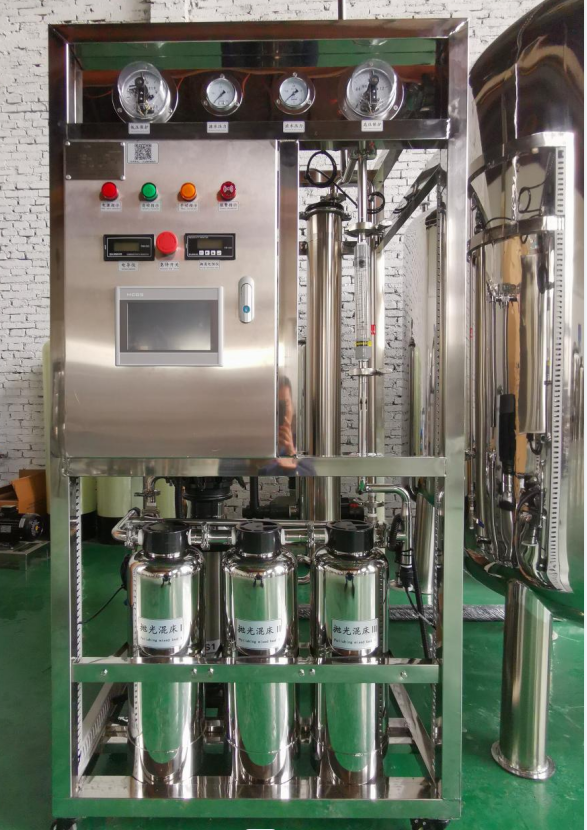
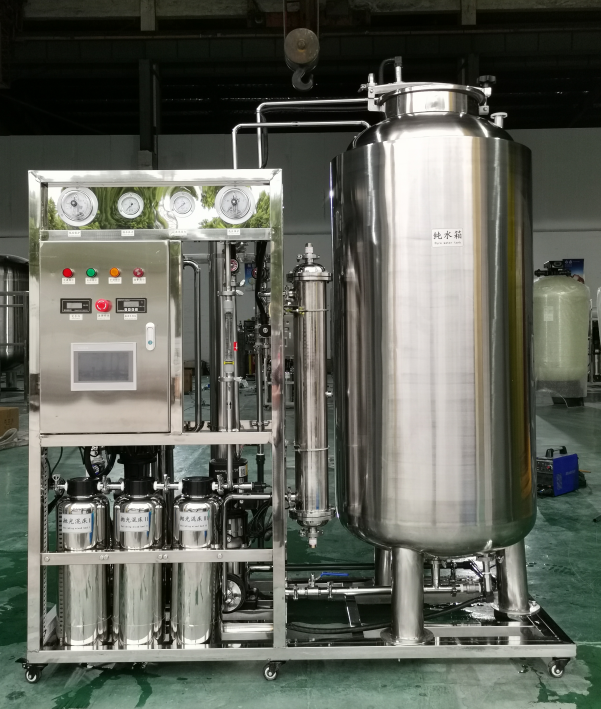
2. Polished Mixed Bed System
Polished mixed bed is generally used at the end of ultra-pure water treatment systems, based on the principle of resin ion exchange. The container is filled with non-regeneration polishing mixed bed nuclear-grade ion exchange resin, with ion forms being H and OH. As a terminal desalination unit, it can elevate the resistivity of the feedwater from the previous stage to the user's required level, and also has certain control capabilities over TOC and SiO2.
Polishing mixed床 ion exchange requires specific feedwater quality, which must be the product water from a positive, negative, or mixed bed ion exchange system, or from an EDI continuous electro-deionization system. Only when the feedwater meets these requirements can the polishing mixed bed ion exchange operate stably and long-term.
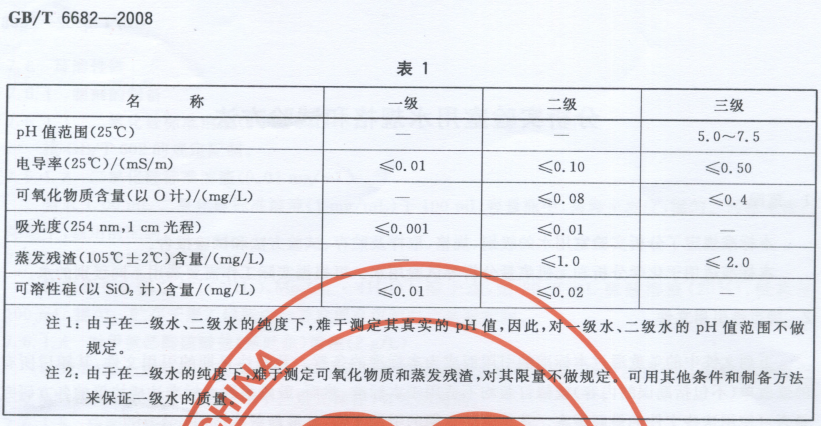
Section 3: GBT 6682-2008 Specifications for Laboratory Water Used in Analysis
Section 4: Selected Classic Customer Cases:
Section 5: National Warranty and Service Network
1. Professional installation and after-sales team, providing one-on-one service, enhancing the timeliness of post-installation after-sales services, and boosting customer satisfaction.
2. Establish a post-installation after-sales service system, conduct performance evaluations, set up a customer service department, a complaint hotline, and promptly address customer concerns.
3. Full guidance and training throughout the installation and debugging process, including theoretical training, hands-on machine operation training, and general troubleshooting training.
4. Establish customer electronic files, conduct monthly phone follow-ups, and promptly provide methods and suggestions for reducing equipment operation costs.
5. Multi-channel after-sales feedback, offering nationwide maintenance and after-sales service, quick response, prompt handling, 24/7 availability.
6. We solemnly promise: Two-year free warranty for the entire unit, lifetime free technical support.
For more product details, please call our 24-hour hotline: 18550863818; or the national hotline: 0512-69390898.
We will provide you with detailed plans, drawings, and competitive quotes for your reference and selection!
※ Call for consultation, enjoy 10% off! Welcome to call!


