

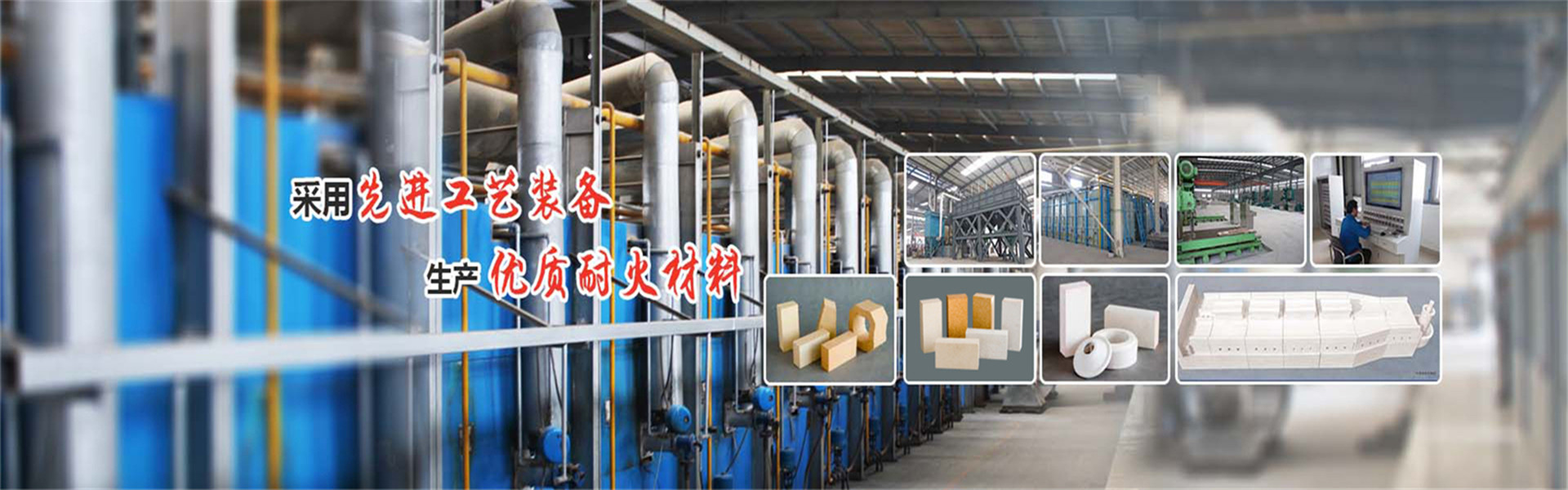
High-alumina bricks are a type of refractory material that boasts high production volume and usage rates. Although the production process is essentially the same as that for clay bricks, there are still certain distinctions in terms of raw material grade and sintering temperature.
The production of high-alumina bricks begins with the selection and sorting of raw materials. Generally, manufacturers opt for older, seasoned raw materials since newly fired materials contain impurities that haven't weathered. This can result in bubbles and black spots on the produced high-alumina bricks. Over time, the impurities in the longer-aged material weather out, ensuring that the bricks produced are both stable in surface color and quality.
The binder used in the production control process of high-alumina bricks is also of critical importance. The ratio cannot be too high. After the raw materials are selected and crushed, they are then graded by particle size, followed by the addition of a reasonable ratio of binder and powder. The mixture must be stirred for no less than 10 minutes; insufficient stirring time can affect the finish and porosity of the finished high-alumina bricks.
After controlling the raw materials, crushing, process ratio, and mixing of high-alumina bricks, they are formed under high pressure using a press, resulting in internal layer cracking. The number of pressure shaping times for high-alumina bricks depends on their weight, generally a few kilograms per blow, starting with light blows and gradually increasing to heavier ones. It is crucial not to under or overdo the blows; too few blows lead to insufficient density in the brick body, while too many can cause cracking.
High-alumina bricks, after shaping, are selected and then fired in tunnel kilns. The binder typically melts first, filling the pores on the granules and sintering as the temperature rises, resulting in increased bulk density and strength. This process yields the overall performance of the high-alumina bricks. However, the firing temperature is determined by the different raw materials used for the high-alumina bricks; the higher the aluminum content, the higher the sintering temperature.
High-alumina bricks are produced through a process of high-temperature sintering, followed by sorting and boxing the finished products, and then shipping them to customers. In summary, the production process of high-alumina bricks essentially involves high-pressure molding and high-temperature sintering to ensure their various specifications.
