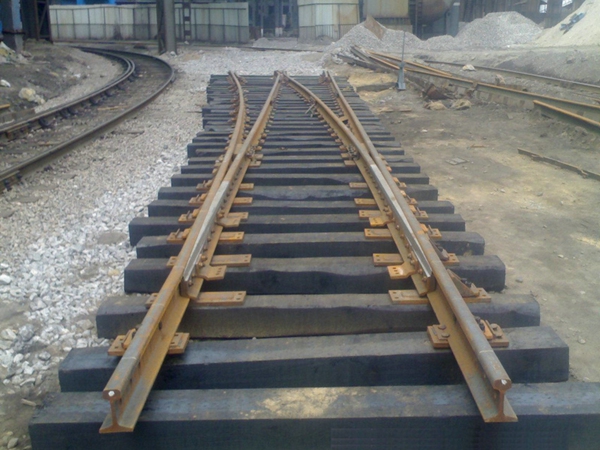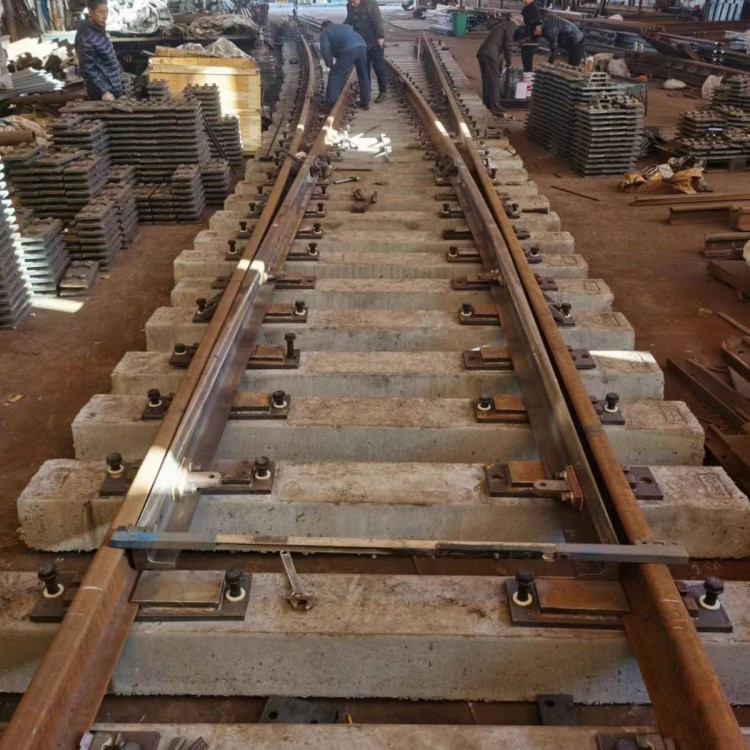
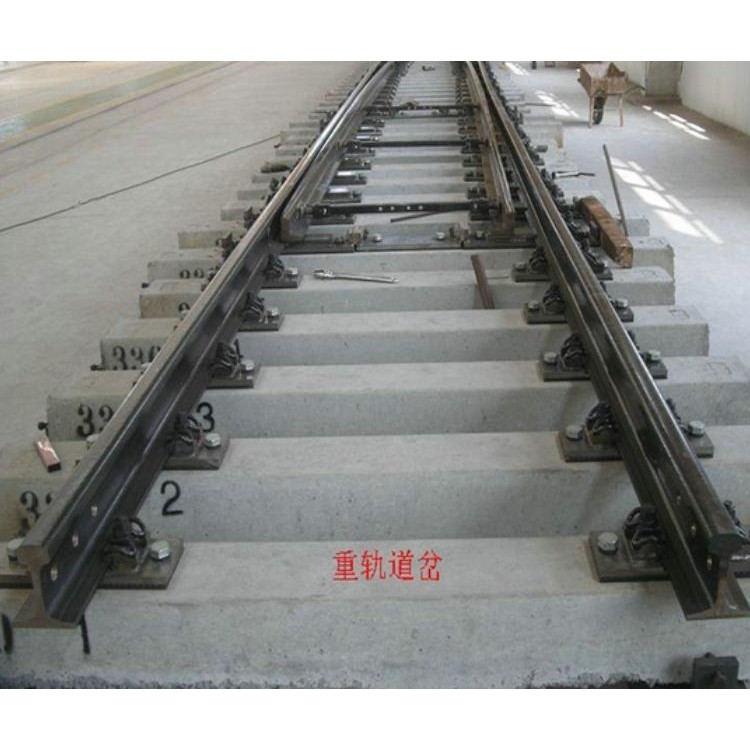
Heavy rail, or heavy-duty track, differs from light rail in that it is designed for the operation of heavy-weight vehicles. It does not solely refer to the weight of the track itself, but is related. Since heavy-weight vehicles require tracks to bear significant vehicle weight, the steel rails are thicker and heavier, and the specifications for the track are more stringent. The scope of heavy rail includes inter-regional railways (including high-speed and heavy-haul railways) under national standards, inter-city railways, urban railways, and also subway systems in urban rail transit.
Rail weight is indicated by the net kilograms per meter of rail specification.
Heavy Rails: Steel rails with a nominal weight of over 60 kilograms per meter are classified as heavy rails, which are divided into two types: general steel rails and crane rails. General steel rails refer to tracks used for laying main railway lines, curves, and tunnels. Among them, standard rail lengths include 25 meters and 50 meters, or continuous welded high-speed rail of 500 meters. Curved track for curves has slightly shorter lengths, such as 24.96 meters and 50.92 meters. The specifications for high-speed rail general steel rails, typically 500 meters in length, are 60, 75, and 100 kilograms per meter.
Heavy rail has a larger cross-section than light rail, enabling it to bear greater force. Early mainline railways even used 78 kg steel rails, but now they are all using 60 kg and 75 kg rails.
Heavy Rail Range: Regional rail, intercity rail, metro rail, rapid transit, and subway systems all fall under heavy rail.