
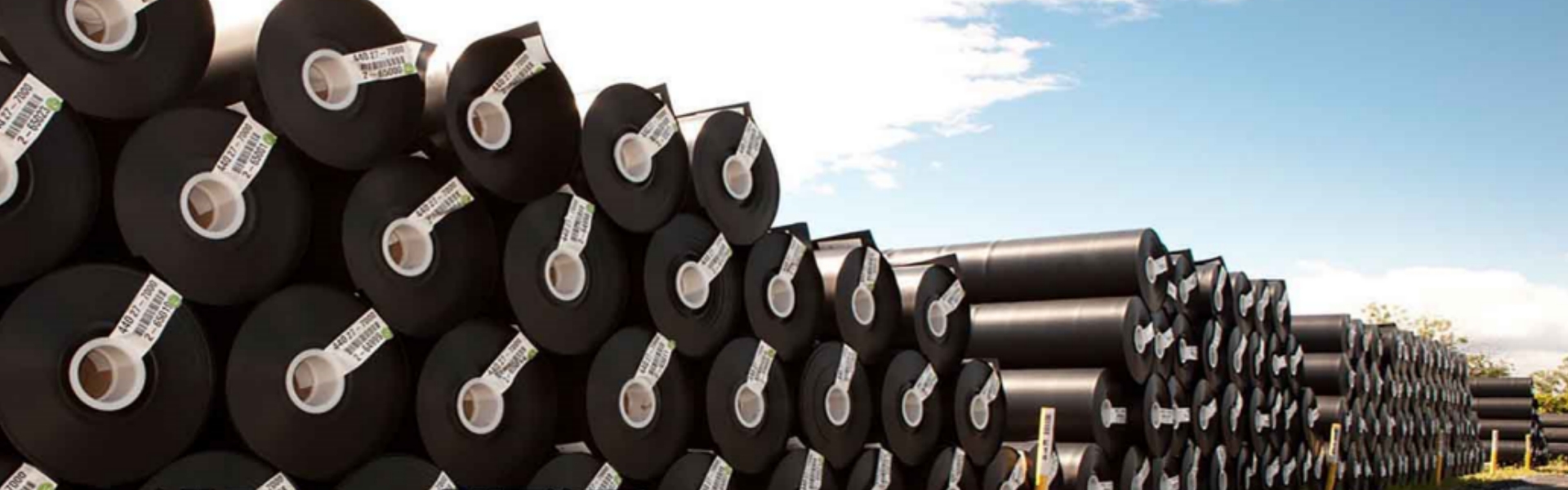
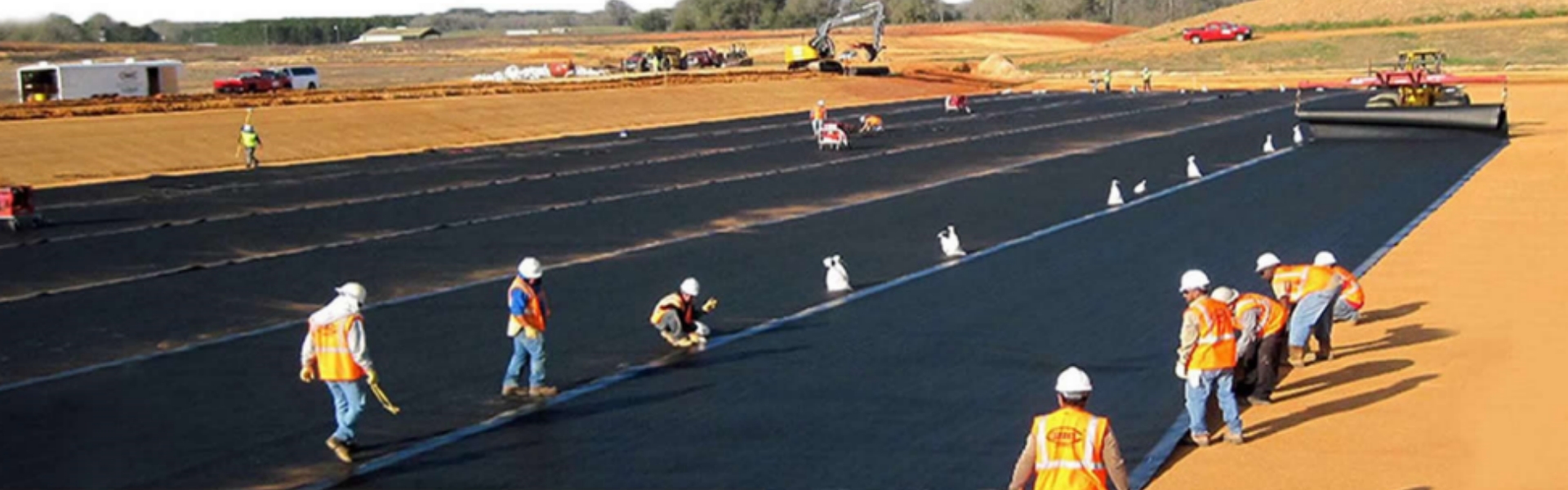

The Three-Dimensional Composite Drainage Mesh is a new type of geosynthetic material. Its composition structure is a three-dimensional geogrid, with geotextile adhered to both sides. The core of the three-dimensional geogrid includes a thick vertical rib, with diagonal ribs at the top and bottom. It can drain subsoil water from roads and also features a pore maintenance system that can block capillary water under high loads.
The three-dimensional composite drainage net is laid between the subgrade and sub-base, designed to drain accumulated water between them and prevent capillary water from joining the edge drainage system. This structure automatically shortens the drainage path of the subgrade, significantly reducing the drainage time and extending the service life of roads. Laying the three-dimensional composite drainage net on the sub-base layer also serves as a barrier to prevent the finer materials of the sub-base from entering the subgrade layer. The aggregate subgrade can only enter the upper part of the geotextile net to a limited extent. In this way, the composite geotextile drainage net also has a potential function to restrict the lateral movement of the aggregate subgrade, similar to the role of geogrids. Generally speaking, the tensile strength and rigidity of the three-dimensional composite drainage net are better than those of many geogrids used in subgrades.
Under northern climatic conditions, laying a three-dimensional composite drainage mesh can help alleviate the effects of frost heave. If the depth of freezing is significant, the geotextile mesh can be placed at a shallower position within the subgrade, acting as a capillary action barrier. Additionally, it is often necessary to replace the granular subgrade material with one that is less prone to frost heave, extending downward to the depth of freezing. The frost-heaving susceptible backfill soil can be directly placed on top of the three-dimensional composite drainage mesh, up to the ground surface level of the subgrade. In this case, the system can be connected to the drainage outlet, ensuring the groundwater level is at or below this depth. This can potentially limit the growth of ice crystals, and during spring thaw in cold regions, traffic loads do not need to be restricted.
The purpose of the final capping system at landfill sites is to limit precipitation infiltration into the landfill and minimize the production of leachate that may contaminate water sources. In the capping system, the role of the surface water drainage layer is to discharge water that infiltrates the cover soil, preventing accumulation on the impermeable layer. Accumulated water on the capping impermeable layer can generate pore water stress, potentially causing the overlying vegetation cover soil to slide and damaging the capping slope. Traditionally, sand and gravel are used as the surface water drainage layer for capping, which can be difficult to place on steep slopes. However, the use of a three-dimensional composite drainage mesh can be applied to steep capping slopes and also increase the landfill volume.
The three-dimensional composite drainage mesh offers superior drainage performance, capable of effectively removing surface seepage and stabilizing the slope of the capped landfill. The exhaust capacity of the gas drainage layer in the capped landfill system is insufficient, or the flat gas drainage layer is not properly installed, leading to excessive gas pressure applied to the impermeable layer, which may cause damage to the capped system. The gas drainage layer of the capped system can utilize the high-performance three-dimensional composite drainage mesh. The high-performance three-dimensional composite drainage mesh can be used, or a combination of the three-dimensional composite drainage mesh with sand and gravel to form the gas drainage layer of the capped landfill system. The use of the three-dimensional composite drainage mesh in the capped landfill system as both the surface water drainage and gas drainage layer is suitable for steep slopes, with its high drainage performance effectively removing seepage and gases, ensuring slope stability.
1. Excellent drainage performance.
High tensile strength.
3. Reduce the likelihood of geotextile embedding into the core matrix, ensuring long-term stable drainage.
4. Capable of withstanding long-term high-pressure loads (can bear approximately 3,000Ka of compressive loads).
5. Corrosion-resistant, acid and alkali-resistant, with a long service life.
6. Easy construction, reduced project timeline, and cost savings.
Composite drainage boards are used in projects such as soft soil treatment, roadbed reinforcement, slope protection, bridge abutments, coastal slope protection, and reservoir bottom lining.
