
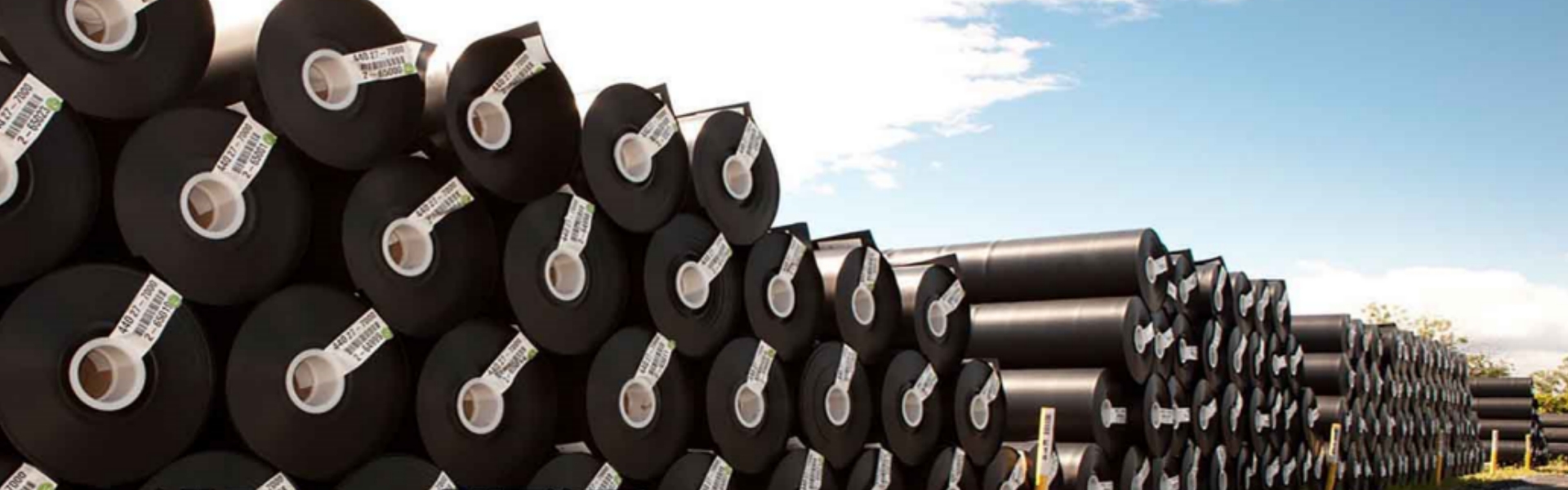

The geosynthetic membrane, also known as HDPE waterproofing membrane, is a type of waterproof and barrier material produced from high-density polyethylene resin, with a density of 0.94g/cm³.
Geotextile membranes possess the following excellent properties:
a) Possesses a high seepage coefficient (1x10^-17 cm/s).
b) Offers excellent temperature adaptability, operable in environments ranging from high temperatures of 110°C to low temperatures of -70°C.
c) Possesses excellent corrosion resistance, capable of withstanding the corrosive effects of strong acids, alkalis, oils, and other chemicals, making it an excellent anti-corrosion material.
d) The geotextile membrane boasts high tensile strength, allowing for use in harsh geological and climatic conditions. It exhibits strong resistance to strain under uneven geological settlements, meeting the demands of high-standard engineering projects.
e) Excellent resistance to aging and ultraviolet rays in harsh natural environments, allowing for long-term bare use without decomposition, maintaining its original performance.
f) Utilizing native plastic and carbon black particles, this material is free of any preservatives and is extremely environmentally friendly.
g) Strong resistance to root penetration by plant growth;
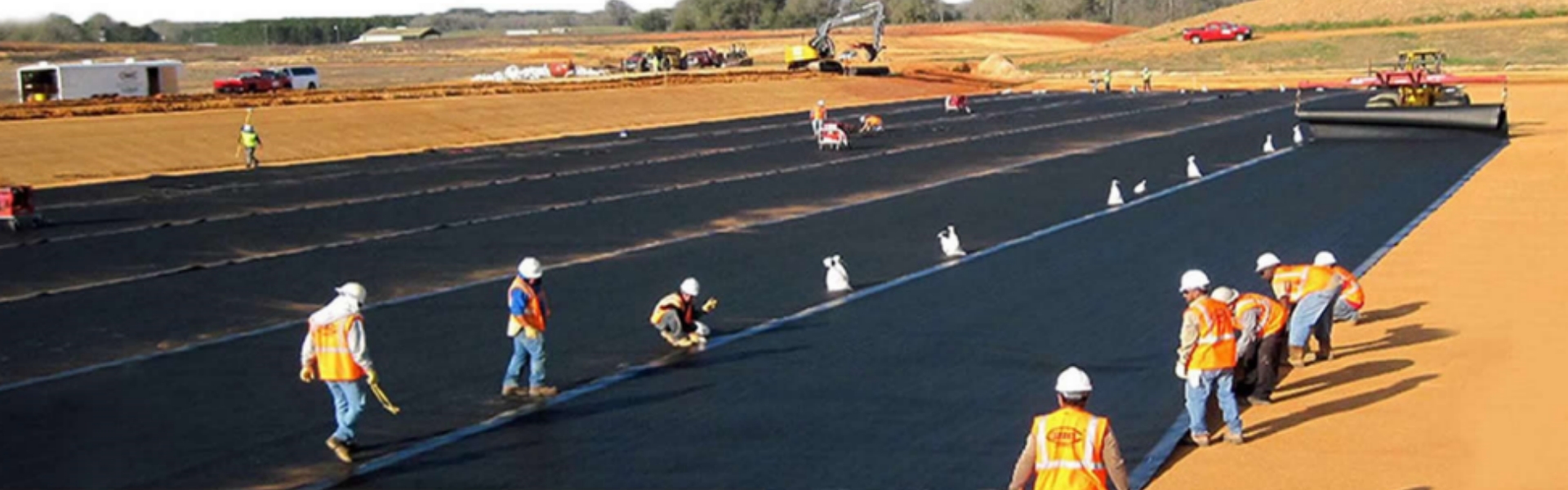
h) Easy and quick installation, with a variety of specifications and laying methods to meet different engineering seepage prevention requirements. Utilizes hot melt welding for high seam strength, ensuring convenient, fast, and environmentally friendly construction.
Geotextile membranes, renowned for their excellent tensile strength and mechanical properties, resistance to low temperatures, aging, and corrosion, and their long service life, are now widely used in projects such as leak prevention in wastewater treatment plants, artificial lakes, evaporation ponds, oil separators, sedimentation tanks (both inner and secondary linings), tailings storage facilities, and landfill sites.
