
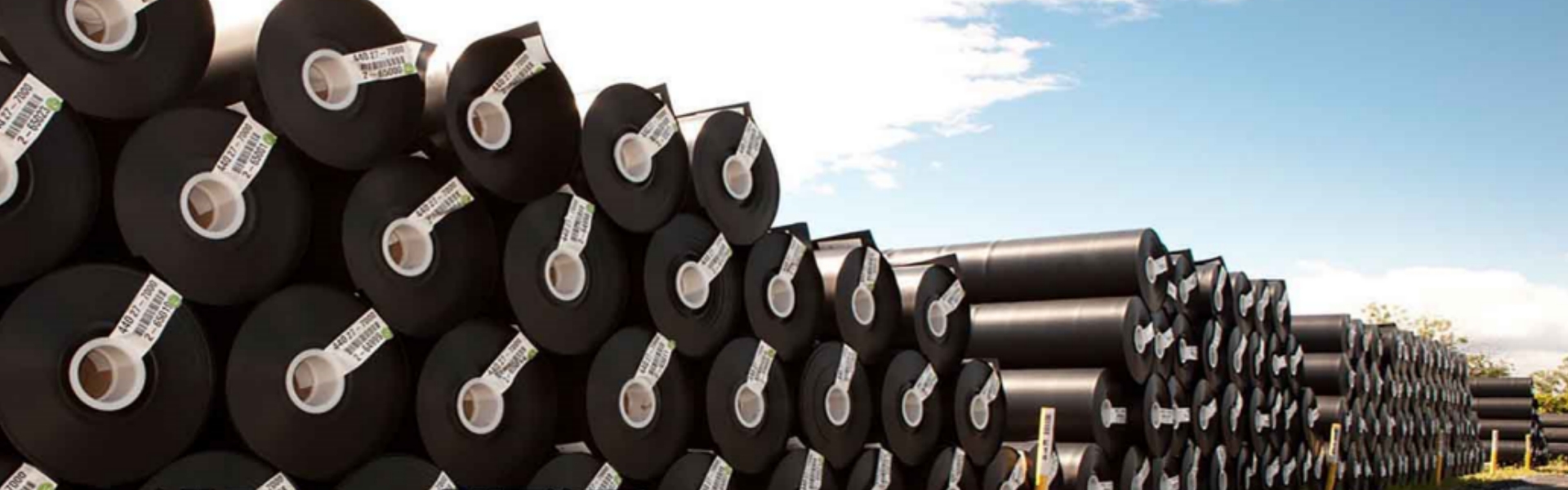

Geosynthetic clay liner is a widely used geosynthetic material, offering properties such as waterproofing, isolation, and reinforcement. Below, we introduce the construction methods for the installation of geosynthetic clay liners.
Pre-construction preparations
Finalize construction drawings and engineering requirements, and develop the construction plan and schedule.
The site of the construction site was surveyed and measured to determine the placement and size of the composite geomembrane.
The construction site is being cleared and treated to ensure the soil base is dry, level, free of standing water, and free of debris.
Composite Geomembrane Laying
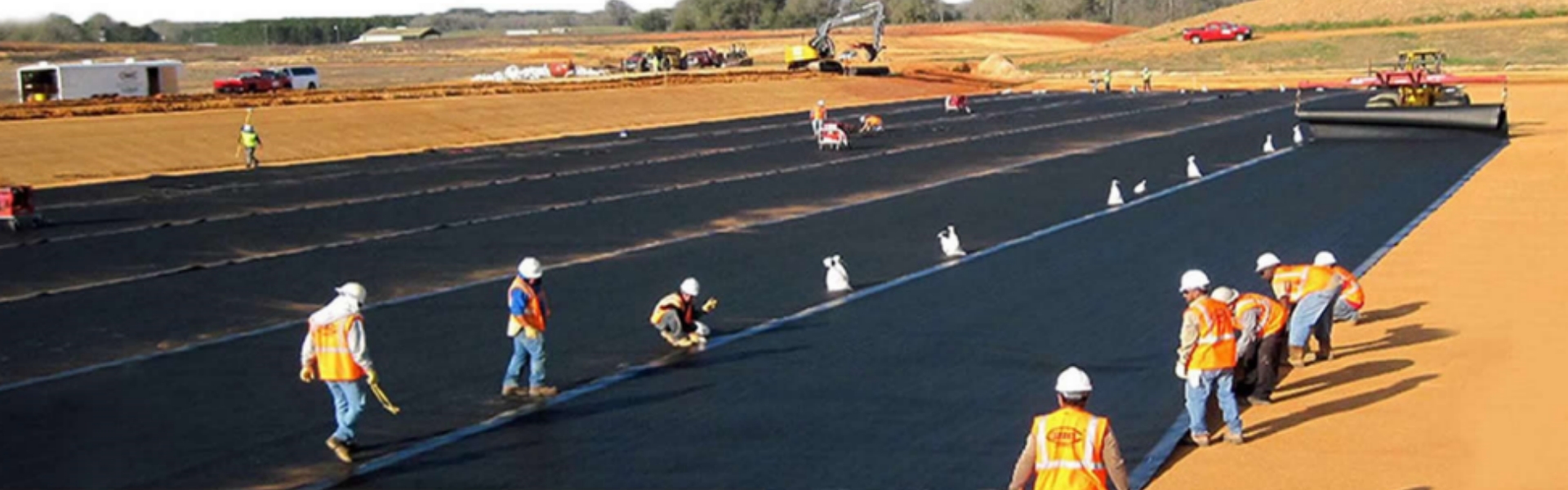
The composite geomembrane is laid according to design requirements and construction plans, maintaining flatness and leaving a certain allowance.
Welding at the joints of composite geomembranes using a hot air gun or a high-frequency welding machine ensures a strong, leak-proof bond.
At the edges of the composite geomembrane, U-shaped槽钉 or other fasteners are used for fixation to ensure the geomembrane does not shift.
Soil Treatment: Prior to construction, the soil surface must be leveled, cleaned, and drained to ensure the subgrade is dry, smooth, free of standing water, and free of impurities.
Composite Geotextile Membrane Laying: Lay the composite geotextile membrane according to the predetermined width and length, ensuring it remains flat and leaving a certain amount of allowance.
Welded Joints: Utilize hot air guns or high-frequency welding machines to weld the joints of composite geotextiles, ensuring robust welds and no leakage.
Fixed Edges: The edges of the composite geotextile membrane are secured with U-shaped槽钉 or other fasteners to ensure the membrane remains in place without shifting.
Ensure Construction Quality: After laying the composite geotextile membrane, a check is required to ensure its flatness, absence of damage, and no leakage.
Proceed with Subsequent Engineering: Once the quality of the composite geomembrane is confirmed as satisfactory, subsequent construction work can proceed, such as backfilling and paving bricks.
In summary, the construction method for composite geomembranes must be strictly adhered to the specifications to ensure both construction quality and safety. During the construction process, factors such as rain, wind, and ultraviolet radiation should be addressed to maintain the quality and lifespan of the composite geomembrane.
