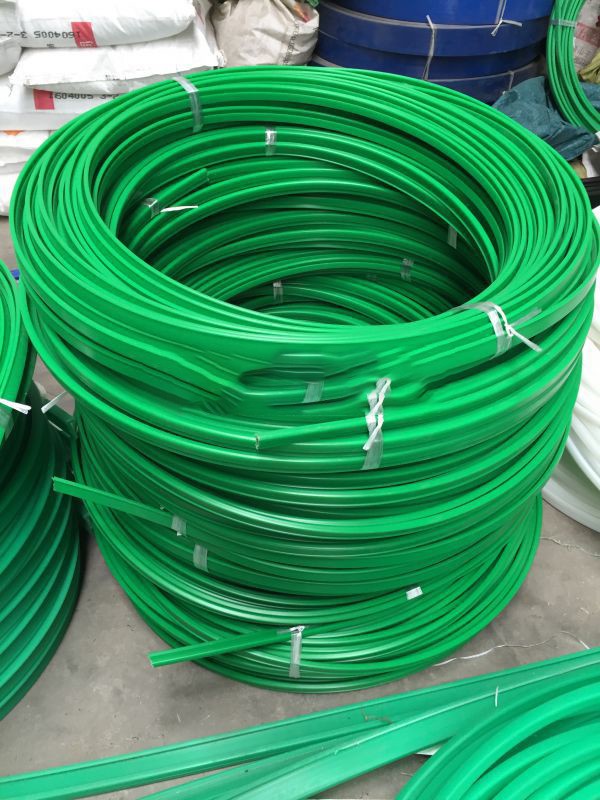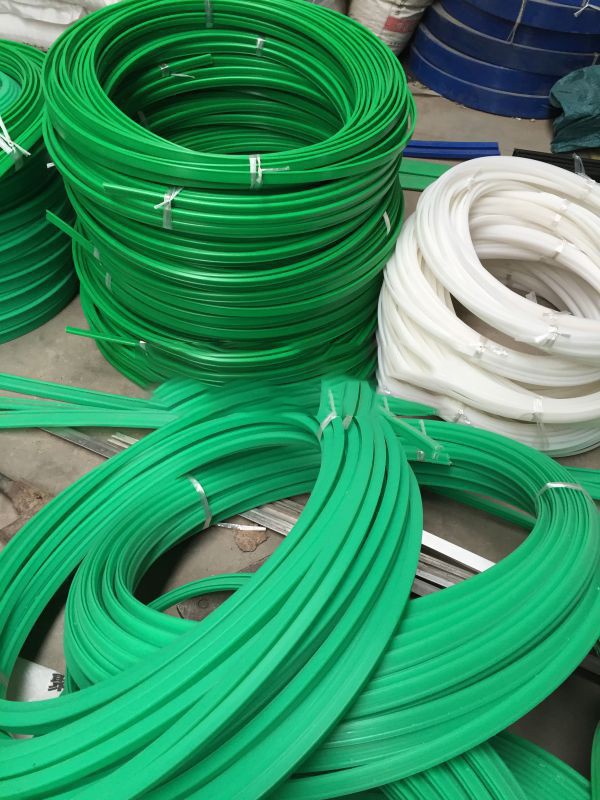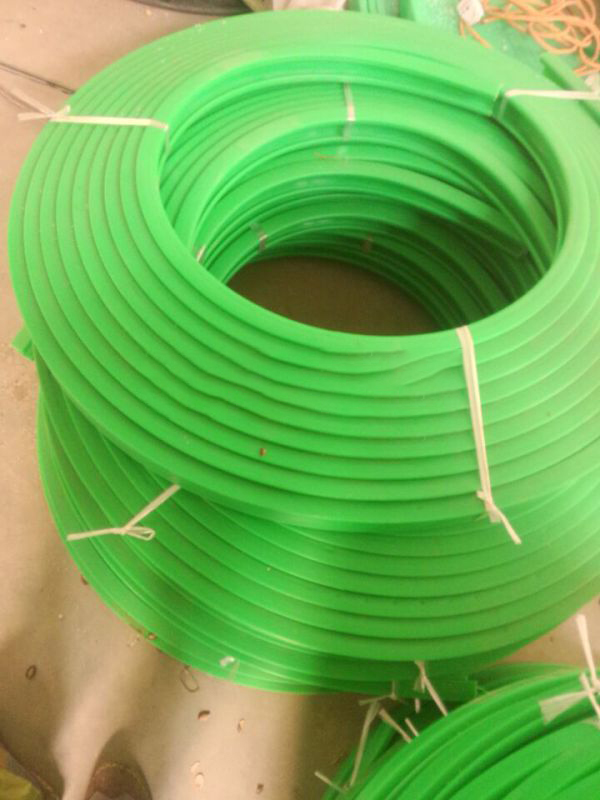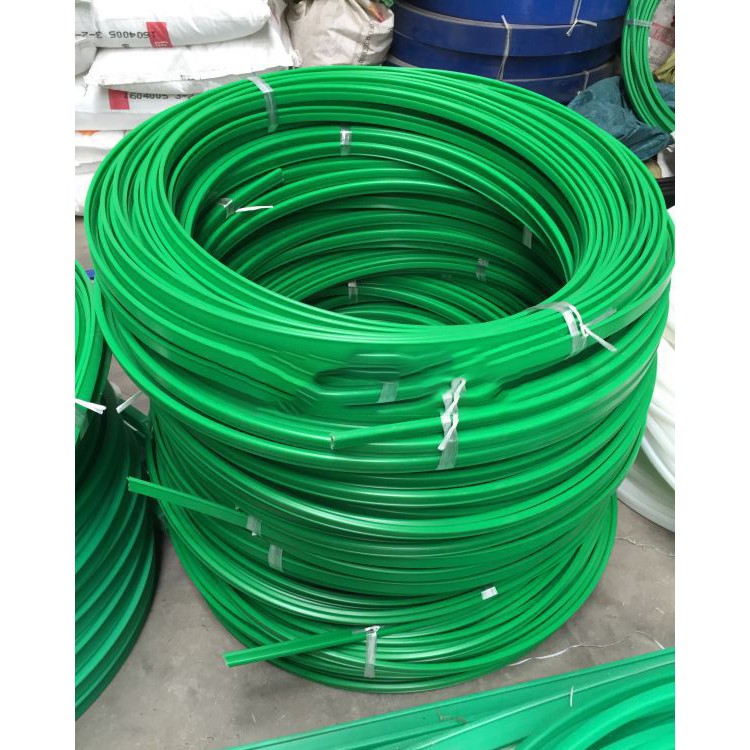
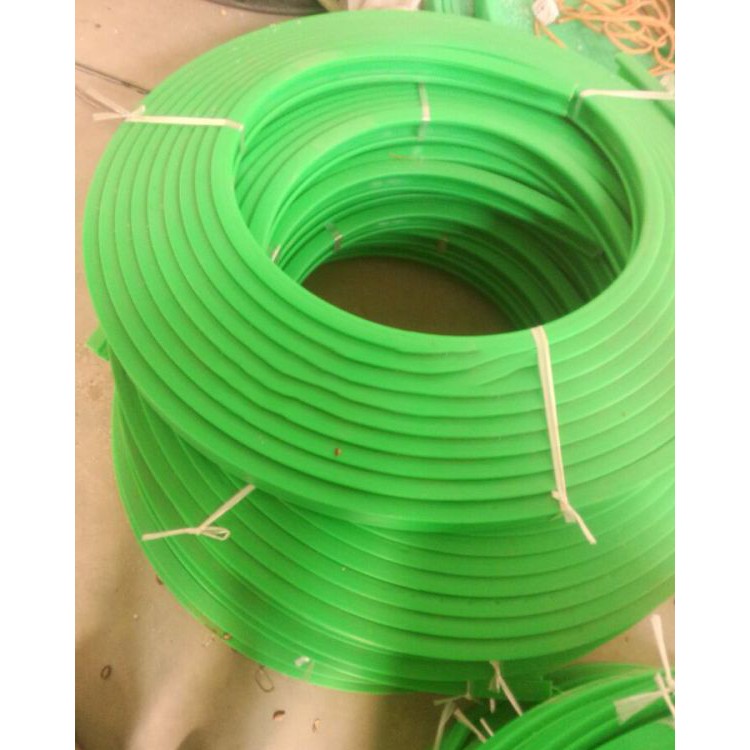
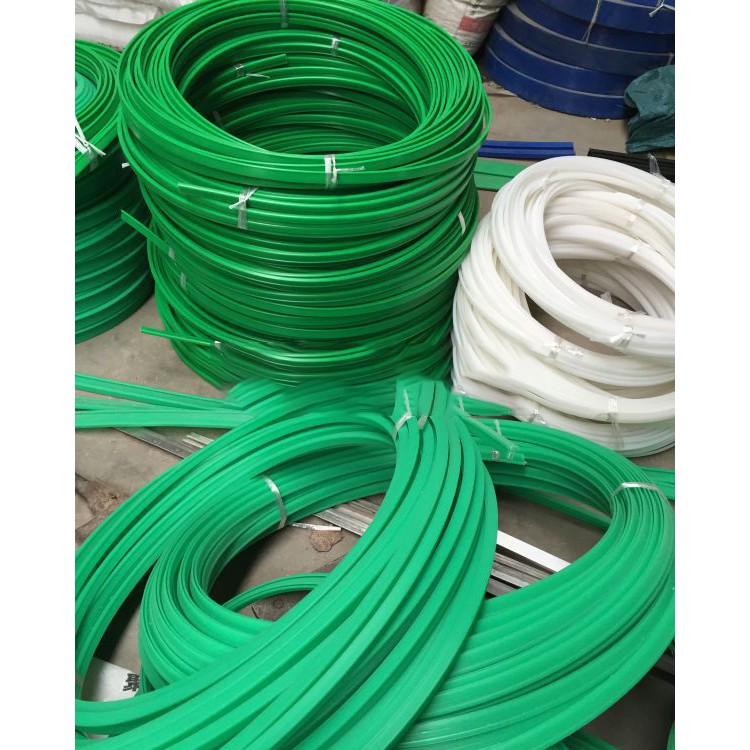
BatXing brand transmission equipment features a complete range of high molecular weight guardrails, strips, lining bars, and support bars, guaranteed quality.
Wear strips are extruded from ultra-high molecular plastic materials (UPE/HDPE/UHMWPE), featuring resistance to scratching, aging, high and low temperatures, and friction. They are primarily used in conveyor belts, automated equipment, conveyor guardrails, such as large C guardrails, parallel rail pads, round cap guardrails, flat-top guardrails, small C guardrails, flat pads, K-shaped strips, and Z-shaped strips, among others, with a wide range of specifications available for customization according to usage requirements. Their function is to reduce the coefficient of friction. The production process of wear strips: Utilizing the extrudability and moldability of plastics, the loose granular or powdered raw materials are first fed into the high-temperature barrel of an injection molding machine, heated, melted, and plasticized to become a sticky fluid melt. This melt is then filled into molds at a certain pressure and speed, after which the mold is kept under pressure and cooled. Once the mold is opened, plastic products of a specific shape and size are obtained.
Wear-resistant strips are extruded from ultra-high molecular plastic materials (UPE/HDPE/UHMWPE), featuring characteristics such as resistance to scratching, aging, high and low temperatures, and friction. They are primarily used in conveyor belts, automated equipment, and guardrails for conveyors, including large C guardrails, parallel rail pads, round hat guardrails, flat-top guardrails, small C guardrails, flat pads, K-type liners, and Z-type liners, among others, with a wide variety of specifications available for customization according to usage requirements. Their function is to reduce the coefficient of friction.
Chinese Name: Wear Strip
English Name: Wear Strip
Type: Protective Strip
Category: Protective Strip
Abrasive Strip Characteristics
Abrasion-resistant strips are made of rubber-plastic (modified PVC) material, featuring characteristics such as resistance to scratching, aging, and extreme temperatures. They are primarily used for protecting floors, walls, and machinery, and can also be used as conveyor belts and transfer belts.
Wear Strip Characteristics
Primarily manifested in the following aspects (with a comparison of some parameters using a common wear-resistant polyethylene strip as an example):
1. Abrasion Resistance: The molecular weight of the abrasive strip exceeds 2 million, with a low wear index, providing excellent anti-slip friction resistance. Its abrasion resistance is 6.6 times higher than that of general alloy steel and 5.5 times that of stainless steel. It is six times that of nylon and five times that of polytetrafluoroethylene, significantly extending service life.
2. Impact Resistance: The ultra-high molecular weight wear strips in the existing engineering plastics have a high impact toughness value. Many materials will crack, break, shatter, or experience surface stress fatigue under severe or repeated explosive impacts. In accordance with the GB1843 standard, this product undergoes cantilever beam impact tests and achieves no damage, capable of withstanding strong external impact forces, internal overloading, and pressure fluctuations.
3. Excellent resistance to chemical corrosion
4. Excellent self-lubricating properties, thanks to the inclusion of wax-like substances within the ultra-high molecular weight polyethylene tubes, which offer superior self-lubrication. The coefficient of friction (196N, 2 hours) is only 0.219 MN/m (GB3960). Its self-sliding performance exceeds that of steel or brass lubricated with oil. Particularly in harsh environments with abundant dust and sand, the dry lubricating properties of this product are more prominently displayed. Not only does it move freely, but it also protects the related parts from wear or abrasion.
5. Exceptional Low-Temperature Resistance - The ultra-high molecular weight polyethylene wear strips offer excellent low-temperature resistance, maintaining their impact and wear resistance at a constant level down to -269°C. It is currently one of the engineering plastics that can operate at temperatures close to zero.
6. Excellent Anti-Fouling Property: Ultra-high molecular weight polyethylene pipes have a low friction coefficient, resulting in excellent surface non-adherence. 7. High Impact Resistance and Good Flexibility: Even under strong impact at low temperatures, they will not break. 8. Non-Toxic, Odorless, and Non-Dripping.
The eight characteristics of wear strips determine their wide application scope, making them suitable for various industries. They can replace materials like carbon steel, stainless steel, and bronze in sectors such as textiles, papermaking, food machinery, transportation, coal mining, and chemical industries. For instance, in the textile industry, they are used for shock-resistant and wear-resistant parts like the technic reed, reed driver, gears, connectors, brush rods, shock absorbers, eccentric blocks, rod sleeves, and swing shafts. In the papermaking industry, they are used for box lids, wiper blades, compression components, joints, sealed shafts for transmission machinery, eccentric pulleys, blades, and filters.