
High molecular weight polyethylene sheets are a type of polymer with specific characteristics, where their mechanical properties are greatly influenced by temperature and molecular weight. Great attention should be given to their design when creating mechanical components made from high molecular weight polyethylene sheets. As the molecular weight increases, the wear resistance of high molecular weight polyethylene improves, while the elongation decreases with increasing molecular weight. The yield strength also decreases with increasing molecular weight, and the strength slightly increases with increasing molecular weight. The impact strength increases with increasing molecular weight, reaching a peak around 3 million molecular weight units. Beyond this point, it decreases. Impact strength increases with temperature, reaching a high value around 25°C. It then decreases with further temperature increases. Even at -200°C, high molecular weight polyethylene sheets retain a certain impact strength, with tensile strength and yield strength significantly decreasing with increasing temperature.
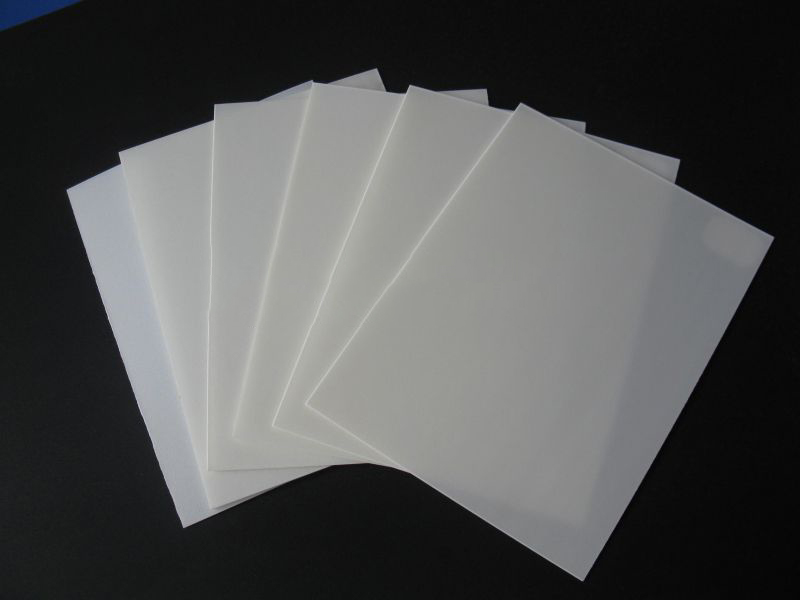
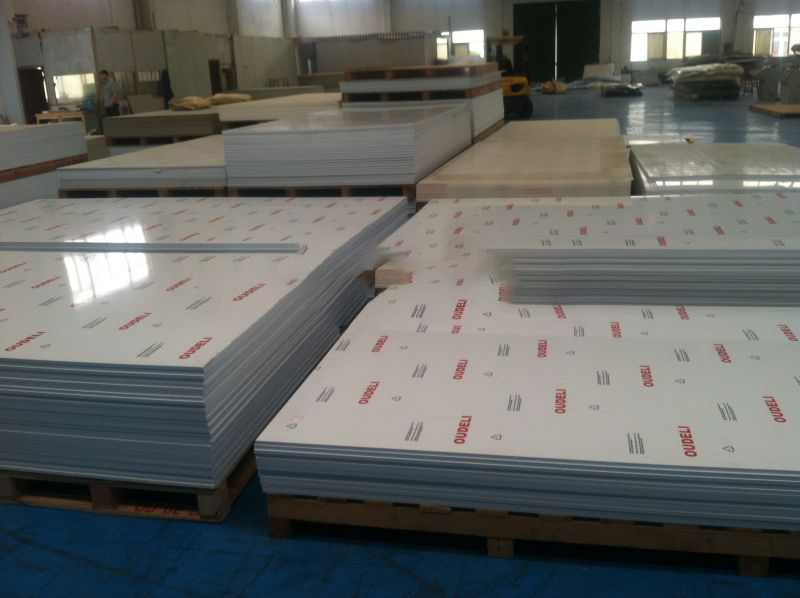
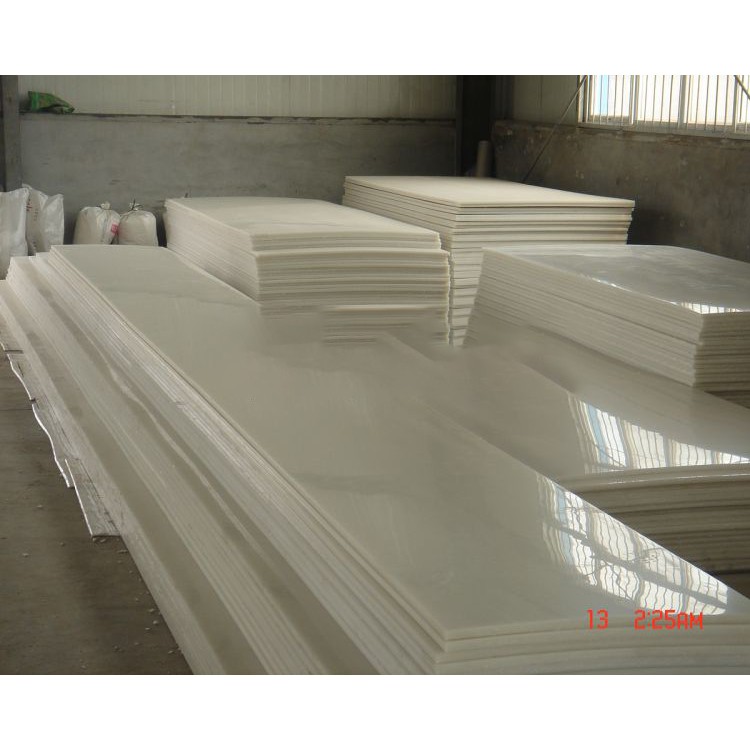
High-density polyethylene (HDPE) sheets, commonly referred to as UHMWPE sheets, are a simplified term for high molecular weight polyethylene sheets. These sheets are produced by blending relevant modified materials into ultra-high molecular weight polyethylene raw materials, then undergoing mixing, calendering, sintering, cooling, high-pressure shaping, demolding, and forming. Performance: HDPE sheets retain the excellent qualities of UHMWPE sheets, such as high impact strength, low friction coefficient, and self-lubrication, while also meeting various performance requirements of customers. For instance, flame-retardant HDPE sheets are difficult to ignite, can extinguish themselves within 3-10 seconds after being removed from the fire source, and do not drip or produce smoke. The volatile gases are harmless to humans, and after testing by the National Flame Retardant Material Research Institute, the product is recognized as environmentally friendly and has high promotional and usage value. Additionally, there are wear-resistant, high-temperature-resistant, and high-strength HDPE sheets available. Applications: HDPE sheets are used as linings due to their moderate mechanical properties, often serving as lining materials for metals, combining the strength of metals with the wear resistance and required properties of HDPE. Flame-retardant HDPE sheets are widely used in industries such as electricity, coal mining, steel, cement, and coking in China, effectively preventing fire outbreaks due to spontaneous combustion of coal and other factors. Manufacturer direct sales - White flame-retardant HDPE sheets, ample supply, wholesale supply of wear-resistant, flame-retardant black HDPE lining plates, bulk orders preferred, supply wear-resistant HDPE sheets, export quality, trustworthy. Large quantities available - Antistatic, wear-resistant black HDPE coal storage lining plates, quality assured. [Promotion] Custom-made wear-resistant HDPE sheets, HDPE lining plates, professional production, customization, antistatic UHMWPE sheets, technically skilled. [Bestseller] Power plant coal storage material storage HDPE coal storage lining plates, coal storage wear-resistant plates, special price direct supply, flame-retardant nylon coal storage lining plates, specifications available, quality guaranteed. Ultra-high molecular weight polyethylene (UHMW-PE) is a linear thermoplastic engineering plastic with outstanding comprehensive properties. The development of UHMW-PE has been very rapid, with an average annual growth rate of 8.5% worldwide before the 1980s, and the growth rate reaching 15%-20% after entering the 1980s. In China, the average annual growth rate has been over 30%.
1978, the global consumption was between 12,000 to 12,500 tons, and by 1990, the global demand reached approximately 50,000 tons, with the U.S. accounting for 70%. From 2007 to 2009, China gradually became the world's engineering plastics factory, with the development of ultra-high molecular weight polyethylene (UHMWPE) industry being particularly rapid. The following is the history of its development: In the early 1930s, the foundational theories for UHMWPE fibers were proposed; the introduction of gel spinning and plasticizing spinning methods led to significant technical breakthroughs in UHMWPE; in the 1970s, Capaccio and Ward from the University of Leeds in the UK were the first to successfully produce UHMWPE fibers with a molecular weight of 100,000; in 1964, China successfully developed and industrialized the production; in 1975, the Netherlands invented gel spinning (Gelspinning), successfully producing UHMWPE fibers and filing a patent in 1979. After ten years of research efforts, it was confirmed that gel spinning was an effective method for manufacturing high-strength polyethylene fibers with industrial prospects; in 1983, Japan used gel extrusion super-drawing to produce UHMWPE fibers using paraffin as a solvent; in China, UHMWPE pipes were listed in the National Key Technology Achievement Promotion Program by the Ministry of Science and Technology with document number Guokaiji No. (2000) 056, categorized as new materials and new products in the chemical industry. The National Development and Reform Commission's Ministry of Science and Technology listed UHMWPE pipes as a key project in the priority development of high-tech industries. [1] 2. Identification Methods UHMWPE is a high molecular compound that is difficult to process, with high wear resistance, self-lubricating properties, high strength, stable chemical properties, and strong resistance to aging. Therefore, when identifying genuine UHMWPE, attention must be paid to these characteristics. The specific identification methods are as follows: 1. Weight Rule: Products made of pure UHMWPE have a specific gravity between 0.93 and 0.95, are lightweight, and can float on water. If it is not pure polyethylene material, it will sink to the bottom. 2. Temperature Measurement: Genuine UHMWPE products will not melt or deform at 200 degrees Celsius but will soften. If it is not pure UHMWPE material, it will deform at 200 degrees Celsius. 3. Visual Method: The surface of genuine UHMWPE is flat, even, smooth, and the cross-section density is very